
La Marianna in Bergamo: the pastry shop, the restaurant and the stracciatella

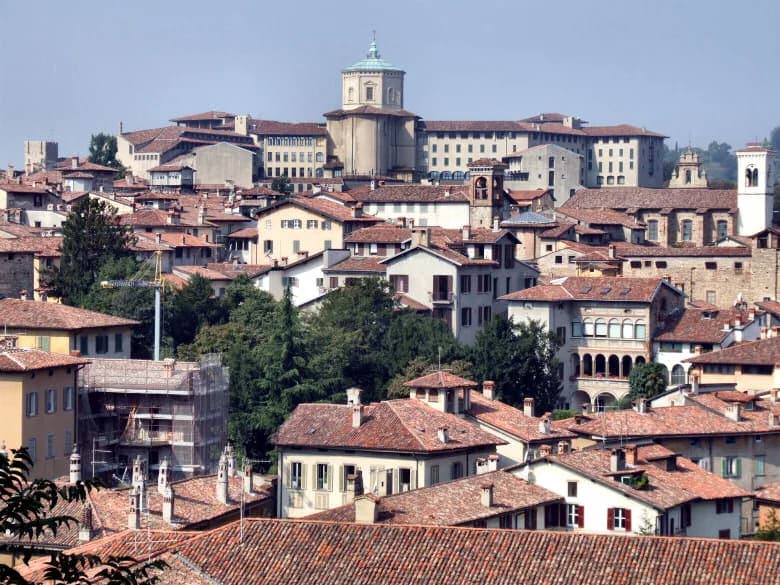
La Marianna is two things in one building: a pastry shop at street level and a restaurant with a garden terrace above it, on Largo Colle Aperto at the top edge of Bergamo's Città Alta. It is best known as the place where, by the Panattoni family's account, stracciatella gelato was created in 1961. This guide covers what each part of the business is, how to find the door, what to order and what sits within a few minutes' walk.
What La Marianna is: a pastry shop with a restaurant above it
The address holds a historic pasticceria, a pastry shop, with a restaurant on the floor above. Both belong to the Panattoni family, who describe the place as a meeting point for Bergamo rather than a quick stop. Practically, that means you can walk in for a brioche or a gelato at ground level, or climb the stairs for a seated meal with a garden view.
The building has a longer history than the family business: the site was once home to an establishment called Bettolina, recorded between 1508 and 1780. The current activity dates from 1952, when Enrico Panattoni opened a bar and a Tuscan-style trattoria. That double identity, pastry counter below and kitchen above, is what confuses first-time visitors most.

Where it is: Largo Colle Aperto, against the Mura Venete
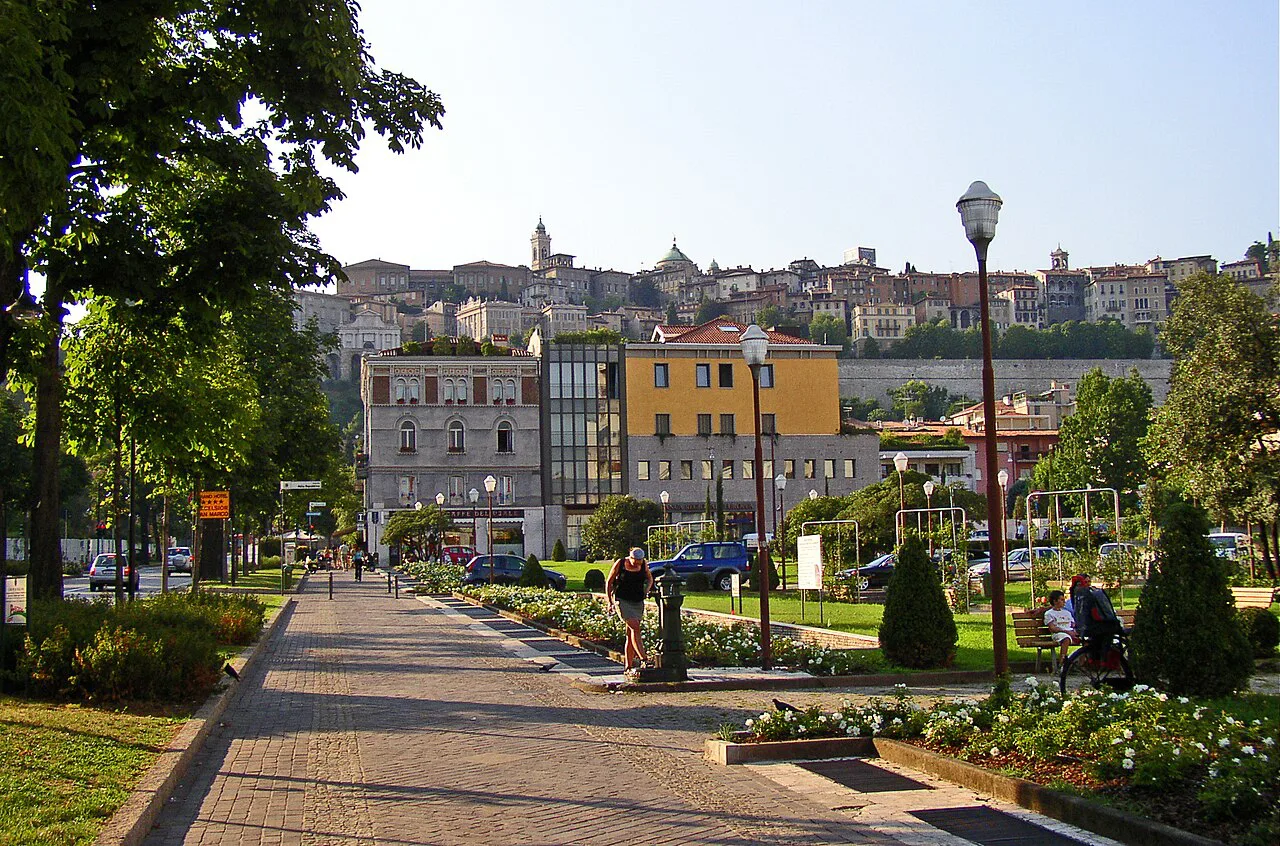
La Marianna stands at Largo Colle Aperto 4, in the upper city, built directly against the Mura Venete, the Venetian walls that ring Città Alta and carry UNESCO World Heritage status. The easiest landmark is the Torre di Adalberto, the tower directly opposite, known locally as the Torre della Fame, the tower of hunger. If you can see the tower, you are at the right corner of the square.
Getting there on foot means entering Città Alta and following the main street up to Piazza Vecchia, then continuing up through the upper city to the square at Colle Aperto, where La Marianna sits. It is at the top edge of Città Alta, so the walk is a climb; give yourself time and enjoy the streets on the way.
The stracciatella story: Enrico Panattoni's 1961 gelato
The family's account runs like this: customers at the restaurant kept asking for stracciatella in its savoury sense, the Roman egg-drop soup, and Enrico Panattoni grew tired of making it. He worked out a way to serve the idea as a dessert instead, and the result was a gelato of milk with fine shards of chocolate running through it. The date the family gives is 1961.
Treat it as the house version of a good story rather than a settled piece of food history: the family retells it themselves, and Mirko Panattoni frames the flavour as both a nod to the family's Tuscan roots and an expression of affection for Bergamo's traditions. What is not in doubt is that the gelato is made and sold here, and that locals use the name of the place as shorthand for the habit of stopping by.
What to order: from stracciatella to casoncelli
Start with the stracciatella, either as a gelato from the pastry side or as the Tegola croccante alla Stracciatella, a dessert built on sugar-paste and almond brittle, the house gelato, toasted almond petals and a base of warm chocolate sauce. The name means crunchy tile, and it is the most direct way to eat the flavour the kitchen is proud of.
At the table, the Bergamo staple casoncelli, stuffed pasta usually served with butter and pancetta, sits alongside dishes carried over from the original Tuscan kitchen. The historical menu ran to ribollita, a thick bread and vegetable soup, and Fiorentina, the big bone-in grilled steak. The kitchen now describes itself as more elaborate, drawing on local ingredients such as scarola from the surrounding hills, the greens sold as parüch, Martinengo potatoes and Bergamo cheeses.
How it works: pastry shop below, restaurant and terrace above
Use the ground floor for the pastry shop, and head upstairs for a proper meal with table service. The restaurant keeps a large old dining room and a veranda looking onto a roof garden, which the family singles out as the reason to sit down: it holds a very old Sophora japonica tree, said by some to pre-date the building of the walls. The rooms also display works by Bergamo contemporary artists.
Visa, Mastercard and American Express are accepted, and there is outdoor seating and wi-fi. The veranda and the tables look onto the garden, which the family treats as the great pleasure of the place in fine weather.
The Panattoni family and the 1952 opening
Enrico Panattoni and his family arrived in Bergamo in 1946 and opened the business six years later, with his sister Nila in the kitchen and Enrico front of house. The Tuscan dishes were an instant draw for Bergamo diners, which is why ribollita and Fiorentina still anchor the story. His son Mirko Panattoni speaks of the place as part of a changing city rather than a museum piece.
Nearby once you leave: the walls, the tower and Città Alta
Step out of the door and the Torre di Adalberto is in front of you, with the Mura Venete running along the ridge behind the restaurant. A walk along the wall path gives you the plainest view of why the upper city is laid out as it is, and it takes under an hour at an easy pace.
Down the hill, Piazza Vecchia is the heart of Città Alta and Caffè del Tasso, a historic café on the square, is the obvious stop for a coffee after the walk. If you want a second proper meal in the upper city rather than a snack, Trattoria Parietti is another address worth knowing.
For a pastry-led alternative in the same quarter, Pasticceria Balzer is a name to keep in mind, and Antica Trattoria Tre Torri near Piazza Bastreri covers the sit-down end. Neither replaces La Marianna for stracciatella, but both make sense if you are building a day around the upper city.
Is La Marianna worth the walk up to Colle Aperto?
Yes, and the reason is specific: this is where the house version of stracciatella began, and the pastry shop lets you try it without committing to a full meal. Come for the gelato and the Tegola croccante, stay for casoncelli in the upstairs room or on the terrace if the weather holds. It also sits at the natural top of a Città Alta walk, so it fits a morning rather than demanding its own trip.
Frequently Asked Questions
Is La Marianna a gelateria, a pastry shop or a restaurant?
All three, in one building. The ground floor holds the historic pastry shop, where you can buy gelato including the stracciatella the family says was created here in 1961. The restaurant is on the floor above, with its own dining room and a veranda looking onto the roof garden.
Do you need to book a table at La Marianna?
For a sit-down meal upstairs, contact the restaurant directly to arrange a table. The pastry counter below is a simpler stop if you only want a gelato or a brioche.
Who are the Panattoni family?
They are the family behind La Marianna. Enrico Panattoni opened the business in 1952 after arriving in Bergamo in 1946, and his son Mirko speaks for the family today. The family credits Enrico with the stracciatella gelato.