Best Restaurants in Catania: Where to Eat by Style
Where to eat in Catania, from seafood osterie by La Pescheria to horse-meat trattorias and pastry counters, with the dish to order at each place.
On this page
The best restaurants in Catania cluster in two zones: the streets around La Pescheria fish market for seafood, and the trattorias and pizzerias a short walk from Piazza Duomo for traditional Sicilian cooking and grilled meat. Choose by what you want to eat rather than by a ranking, because a market-side table and a student trattoria do different jobs. This guide groups the city's tables by style, names the dish to order at each, and explains the trade-off between the centre's convenience and portion size further out.
What Catania food is known for
Catania's kitchen is loud and direct: seafood landed at the Pescheria, aubergines fried into pasta alla Norma, horse meat grilled in the streets behind Castello Ursino, and arancini eaten standing up. Rice balls here are arancini, and locals are firm about the name. Granita with brioche is breakfast, not dessert, and the savoury versions come with a soft roll for dunking.
A short list of Catania classics covers most menus: pasta alla Norma with fried aubergine, tomato and salted ricotta; pasta al pistacchio with pistachio cream from Etna; involtini, thin meat rolls grilled or braised; cipollate, spring onions wrapped in pancetta and grilled; and Seltz Limone e Sale, a salty lemon fizz sold in bars. Street snacks include cartocciata, a folded baked parcel similar to a calzone. Order one of these at each stop and you will eat your way across the city's repertoire.
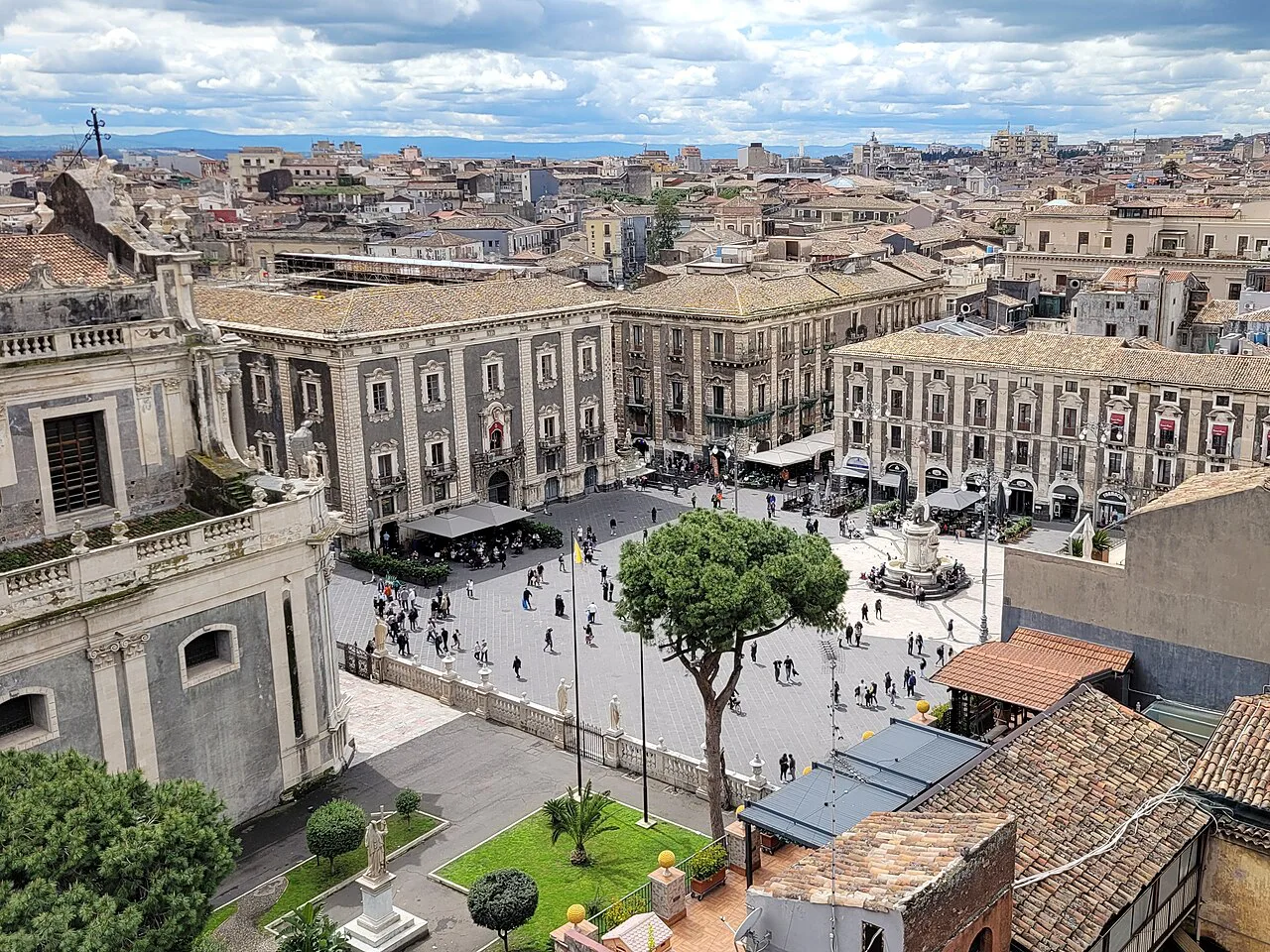
How to choose: trattoria, osteria, pizzeria or wine bar with a kitchen
Treat the words on the door as a guide to the bill and the pace. A trattoria is a family-style dining room with a long menu and generous portions; an osteria is smaller and more focused, often on seafood or a short daily list; a pizzeria is for evening, wood-fired and fast; a wine bar with a kitchen lets you build a meal from crostoni, cured meats and cheese. Trattoria del Cavaliere, for example, is known for large portions and low prices, while market-side osterie trade that cheapness for location.
Book where the room is small. Osteria Antica Marina, beside the fish market, fills its few tables at both lunch and dinner, so reserve ahead. In general, lunch is the bigger meal for seafood and dinner is when pizzerias and horse-meat grills come alive. If you want a single unhurried sitting, aim for lunch at a market osteria.
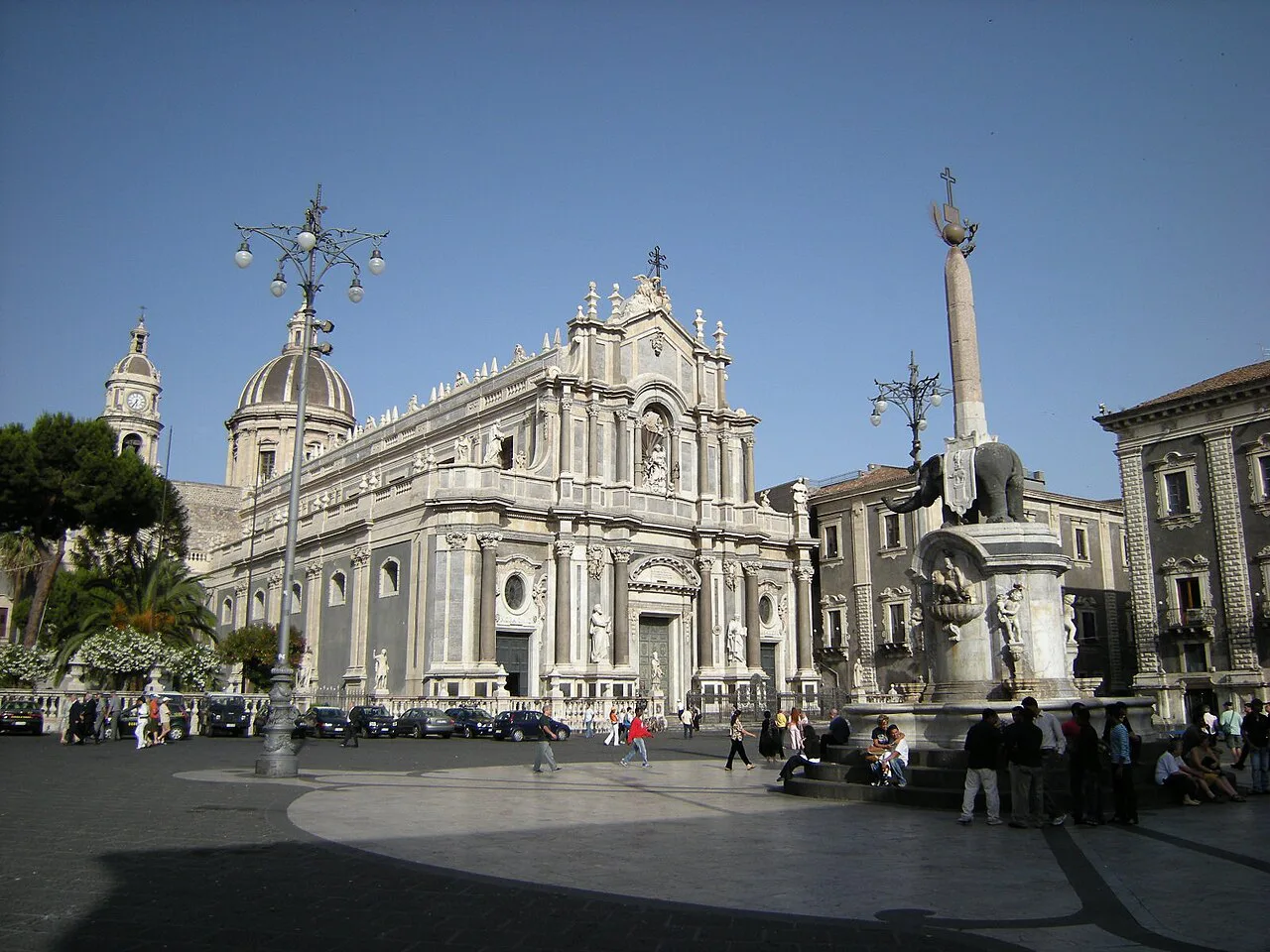
Seafood restaurants around La Pescheria
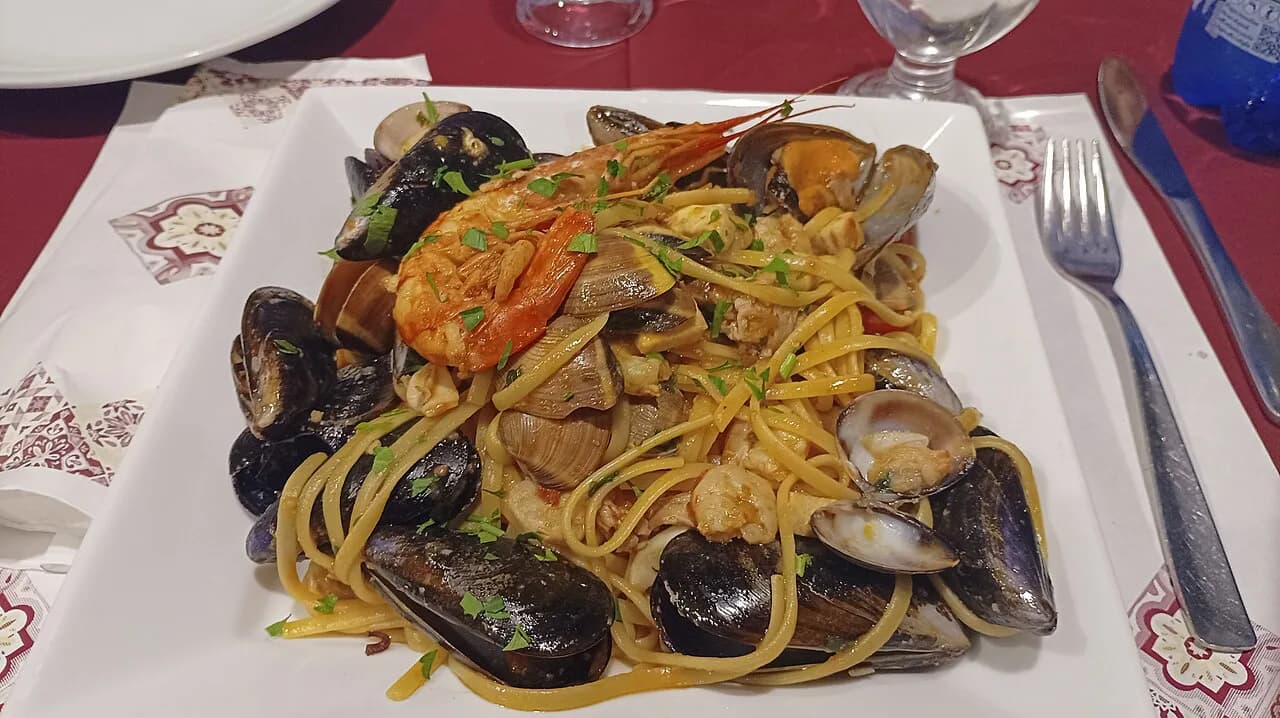
Osteria Antica Marina sits inside La Pescheria, Catania's largest fish market, and its outdoor tables are effectively part of the stalls. The dining room is tiled in colourful Sicilian ceramics, and the kitchen leans on the day's catch. Order spaghetti ai ricci di mare (sea urchin pasta), grilled fish and prawns; the menu runs both fixed-price and à la carte.
For something faster, Scirocco Sicilian Fish Lab occupies an old butcher's shop on the edge of the market, its white tiles and meat hooks still visible. Fried fish arrives in a paper cone, and the octopus is cooked to order. The Cono di Mare mixes mullet, anchovies and the catch of the day, while the Cono Terra Mare pairs fried vegetables with broad beans and pistachio for vegetarians. It is built mainly as street food, so order from the take-away window and eat while you explore the market.
La Siciliana was founded by the La Rosa family in 1968 and is now run by brothers Vito in the kitchen and Salvo in the dining room. The cooking is seafood in the plain Sicilian register. Ask for the Ripiddu nivicatu, a cuttlefish-ink risotto with cuttlefish and cheese shaped to look like Mount Etna, or the rigatoni with mollica (toasted breadcrumbs) and the linguine with swordfish roe. It sits on viale Marco Polo, along the city's ring road, so it is a taxi or bus ride from the centre.
Traditional Sicilian cooking and Slow Food ingredients
Mé Cumpari Turiddu is a centre-city institution opened by Roberta Capizzi, a former lawyer turned restaurateur, and it serves traditional Sicilian cooking with a contemporary hand. Most of its ingredients come from Presidi Slow Food producers — Slow Food's protection scheme for small, traditional foods — or from Capizzi's own garden, including the vegetables and citrus behind the jams. Order the zuppa di macco with Leonforte broad beans, the spaghetti alla Turiddu with anchovies and toasted breadcrumbs, or the maccheroncini alla Norma.
Trattoria del Cavaliere is the student and family canteen of the Catania repertoire: long menu, large-to-enormous portions, low prices. Pasta al pistacchio, involtini and horse meat all appear, and the grilled meats can be ordered by weight. It is the trade-off against the market-side osterie: less atmosphere, more food for your money. Come hungry and skip the second course if you have already eaten arancini.
Horse meat and grilled meat by Castello Ursino
Trattoria Camelot is a Catania must for horse-meat lovers, and the long buffet of Sicilian antipasti is where to start before the grill. Beyond horse, the kitchen turns out involtini, sausages, steaks and cipollate, so a mixed table works. Order by asking what is on the grill that day rather than choosing blind from the list, and share a plate of the grilled meats.
If you sit outside, the view is Castello Ursino, one of the main squares of the centre, so the meal doubles as a pause between sights. Horse meat is not for every table, and the buffet and grill give plenty of alternatives, but it is the dish that defines this corner of the city. Book ahead for a group.
Where to eat outside the centre: Sant'Agata Li Battiati and Acitrezza
Pidatella Pescheria Gastronomia is a counter of ready-made seafood dishes and raw fish to cook at home, with a small dining room if you want to eat there. It sits in Sant'Agata Li Battiati, about ten kilometres from the historic centre, so it is a trip rather than a detour. Go for a seafood lunch on the way to or from the coast, and buy raw fish only if your accommodation has a kitchen.
Trattoria Il Nespolo lies on the via Marina in Acitrezza, a few steps from the seafront at the Faraglioni rocks, and is a straightforward fish trattoria. The fixed menu brings a run of cold and hot antipasti, two primi and a second, all from fish caught that day. Ask for the fixed menu if you want to stop choosing and just eat. Bring a car or plan the bus, as Acitrezza is a separate village along the coast.
Aperitivo that turns into dinner: Vermut and Razmataz
Vermut, near Piazza Carlo Alberto di Savoia, is the place to start an evening: vermouth cocktails from a list of more than sixty Italian vermouths, wine, beer and a long spread of crostoni, cured meats and cheeses. The point is to turn aperitivo into dinner by ordering a large selection to share. Sit outside, where the street is lively, rather than in the industrial-chic room.
Razmataz, just off via Etnea in the historic centre, is a wine bar with a kitchen and a short menu that changes often, mixing Catania dishes with plates from elsewhere in Italy and beyond. The list runs to local and emerging Sicilian wineries, and the room is casual. It is the choice for a lighter, more modern dinner, and booking is advisable.
Pizza and street food
Pizza in Catania is an evening affair and a good fallback when you want a table without a long menu; our guide to the best pizza in Catania picks out the ovens worth the walk. The city's pizzerias also serve fried snacks and, often, a short list of Sicilian beers to go with them.
For street food, the market is the address: arancini, fried fish cones and cartocciata are eaten standing, and the Pescheria area doubles as a breakfast stop with granita. If you want the full picture before you order, our guide to Arancini: What They Are, What's Inside and How to Eat Them explains the fillings and the etiquette. Eat early, before the stalls pack up, and keep cash handy for small vendors.
Bakery and pastry stops: arancini, rustici and granita
Pasticceria Savia is a well-known Catania name for arancini and rustici, the flaky pastry parcels filled with cheese or meat, and it works as a quick lunch or a snack between sights. At a busy pasticceria, order and pay at the till, then take your receipt to the counter.
Forno Biancuccia, run by Valeria Messina, is a bakery aimed at preserving traditional Catania baking, and it is where to buy bread and savoury baked goods to take away. Caffè Europa is another established stop in the centre. For granita, order it with brioche con il tuppo, the soft roll with a round top, the way locals have it for breakfast.
How to order and pay: coperto, booking and timing
Some Catania restaurants add a coperto, a per-person cover charge for bread and service; where it applies it can appear on the bill rather than at the menu headline, so check before you compare two bills. At a café or pasticceria with a counter, pay at the till first, then hand the receipt to the barista.
Lunch runs from about one o'clock and is the main seafood sitting; dinner starts late, so a table at eight is early by local standards. Book the small rooms — Antica Marina, Razmataz and Mé Cumpari Turiddu — and walk in at the trattorias. Cash is still useful at market stalls and small bakeries.
If you only have one meal in Catania
For one meal, book lunch at Osteria Antica Marina and order the sea urchin spaghetti followed by grilled fish, so the market itself is your dining room. If you would rather eat inland, choose Mé Cumpari Turiddu for its Slow Food pantry and a plate of pasta alla Norma that shows what the city does with aubergine and ricotta. Finish with granita and brioche at a bar on via Etnea, and the day is complete.
Which table should you book?
If your trip is short, plan one market-side seafood lunch, one traditional dinner and one counter stop, and you will have tasted the Catania repertoire without chasing a ranking. Book the small rooms and walk into the trattorias, which are the better value per plate. The trade-off is simple: pay for the market view and the historic room, or trade them for portions and prices further from Piazza Duomo. If your trip also takes in Cefalù on Sicily's northern coast, see our guide to the best restaurants in Cefalù.
Explore more Catania food guides
Sources
Notes for your next meal in Italy
Optional updates to our food guides.
You might also like
Continue reading
More guides you'll find useful