
Fera 'o Luni Market: Catania's Historic Food Market

Fera 'o Luni is Catania's historic open-air market, held in Piazza Carlo Alberto in the heart of the old centre. It is a working food market first and a spectacle second: stacked produce, fish on ice, sacks of spices and vendors calling prices across the square. This guide covers where it sits, how to time a morning visit, what to buy and where to eat around it, and it slots naturally into our Catania Attractions: 4 Visitor Guides.
It is not a flea market and not a shopping street. Come for edible Sicily, a bit of theatre and an easy pairing with Piazza Duomo and the fish market a short walk away.
What Fera 'o Luni is and where it sits in Catania
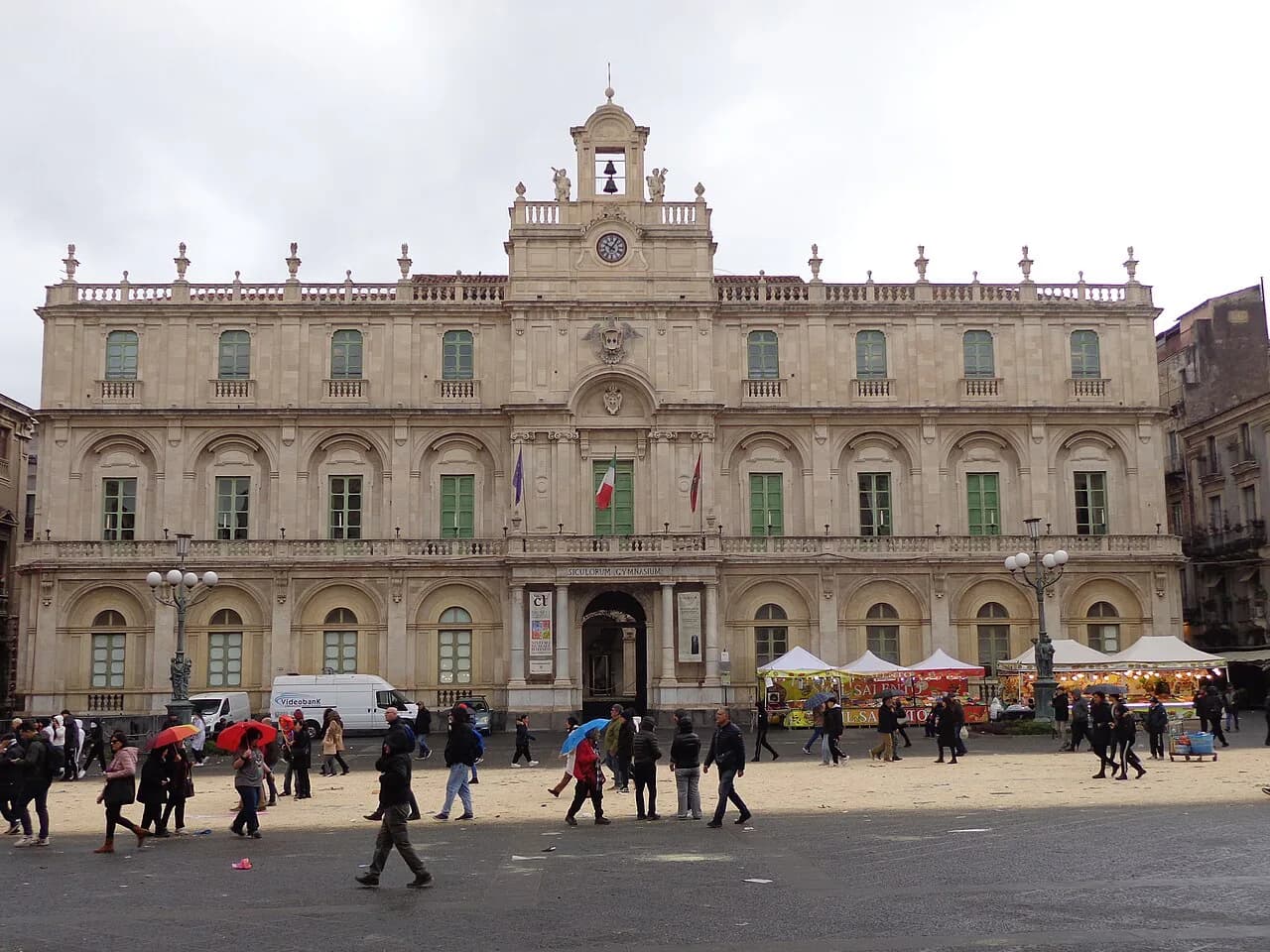
The market fills Piazza Carlo Alberto, a central square ringed by sand-coloured baroque facades, and has the feel of a North African souk transplanted into Sicilian baroque. Trades, languages and goods mix across the stalls, and the square turns into a stage of loud negotiation each morning. It is one of the city's most historic and characteristic commercial sites, alongside the fish market at Piazza Duomo.
The name's origin is uncertain. One explanation links it to the first day of the week on which the market was once held, another to an ancient temple to the moon goddess on the site; treat both as claims rather than settled history. What the account of the market does record is movement: after the 1693 earthquake the market was shifted, first to Piazza Università and later to today's Piazza Carlo Alberto.
An oddity worth knowing: the square sits above the grottoes of the Chiesa di San Gaetano, a religious site with an altar and underground passages once used for burials. You will not see this from the stalls, but it explains why the market feels layered into the city rather than parked on top of it.

Where the market is: Piazza Carlo Alberto
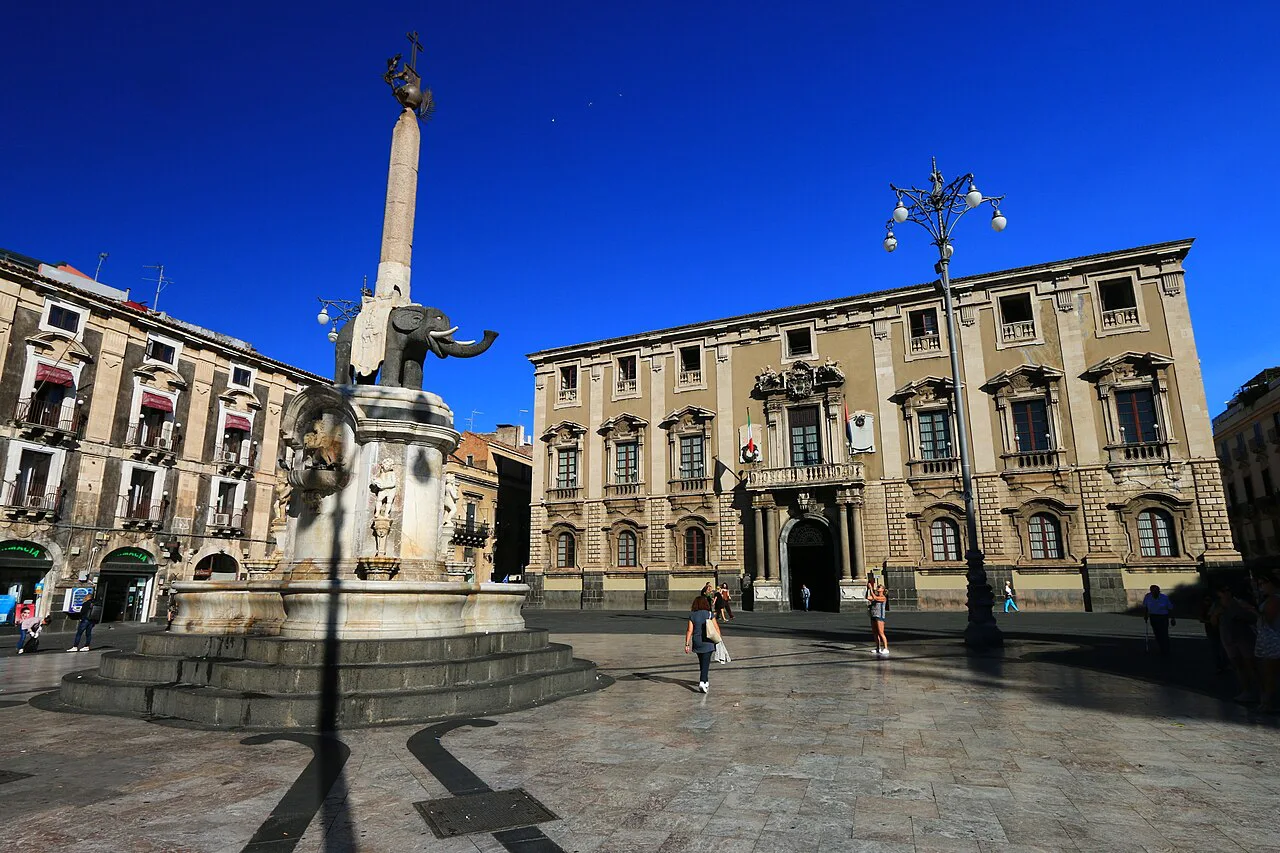
Piazza Carlo Alberto is in Catania's centro storico, a short walk through the baroque streets from the cathedral end of the centre, and the sound of the vendors carries before the square comes into view. Walking is the easiest way in; arrive on foot from the surrounding old town and you are already at the stalls.
The market is a square, not a ticketed site: there is no gate and no queue to plan around, so the practical question is timing rather than entry. Come early, wear shoes that cope with uneven paving and carry cash for small purchases.

How to get there and when to go
The market is reported to trade every morning from dawn, Monday to Friday, whatever the heat, cold or weather. Aim to arrive in the first few hours after sunrise, when the stalls are fully set up and the bargaining is at its loudest; by late morning the best of the produce has gone.
Plan the visit for a weekday morning, since that is the pattern the market's most detailed account describes, and check locally if you are banking on a particular day. Over a weekend, keep the market for Monday and spend the free morning on Catania's pastry shops instead.
How the market works: stalls, bargaining and the morning rhythm
Expect open-air stalls rather than covered aisles, so the visit is a slow loop through the square rather than a single route. Sellers call out prices and shoppers haggle back; the back-and-forth is part of the ritual and part of the entertainment.
Smells are strong and specific: spices, citrus, herbs and fish all at once, and the noise is constant, which makes the market a poor choice for anyone sensitive to crowds or sound. It is also not a place to linger slowly with small children; the pace is brisk and the ground uneven in places.
What to buy: seasonal fruit, vegetables, fish and pantry staples
Produce leads: fruit and vegetables piled in pyramids and sold by the season, with fish on ice from vendors bringing the morning catch into the centre. Pantry staples are the easiest souvenirs, from dried herbs and spices to nuts and dried fruit bought by the scoop.
Buy only what you can carry and eat within a day or two: fresh fish and soft fruit do not travel well in a warm Sicilian afternoon. For things to take home, the spice and dried-fruit stalls are the practical choice.
What to eat around the market and in Catania
After the market, Catania's pastry tradition is the obvious next stop. Arancini, cannoli and cassata are the classics, and the historic pasticcerie around the centre make a natural pairing with a market morning.
If you prefer a sit-down breakfast over a standing coffee, head for a pasticceria with a counter and a few tables, such as Pasticceria Spinella, and take your time over a pastry and a coffee before the crowds build.
For lunch, keep it simple: a plate of pasta with sardines or aubergines, a grilled fish, or a slice of sfincione, the thick Sicilian focaccia topped with tomato, onion and breadcrumbs. Walk a few streets away from the square for a quieter table and better value than the trattorias right beside the stalls.
What is nearby: Piazza Duomo and the fish market
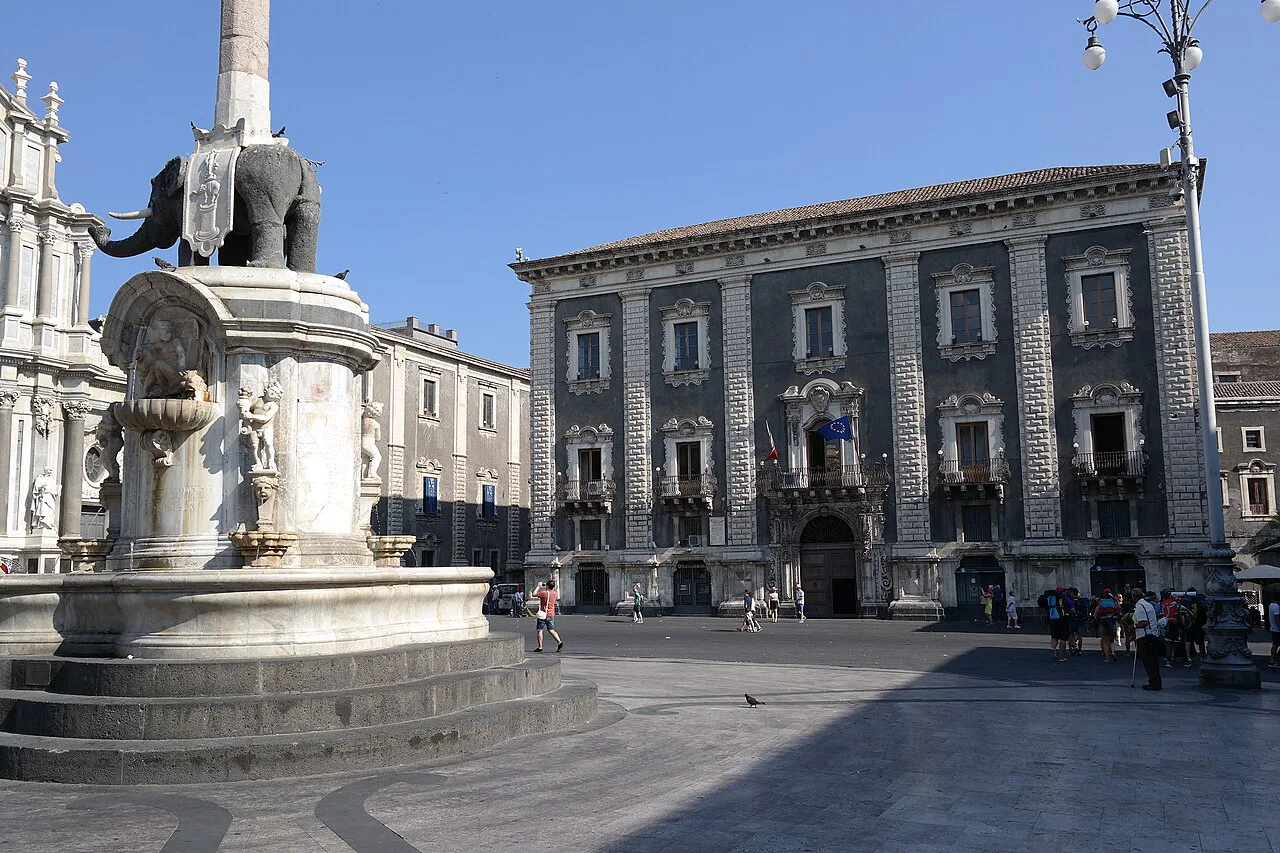
Pair Fera 'o Luni with the fish market at Piazza Duomo, the other historic market in the city centre and a very different experience: darker, wetter, louder, and focused entirely on the catch. Together they give you a fuller picture of how Catania feeds itself.
Between the two you pass the cathedral and the baroque heart of the city, which is enough sightseeing for one morning without turning the day into an itinerary. On the way, a stop at Pasticceria Savia fits neatly alongside the market loop and a coffee.
Who the market suits and how much time to allow
Fera 'o Luni suits travellers who want to see ordinary Catania at work, and who are happy to shop, taste or just watch. It is a poor fit for anyone hoping for a curated, signposted tourist attraction or for a flea market of vintage finds.
Allow about an hour for the market itself, and half a morning if you add the fish market and a pastry stop. Wear shoes that cope with uneven paving and carry cash for small purchases; the atmosphere is the point, so slow down once rather than rushing through twice.
Is Fera 'o Luni worth a morning?
Yes, if you come on a weekday morning with an appetite and a bit of patience, and treat it as a working market rather than a sight. The combination of produce, fish, spices and baroque setting makes it one of Catania's most characterful hours.
Build the rest of the morning around it: the fish market at Piazza Duomo, then a pastry and a coffee on Via Etnea. That is a complete Catania food morning without a single fixed appointment.
Frequently Asked Questions
Is Fera 'o Luni a flea market?
No. Fera 'o Luni is a food market in Piazza Carlo Alberto, selling fruit, vegetables, fish, spices, nuts and dried goods from open-air stalls, with the feel of a Sicilian souk rather than a flea market.
When is the best time to visit the market?
Early morning, from dawn onwards, on a weekday. The market is reported to trade every morning from dawn, Monday to Friday, and the stalls are at their liveliest in the first hours after sunrise.
Do I need to book or pay to enter?
No. The market is an open square with stalls rather than a ticketed attraction, so there is nothing to book and no entry gate.
What should I buy at Fera 'o Luni?
Seasonal fruit and vegetables, fish from the morning catch, and pantry staples such as dried herbs, spices, nuts and dried fruit that travel well.