
Mercato di Ortigia: Syracuse's Morning Food Market

The Mercato di Ortigia is the morning food market on the island of Ortigia in Syracuse, best visited before lunch. Come for the fish counters first, then work back through the vegetables, the larder stalls and the cheese counters, and finish at the improvised grills and sea-urchin stands that give the market its particular character.
This guide covers where the market sits on the island, what each part of it sells, how to shop by weight and how to eat on the spot. It is a market for buying and tasting rather than a sight with a ticket, so you can walk through in half an hour or settle in for a couple of hours over shellfish and a glass of wine.
Where the Mercato di Ortigia sits on the island
The market spreads through the streets at the northern end of Ortigia, the island quarter that reaches out into the sea from mainland Syracuse. Coming from the mainland, you cross the bridge and find the stalls almost in front of you, so it works as the natural first stop of an Ortigia morning.
The historic core of the market is the Antico Mercato, a building from 1900 on Via Trento, tucked just behind the Temple of Apollo. That gives you a useful landmark: find the Greek temple columns and the market is a minute away.
If you are planning the rest of your time in the city, the market makes a good anchor for a morning that continues through the Syracuse Attractions: 5 Visitor Guides. Everything in the historic centre is walkable from here, so you can leave the market and be at the Duomo or the waterfront in minutes.

How to reach it and what to expect on arrival
On foot is the sensible way in: from Ortigia's centre you are within a short walk of the stalls, and streets around the market are narrow and busy with shoppers and delivery carts. If you are arriving from the mainland, walk across the bridge and follow the crowd rather than trying to drive into the island.
Expect noise and colour rather than a neat indoor hall. Produce spills out of shopfronts, fish is laid on ice at the kerb and vendors call out prices, so wear shoes you do not mind getting wet and keep bags close in the crush.
When the market runs
The market runs in the mornings; a 2014 visitor account describes it as held daily except Sunday, so a weekday or Saturday morning is the safest bet and Sunday is best planned around something else. Trading days can change, so if a single morning is all you have, confirm locally.
Go early if fish is the point of your visit: the best counters thin out as the morning goes on and the atmosphere fades by early afternoon. Allow an hour for a proper walk-through, or two if you plan to eat shellfish and grilled vegetables on the spot.
The fish counters: blue fish, swordfish, prawns and scorfani
Fish is the heart of the Mercato di Ortigia, landed metres away and displayed with an immediacy that is the market's real draw. Look for blue fish, swordfish, prawns, scorfani (the spiny rockfish used in soups) and squid, all arranged on ice.
One counter specialises in shellfish and sets out tables beside the stall, so you can eat clams, oysters and mussels raw with a glass of wine instead of carrying them home. This is the single best eat-now stop in the market and the reason to arrive hungry rather than after breakfast.

Fruit and vegetables: Pachino tomatoes, capuliato and Giarratana onions
The produce stalls carry the vegetables and fruit that define this corner of Sicily. Pachino tomatoes, the small sweet cherry tomatoes from the nearby coast, appear fresh, sun-dried and also as capuliato, a concentrated dried-tomato paste you can pack in a jar.
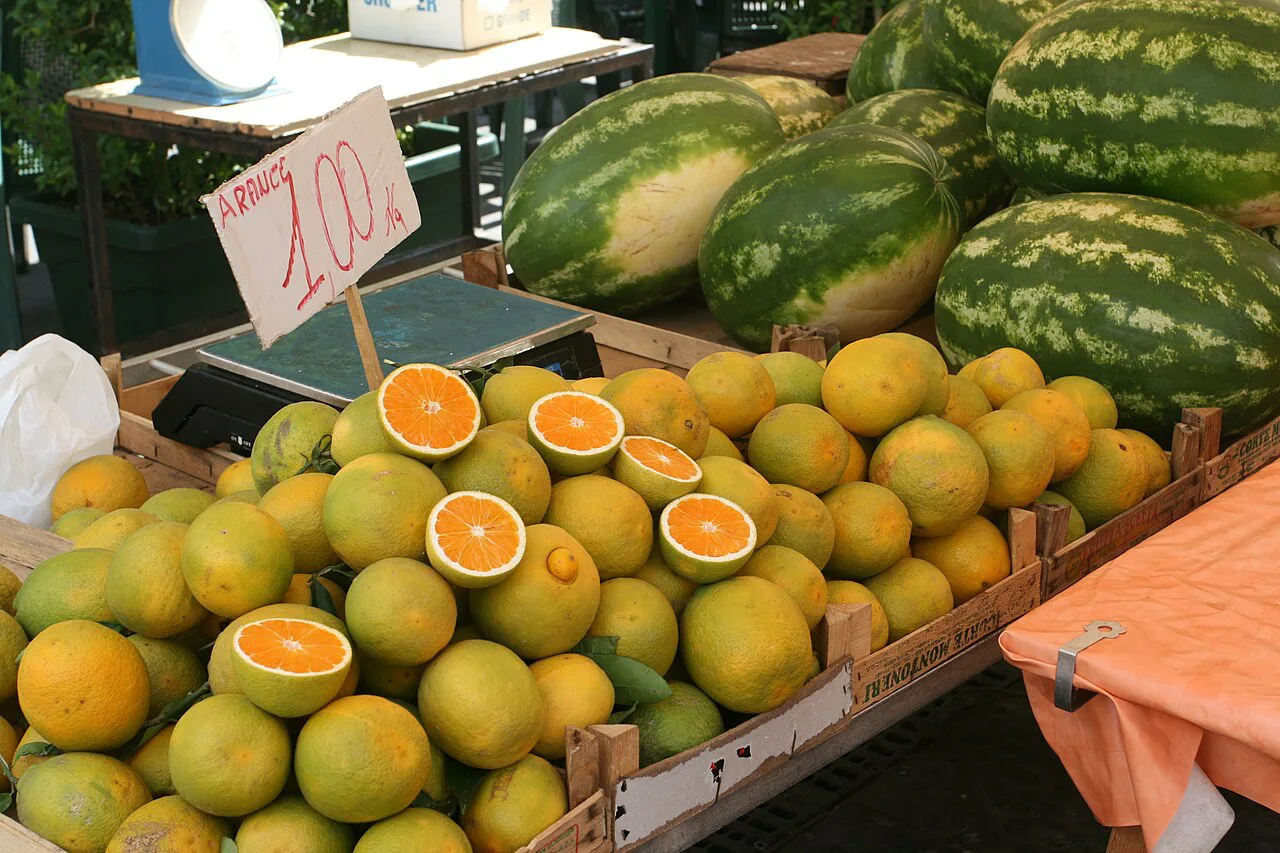
Look for the large Giarratana onions, sweet enough to eat raw in salad, and for prickly pears from the slopes of Etna, sold whole or already peeled and ready to eat on the spot. Peaches and white melons round out the fruit in summer.
The larder stalls: capers, olives, pistachios and Fuoco dell'Etna
Between the produce and the fish you will find the stalls that fill a suitcase: capers packed in salt, olives dressed in oil and herbs, sun-dried tomatoes and almond pastries. Pistachios from Bronte, the volcanic town on Etna's slopes, are sold in grain form and make a light, packable souvenir.
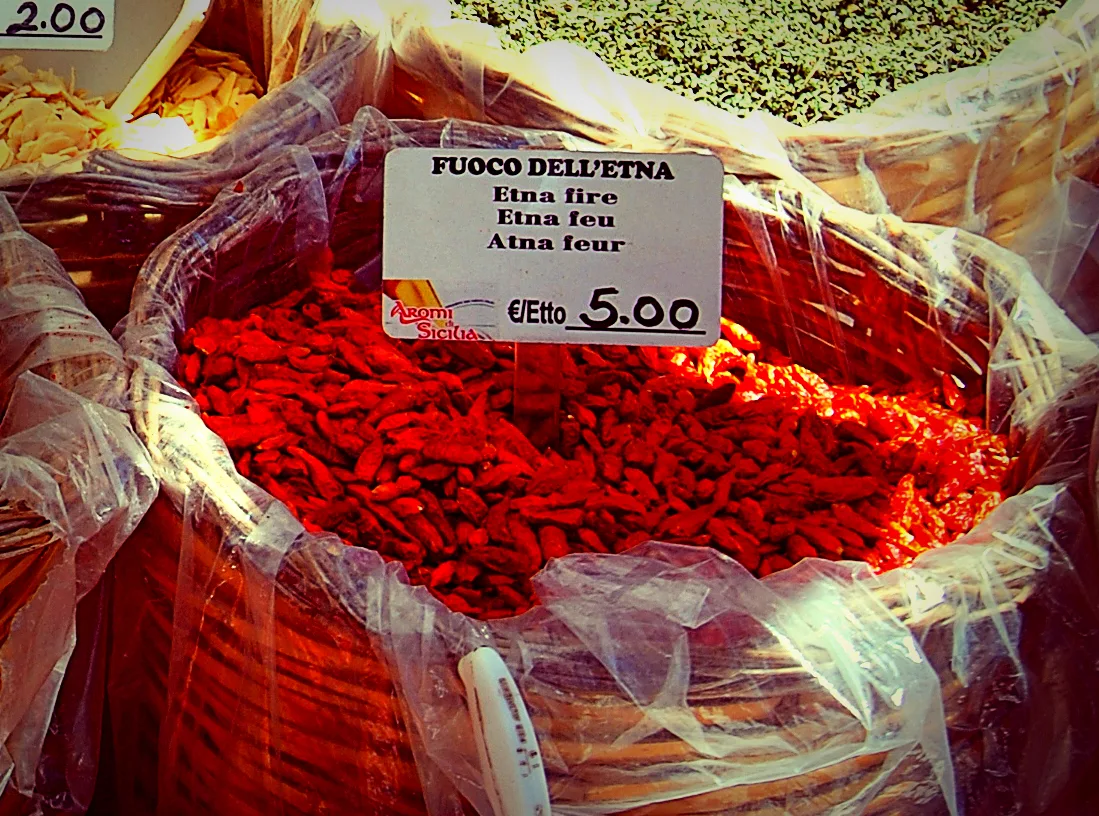
The spice stalls are just as good, with dozens of jars and a local chilli sold under the name Fuoco dell'Etna, literally Etna's fire. Ask to taste before you buy: the vendors expect it and it is the only reliable way to judge how hot a chilli or how salty a caper really is.
Cheese, cured meat and filled panini
Sicilian cheese is well represented: pecorino, caciocavallo (a firm stretched-curd cheese, often smoked) and fresh or smoked ricotta, some of it salted and sold to grate. Cured meat counters sit alongside, and several shops sell generous filled panini and cheese boards to eat with a glass of wine, some staying open into the evening.
For a proper sit-down version of the same idea, Fratelli Burgio is the deli counter in Syracuse to know, built around exactly this kind of cheese, cured meat and preserve selection. It makes a good follow-up if the market has whetted your appetite for a longer lunch.
Street-food corners: grilled peppers and sea urchins in a cup
The most distinctive eating at the market happens at the improvised stands on its edge. Vendors grill long red peppers on the spot, along with potatoes, onions and sometimes courgettes, and sell them hot as a rough street snack; other hawkers sell whatever their boat brought in that day.
Sea urchins are opened to order and the orange interior scraped into a small cup so you can eat it standing up. It is a Syracuse ritual and worth trying once, even if the cup and the setting are more practical than elegant.
The Antico Mercato building and the Temple of Apollo
The Antico Mercato on Via Trento is the historic shell of the market, a commercial building from 1900 beside the Temple of Apollo. It is worth a look even on a quick visit, because it anchors the stalls in the street plan of Ortigia.
The Temple of Apollo next door is one of Syracuse's ancient Greek monuments, standing at the edge of the market streets. It is a two-minute detour from the fish counters and needs no more than a look as you pass.
How to shop: buying by weight, tasting and taking food home
Most stalls sell by weight, so point at what you want and say how much: un etto (100 grams) is a useful word for cheese, olives and pistachios. Vendors expect you to taste before buying, and cheese or olives are often offered on the end of a knife or a toothpick.
If you are travelling home by plane, buy cheese, olives, capers and sun-dried tomatoes rather than fresh fish or shellfish. Pistachios, almond pastries and jars of capuliato survive a flight; anything fresh off the ice will not.
Nearby: what to do after the market
Once the stalls are done, head deeper into Ortigia for the Duomo and the seafront, or stop for coffee at a classic Ortigia café a few minutes' walk away. It is a good place to sit down with a caffè and plan the rest of the morning.
For something sweet after all the savoury business, Pasticceria Artale in Ortigia, Syracuse is a reliable stop for Sicilian pastries and granita. It is the sort of place to end a market morning properly, rather than grabbing something from the first tourist counter you see.
Is the Mercato di Ortigia worth planning your morning around?
Yes, if you go in the morning and start at the fish counters. The market is best when you treat it as breakfast and lunch rather than a photo stop: shellfish and a glass of wine beside the seafood stall, grilled peppers on the way out, and a coffee afterwards in the centre of Ortigia.
If you have only an hour, focus on the fish and the produce stalls and skip the shopping. Caps, jars and pistachios travel well, but the memory is the noise, the ice under the fish and the cup of sea urchin you eat standing up in the street.
Explore more Syracuse food guides
Frequently Asked Questions
Is the Mercato di Ortigia open on Sundays?
A 2014 visitor account describes the market as held every morning except Sunday, so a weekday or Saturday morning is the safest bet; trading days can change, so confirm locally if Sunday is your only option.
How long does it take to walk around the Mercato di Ortigia?
Allow about an hour for a thorough walk, longer if you stop to eat shellfish or grilled vegetables at the stalls. Plan for two hours if the market is the main event of your morning.
What should I buy at the Mercato di Ortigia to take home?
Capers in salt, dressed olives, Bronte pistachios, almond pastries and jars of capuliato travel well. Avoid fresh fish or shellfish if you are flying home.