Breakfast in Modena: Where to Eat and Café Culture
Breakfast in Modena means a bar espresso and a warm brioche, a pasticceria table for pastry, or gnocco fritto if you want savoury. Here is how the morning works.
On this page
Breakfast in Modena is a two-part affair: an espresso drunk standing at the bar and a brioche eaten in three bites, or a slower seated table at a pasticceria with a proper pastry and a cappuccino. Most mornings cost you ten minutes, which leaves room for the tortellini and cured meats that come later. This guide covers what to order, how the counter and till routine works, which Emilian pastries are worth knowing, and where a fuller brunch fits in.
What breakfast looks like in Modena
The default is sweet and small: coffee and a cornetto, the Italian croissant-style pastry, taken at a bar on the way to work or the station. A pasticceria (pastry shop with a café counter) does the same job with better pastry and often a seat, which is where you go when breakfast is the outing rather than the fuel. The savoury option exists and is very Emilian, but it is a deliberate choice rather than the norm.
Modena's food reputation rests on what comes later in the day, so treat breakfast as a light opener rather than a meal to fill up on. If your lunch is going to involve ragù or a plate of salumi, a coffee and a single pastry is the sensible call. Order two pastries only if lunch is late or you are sharing.
The bar breakfast: caffè, cornetto and paying first
In the classic Italian bar routine you order and consume at the counter, then pay. Many bars expect you to pay at the till first and hand the receipt to the barista, so watch what the locals ahead of you do and follow suit; at a table, you pay at the end. Say caffè and you get an espresso, while cappuccino is a morning drink and caffè macchiato is espresso with a dash of milk.
Specify the filling if the brioche is stuffed: alla crema (custard), al cioccolato (chocolate) or vuoto (empty). Standing at the bar is quicker and usually cheaper than sitting, and in a busy bar it is the done thing rather than a slight. If you want to sit with a newspaper, choose a pasticceria with tables instead of a station bar.
Pasticceria degli Dei on Viale Muratori
Pasticceria degli Dei is a neighbourhood pastry shop and café on Viale Muratori, away from the historic centre, making its dolci (sweet pastries and cakes) fresh each day in its own laboratory. Its own site sets out a day that runs from breakfast through to aperitivo, with cornetti, brioche and coffee in the morning, a pastry counter through the day, and made-in-house gnocco fritto served warm with local salumi and cheeses.
The address is Viale Muratori 317, and the shop publishes its own opening times and phone number for reservations, custom cakes and questions about holiday hours. It is a useful stop if you are staying or parking outside the centre and want breakfast without circling the Duomo streets. Ring ahead if you are set on a particular cake or a large order.
The Emilian pastry case: barozzi, bensoni and zuppa inglese
Three names to look for in a Modena pastry case are barozzi, bensoni and zuppa inglese. Barozzi and bensoni are local sweet specialities, the sort of thing Modena bakes for its own tables rather than for visitors, and Pasticceria degli Dei names both among the traditional recipes it follows. Zuppa inglese, literally English soup, is a spoon dessert of sponge soaked in liqueur and layered with custard and cocoa, and it is a breakfast-adjacent indulgence rather than a morning staple.
Ask what came out of the oven that morning and take that, since freshness is the whole argument for eating pastry here. A tray of mignon (small assorted pastries), crostate (jam tarts) and bignè (choux buns) is the standard counter offer in a shop like this. If you cannot choose, a small mixed selection gives you the range without committing to a whole cake.
Gnocco fritto: the savoury morning option
Gnocco fritto is Modena's puffed, deep-fried dough, served hot and split or folded around salumi and cheese, and Pasticceria degli Dei makes it in house as a speciality. It is usually an aperitivo dish, but eaten warm in the late morning it makes a solid savoury option before a long walking day.
Order it to share rather than alone, because a plate of fried dough plus a board of salumi is a lot before lunch, and in Modena lunch is often the main event. Pair it with a simple coffee or a glass of water rather than a second fried item. This is also where breakfast slides into aperitivo territory, which is a Modena habit worth copying at the right hour.
Sitting down or standing at the counter
Standing at the bar is the quick start: order, drink, eat, pay, out, usually in under ten minutes, and it suits a morning with a train or a market to catch. Sitting at a table is the slow start: you get a tray, a proper cup and saucer, and no one hurries you, but table service usually costs more than the same coffee at the counter. Decide before you walk in, because in a small bar the two routines run side by side.
For most visitors the sensible pattern is one seated pasticceria breakfast and the rest standing. If you want the full range of Modena's morning coffee options and the etiquette around ordering, keep a short list of cafés and pick the one nearest your first stop of the day.
Late-night brioche and early bakery hours
Modena has a long-standing habit of the post-midnight brioche, the colazione after a night out, and a 2019 local round-up listed a handful of bakeries and pastry bars open around midnight for exactly that. That list is history now: shops change hands, hours shift, and a venue open at midnight in 2019 may not be today. If a late brioche is part of your plan, check the specific bakery's own channels on the day rather than trusting an old round-up.
The early shift is more dependable: pastry shops bake before dawn so the first cornetti are ready when they open, and Pasticceria degli Dei runs from breakfast onwards. Arriving early gets you the warm tray and a calmer counter. By mid-morning the choice is thinner and the queue longer.
A fuller brunch and seated morning plates
A proper brunch is not the Modena default, so look for the cafés and pastry shops that advertise a seated breakfast rather than assuming every bar will scramble eggs. Pasticceria degli Dei describes breakfast and brunch service from early morning, which means a table, a coffee and something from the pastry counter rather than a hot plated brunch menu.
If you want a sit-down morning that feels like a meal, build it from savoury components: gnocco fritto with salumi, a slice of crostata, and a cappuccino, taken slowly at a table. For a sweet-only morning, the gelaterie and pastry counters of the centre are the alternative once the ovens have done their work.
How much to eat before a Modena lunch
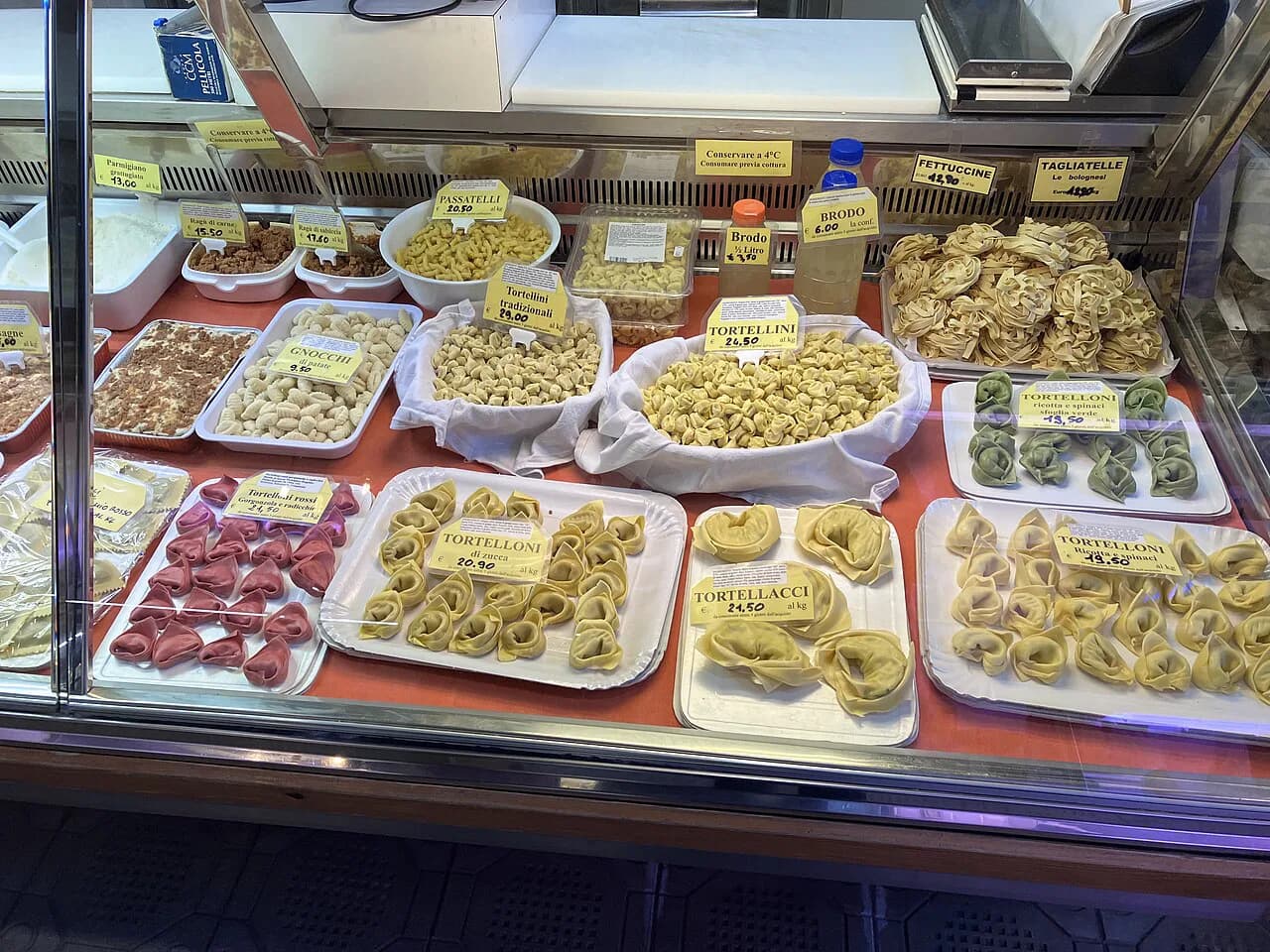
Modena's signature dishes are rich: tortellini in broth, tagliatelle al ragù, and boards of cured meat including the protected Prosciutto di Parma and Mortadella Bologna. That argues for a deliberately small breakfast, a coffee and one pastry, so you arrive at lunch hungry rather than merely willing. If your day includes a big restaurant booking, treat breakfast as a snack and leave the appetite for the main event.
Plan the day's eating around one anchor meal. If lunch is the anchor, keep breakfast to the bar and walk the centre afterwards; if dinner is the anchor, a seated pasticceria breakfast and a light lunch leaves room. The best restaurants in Modena fill up, so set the anchor first and let breakfast fit around it.
For a sense of how far Modena's dining reaches, the town's most famous kitchen is Massimo Bottura's Osteria Francescana, one of Italy's best-known restaurants. It is a dinner-scale experience, not a breakfast one, but it explains why so many visitors are in town in the first place.
Which Modena breakfast suits your day?
Choose the bar counter if your morning has a train, a market or a cathedral visit attached: a caffè and a cornetto, paid at the till first, and you are moving again. Choose a seated pasticceria table if breakfast is the plan itself, and use Pasticceria degli Dei on Viale Muratori for traditional Emilian pastry or gnocco fritto with salumi. Keep it small if lunch is going to be a proper Modena meal.
Explore more Modena food guides
Frequently Asked Questions
What is a typical Italian breakfast?
A coffee and a sweet pastry: an espresso or cappuccino with a cornetto or brioche, often taken standing at a bar counter. Portions are small because lunch is the larger meal, and in Modena the pastry might be a local speciality such as a barozzo or a slice of zuppa inglese.
Can you get a savoury breakfast in Modena?
Yes. Gnocco fritto, the puffed fried dough served with salumi and cheese, is made in house at Pasticceria degli Dei and can stand in for a sweet breakfast. It is filling, so share a plate if lunch is planned.
Do you pay before or after coffee in Modena?
At a bar counter you usually pay at the till first and hand the receipt to the barista; at a table you pay at the end. Watch the customers ahead of you, since the routine varies slightly between bars.
Sources
Notes for your next meal in Italy
Optional updates to our food guides.
You might also like
Continue reading
More guides you'll find useful