
Acetaia Giusti: Visiting Modena's Historic Balsamic Vinegar Cellars

A visit to Acetaia Giusti means one guided circuit through the family museum and the historic barrel attics, finishing with a tasting and a shop. The company has been making balsamic vinegar in Modena since 1605 and is now run by the seventeenth generation of the family, Claudio Stefani Giusti. This page covers what you see, how the vinegar is made, the difference between the everyday condiment and the traditional DOP, and how to arrange the visit.
What Acetaia Giusti is
Giusti is a family vinegar house rather than a working farm or a museum alone: the museum and the active acetaia sit together, and the barrels you walk past are still in use. The firm was founded in 1605 and is described as the oldest acetaia still active in producing balsamic vinegar in Modena, with seventeen generations behind it.
The current head of the family business, Claudio Stefani Giusti, speaks of combining the value of tradition with a modern company outlook, which explains why the visit is as much about production method as about old objects. Treat it as a food-landmark stop in Modena, not as a general sightseeing attraction.

Where it is: Contrada Quattro Ville and the old via Farini address
The visit takes place at Contrada Quattro Ville 155, on the edge of Modena, in a restored mid-nineteenth-century agricultural borgo that has housed the acetaia since 2018. The site, rather than the city-centre address, is what you put in a taxi app or a rental car's satnav.
The family's story starts in the centre of Modena, in via Farini, where Giuseppe Giusti's family set up the first wooden barrel batteries in an attic. Historically balsamic vinegar was made in lofts rather than cellars because the warmer, drier microclimate suited the process, and knowing this makes the low attic rooms on the tour easier to read.
Because the borgo lies outside the historic centre, the sensible shape of the day is a half-day in Modena's centre and a booked slot at Giusti, or the reverse. If you are building the rest of your day, the Modena Attractions: 4 Visitor Guides page sets out the other stops worth your time.

How the visit works: museum rooms, barrel attics, tasting
The tour is a guided walkthrough of the Giusti museum of the ancient acetaie and of the working barrel rooms, and it closes with a tasting in the shop, where the vinegars are also on sale. Expect the format of a guided visit rather than a self-guided wander, with a host explaining each stage.
The museum spans ten rooms of objects, documents and historic certificates that trace the family and the vinegar across four centuries, including the tradition of starting a barrel battery at the birth of a daughter as part of her dowry. That dowry custom was a practical investment: the vinegar matured over years and passed to the bride at marriage.
Pieces to look out for include the barrel known as A3, which Giuseppe Giusti took to Florence in 1861 for the Italian Exposition and which won a gold medal for a ninety-year balsamic, and the 1929 document signed by King Vittorio Emanuele III recognising the product. These are the concrete historical anchors rather than generic claims about prestige.
One travel blog describes the tour and the tasting as free at the time of its visit. Treat that as that account's experience and confirm the current arrangement when you book through the official Giusti channel.
The barrels and how the vinegar ages
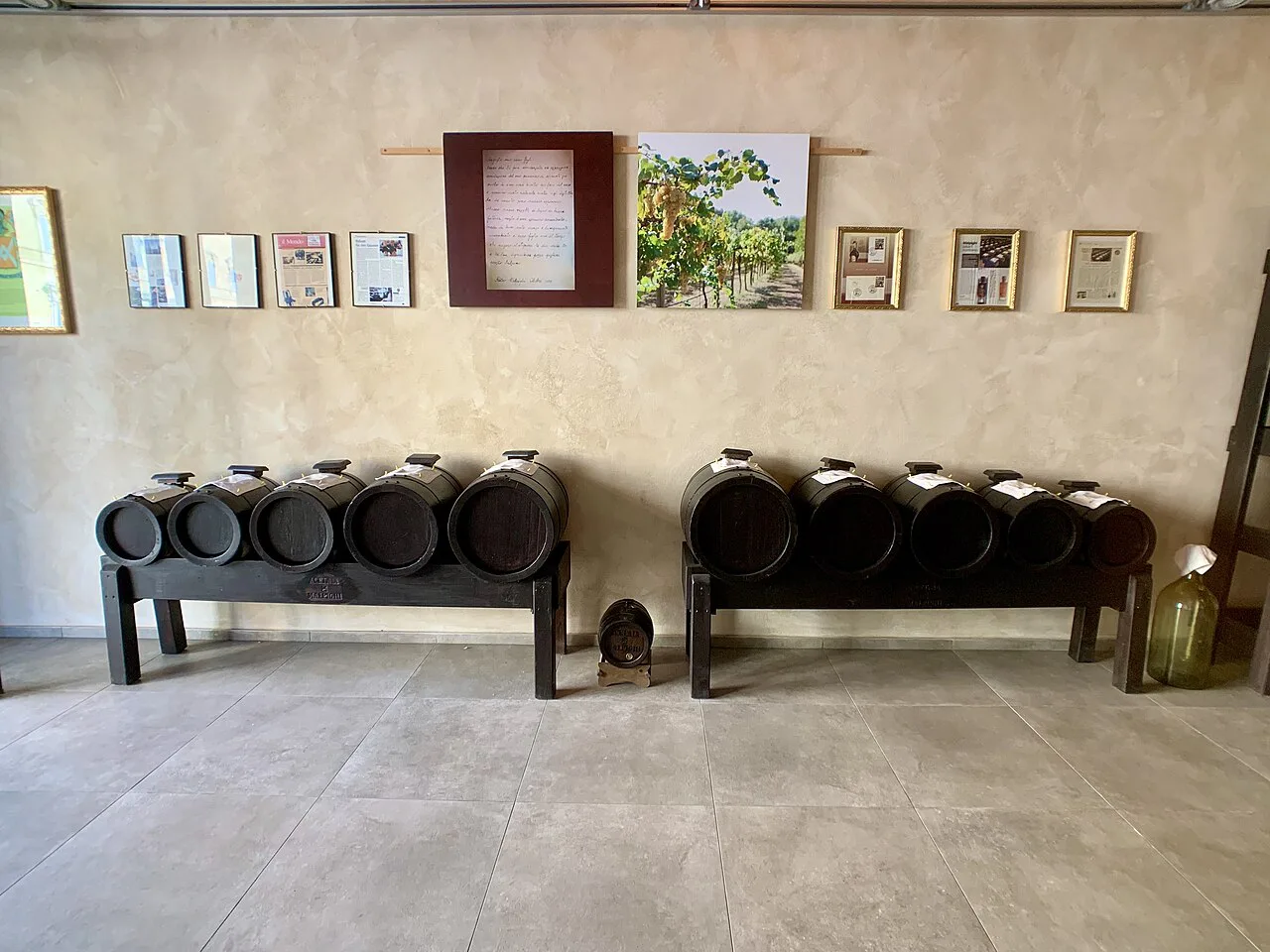
Around 600 historic barrels from the 1700s and 1800s sit in the attic rooms, and this is where the long affinamento, the slow maturing, actually happens. Older wood gives more intense aromas, so the age of the cask matters as much as the age of the vinegar inside it.
The base is cooked grape must from local Trebbiano and Lambrusco vines, aged in woods of different sizes and characters: chestnut brings tannin and a brown colour, cherry softens the flavour, juniper adds a resinous note and oak the familiar vanilla scent.
The batteries are kept going by rincalzi e travasi, the topping-up and decanting method: because liquid evaporates, vinegar is drawn from the smallest cask and each cask is refilled from the next size up, in a chain that keeps every barrel full. It is a similar idea to the solera system used for some spirits, and it explains why there is no single start and finish date for a batch.
What you taste: IGP versus traditional DOP
Tastings at Giusti cover a selection of the company's balsamic vinegars, described as both IGP and DOP. The traditional DOP is the strictly aged category, and the production rules set the minimum ageing for it; the IGP is a separate, more widely sold product. Treat the two as different things when you compare labels in the shop.
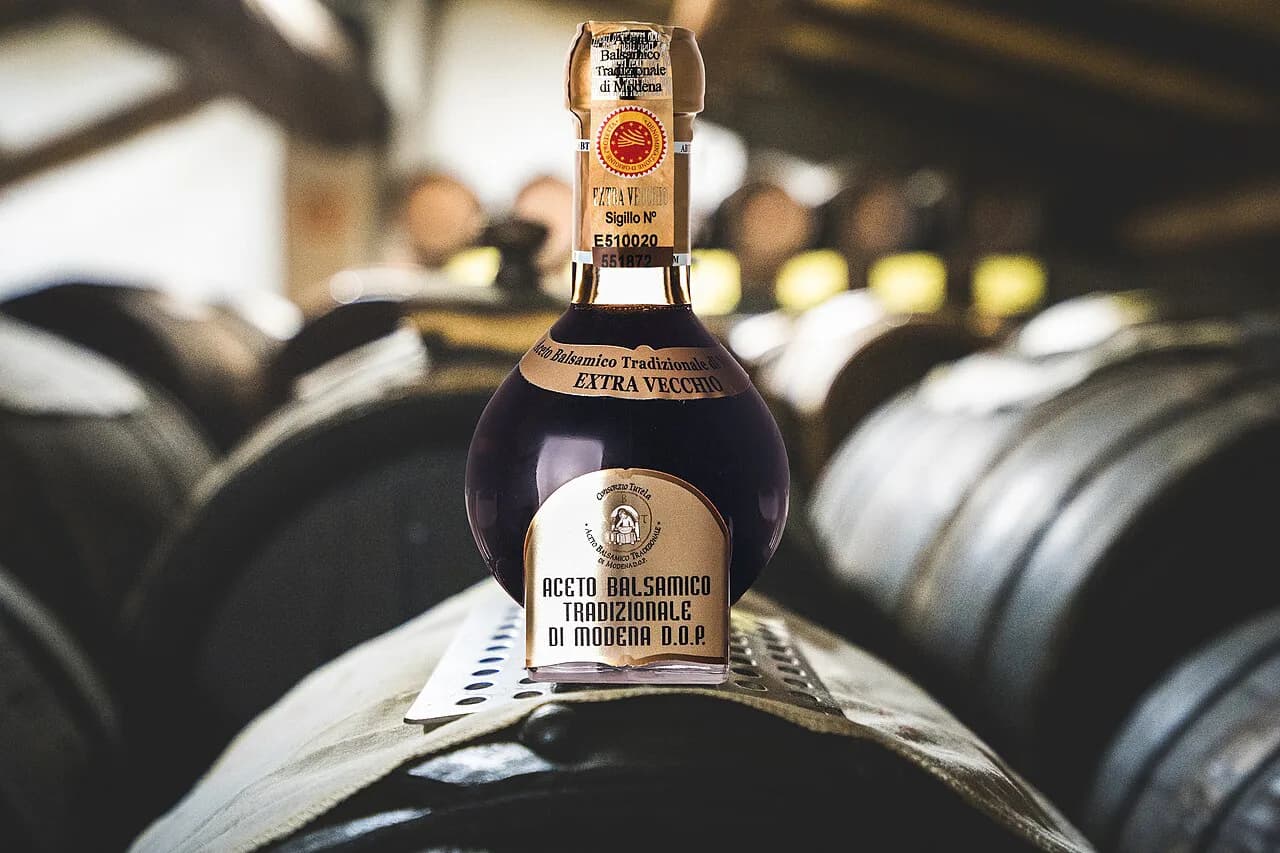
Within the traditional DOP, the disciplinare, the production rules, require a minimum of twelve years in wood, while the Extravecchio designation requires at least twenty-five. That minimum is the key number to hold on to when you compare labels and prices in the shop.
A practical approach at the tasting counter is to taste from the lighter, younger end upwards, so the density and sweetness of the older DOP registers as a step change rather than a blur. Ask the host which sample is IGP and which is DOP before you start, then decide what to buy on that basis.
Buying at the shop after the tour
The tasting ends in the shop, so the buying decision comes straight after the samples. Because the range runs from everyday IGP condiment to long-aged DOP, the useful question is what you will actually use it for: dressings, cooked dishes or finishing drops on cheese and strawberries.
Bottles are heavy and glass, which matters if you are flying hand-luggage only or moving on through several cities. If Modena is early in your trip, ask about packaging for transport before you commit to several bottles.
Booking ahead and how long to allow
Book in advance through the official Giusti site or by phone rather than turning up and hoping for a place, since the visit runs as a guided slot. The published contact number for bookings is 059 840135.
Allow a generous half-day for the round trip from central Modena, the visit itself and the tasting, and leave slack if you are relying on local transport to the borgo. The site is on the edge of town, so an unhurried buffer is more useful than a tight schedule.
Nearby: Modena's centre and the Mercato Albinelli
Back in the centre, the Mercato Albinelli is the historic covered food market and the obvious place to spend the rest of a food-focused day in Modena. Pairing it with the Giusti visit gives you the market side and the producer side in one trip.
For a coffee stop or a pastry before the visit, Antica Pasticceria San Biagio in Modena is the kind of named counter worth building into the morning.
If you want a second address with a different rhythm, Caffè Concerto in Modena fits neatly into a centre-based afternoon after the acetaia.
Is Acetaia Giusti worth booking?
Yes, if you want to understand what balsamic vinegar actually is and buy a bottle with confidence. The combination of the museum, the live barrel attics and a tasting in one guided slot makes it a compact, high-value stop for anyone who plans a trip around food.
Book through the official site, allow half a day, and build the rest of your eating around the centre. Check the current booking arrangements and any costs when you reserve.
Explore more Modena food guides
Frequently Asked Questions
What is the difference between IGP and DOP balsamic vinegar from Modena?
At Giusti the tasting covers balsamic vinegars described as both IGP and DOP. Aceto Balsamico Tradizionale di Modena DOP is the traditional, strictly aged product, and the DOP rules require at least twelve years in wood for the standard version and at least twenty-five for Extravecchio. The IGP is a separate category and is the more widely sold product, so the two are not interchangeable.