
Antica Pasticceria San Biagio: Modena's Historic Pasticceria

Antica Pasticceria San Biagio is the oldest pasticceria in Modena, trading on Via Emilia Centro in the historic centre and run by the Ronchi family for six decades. Treat it as a food errand rather than a sight: you come to buy pastries and biscuits by the piece or boxed, and to look at a shop interior that has barely shifted in layout for generations.
This guide covers where the shop sits, the short version of its history, the Modenese cakes and biscuits worth carrying away, and the balsamic vinegar on the shelves. It sticks to one place; everything else in the city is a passing reference.
What Antica Pasticceria San Biagio is
San Biagio is a traditional pasticceria with a marble interior, an old-style counter and a red sign that reads as a nineteenth-century shopfront. Behind the glass sit pasticcini, crostate and cakes in the Modenese repertoire, with boxes of chocolates, caramelle, liqueurs and wine stacked alongside. It is a shop first: you queue at the counter, point, and take your purchases away.
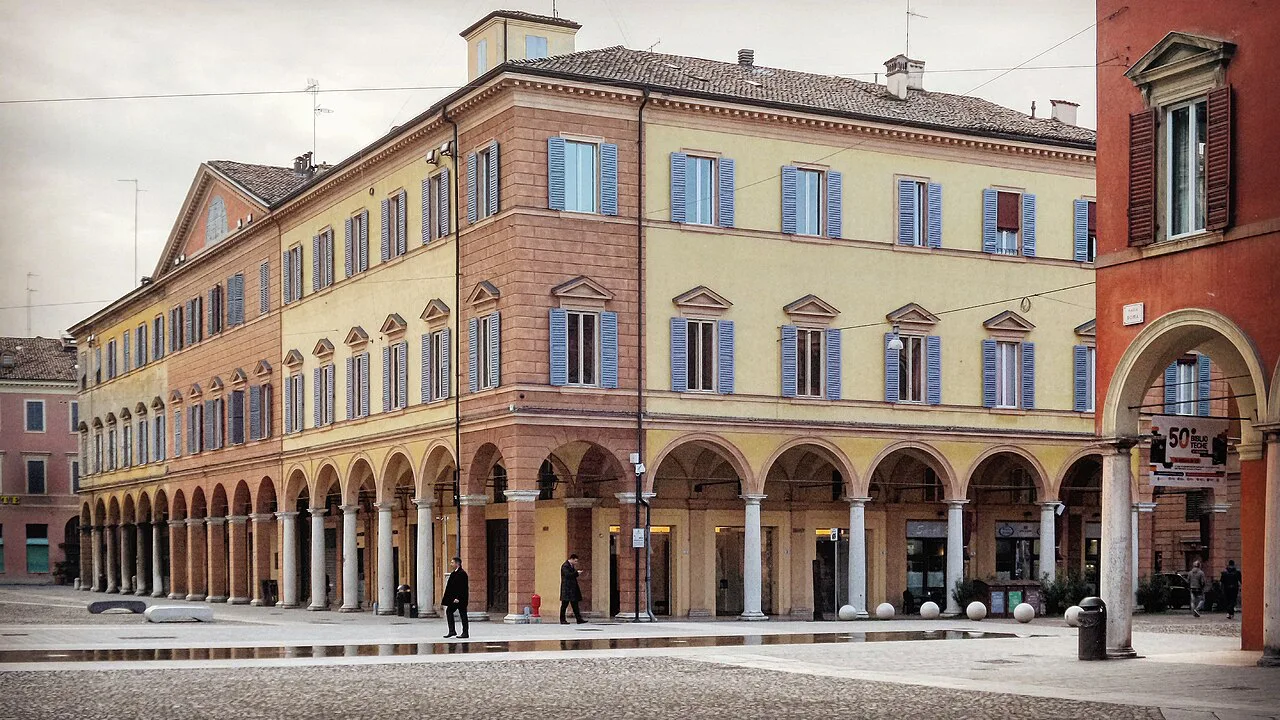
The reference point for visitors is the address on Via Emilia Centro, the straight Roman road that cuts through the centre of Modena; the shop is at number 77.

Where it is and how to reach it
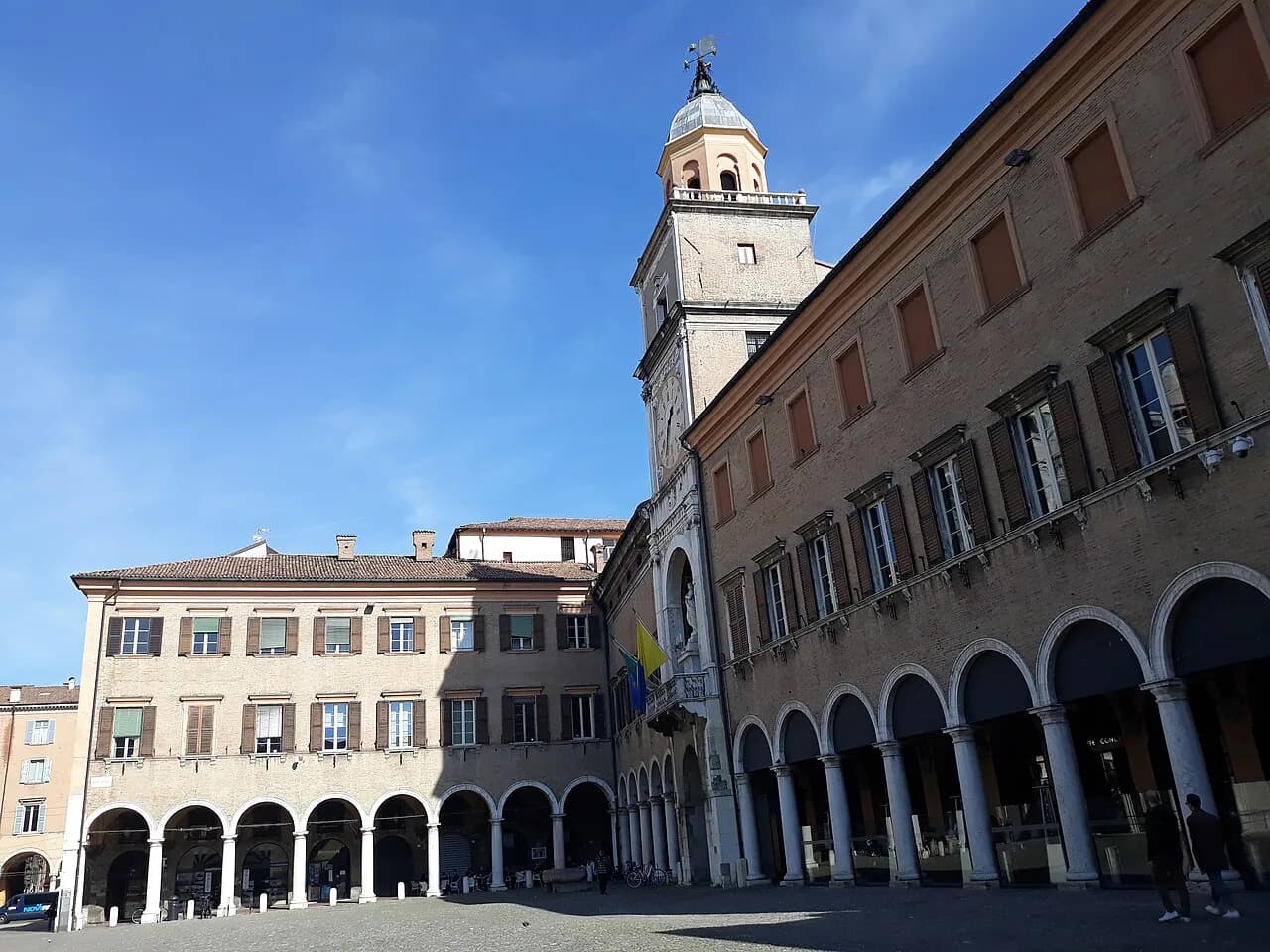
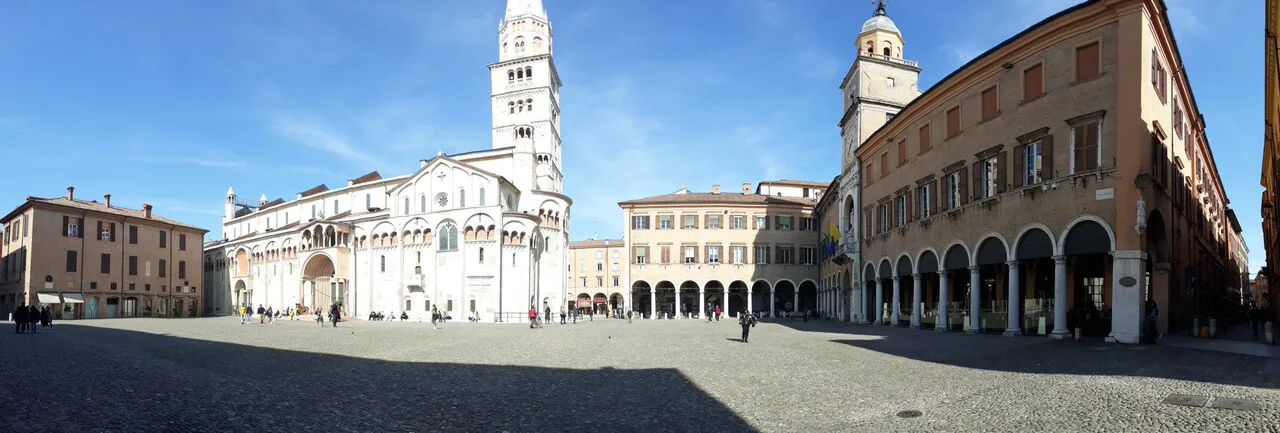
The shop sits on Via Emilia Centro, the central stretch of the Via Aemilia, within easy walking distance of Piazza Grande and the Duomo. If you are already in the historic centre, it works as a ten-minute stop between one errand and the next rather than a destination in its own right.
Modena's railway station is on the northern edge of the centre, and the Via Emilia run through the middle is straightforward to follow south on foot. Allow a short walk rather than a bus ride; the centre is compact and the pavements are flat.

A short history: Allegretti, Barbieri, Ronchi
The shop was founded at the end of the nineteenth century under the Allegretti family and only took the San Biagio name in 1955, though the fittings are older: the original marbles and the counter's arrangement survive. Bruno Barbieri, who had worked there as a errand boy from 1912, took the business over from the Allegretti family in the years after the Second World War, and the Ronchi family has led it for around sixty years.
Barbieri's European travels brought some of what the shop sells: marrons glacés (candied chestnuts), kranz (a twisted, enriched yeasted cake), Linzer torte (a latticed jam tart) and apfelstrudel (apple strudel) joined the Modenese range, alongside the torta delle rose. That Mitteleuropean layer is unusual in an Italian pasticceria and worth noticing as you choose.
The Bonissima and the botteghe storiche
In 2022, the shop's 120th year of trading, the mayor of Modena presented the Bonissima to the owners Iolanda Corradi and her son Dino Ronchi, recognising the business as one of the city's botteghe storiche, historic shops. The Bonissima is a civic award, not a food rating, and the shop's standing rests on longevity rather than on guidebook stars.
What to order: the Modenese classics
Start with torta delle rose, a coiled rose-shaped cake of layered, enriched dough that is the shop's signature and was a favourite of Luciano Pavarotti in a personalised version. Then try offelle, a flaky pastry sweet once sold in offellerie, the shops where it was dipped into cups of hot chocolate at the start of the twentieth century.
Amaretti di San Geminiano, the small almond biscuits named for Modena's patron saint, are the easiest thing to carry in a bag and the right choice if you want a taste of the city to take home. The shop also sells crostate, offelle and pasticcini from the Modenese tradition, so a mixed box gives you a representative spread without committing to a whole cake.
The Mitteleuropean pastries
Barbieri's travels put kranz, Linzer torte, apfelstrudel and marrons glacés on the counter next to the Modenese classics. If you only buy one cake, choose between the torta delle rose and the strudel: the first is the local statement, the second a reminder of the shop's unusual history.
Torta Barozzi: the original and the shop's own
Torta Barozzi, Modena's dense chocolate and almond cake, is made originally by Gollini in Vignola, and San Biagio holds authorisation to sell that original next to its own version. If you want the benchmark, say explicitly that you want the Gollini and expect a different result from the shop's own bake. The distinction is worth the question at the counter.
Balsamic vinegar and the shelves
Beyond the pastry counter, San Biagio stocks Aceto Balsamico Tradizionale and Aceto Balsamico di Modena from local producers, along with wines, liqueurs, chocolate boxes and caramelle. It works as a compact one-stop for edible gifts if you want to leave Modena with a bottle as well as a box of biscuits.
For a proper look at how balsamic is made rather than just a bottle to carry, Acetaia Giusti on the city's western edge is the obvious next stop, with its own visitor route through the barrels.
How the shop works
Service is at the counter: you indicate what you want, the staff box pastries, and you take your purchases away. For individual pastries and biscuits, you simply queue and buy; if you want a whole cake for a particular occasion, it is worth asking about ordering ahead so it is ready when you need it.
Cash is useful for small purchases, and a boxed cake travels better flat in a bag than upright in a rucksack. Confirm any current hours by phone or on the shop's own website before making a special trip.
Nearby for a savoury stop
For contrast after all that sugar, Caffè Concerto in Modena is a traditional café in the centre that works as a coffee or lunch stop in the same walk.
If you are heading out of the city towards the Via Emilia, Caseificio Bio Reggiani in Recovato di Castelfranco Emilia is a working dairy worth the detour for Parmigiano Reggiano.
Is San Biagio worth a stop in Modena?
Yes, if you want a genuine old-fashioned pasticceria with a specific product to buy: the torta delle rose for the table, the amaretti di San Geminiano for the journey home, and a bottle of balsamic if you have room. It is a twenty-minute stop, not an afternoon, and it earns its place by being the oldest in town rather than by spectacle.
Frequently Asked Questions
What are the typical sweets of Modena?
The local repertoire includes torta delle rose, a coiled layered cake; offelle, a flaky pastry once served in offellerie with hot chocolate; amaretti di San Geminiano, small almond biscuits; and torta Barozzi, a dense chocolate and almond cake associated with Vignola. San Biagio sells the Modenese classics and the Gollini torta Barozzi by authorisation.
Where does torta Barozzi come from?
Torta Barozzi is made originally by Gollini in Vignola, and San Biagio sells that original under authorisation alongside its own version. Ask at the counter which one you are buying.
Do I need to book at San Biagio?
For individual pastries and biscuits, no: you queue and buy at the counter. If you want a whole cake for a particular occasion, it is worth asking about ordering ahead so it is ready when you need it.