
Osteria de Borg: A Romagna Osteria in Rimini's Borgo San Giuliano

Osteria de Borg is the place to eat if you want Romagna cooking in Rimini rather than a menu pitched at the beach: a land-focused osteria in Borgo San Giuliano, the old fishing village on the far side of the Ponte di Tiberio. The kitchen rolls pasta by hand, buys from the Rimini hinterland and cooks meat from local farms, with several ingredients named as Slow Food presidia. This guide covers where it sits, which dishes to order, how the rooms and outdoor tables work, and what the listed prices look like.
What kind of osteria it is
This is cooking from the Romagna interior, not a seafood restaurant with a token ragù. The osteria describes its recipes as traditional, resting on carefully chosen produce that carries the flavours of the region, and it flags its meat as Slow Food presidio produce alongside beef cut and cooked on site. That means cured pork, cheeses, hand-made bread and piadina, and cuts cooked over coals or in the pan. It is a solid, generous table rather than a light lunch stop.
The house says it has been working alongside farmers and producers in the area for more than thirty years, which explains why the shopping reads like a map of the province: bread and piadina made on site, salumi and cheeses from the hills, and beef and pork from nearby farms. The cooking stays close to recipes any Romagnolo would recognise, with a little invention along the way. Expect robust flavours and portions to match.

Where it is and how to get there
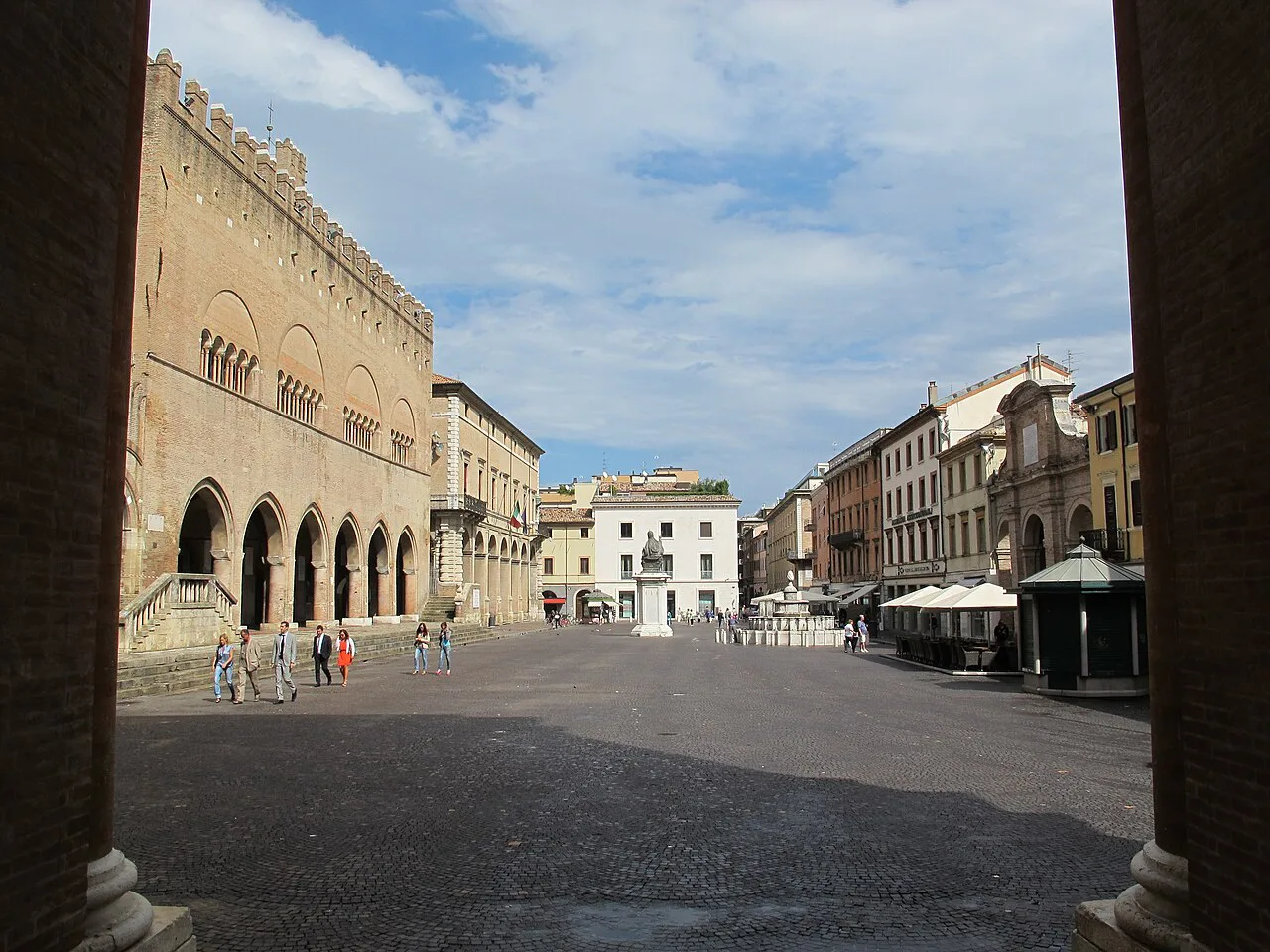
The address is Via Forzieri 12, in the heart of Borgo San Giuliano. From the historic centre you cross the Ponte di Tiberio; coming from the sea, you follow the Porto Canale inland to its city end, and the borgo opens up from there. Either way it is a walk of a few minutes rather than a taxi ride.
The setting earns the walk. Borgo San Giuliano is a knot of low, brightly coloured houses and small squares, many still carrying a majolica tile with the name of the family that first lived there, and the walls are painted with murals of local life and of Federico Fellini's characters, the director himself having been a regular in this quarter. A slow pass at sunset, when the light lands on the facades, is the best way to take it in.

The cappelletti and the handmade pasta
Start with the cappelletti, the kitchen's signature: small filled pasta served in chicken broth, or in a carrot version credited to Luisa, who arrived at the recipe through repeated experiments and created one of the dishes that stays on the menu. Order the broth version first if it is your only visit, and the carrot one if you are sharing. Both are the reason to book this table rather than another.
The rest of the pasta is rolled at the mattarello: strozzapreti (twisted hand-rolled pasta), tagliatelle, ravioli, passatelli (a breadcrumb and cheese pasta typical of Romagna), potato gnocchi and patacotc, a local shape worth trying if you have not met it before. Portions are priced as primi, so a pasta course followed by a secondo is the natural way to eat here.
The land menu: cured meats, piadina and grilled meat
The land side of the menu is where the osteria's identity sits. Bread, piadina (the thin Romagna flatbread) and cassoni (folded flatbreads stuffed and baked or grilled) are made in house, and the board of salumi and cheeses comes from the hinterland. For a first course, the crostini with seasonal toppings and the rustic antipasto, with cassoncini, rolled stuffed piadina, a fresh mushroom salad and crostini, give a good spread of the kitchen's range.
Main courses run to grilled and pan-cooked meat, white and red: salsiccia (Italian sausage), castrato (mutton), fiorentina and costata (the bone-in and rib steaks), and Mora Romagnola, an old Romagna pig breed with darker, more savoury meat. A listed favourite is galletto in umido, cockerel stewed with cherry tomatoes. If you want one plate that sums up the house, take a grilled meat and a contorno rather than a second pasta.
Sea and land, and how to finish
Plates alternate between sea and land, so a table can mix a seafood starter with a meat main without the meal feeling disjointed. The outdoor area is a pleasant setting for a longer lunch in mild weather. Leave room for the zuppa inglese, a trifle-like dessert of custard, sponge and liqueur that the osteria serves in its own version.
How the rooms work
At street level on Via Forzieri, the bar counter gives the first welcome, then a small room with the wood-fired oven and the wine shelves, with part of the open kitchen behind it. Upstairs is a larger, colourful dining room, hung with Pascucci-print cloths and old advertising posters, all wood tables and lamps made from old lids and aluminium pans. Outside, the little square in front becomes the dining room once the weather turns mild.
That layout decides how the evening feels. If you want the animation of the pass and the oven, ask for the ground floor; if you want quiet, the upstairs room is the better bet; if the sun is out, the piazzetta tables are the reason to come early. Booking is straightforward through the osteria's own site, and it is the sensible move for a weekend.
What it costs
ilGolosario's entry records average prices of 15 euros for antipasti, 10 for primi, 16 for secondi and 5 for dolci, with an average spend of 45 euros per person. Treat them as an indication of the level of the bill rather than a current quote: a pasta and a main with a shared starter lands near the middle of that range, and a full meat dinner with dessert pushes towards the top.
The same entry records 90 covers inside plus 25 and 80 more across the other rooms and the outdoor space, and notes a vegetarian menu, a doggy bag service and small dogs allowed, with cards accepted. That capacity explains why the square matters on a busy evening and why a table for two is easier to find than one for eight.
When to go
The osteria is open every day, with lunch from 12.00 to 15.00, and dinner from 19.00 to 22.30 Sunday to Thursday, running to 23.00 on Friday and Saturday. A weekday lunch is the calmest way in; a Friday or Saturday evening needs a booking, especially for the outdoor tables.
Before or after: the borgo itself
Build half an hour around the meal for the borgo. Cross the Ponte di Tiberio, read the family tiles on the houses, follow the murals, and end at the canal. For a wider plan of the city, the Rimini Attractions: 4 Visitor Guides collection sets this quarter alongside the rest of what is worth seeing, and the Mercato Coperto di Rimini is the other market-side stop if you are grazing your way through town.
Is Osteria de Borg worth the walk over the bridge?
Yes, for a particular kind of meal: hand-rolled pasta, a proper plate of Romagna cured meat and grilled beef or Mora Romagnola, in a borgo that rewards the walk from the centre. It is not the place for a quick pizza before the beach, and the cooking is hearty enough that a light dinner elsewhere the same day makes little sense.
Book for Friday or Saturday, aim for a weekday lunch if you want the room to yourself, and sit outside when the weather allows. If you have room afterwards, Gelateria La Romana in Rimini is the obvious next stop for a walk back towards the centre.