Breakfast in Lucca: What to Eat and Where to Go
Breakfast in Lucca means a pastry and a cappuccino at the bar. Here is how the Italian morning works, plus a bakery-café in the Sant'Anna quarter to start with.
On this page
Breakfast in Lucca is short and sweet: a cornetto and a cappuccino at a bar, eaten standing at the counter in ten minutes. The city does not really do the long hotel breakfast outside its hotels, and that is the pleasure of it — you eat what Lucchesi eat, then get on with the morning. This guide covers what to order, how the two-step bar routine works, why the cappuccino question is a habit rather than a rule, and which kind of counter to choose.
For a fuller picture of the city once the coffee is finished, the best restaurants in Lucca picks up where breakfast leaves off, from lunchtime tordelli to dinner.
What breakfast in Lucca looks like
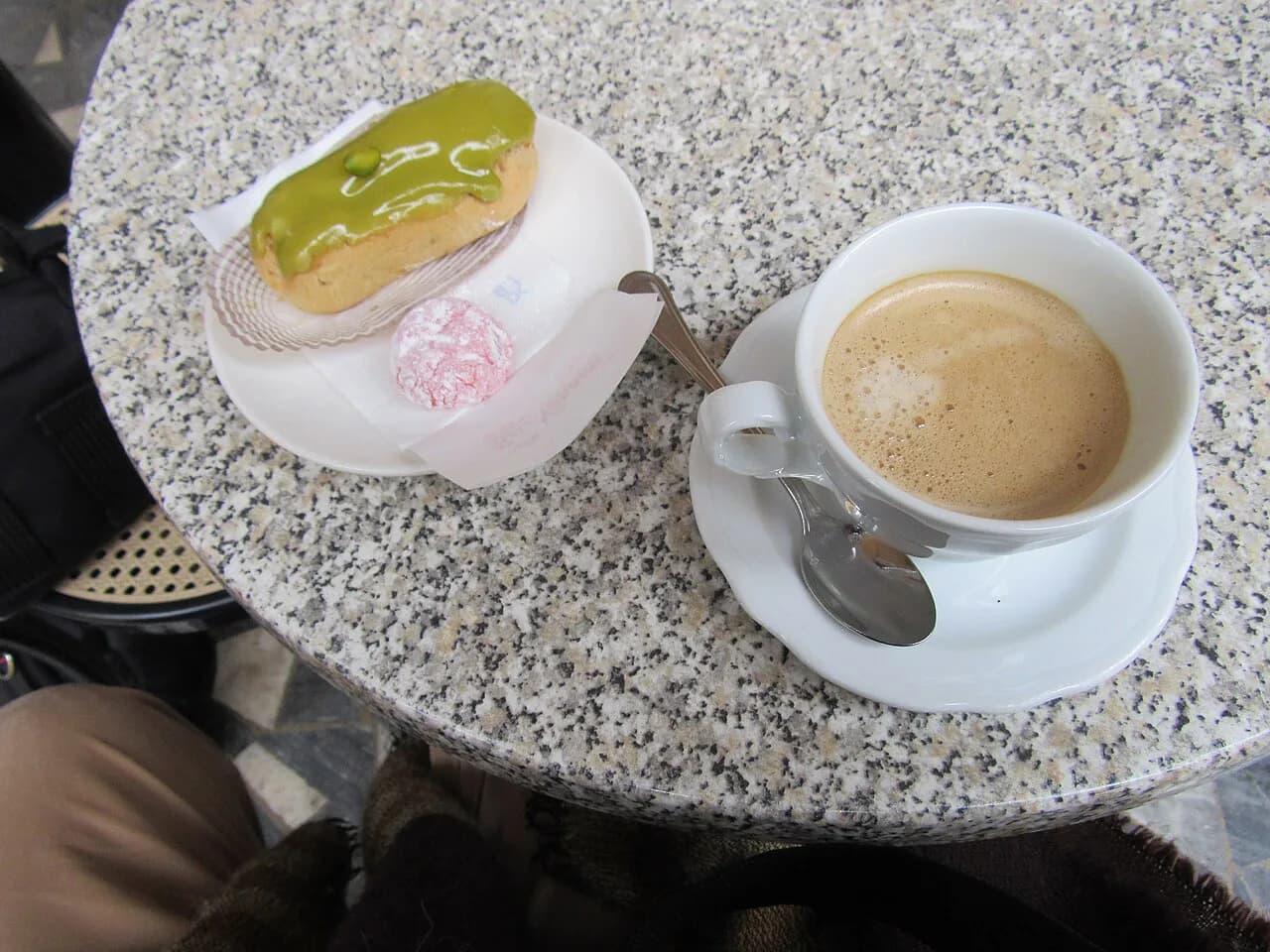
The standard morning is a cornetto — the Italian croissant, plainer and often lighter than the French version — with a cappuccino or a caffè, drunk at the bar. You will see the same scene in every quarter: a marble counter, a hissing machine, regulars in and out in minutes. Nobody sits down for a cooked breakfast on a weekday.
Cornetti come plain, stuffed with cream or jam, or topped with almonds, and many bars also sell paste, small pastries eaten with the coffee. A savoury option exists as well, usually a tramezzino — a soft white-bread sandwich — or a slice of focaccia for anyone who wants salt before noon. If you want eggs, look for a hotel or a brunch-style café rather than a neighbourhood bar.
Why the Italian breakfast is sweet
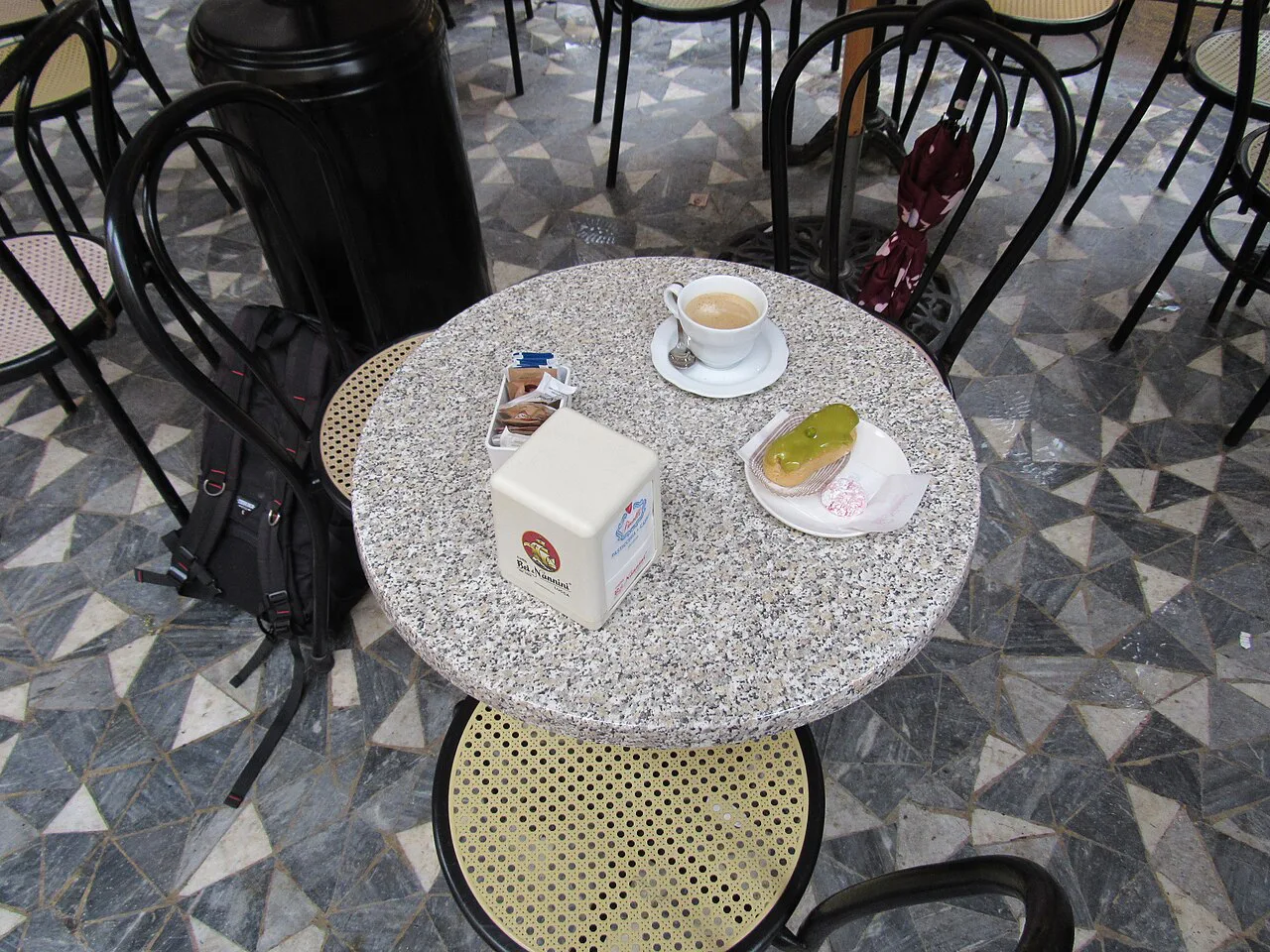
The sweet morning is a habit built around the bar, not a rule about health: the pastry is a small treat taken with coffee before work, and it is meant to be quick. That is why a cappuccino and a cornetto pair so naturally — both are small, both are finished standing up. A savoury breakfast exists, but it is the exception rather than the default.
The cappuccino rule is similarly a habit. Italians tend to drink milk coffee in the morning and switch to espresso after lunch, on the view that a big milky coffee sits heavily on a full stomach. Nobody will refuse you a cappuccino at four in the afternoon; you will simply be drinking it out of step with the room.
How to order and pay at the bar
The routine is simple once you know it: order at the counter, tell the barista what you want, and keep the scontrino — the receipt — because you pay at the till rather than to the person making the coffee. In some bars you pay first and hand the receipt to the barista; watch what the person ahead of you does and copy it. Coffee is drunk at the counter, often within a couple of minutes of being made.
Prices differ between standing at the bar and sitting at a table, and a table service charge can apply on top. If you want to sit outside with a view, expect to pay more than the person standing inside; if speed matters, stay at the counter. A coperto — a per-person cover charge — is normal at sit-down meals rather than at a bar, so it rarely appears on a morning coffee bill.
Pasticceria Stella in the Sant'Anna quarter
Pasticceria Stella is a historic pasticceria in Lucca's Sant'Anna quarter, on Traversa II Via Pisana, and it is a good example of a counter that does more than coffee. The pastry chef Joseph Dimasi signs the creations, which run from viennoserie — the French-style laminated pastries — to single-portion cakes, large leavened cakes and chocolate work. It also runs a caffetteria counter with a wide range of sweet and savoury products, so a sweet tooth and a savoury appetite can both be satisfied without leaving the room.
The same address handles lunch and aperitivo, with a daily lunch offer of hot and cold dishes and a choice of alcoholic and non-alcoholic mixes with something sweet or savoury alongside. That makes it useful if you want one stop for a pastry, then a sit-down plate later. The kitchen describes its lunch cooking as contemporary rather than traditional trattoria fare.
The address on Traversa II Via Pisana sits in the Sant'Anna neighbourhood rather than among the sights, which is part of the appeal: a local counter rather than a café pitched at the postcard trade. If you are staying in the old town, it is one stop outside the tourist core and easy to fold into a morning walk.
Breakfast near the walls and in the old town
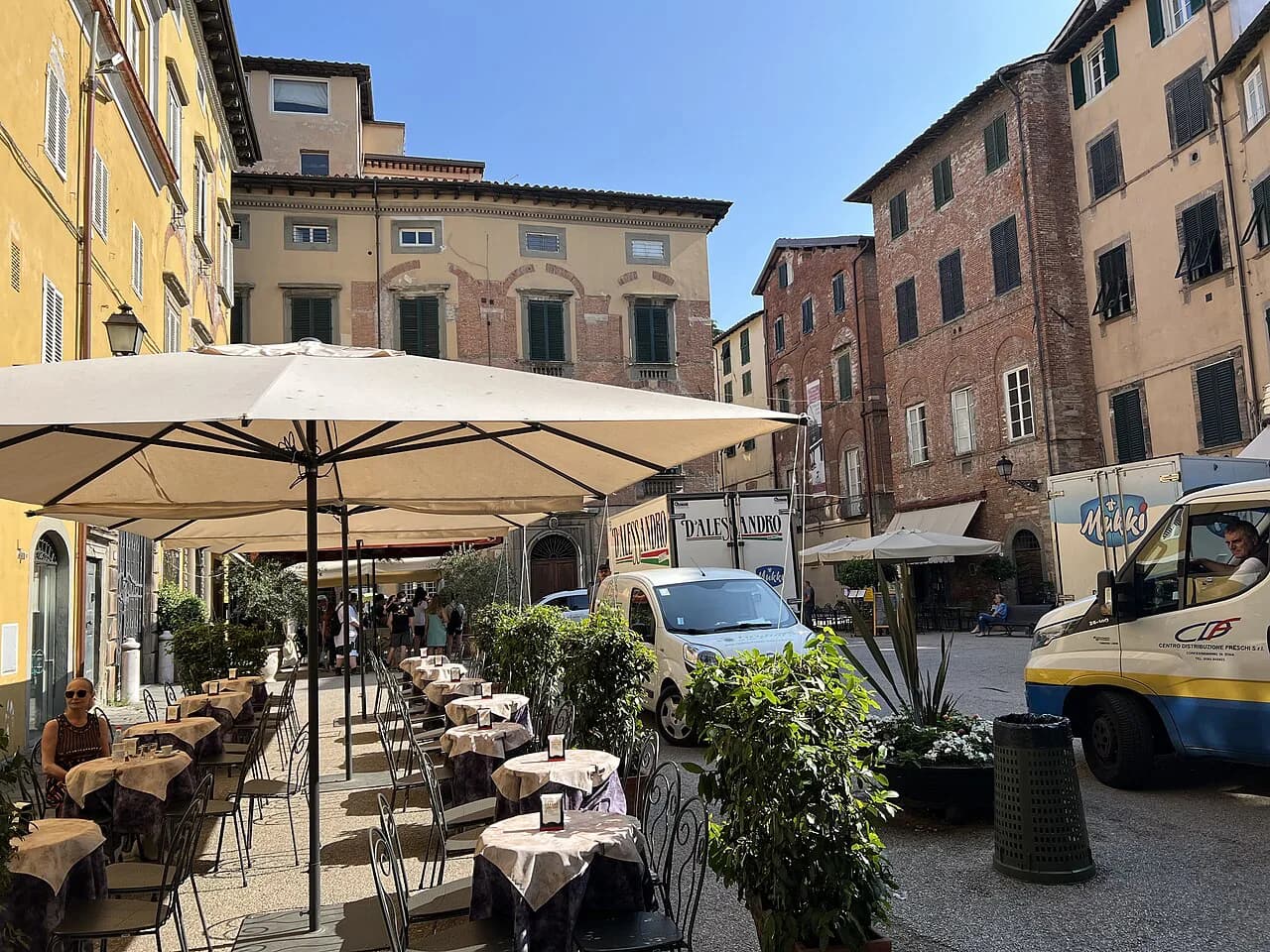
Inside the walls, the cafés you pass on Via Fillungo and around Piazza San Michele mostly follow the same bar formula: counter, coffee, cornetti, a few tables outside. Expect more English spoken and slightly higher prices close to the main squares, and a more workaday crowd a street or two back. The old town is compact enough that any café within the walls is a few minutes from the next, and the same morning routine carries over into the city's aperitivo culture later in the day.
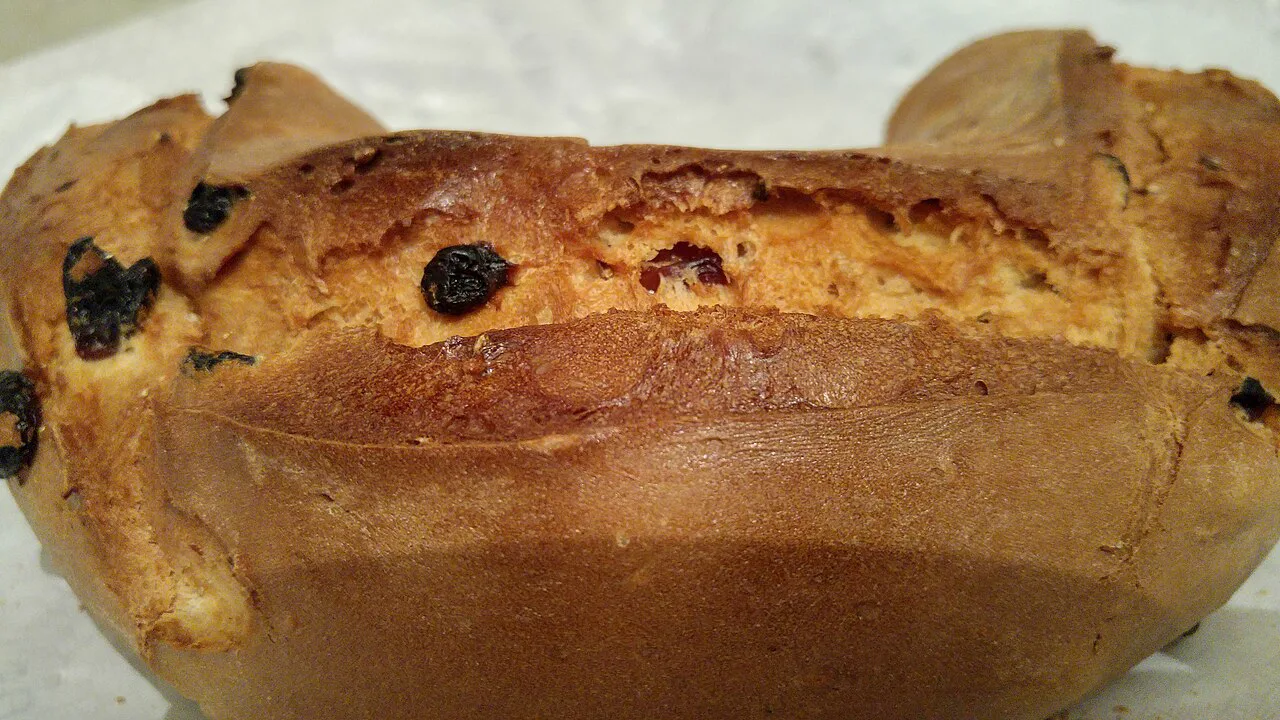
For something sweet to carry with you, buccellato di Lucca is the city's own answer: a ring-shaped loaf with raisins and aniseed, sold by weight in bakeries and often eaten at breakfast with a coffee. It keeps well, so it makes a sensible thing to buy in the morning and eat later on the walls.
Hotel breakfasts are a different matter, and a buffet is normally for guests rather than walk-ins. Palazzo Dipinto, in Piazza del Palazzo Dipinto, describes a buffet breakfast of fresh, quality products and, in summer, seating out in the square in front of the hotel; the hotel's own page is the place to check what is on offer if you are staying there.
Sitting down versus standing
Standing at the bar is the faster and cheaper option, and it is what most Lucchesi do on a working morning. Sitting at a table buys you time and usually a view, at the cost of a table charge and a slower pace. If you are on your way to a train or a museum slot, stand; if you want to read the paper and watch the piazza wake up, sit.
A practical compromise is to have your coffee standing and then take a second stop for something more substantial, splitting the morning between a bar and a pasticceria. The pasticceria model — a counter with a wider range of pastries, cakes and savoury items — suits a slower start and gives you more choice than the average bar.
A fuller morning: pasticcerie that turn into lunch
Some pasticcerie in Lucca are not only morning places. Pasticceria Stella runs a lunch service alongside its pastry counter, with a daily menu of hot and cold dishes, and an aperitivo offer later in the day. If your idea of a good morning stretches into a long sit-down meal, a pasticceria like this one covers both halves of the day.
That dual role is worth knowing when you plan: a single address can serve a cornetto at nine and a plate of pasta at one, which saves moving between venues. It also means a pasticceria can be busier at lunch than at breakfast, so the morning is often the calmer time to visit.
For the rest of the day, pasta in Lucca usually means tordelli lucchesi, the local ravioli-like filled pasta served with a meat ragù, and the dish turns up on most lunch menus in the city. It is the natural follow-on from a morning spent at a pastry counter.
Bar, pasticceria or bakery for your morning stop
Choose a bar if speed and coffee are the point: you will stand, drink, eat a cornetto and be out in minutes. Choose a pasticceria if you want a wider pastry selection, a seat and the possibility of staying for lunch. Choose a bakery if you want bread, buccellato or something to take away for later in the day.
For most visitors a bar does the job on a first morning, and a pasticceria is the better second stop once you have worked out the routine. The Sant'Anna quarter, with Pasticceria Stella on Traversa II Via Pisana, is a good place to practise it away from the main tourist flow.
Where to Have Your First Lucca Morning
Start with a bar: a cornetto and a cappuccino at the counter is the honest version of breakfast in Lucca, and it costs little. Once you have that routine, walk out to the Sant'Anna quarter and try Pasticceria Stella for a wider pastry counter and the option of lunch in the same room.
If you would rather sit down with a view, pay the table charge and take your time near Piazza San Michele; if you want to eat where the city works, head outside the walls. Either way, keep the morning short and leave the long meal for later.
Explore more Lucca food guides
Frequently Asked Questions
What is a typical Italian breakfast?
A cornetto and a coffee, usually a cappuccino or an espresso, taken standing at a bar counter. Some people add a small pastry or a tramezzino, and a few prefer a slice of focaccia, but the sweet, quick formula is the standard.
Do Italians really never drink cappuccino after lunch?
It is a habit rather than a law. Milk coffee is normally a morning drink in Italy, and many people find it heavy after a full meal, so they switch to espresso. Ordering one later will not cause offence.
What food is Lucca known for?
Among the local specialities are tordelli lucchesi, a filled pasta served with meat ragù, and buccellato di Lucca, a raisin and aniseed ring loaf that is often eaten at breakfast. Both are worth trying during a stay.
Sources
Notes for your next meal in Italy
Optional updates to our food guides.
You might also like
Continue reading
More guides you'll find useful