Casunziei: Cortina's Beet Ravioli and How to Eat Them
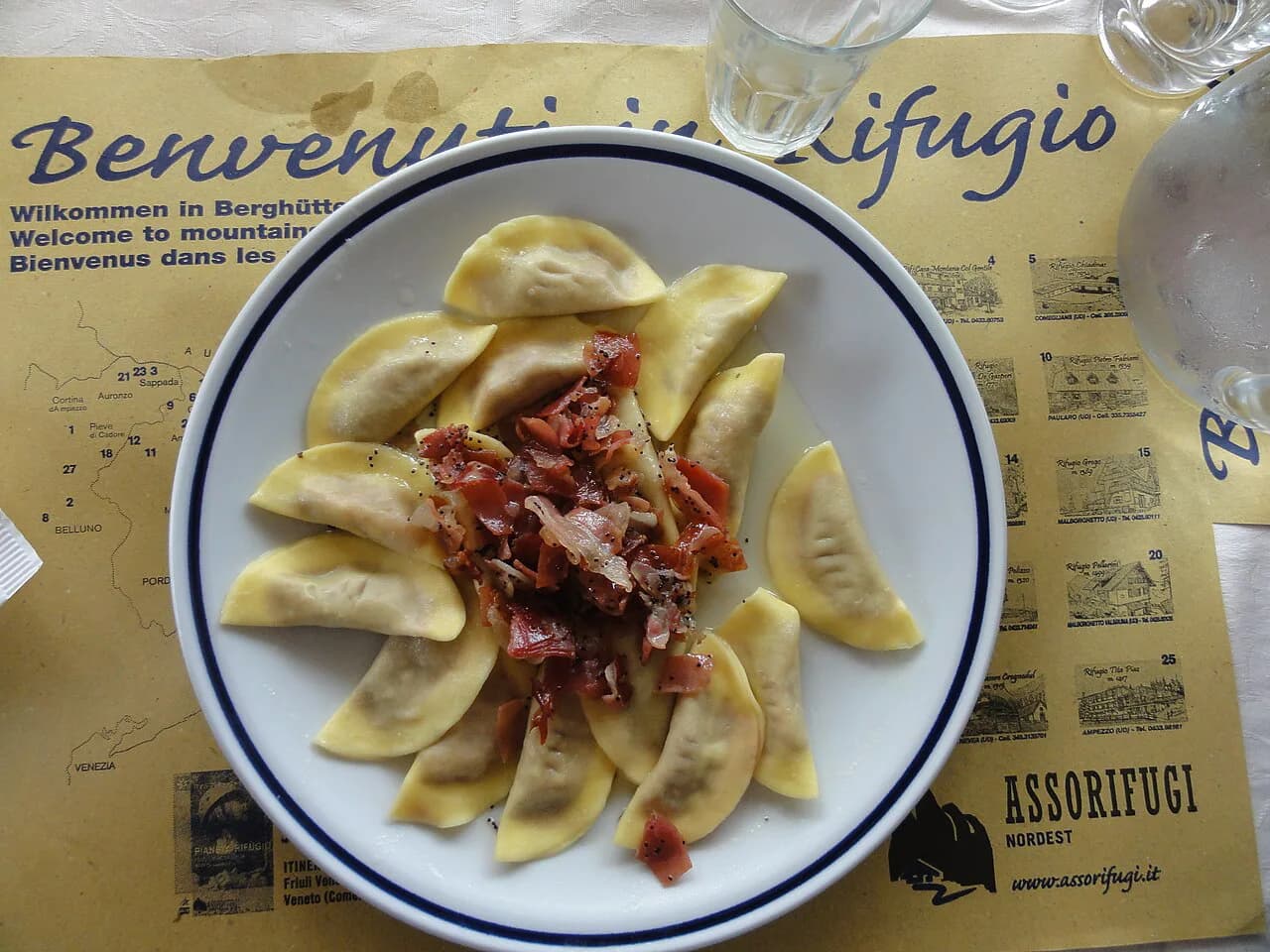
Casunziei are Cortina d'Ampezzo's beet-filled ravioli, served with melted butter, Parmigiano Reggiano and poppy seeds. Here's what arrives on the plate.
On this page
Casunziei are Cortina d'Ampezzo's signature pasta: small half-moon ravioli made from very thin fresh egg pasta, filled with red beetroot and served with melted butter, Parmigiano Reggiano and poppy seeds. They arrive sweet, earthy and rich in one plate, which is why they turn up on menus across town.
This guide explains what casunziei are and how they are made, what the beetroot filling tastes like under the butter, the ricotta and turnip variations worth spotting on a menu, and the other Ampezzano dishes that usually sit beside them. It also covers how to order them and where to buy them to cook at home.
What casunziei are: beetroot, thin pasta and browned butter
A plate of casunziei starts with the dough: fresh egg pasta rolled thin enough that the filling shows through as a dark ruby patch. The filling is red beetroot cooked until soft, drained well so it does not soak the pasta, then crushed and seasoned. Each circle of dough is folded in half around a spoonful of filling and sealed with the tines of a fork, giving the classic half-moon shape.
The dressing is deliberately plain: butter tossed with poppy seeds, kept off the heat before it browns, then used to coat the cooked casunziei, which are finished with Parmigiano Reggiano. Nothing in that list hides the beetroot, which is the point. If you are used to ravioli under a thick sauce, expect something quieter and more buttery instead.
La Cucina Italiana describes casunziei as one of Cortina d'Ampezzo's most traditional dishes and a speciality of the Dolomites, the mountainous region of north-east Italy. The name ‘casoncelli’ derives from ‘casereccio’, and the recipe was historically made with the few ingredients available, with variations widespread from Lombardy to Veneto.

What they taste like: sweet beetroot under rich butter
The first thing you notice is colour: the beetroot bleeds slightly into the butter, staining it pink. The flavour is sweet and earthy rather than sharp, because the beetroot is cooked, drained and crushed before it goes into the pasta. Underneath sits the fat of the butter, the faint crunch of poppy seeds and the savoury edge of Parmigiano Reggiano.
It is a soft, gentle plate rather than a punchy one, so it suits the start of a mountain meal better than a heavy main. Order a portion each if casunziei are your primo, or share one between two if you are working through canederli and grilled meat afterwards. A light red or a crisp white from the Veneto both sit comfortably alongside the butter without fighting the beetroot.

Variations to look for: ricotta, smoked ricotta and yellow turnip
Menus and recipes do not all treat casunziei the same way. La Cucina Italiana notes that some prefer them seasoned with smoked ricotta, which adds a smoky, savoury note to the sweet beetroot, while others add ordinary ricotta to the filling itself for a softer, creamier centre. If you see either, the plate will taste noticeably different from the classic beetroot one.
Traditionalists prefer adding yellow turnips to the filling. La Cucina Italiana calls the turnip the secret ingredient for many restaurants, though it is not so easy to find them anymore. If a menu mentions rapa gialla or simply turnip, order it: you are getting the older expression of the dish.
None of these versions is a gimmick. They reflect how a mountain kitchen worked with the few ingredients available, and the fact that casunziei spread from Lombardy to the Veneto in different local forms. Treat the beetroot-and-butter plate as the baseline and the turnip or ricotta versions as the regional accent.
Casunziei in the Ampezzano kitchen: canederli and spätzle
Casunziei rarely appear alone on an Ampezzano menu. They sit alongside canederli, the bread dumplings served in broth or with butter, and spätzle, small soft egg noodles often finished with cheese or browned butter. Together these make up the core of Cortina's mountain cooking: starch, dairy and whatever the valley could produce.
A sensible order for two is one plate of casunziei to start, a canederlo each, and then something grilled or braised to follow. If you order all three as separate courses, you will be eating a lot of butter and bread, so pace yourself. The best restaurants in Cortina are the places to look for these plates in town.
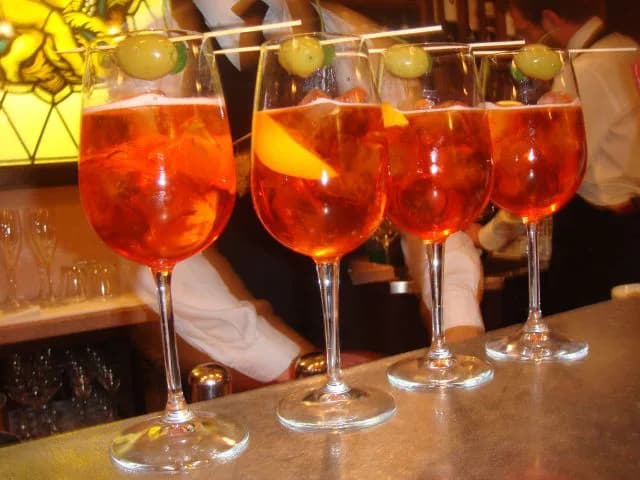
Aperitivo in Cortina d'Ampezzo runs on a different rhythm from the dining room, usually a glass and a small snack standing at a bar before the evening meal. If you take one, keep it light so the butter and beetroot still land properly at dinner.
Where to buy casunziei and Ampezzano specialities in Cortina
Panificio Ghedina on Pian da Lago, 19 is a Cortina bakery that also sells gastronomia, the prepared dishes and specialities of the Ampezzano tradition. Alongside bread and biscuits, the shop produces grissini, both savoury and sweet with a chocolate coating, and sells canederli, casunziei and spätzle.
That makes it a useful stop if you are self-catering or want to take something back to a flat. Buy the casunziei to cook yourself, and pick up grissini and biscuits for the journey home. If you want to eat them out, the best pasta in Cortina covers restaurants where stuffed pasta and fresh pasta are the reason to book.
Casunziei in the wider stuffed-pasta family: casoncelli and beyond
Casunziei belong to a broad family of stuffed pastas that runs from Lombardy into the Veneto. The name casoncelli shares a root with casereccio, meaning homemade, and casoncelli are widespread in different variations across northern Italy. The Ampezzano version is vegetable-led, but the technique, a thin sheet folded around a spoonful of filling, is the same.
If you are travelling through northern Italy, tasting casunziei in Cortina and casoncelli further west is a fair comparison, and you will notice how much the filling changes. In Cortina the beetroot and turnip reflect a mountain kitchen built around what the valley could produce, while the butter and poppy seeds reflect the dairy larder of the Dolomites.
How to order and eat them
Order casunziei as a primo, the first course, not as a side to a main. Portions are usually modest, so one plate per person works if you are having a secondo afterwards, and it is fine to share a single plate as a starter for two. The classic plate arrives dressed with melted butter, Parmigiano Reggiano and poppy seeds.
When you eat them, use a fork and knife, not a spoon, and cut one at a time so the filling stays inside. A glass of white wine, or a light red from the Veneto, works comfortably with the beetroot and dairy.
Should you order the casunziei?
Yes, at least once: casunziei are the clearest expression of Cortina's mountain cooking on a plate, and they are a better introduction to the Ampezzano tradition than a generic bowl of pasta. Order the classic beetroot version with butter, Parmigiano Reggiano and poppy seeds first, then try the smoked ricotta or yellow turnip variations if you see them.
If you want to cook them yourself, buy them at Panificio Ghedina and follow the simple butter-and-poppy-seed finish rather than adding a sauce. If you would rather eat out, use the best restaurants in Cortina to find a table, and open with a plate of casunziei before moving on to canederli or something grilled.
Explore more Cortina d'Ampezzo food guides
Frequently Asked Questions
How do you say casunziei?
Casunziei is a local Ampezzano form related to the standard Italian casoncelli, which itself shares a root with casereccio, meaning homemade. If you are unsure how the kitchen says it, point to the menu.
Are casunziei always made with beetroot?
The classic Cortina version uses very thin fresh egg pasta filled with red beetroot, finished with butter, Parmigiano Reggiano and poppy seeds. Traditionalists prefer adding yellow turnips to the filling, though they are not so easy to find anymore, and some recipes add ricotta or smoked ricotta.
What is the difference between casunziei and casoncelli?
Both are stuffed fresh egg pastas from northern Italy, and the name casoncelli shares a root with casereccio, meaning homemade. Casoncelli are widespread from Lombardy to the Veneto in many variations, while casunziei in Cortina are made with very thin egg pasta and a red beetroot filling, finished with butter and poppy seeds.
Sources
Notes for your next meal in Italy
Optional updates to our food guides.
You might also like
Continue reading
More guides you'll find useful