Cinque Terre Food: What to Eat, from Anchovies to Pesto
Cinque Terre food means Monterosso anchovies, trenette al pesto and focaccia. Here is what to order across the five villages and which restaurants do it well.
On this page
Cinque Terre food begins with anchovies, pesto and focaccia, and the best eating happens when you order those Ligurian classics instead of a generic Italian menu. The five villages sit in a tourism-heavy national park, so the gap between a memorable meal and a forgettable one is wider here than in most of Italy. This guide covers what to order village by village, the restaurants worth planning a day around, and how a sit-down meal differs from a quick counter stop.
What Cinque Terre cooking is built on
The five villages — Monterosso al Mare, Vernazza, Corniglia, Manarola and Riomaggiore — are stacked against the Ligurian cliffs, with narrow terraces above them and a cold, deep sea in front. That geography dictates the menu: anchovies and other small fish from the water, olive oil and lemons from the terraces, and pasta made to carry pesto rather than heavy sauces. Liguria is the coastal region of north-west Italy between Tuscany and the French Riviera, and its cooking is lighter and more herb-driven than the butter-and-ragù cooking further north.
Restaurants in Cinque Terre are not uniformly local in what they serve. According to La Cucina Italiana, several restaurants in the park buy frozen seafood from China and Ethiopia and present it as Mediterranean, which matters in a place where the water off Monterosso is full of anchovies. That reporting does not name the offenders, so the practical move is to ask where the fish comes from and to favour places that display the day's catch or name the fishing town on the menu.
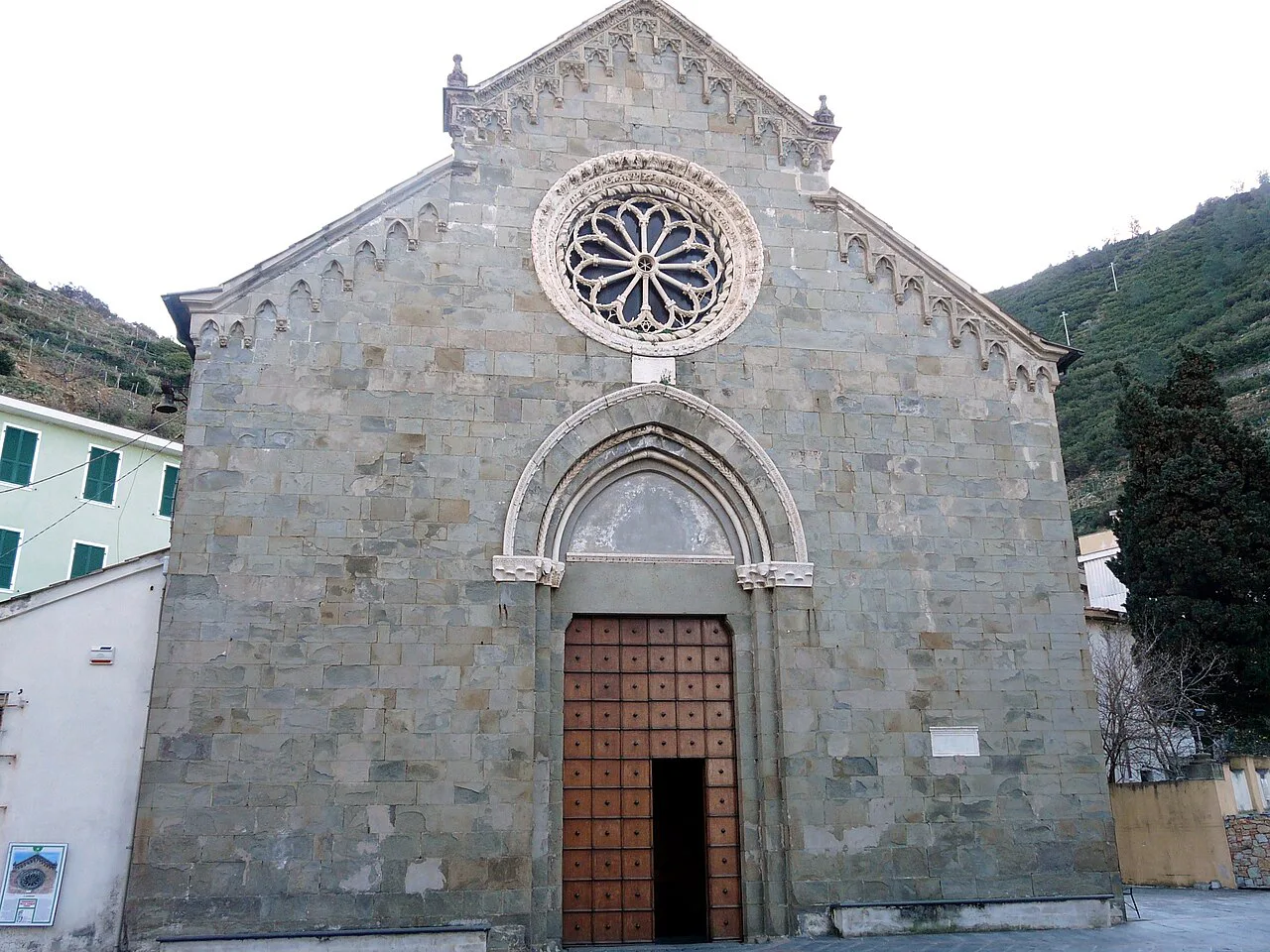
Start with anchovies: Monterosso anchovies and the dishes built around them
Monterosso anchovies are the local speciality most worth building a meal around, nicknamed pan du ma — bread of the sea — by locals. Order them simply, fried or marinated, or in a pasta that lets them carry the dish. The most famous version is L'Acciugata alla Monterossina at Ristorante Miky, an anchovy spaghetti that, as La Cucina Italiana describes it, is an homage to the town drawing on the fishing boats, caper plants and wind-blown olive trees of the chef's childhood.
At La Cantina di Miky, the sister restaurant in Monterosso's New Town, the anchovy tasting presents the fish six ways — lemon-cured, in carpione (pickled), salted with butter, fried, grilled and stuffed — which is the best single order for a first-timer who wants to understand why the anchovy matters here. Follow it with a pasta al pesto or the salt-baked whole fish at Ristorante Miky, which changes with what the market has that day.
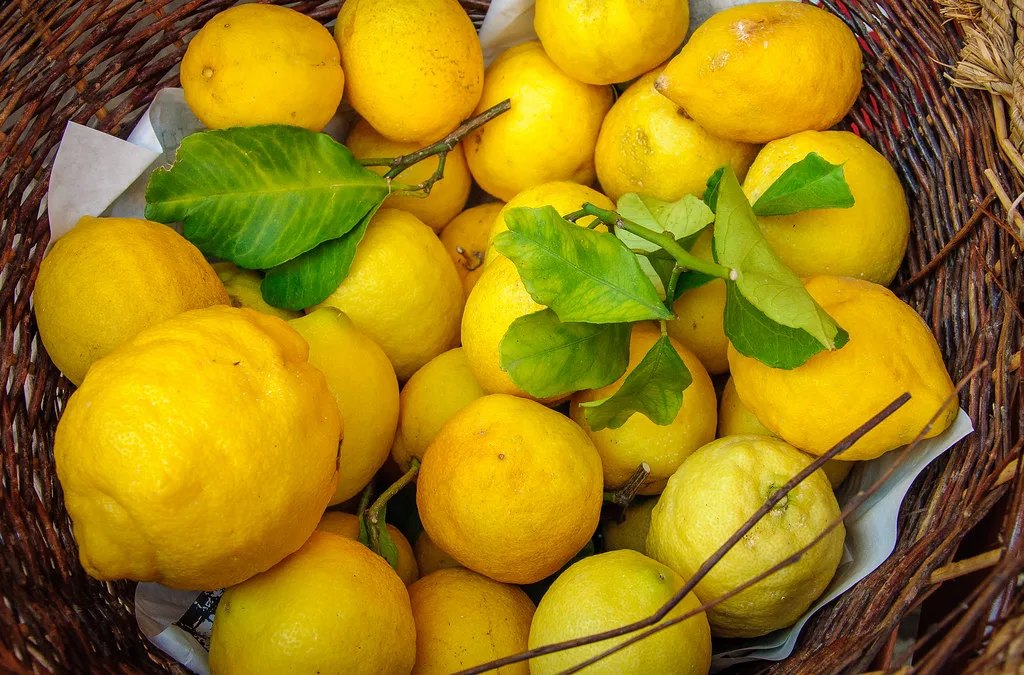
Pesto and pasta shapes: trenette al pesto and what the sauce is made from
Pesto in Liguria is made from basil, pine nuts, garlic, salt, olive oil and a hard cheese, pounded rather than blended so the basil stays green and sharp. The classic pairing here is trenette al pesto, a long, flat pasta that holds the sauce; you will also see pesto with gnocchi and with short shapes. Order it as a first course rather than a main, because Ligurian portions are built for a multi-course meal.
Look for pasta dishes that name a local ingredient rather than a generic sauce — pappardelle with leeks and sausage from Pignone, or gnocchetti with baccalà (salt cod), Taggiasca olives and cherry tomato, both served at Agriturismo Missanega above Monterosso. Taggiasca olives are the small, dark Ligurian olive that also makes the region's oil, and they turn up in pasta, on focaccia and alongside fish.
Focaccia and savoury bakes for a quick lunch between villages
Focaccia is the Cinque Terre lunch. The Ligurian version is thin, dimpled and generous with olive oil, and it is sold by weight or as a filled slice at bakeries and focaccerie in every village. A piece of focaccia and a coffee at the bar costs far less than a sit-down lunch and leaves you free to spend the afternoon walking or on the train between villages.
Treat a bakery stop and a restaurant meal as different decisions. The bakery is for a quick lunch, a picnic on the rocks or a snack before the train; the restaurant is for dinner, when you sit down, order anchovies and pesto, and pay a coperto (a per-person cover charge added to the bill). If you want a sit-down lunch in Manarola rather than a slice, plan it around the day's train timetable so you are not eating at 3pm.
Restaurants worth planning around, village by village
In Manarola, Cappun Magro is a small gourmet restaurant serving products from the surrounding terraces, with a wine selection drawn from the slopes above the village. Regina di Manarola is a more recent opening serving local cooking with fusion touches. Both are the kind of place to book for dinner if you want a proper Ligurian meal rather than a tourist menu, and both sit in a village small enough that you will pass them on foot.
In Monterosso, Ristorante Miky has been serving seafood-centric cooking since 1980, with a sawn-off ship turned into an ice bed outside displaying the day's catch. Agriturismo Missanega sits in the hills above the village, reached by an hourly shuttle from Monterosso, and its menu draws on an organic garden and ingredients from nearby inland towns. These are the two ends of the scale: a polished seafood restaurant in the New Town and a rustic hilltop farm stay with rooms.
If you are staying in or near Manarola, the Best Restaurants in Manarola are worth planning a dinner around, and the village is compact enough to walk between them in minutes. Elsewhere, the pattern is the same: the more specific the menu — a named fishing town, a named pasta shape, a named olive — the better the meal tends to be. Use the village you are sleeping in as your base and take the train to eat elsewhere only when a particular dish justifies the journey.
Where the seafood on your plate comes from and why it matters here
Cinque Terre is a UNESCO-protected national park and a tourism darling, and that combination makes eating genuinely tricky: demand is high, margins are tight, and frozen imported seafood can pass as local. La Cucina Italiana reports that some restaurants in the park do exactly that, which is why the anchovy — abundant in Monterosso's waters — is the safest and most satisfying order. A restaurant that names the boat, the town or the day's catch is showing you its sourcing; one that offers a long menu of generic seafood dishes is not.
How a meal works: courses, coperto and paying
A restaurant meal in Cinque Terre follows the Italian pattern: antipasto, primo (usually pasta), secondo (fish or meat) and contorno (a vegetable side), with dolce at the end. You do not have to order every course, but pasta is a first course, not a main, so a bowl of trenette al pesto on its own is a light lunch rather than dinner. Coperto, a small per-person cover charge, appears on the bill at sit-down restaurants and is normal rather than a scam.
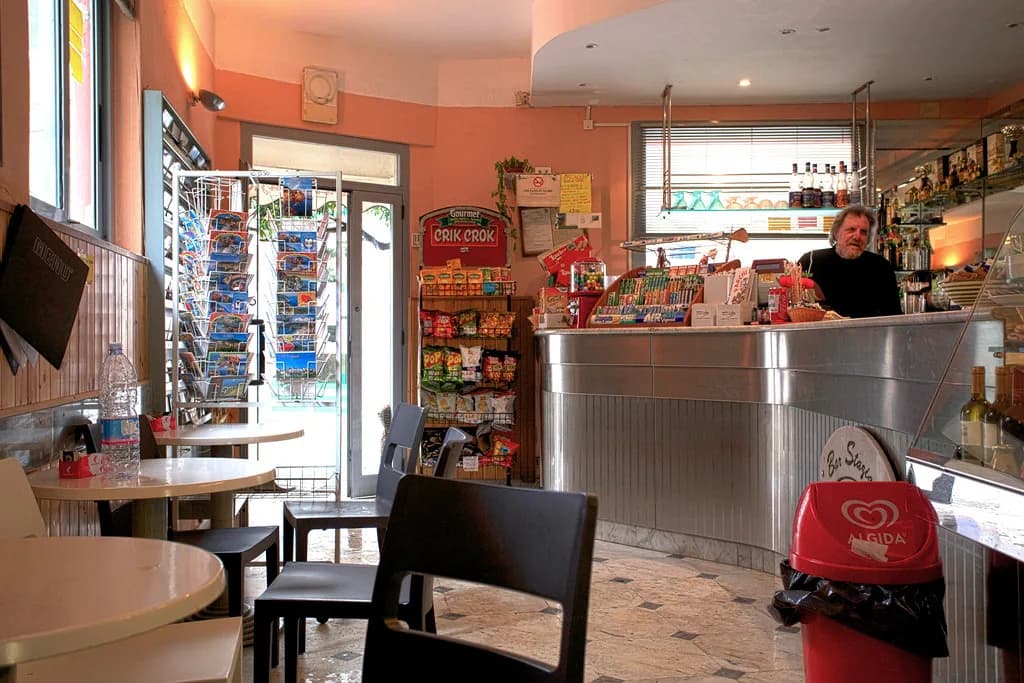
At a café or bakery counter, pay at the till first and take the receipt to the counter to order — the same system you will meet across Italy. At a restaurant, ask for the bill when you are ready rather than waiting for it to arrive, and check whether the card machine is working before you sit down if you are relying on a card. Prices in the villages are higher than inland Liguria because everything arrives by train, boat or a very narrow road.
What to drink with Ligurian food
Ligurian white wines made from Vermentino and Pigato suit anchovies, pesto and seafood better than a heavy red, and the terraced vineyards above the villages produce small quantities that rarely leave the region. A glass of local white with the anchovy tasting at La Cantina di Miky is the obvious pairing, and the restaurant's list also covers local beers and producers from the surrounding area. Keep the drinking moderate: the trails between villages are steep and the trains are frequent, so there is no need to overdo it at lunch.
An Aperitivo in Manarola is a good way to start an evening: a spritz or a glass of white with a small plate of olives or focaccia, taken on a terrace before dinner. The terrace at Nessun Dorma, above Manarola's harbour, is known for the view over the village and for its multicoloured taglieri — boards of cured meat and cheese — served with the house drinks and operatic music. Go for the view and the board, then move on for a proper dinner of anchovies and pasta.
Where to eat in Manarola, Riomaggiore and the other villages
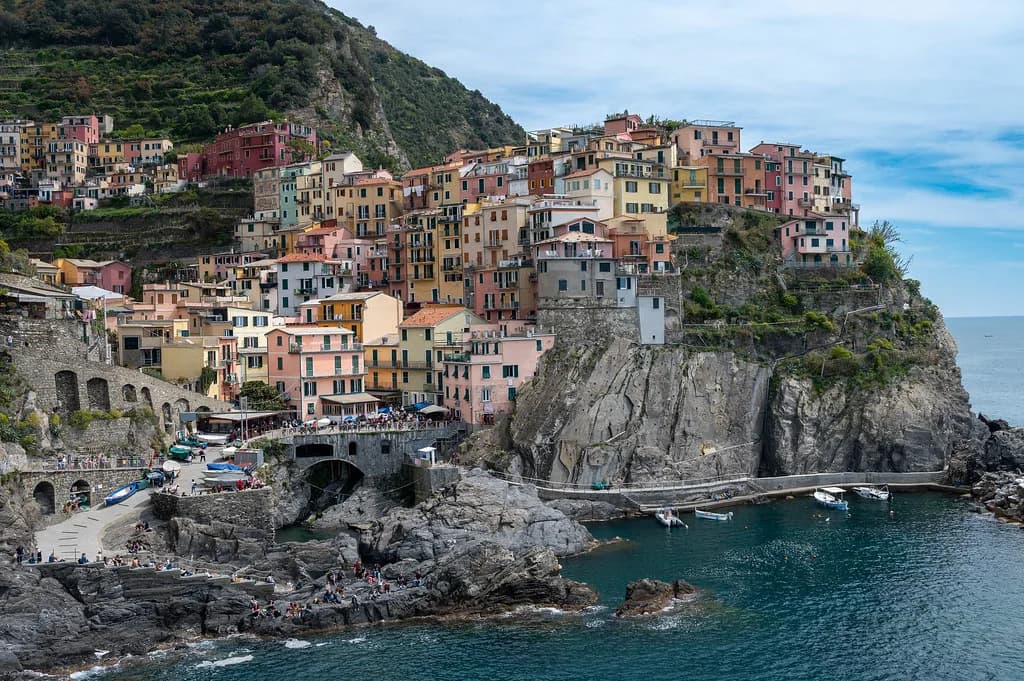
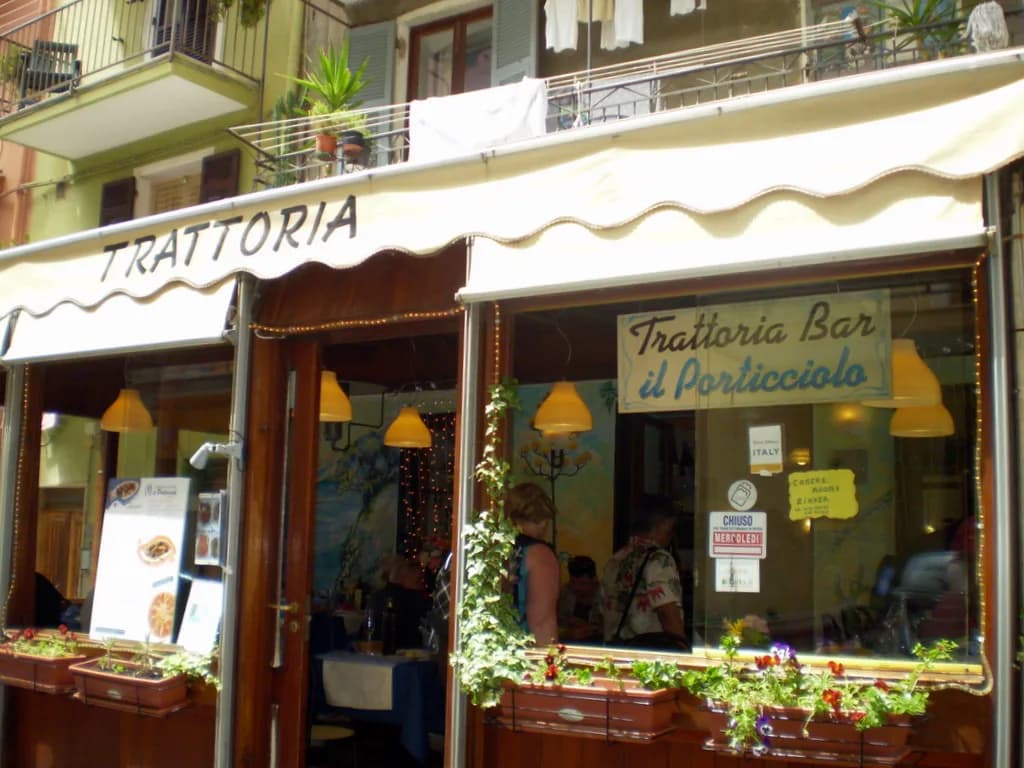
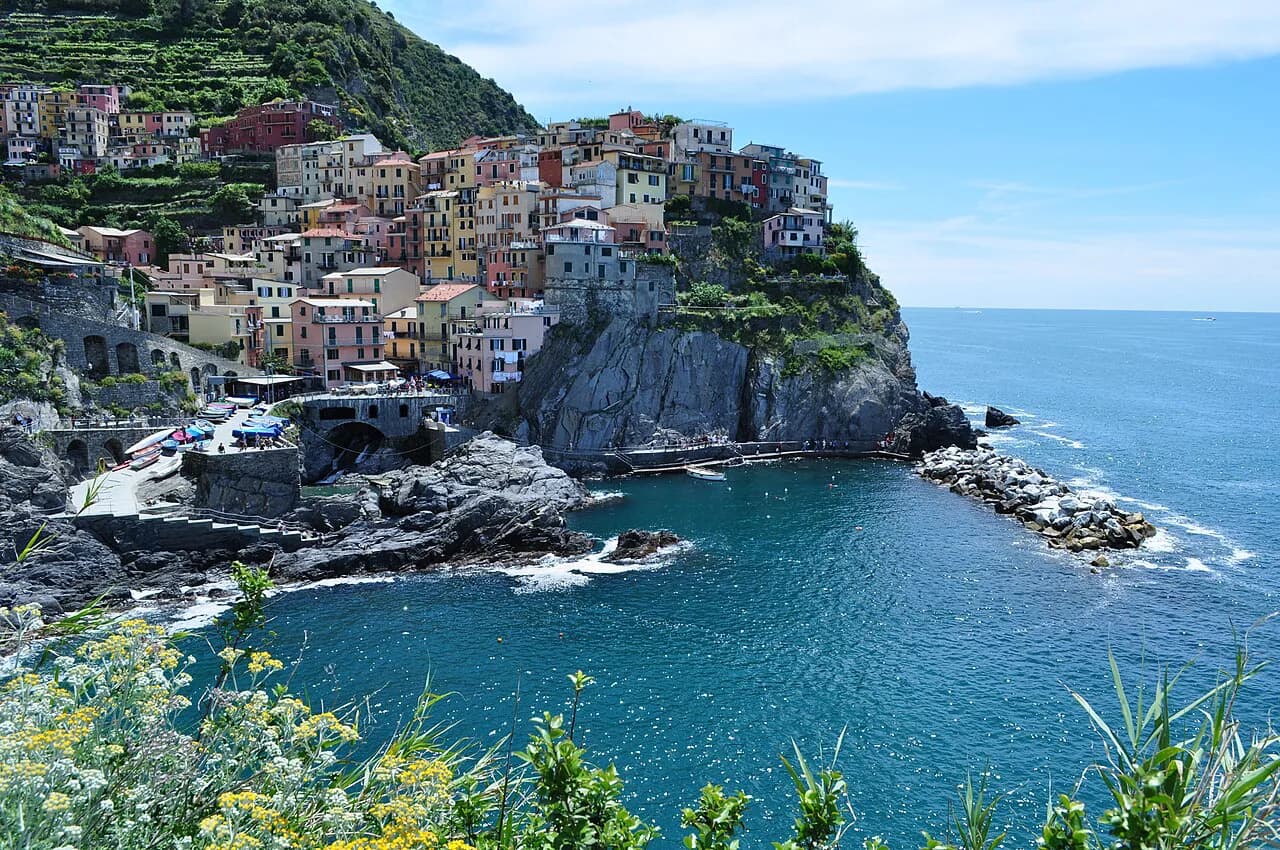
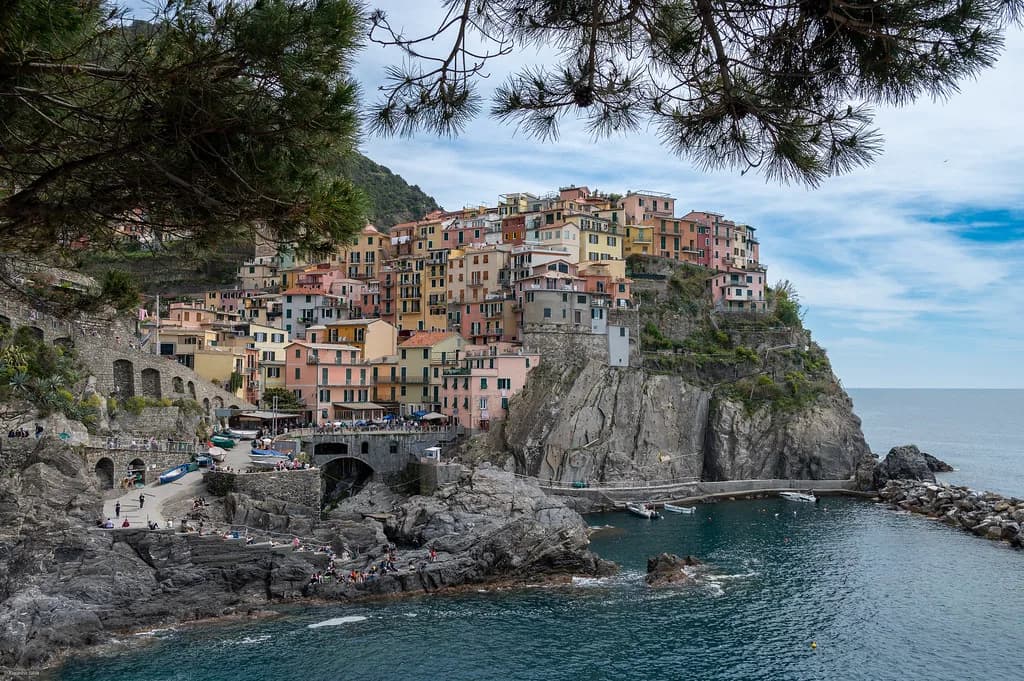
Manarola is the second village heading towards Genoa and the one most photographed, with its multicoloured houses stacked above the harbour. It is small, so eating well means choosing between a handful of restaurants rather than hunting across a city; the trattorias in Manarola are where you go for a simple plate of pasta and a carafe of local white. The village is easily reached by train and by the Cinque Terre ferry service, which also links Portovenere.
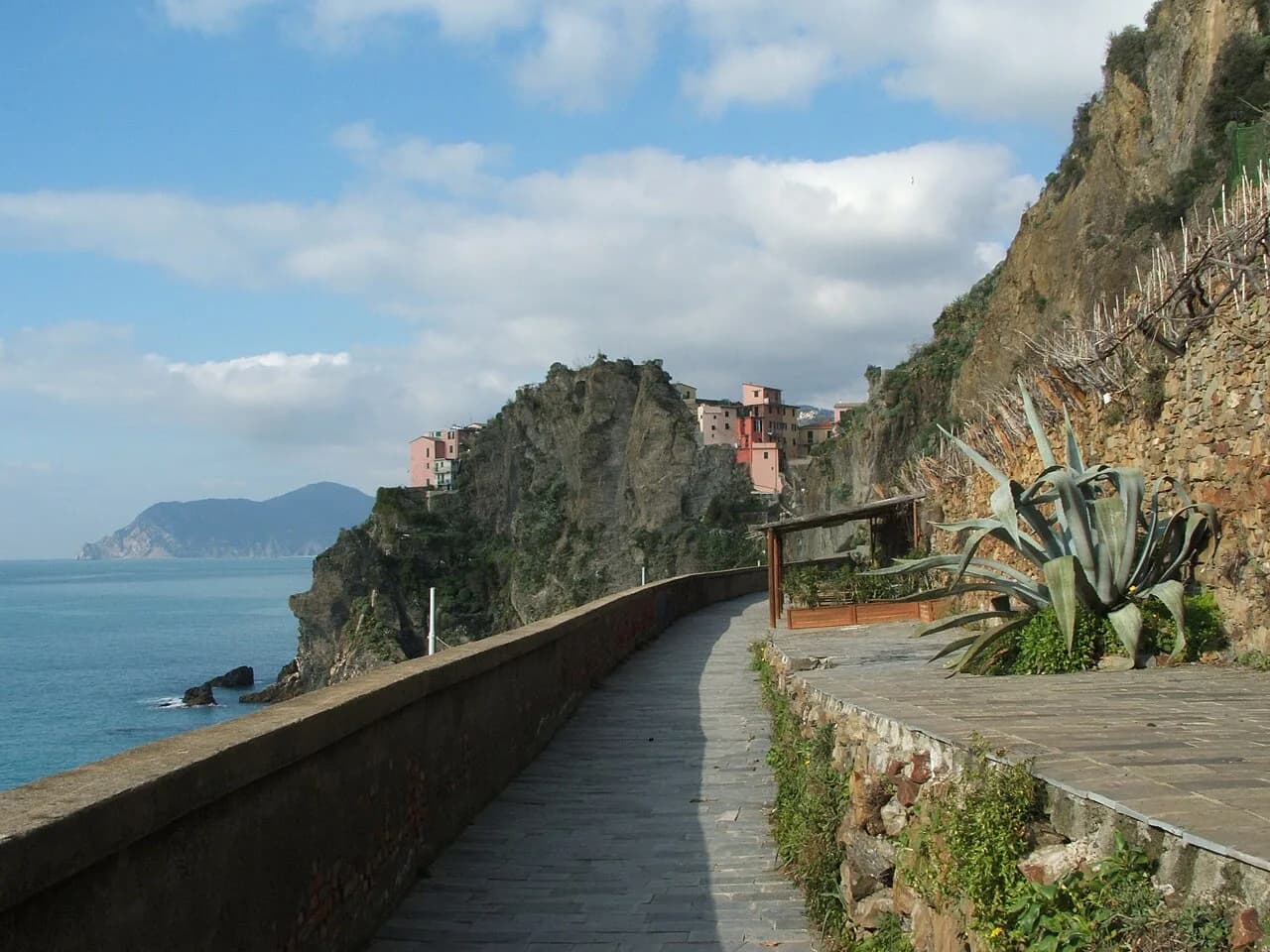
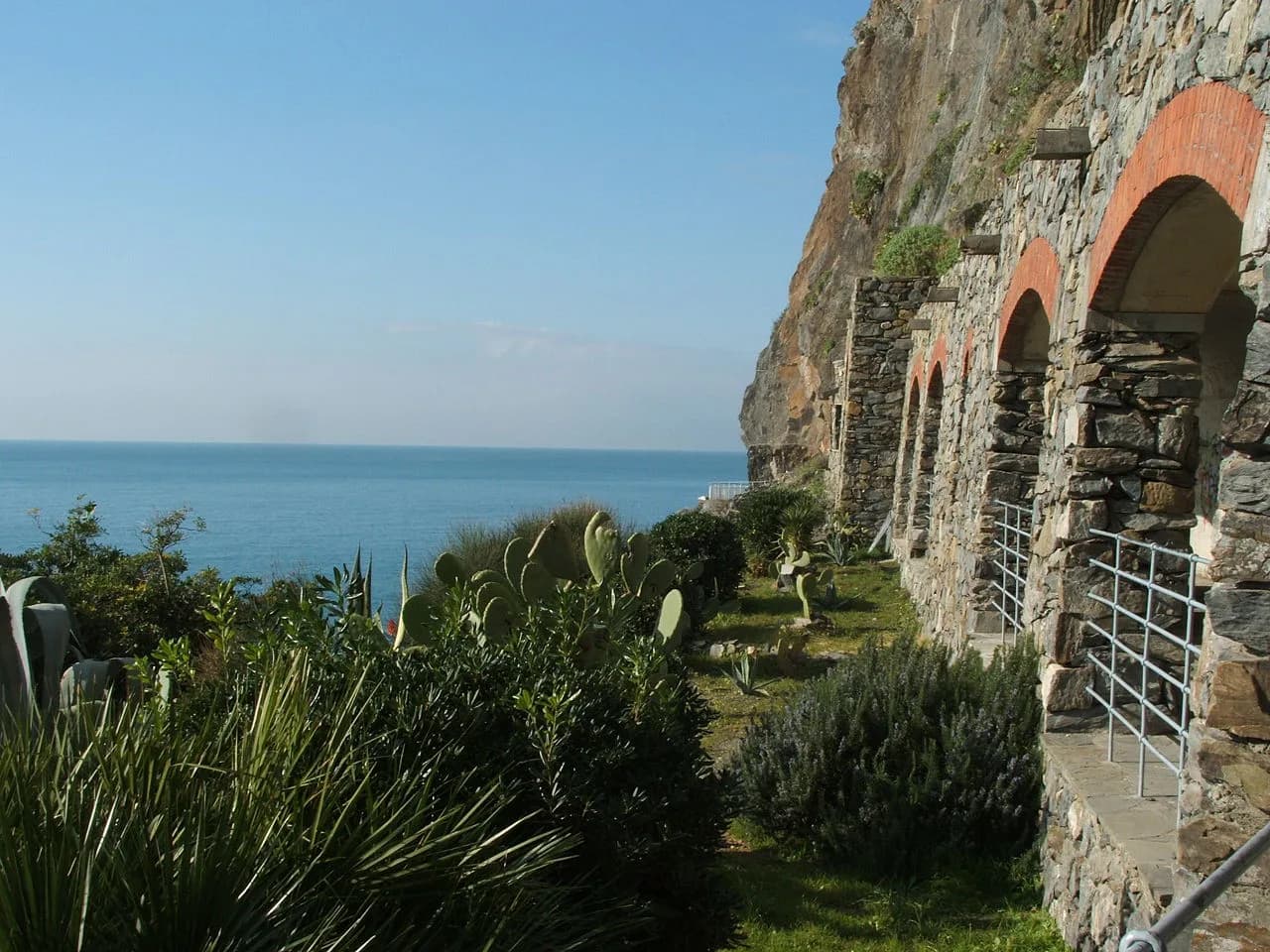
Manarola is also the end point of the Via dell'Amore, the coastal path to Riomaggiore, which is currently closed for a landslide and repair works apart from the first 200 metres from the station. That closure shuffles how you move between villages: the train becomes the practical link, and lunch becomes a stop rather than a walk. In December and January the illuminated nativity on the terraced hill opposite the village adds an evening reason to be in Manarola, though it is not a food event.
Riomaggiore, the first village from La Spezia, and Vernazza and Corniglia each have their own small cluster of restaurants and bakeries, and the train makes a lunch in one village and a dinner in another entirely practical. Corniglia sits high on its promontory and looks down at the sea rather than sitting on it, which makes it a quieter lunch stop. Wherever you eat, a plate of anchovies and a bowl of trenette al pesto are the two orders that tell you most about the kitchen.
Is Cinque Terre expensive to eat in, and how to keep the bill down
Eating in Cinque Terre can be expensive because the villages are small, the ingredients arrive by train or boat and the summer crowds let restaurants charge tourist prices. The reliable way to keep the bill down is to split your day: a bakery lunch of focaccia and a drink, then one sit-down dinner of anchovies and pasta rather than two restaurant meals. Ordering the local anchovies and pesto also keeps you away from the priciest seafood dishes, which are the ones most likely to disappoint.
A cooking class in Manarola is the other way to spend money well if you want to understand the food rather than just eat it. You will handle basil for pesto and learn the pasta shapes, which makes every restaurant menu afterwards easier to read. For a lower-cost start to the day, breakfast in Manarola is a coffee and a pastry at the bar, standing at the counter like locals do.
Finish a hot afternoon with a gelato from a proper gelateria rather than a tub from a souvenir fridge, and treat it as a pause rather than a meal. The best gelato in Manarola is a short walk from the harbour and the train station, which makes it an easy stop between villages.
Which Cinque Terre meal should you book first?
Book one dinner around anchovies and one lunch around focaccia, and you will have eaten Cinque Terre properly. For the dinner, choose between Ristorante Miky in Monterosso for the L'Acciugata alla Monterossina and Cappun Magro in Manarola for terrace produce and a local wine list; for the lunch, find the bakery nearest your village and eat standing up. If you only have one meal, make it the anchovies — they are the dish that tells you whether a kitchen is cooking Liguria or cooking for tourists.
Explore more Manarola food guides
Frequently Asked Questions
What food is Cinque Terre known for?
Cinque Terre is known for Monterosso anchovies, trenette al pesto, focaccia and Ligurian olive oil. Anchovies are the local speciality most worth ordering, served fried, marinated or in pasta such as L'Acciugata alla Monterossina at Ristorante Miky. Pesto is the other staple, paired with long pasta, gnocchi and short shapes.
Where can I eat well in Monterosso al Mare?
Ristorante Miky in Monterosso's New Town is a long-standing seafood restaurant with a display of the day's catch outside, and its sister restaurant La Cantina di Miky serves an anchovy tasting six ways. Agriturismo Missanega, in the hills above the village, serves dishes built on its organic garden and ingredients from nearby inland towns.
Do I need to book restaurants in Cinque Terre?
Booking is wise for dinner, particularly in summer, because the villages are small and the better restaurants have few tables. Bakeries and focaccerie do not take bookings, and a counter lunch is the easiest way to eat without planning ahead. Ask your restaurant about booking when you arrive in the village.
Sources
Notes for your next meal in Italy
Optional updates to our food guides.
You might also like
Continue reading
More guides you'll find useful