Granita in Noto: what to order and where to eat it
Granita in Noto means almond milk, coffee with cream or mulberry, eaten at a café table with a brioche. Here is what it is and where to order it.
On this page
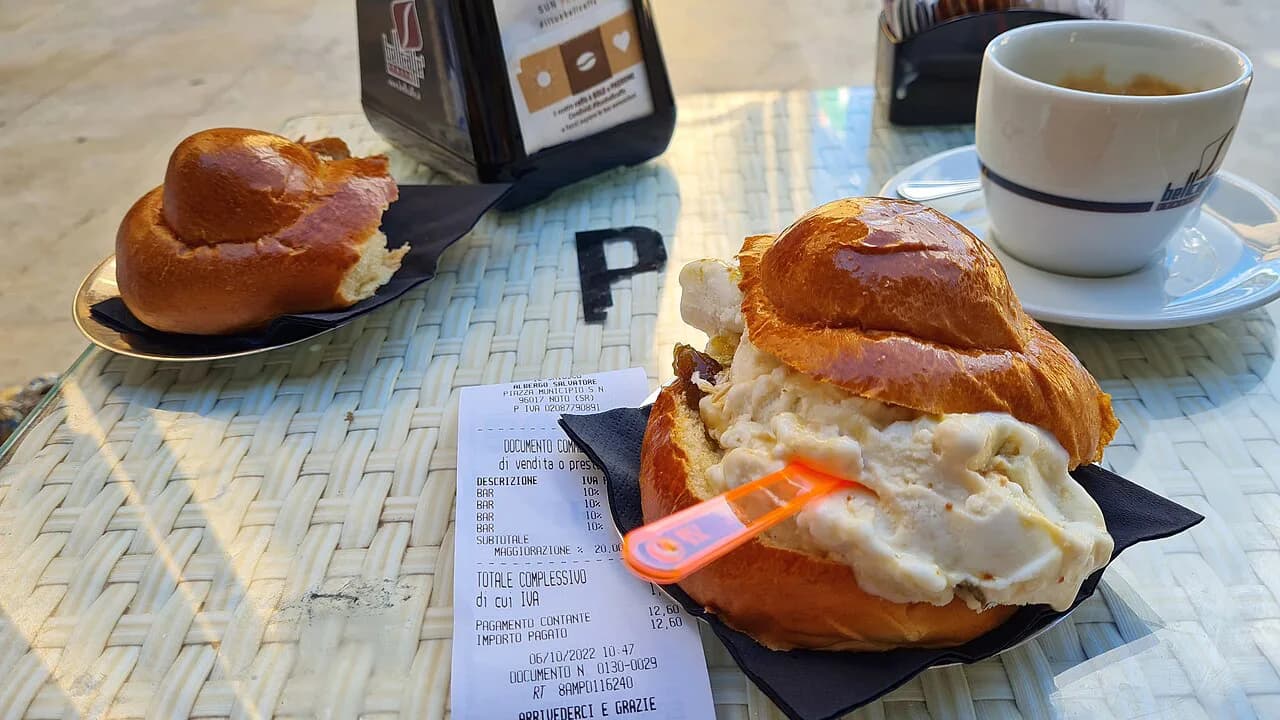
Granita in Noto is best treated as breakfast: a glass of soft, spoonable ice eaten sitting down at a café table, almost always with a brioche col tuppo — a sweet bun with a small round topknot of dough — and sometimes a little fresh cream. The dessert itself is simple, usually just water, sugar and fruit, almonds or coffee, frozen and worked into soft crystals rather than a smooth sorbet. This guide explains what granita is, how it is eaten here, and the four Noto cafés and pastry shops known for it.
What granita actually is
Granita is a frozen dessert made from a base of water and sugar with fruit juice, nuts or coffee, stirred as it freezes so it sets as soft, uneven crystals you can eat with a spoon. That texture is the point: it should melt quickly on the tongue rather than sit firm like gelato. The recipe is deliberately short, which means the quality of the fruit, almonds or coffee does most of the work.
Where granita began is a claim rather than a settled fact: one account credits Acireale, on the eastern side of Sicily, with the first semi-frozen mixture of water, sugar and fruit juice. Treat that as local lore and concentrate on the glass in front of you. In western Sicily the default order is often lemon granita, so much so that limone is treated as the granita; in the east, and in Noto, the range runs much wider.
Breakfast, a glass and a brioche
Granita is eaten at a table, from a glass, with time to spare — not carried down the street in a cup. The classic order is a brioche col tuppo, the domed roll whose topknot you tear off to dip or to scoop with, and a spoonful of panna (fresh cream) on top if you want it richer. If you only have time for one breakfast in the Val di Noto, make it this one.
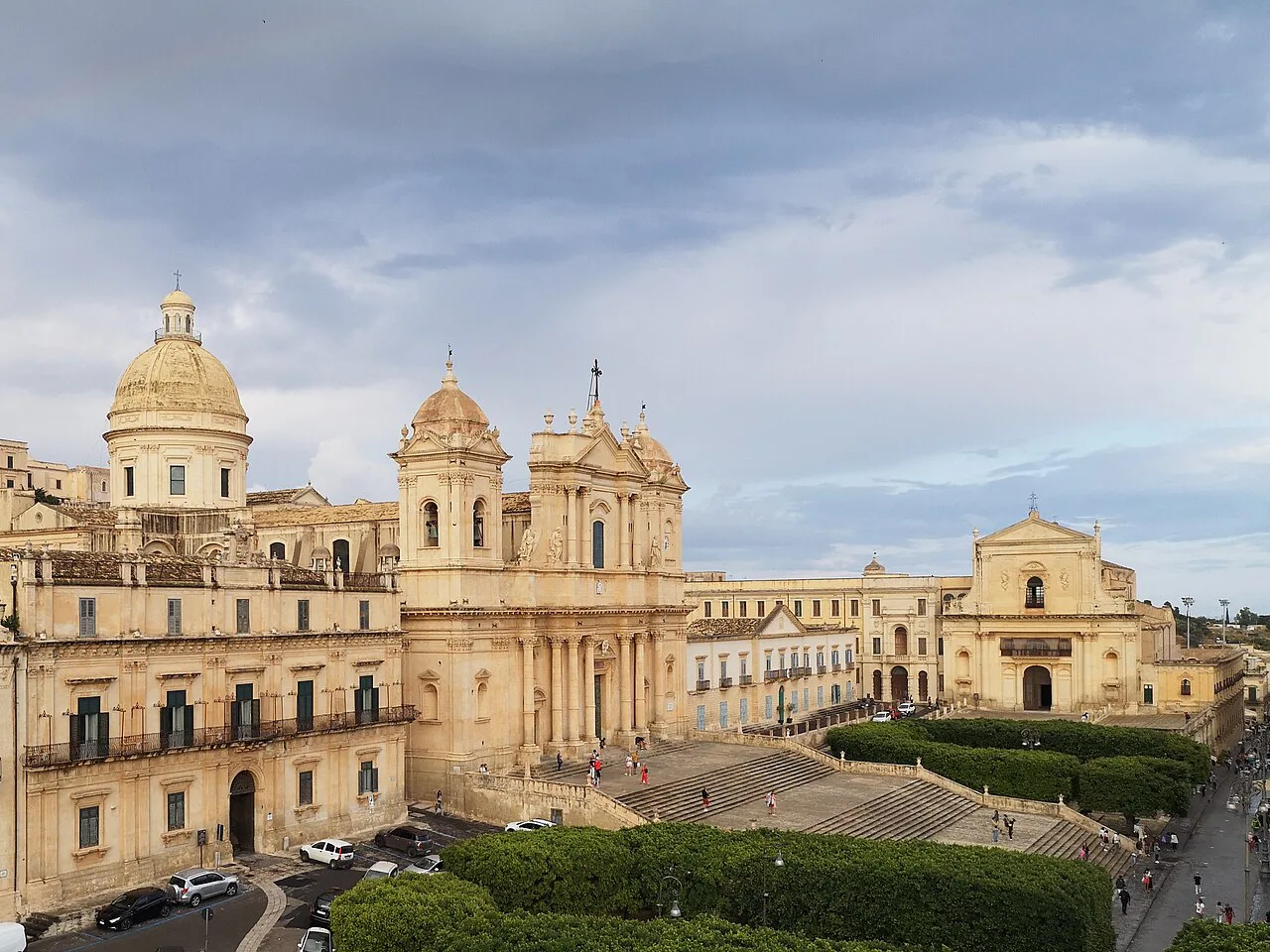
If you want to sit outside in the baroque centre, an early start gives you the best pick of shaded tables on a summer morning. One flavour per glass is the usual order, and asking for panna is routine rather than a tourist request.
Several of the best breakfasts in town come from the same cafés that fill up later for aperitivo, so a morning visit gets you the counter without the evening crowd. A brioche plus a granita is the standard pair.
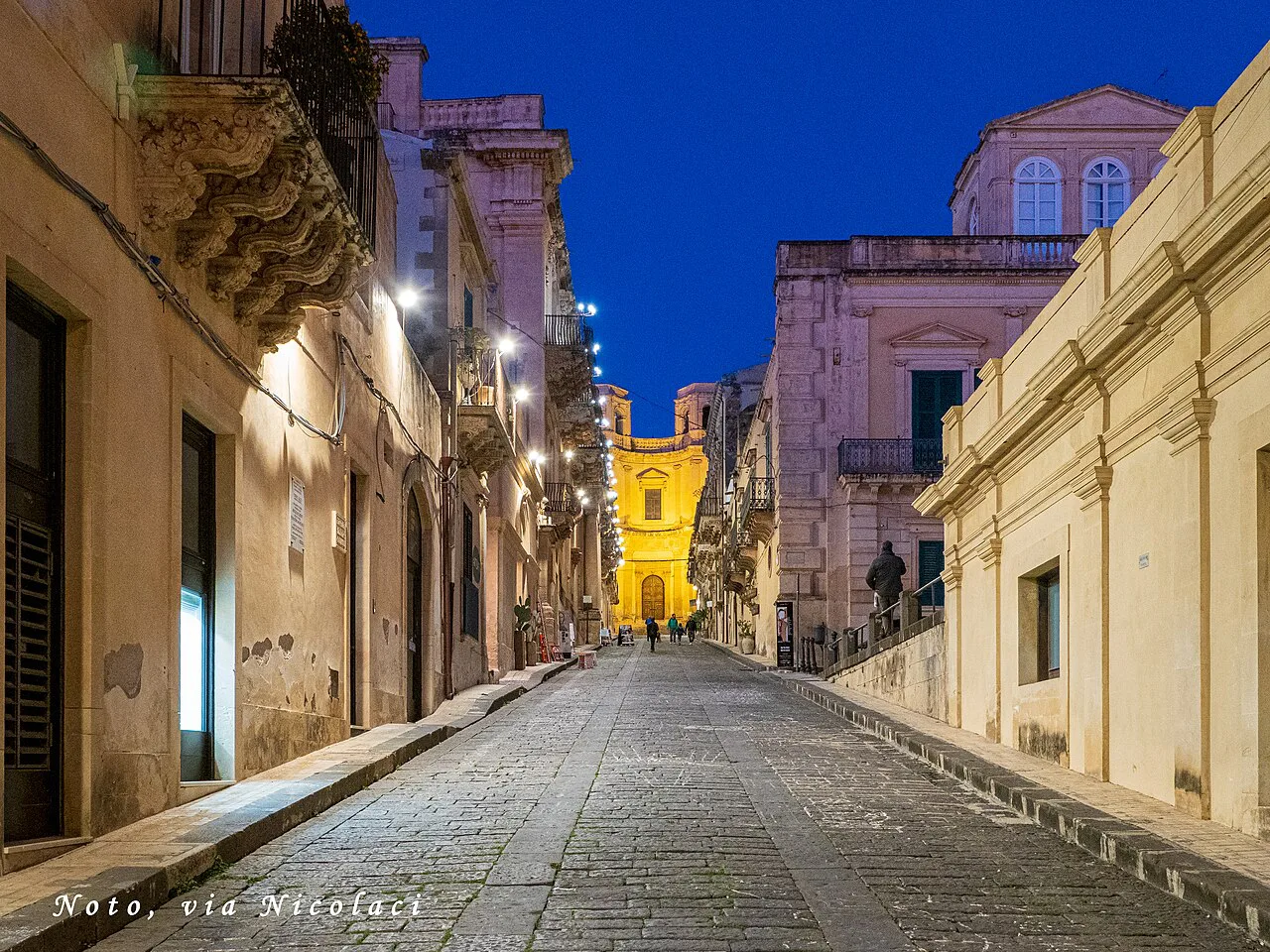
Caffè Sicilia on Corso Vittorio Emanuele
Caffè Sicilia on Corso Vittorio Emanuele is the name most visitors already have on their list, and it earns the stop: the fourth-generation house, co-owned by Corrado Assenza, serves almond-milk granita and cappuccino ghiacciato, an iced coffee poured over almond-milk granita. The pastry may include hazelnut sponge cake or fruit marmalade dusted with dark chocolate. If you want the Noto granita that tastes of almonds rather than coffee, order here.
Order the mandorla (almond) granita for the classic, or the cappuccino ghiacciato if you want coffee and almond in one glass and can do without a separate brioche. As with any famous café on a main street, it draws a crowd. For the same style of pastry in a quieter room, work through the other pastry shops in Noto.
Caffè Costanzo and granita al caffè con panna
Caffè Costanzo on Via Silvio Spaventa is known in Noto for the breadth of its granita, and the order to copy is granita al caffè con panna — coffee granita with a cap of fresh cream — alongside a brioche. The café's real advantage is its outside tables, which let you eat your granita with the baroque facades of Noto around you. That makes it the better choice when you want the setting as much as the glass.
Coffee granita is the flavour to pick if you find almond milk too sweet first thing, and the cream turns it into something closer to a dessert than a drink. If you are also planning a cooked lunch, keep the brioche small, because Noto's best pasta is a serious midday meal.
Mulberry and pomegranate at Pasticceria Al fico d'India
Pasticceria Al fico d'India on Via Napoli sits a few minutes outside the historic centre, which is the trade-off: a short walk for pastry-shop granita made in small batches. The orders to ask for are the gelsi (mulberries) and the melograno (pomegranate), both sharp, fresh and far from the almond-and-coffee defaults. While you are there, the cornetto alla ricotta — a croissant filled with ricotta — is a legitimate second breakfast.
Mulberry granita is deep purple and tastes of the fruit rather than of sugar, and pomegranate is the tarter of the two; pick either if you want something other than the classics. Because you are outside the baroque core, the walk back into the centre is the price of the quieter room and the wider flavour list.
Pasticceria Mangiafico on Via Ducezio
Pasticceria Mangiafico on Via Ducezio traces its first shop to Solarino, in the province of Syracuse, in 1972, and the Noto branch carries the same range. Order the granita, then stay for the cannoli and the cassata siciliana — the sponge cake layered with ricotta, candied fruit and marzipan — because stopping at the granita here is missing half the counter. It is the most convenient of the four if you are walking the centre.
A cannolo is the crisp fried tube filled with ricotta; cassata is the layered cake, denser and sweeter, so it suits a sharing plate rather than a solo order. If you want a single sit-down stop that covers granita and the classic Sicilian cakes together, this is the one to choose.
The flavour words to know
Learn four words and you can order anywhere in Noto: mandorla is almond, caffè is coffee, gelsi are mulberries and melograno is pomegranate. Panna means cream, and asking for it on top is normal. Pistachio, lemon and strawberry granitas are also standard, and a good pasticceria can list a dozen or more in summer.
Almond-milk granita is the Noto signature, made from ground almonds rather than dairy, which is why it tastes toasted and clean rather than milky. Coffee granita is the one that behaves most like a drink, especially with cream. Mulberry and pomegranate are the fruit orders for anyone who finds the classics too sweet.
Granita or gelato?
Granita is the breakfast choice and gelato is the afternoon one. Granita is lighter, sharper and eaten from a glass with a spoon, while gelato is churned with milk and eggs and scooped into a cone. If you are in Noto on a hot afternoon and want something to walk with, the best gelato is built for that and granita is not.
If you can only do one, do granita at breakfast and treat gelato as the separate stop it is; the two are not competing for the same slot in the day. Noto's gelaterie are worth a second visit later, particularly after a long walk around the baroque churches. Many of the same cafés serve granita in the morning and aperitivo after dark.
Lemon in the west, almonds in the east
Granita changes across Sicily: in the west, lemon is effectively the default, while in the east the menu opens up to almond, coffee, mulberry and pistachio. Noto sits firmly in the eastern camp, so if you arrive expecting only lemon you will be pleasantly surprised by the list. The almond version is the closest thing to a local standard here.
Granita also works as an ingredient rather than only a dessert, as in the cappuccino ghiacciato at Caffè Sicilia, where the coffee is poured over almond granita. That is the glass to order if you want one order that explains what the town does well, and for a savoury alternative before lunch, see our pick of the best pizza in Noto.
Which Noto granita stop should you pick?
For the almond granita and the iced coffee that Noto is known for, go to Caffè Sicilia on Corso Vittorio Emanuele. For outside tables and a coffee granita with cream, Caffè Costanzo on Via Silvio Spaventa is the better fit.
If you want fruit flavours and a quieter room, walk the few minutes to Pasticceria Al fico d'India for mulberry or pomegranate, and choose Pasticceria Mangiafico when you want cannoli and cassata alongside the glass. Go early, sit down, and order a brioche col tuppo — that is the whole ritual.
Explore more Noto food guides
Frequently Asked Questions
What is granita made of?
Water, sugar and a flavouring — fruit juice, ground almonds or coffee — frozen while being worked so it sets as soft crystals rather than a smooth sorbet. The recipe is short, so the quality of the fruit or nuts shows through.
Is granita a dessert or a breakfast?
In Sicily it is usually breakfast, eaten from a glass at a café table with a brioche col tuppo, the sweet bun with a round topknot. It is also eaten as an afternoon refresher, but the morning sitting is the tradition.
What is the difference between granita and gelato?
Granita is water-based, sharp and eaten with a spoon from a glass; gelato is churned with milk and eggs and scooped into a cone. Granita suits breakfast, gelato suits a walk in the afternoon.
Do you eat granita with cream?
Often, yes. Panna means fresh cream, and a spoon of it on top of a coffee or almond granita is a normal order rather than a special request. Ask for it when you order.
Sources
Notes for your next meal in Italy
Optional updates to our food guides.
You might also like
Continue reading
More guides you'll find useful