Street Food in Ravenna: What to Eat and Where to Find It
Street food in Ravenna means piadina and crescione from kiosks, plus the Romagna pasta dishes worth sitting down for. Here is what to order and why.
On this page
Street food in Ravenna means two things: piadina and crescione eaten from a kiosk counter, and the handmade Romagna pasta that locals treat as everyday food but visitors usually eat at a table. The flatbread is the quick lunch; the pasta is the meal worth planning around. This guide works through both, dish by dish, with what each one is and how it turns up on a menu.
The city eats from a peasant tradition built on flour, eggs, cheese and the pig, which is why so many of its signatures are cheap to make and filling to eat. Much of that cooking is now sold in kiosks and small trattorias rather than at markets, so a street-food crawl here is less about stalls and more about knowing which name to ask for.
What street food in Ravenna actually means
Romagna's kitchen is built on fresh egg pasta and griddle bread, and the two split neatly between standing up and sitting down. Piadina and crescione are the kiosk food, made to order and eaten in the hand. Cappelletti, passatelli, strozzapreti and spoja lorda are first courses served in a bowl with a fork, which is why locals would not call them street food at all.
That distinction matters when you plan a day. A piadina stop takes fifteen minutes and costs little; a trattoria lunch with a first course of cappelletti, bread and a coperto (the per-person cover charge added to the bill) takes an hour and belongs to a slower afternoon. Choose one or the other for lunch rather than trying to do both.
Ravenna also hosts travelling food-truck weekends, where Italian kitchens on wheels park up and sell from hatches, as with the Streeat Food Truck Festival held at the Darsena.
Piadina: what it is, how it is cooked and what goes inside
Piadina is a thin disc of dough roughly 25 cm across, made from water, flour, salt, a little bicarbonate and either strutto (rendered pork fat) or a splash of milk, then cooked on a hot iron plate. The dough is standardised; the filling is not, and that is where the choice lies. Squacquerone, a soft fresh cow's-milk cheese, is the classic partner, and every kiosk will have its own list beyond that.
Order it at a kiosk counter, folded around the filling and handed over warm. Eat it straight away: the dough stiffens as it cools and the cheese starts to weep. A piadina is a proper lunch for one person, not a snack to share before a sit-down meal.
English-language coverage often lumps piadina in with Italian flatbreads generally. In Ravenna it is a Romagna staple rather than a national one, so expect it on kiosk menus and in piadinerie rather than on every restaurant list.
Crescione: the folded, stuffed relative of piadina
Crescione sits halfway between a piadina and a calzone: the same dough folded into a half-moon and sealed around a filling, then cooked until the seam holds. The usual filling is herbs, tomato and mozzarella, which makes it the vegetarian order at most kiosks and a good change from cheese-heavy piadina.
Because it is sealed, crescione travels better than an open piadina and stays warm longer, which makes it the practical choice if you are carrying lunch towards the mosaics or the station. Ask for it freshly pressed rather than taking one that has been sitting under a lamp.
Cappelletti al ragù: Ravenna's signature first course
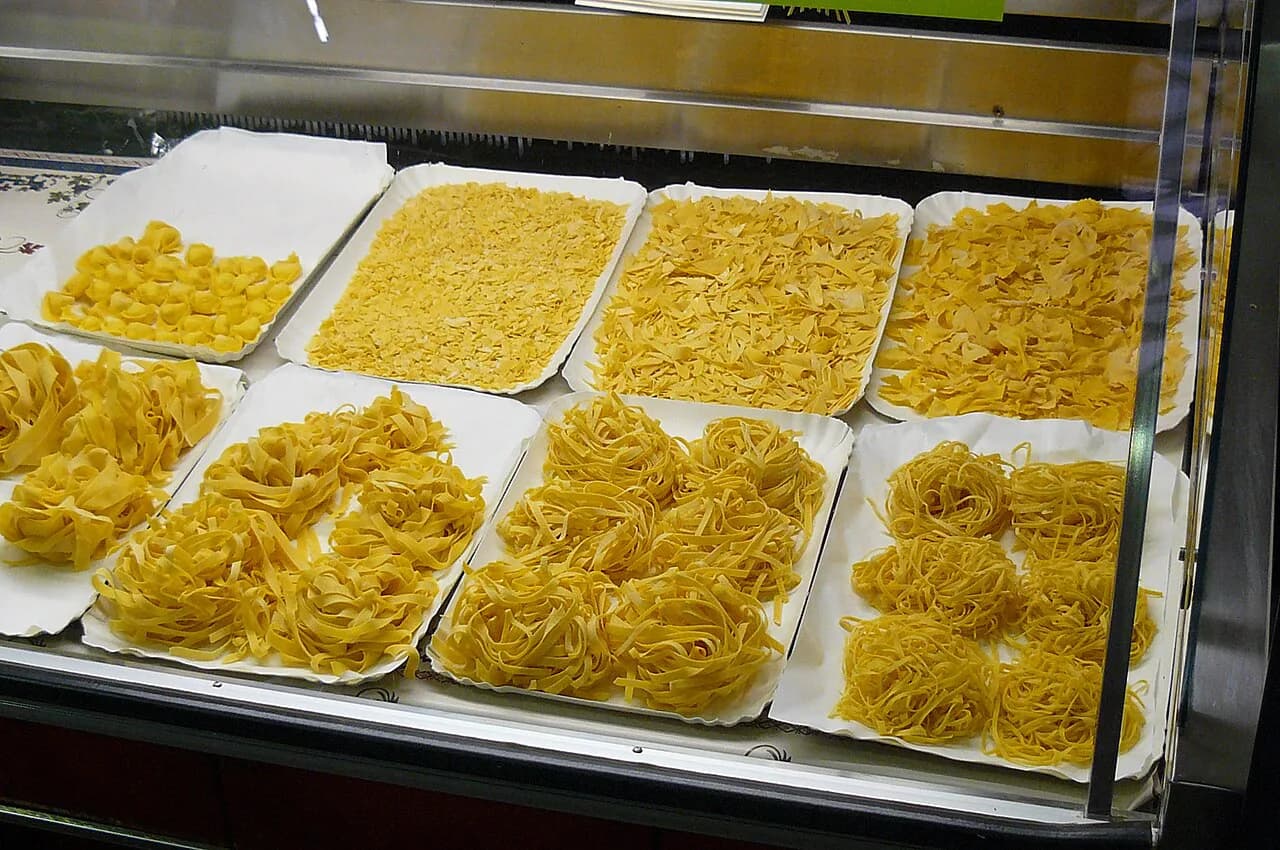
Cappelletti are small squares of egg pasta filled with soft fresh cheese, often ricotta, Parmigiano and a fresh cow's-milk curd, then pinched into the little hat shape that gives them their name. In Ravenna they come almost always with a meat ragù, though they also appear in broth. They are not tortellini, and locals will notice if you treat the two as the same thing.
Order them as a first course at lunch or dinner and expect a portion that leaves room for a second. This is the dish to pick if you want the single most representative plate of the city, and it is the cheapest way into Ravenna's cooking beyond a kiosk.
If you want a benchmark, compare what the best restaurants in Ravenna put on the plate, then judge the simpler trattorias against it.
Passatelli in brodo: what the mixture is and when it is served
Passatelli are short, irregular strands made from eggs, cheese, breadcrumbs and a pinch of nutmeg, pushed through an iron with wide holes and then cooked in broth. The mixture contains no flour, which is why the strands come out rough and why they hold a rich meat or fish broth so well. Traditionally they were a feast-day dish, but they now sit on restaurant menus all year.
The broth is the whole dish, so it is worth ordering where the kitchen clearly makes its own. Passatelli suit a cold day rather than a summer lunch, and they work better as a first course than as the only thing you eat.
Strozzapreti and other Romagna pasta shapes
Strozzapreti are hand-rolled twists of flour and water dough, a shape that appears in Romagna recipe books as far back as the fifteenth century. The name means 'priest strangler', a joking reference to clerical greed, and the twisted form is designed to catch meat and vegetable sauces rather than let them slide off.
Ordering by name gets you further than pointing. Learn cappelletti, passatelli, strozzapreti and spoja lorda and you can read a Romagna menu without a translation app, because the sauce attached to each shape is usually just beneath it.
Spoja lorda: the Ravenna soup made from cappelletti offcuts
Spoja lorda means 'dirty sheet', and it is the most Ravenna-specific dish on this list. It began as a way of using up the pastry and filling left over from making cappelletti: the egg dough is lightly stained with the filling, cut into small ravioli and cooked in broth. It is also called minestra imbottita, or stuffed soup.
Because it comes from leftovers, it tells you something about how the local kitchen works: nothing is thrown away, and a dish invented to save scraps ended up on menus in its own right. Order it as a first course if you want something you will not find in Bologna.
Castrato and the Romagna grill
Castrato is mutton from sheep older than six months and younger than two years, and it is the exception in a region where grilled meat usually means pork. The chop, brasula 'd castrè in dialect, is marinated with salt, garlic and rosemary before it goes on the grill, then served with olive oil and lemon or plain. The meat is tender with a faintly sharp smell that the marinade is there to tame.
It belongs to the sit-down grill in a trattoria rather than a kiosk, and it usually follows a first course of pasta. If you have only one evening in Ravenna and want the local cooking rather than the mosaics, this is the second course to look for.
Sugolo, cozze di Marina di Ravenna and ciambella romagnola
Sugolo is the Romagna grape must pudding: pressed must cooked down until it sets, eaten in slices and traditionally in autumn and winter when the grapes are pressed. It is sweet, dark and dense, and it turns up on dessert boards rather than in kiosks.
Cozze di Marina di Ravenna are mussels from the nearby coastal village, and they are a seaside order rather than a city one: eat them when the day takes you out along the coast, where a plate of shellfish is the point of the trip.
Ciambella romagnola is the ring-shaped country cake that closes a meal across Romagna, plain enough to be eaten with a coffee in the morning or with a glass of something sweet at the end of lunch. For the city's own bakery culture, see pastry shops in Ravenna.
How to order and what you pay at kiosks and trattorias
The split between the two kinds of eating shows up on the bill. At a piadina kiosk you order and pay at the counter, often before the food is made, and there is nothing added. In a trattoria the coperto, the per-person cover charge, appears on the bill with the bread, and if the menu lists a service charge it will be there too.
Carry some cash for kiosks, which are not all set up for cards, and keep a card for the trattoria. Portions of Romagna pasta are generous, so a first course each plus one second to share is a sensible order for two people rather than a full three courses each.
How street food fits into a day around the mosaics
The simplest shape for a day is a kiosk piadina or crescione at midday, an afternoon among the mosaics, and a trattoria dinner with cappelletti or spoja lorda followed by castrato. That keeps lunch cheap and short and puts the money and the time where the cooking is more interesting.
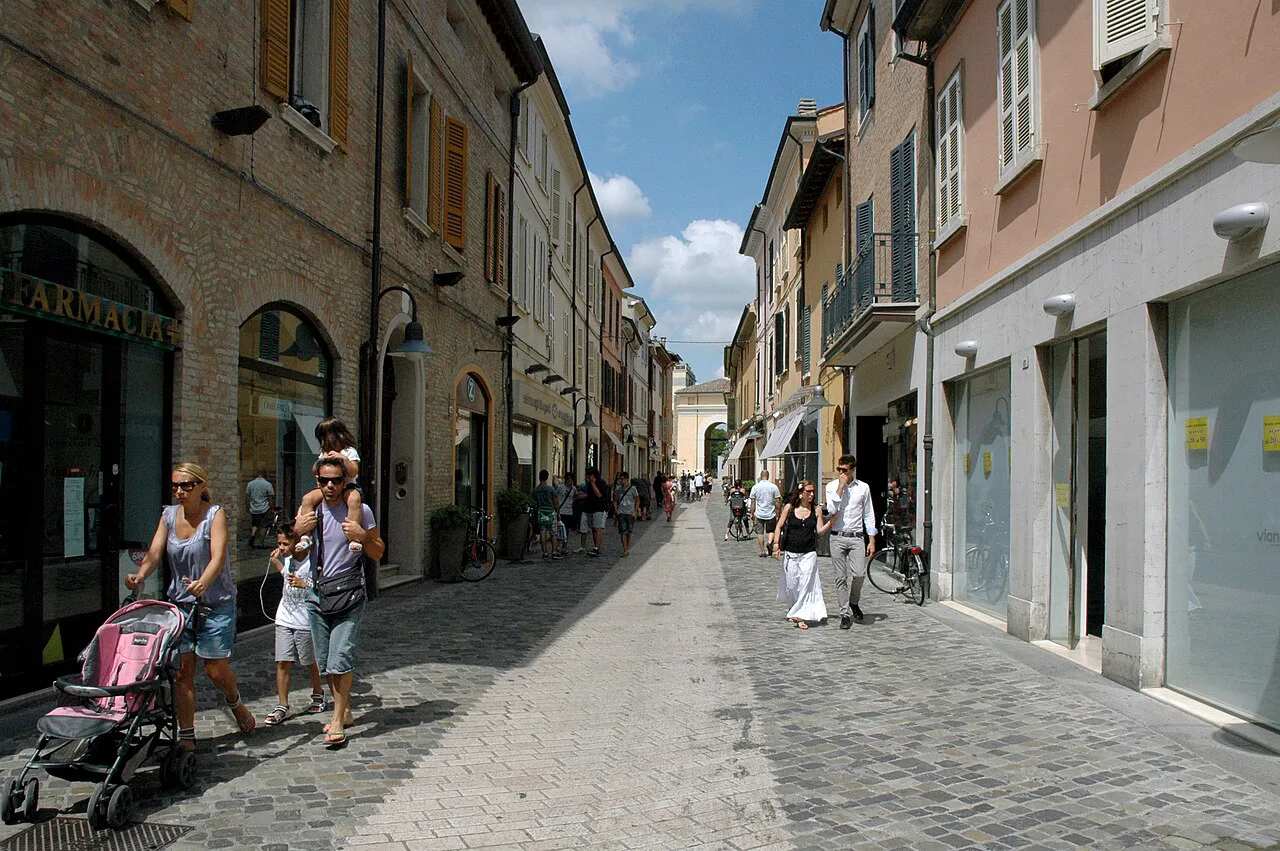
If you are staying near the station or the Darsena, a folded crescione is the practical thing to carry rather than a plated lunch. In the evening, Via IX Febbraio is the street where an aperitivo before dinner fits naturally into the same plan.
Piadina or cappelletti: which do you order first?
Order both, but on different occasions. Take a piadina or a crescione at a kiosk for a fast lunch and spend a sit-down meal on cappelletti al ragù or spoja lorda, which are the dishes that actually explain Ravenna's kitchen to a visitor.
If you are building a longer list, use the best pizza in Ravenna for the evening you want something simpler, and keep breakfast in Ravenna for the morning before the mosaics open.
Explore more Ravenna food guides
Frequently Asked Questions
What food is Ravenna known for?
Ravenna is known for Romagna fresh pasta: cappelletti with ragù, passatelli in broth and the local spoja lorda, a soup made from cappelletti offcuts. Piadina and crescione are the flatbreads sold from kiosks for a quick lunch.
Do I need to book a trattoria for cappelletti in Ravenna?
Small trattorias fill up at weekend lunch and dinner, so booking by phone earlier the same day is sensible if cappelletti is the reason you are going. Kiosks for piadina and crescione do not take bookings, so just turn up.
Is piadina vegetarian?
The dough itself usually contains strutto, rendered pork fat, though some kiosks use milk or oil instead, so ask before ordering if that matters to you. Crescione, the sealed half-moon version, is commonly filled with herbs, tomato and mozzarella.
Sources
Notes for your next meal in Italy
Optional updates to our food guides.
You might also like
Continue reading
More guides you'll find useful