Trattorias in Amalfi: Where to Eat and What to Order
Trattorias in Amalfi and the villages around it, how they differ from ristoranti, the local dishes to order and what a table by the sea adds to the bill.
On this page
For trattorias in Amalfi, look first at what is cooked rather than what is printed: the family kitchens here are judged on their fish soup, their pasta with anchovies and their ndunderi, a local dumpling made with flour and ricotta. The town itself is small and its honest rooms are few, so the strongest family kitchens named on this coast sit just outside it, at Furore, and the dairy villages of the hills behind the coast supply much of what they cook with. This guide explains what the word trattoria means on this coast, which dishes to order when you find one, and which of the named kitchens are worth planning a day around. If you are weighing up the neighbouring coast as well, the Positano guide covers where to eat there by budget.
Expect a narrower choice than a ristorante, a shorter wine list and a bill that reflects the cooking rather than a view over the water. The trade-off is real: a terrace above the marina buys you the panorama, while a plain dining room in a hill village buys you second helpings and a slower afternoon. Both can be excellent, and the same family may run both styles under different roofs.
What a trattoria means in Amalfi, and how it differs from a ristorante or osteria
In Italy a trattoria is a modest, usually family-run eating place with a short menu of home cooking; a ristorante is more formal, with a longer menu, more staff and higher bills; an osteria originally meant a simple wine-selling kitchen and now sits somewhere between the two. On the Amalfi Coast the labels are used loosely, so judge the room instead: check whether the menu changes with the catch, whether the pasta is made on site and whether the tables are mostly local families at lunch.
Amalfi's trattoria cooking is built on what the coast and the mountains behind it produce: fish from the Gulf of Salerno, anchovies preserved in salt, and lemons and the cheeses of the Lattari hills. That means you should not expect a vast menu. Ask what came in that morning, and treat a short list as a good sign rather than a limitation.
The dishes to order in an Amalfi trattoria
Start with linguine alla colatura di alici, dressed with colatura di alici, the amber anchovy essence drawn off barrels of salted fish that gives the pasta a deep, savoury hit without any tomato. The same anchovy tradition turns up in pasta with fresh anchovies, one of the coast's everyday dishes, and in a zuppa di pesce, a fish soup that is the test of a kitchen's seriousness.
Order ndunderi di Minori, the coast's ricotta dumplings, when they appear; they are lighter than potato gnocchi and take well to a simple sauce. Elsewhere, look for dishes that show the mountains as much as the sea, such as the mozzarella of Agerola and the Provolone del Monaco of the Lattari hills, and finish with something built on lemons: Bacco Furore's kitchen, for instance, serves a sfogliatella riccia with sfusato amalfitano lemon sauce and pear compote.
Bacco Furore Hostaria in Furore: a family kitchen above the fjord
Bacco Furore is the clearest example of the trattoria tradition on this coast: a family address open since 1930, now also a scattered hotel, whose terrace looks over the water from Furore. Erminia Cuomo runs the kitchen, cooking traditional dishes from this stretch of coast with a light, creative hand, and the menu draws on local produce from the land as well as the sea.
Order the linguine alla colatura di alici, among the dishes the house itself puts forward, followed by the hazelnut-crusted ombrina (meagre, a firm-fleshed fish) and the ndunderi di Minori. The kitchen's signature soup is the Zuppa di Pesce di mamma Erminia, the fish soup credited to the mother in the Corriere coast round-up. This is no plain fried-fish trattoria: the cooking reaches further than the standard coast menu.
Furore itself is a quieter village than Amalfi or Positano, known for its gorge — a ravine some 200 metres long and 50 deep — as well as its waterfalls, terraces and caves, so a lunch here need not compete with a crowd. The house has a terrace above the water where the coast view is part of the meal.
Blu Furore and the case for choosing a trattoria instead
The counterpoint to Bacco Furore sits nearby at Blu Furore, the fine-dining restaurant of the Furore Grand Hotel, where the kitchen is led by Vincenzo Russo under Enrico Bartolini and the format is tasting menus rather than a family table. The Corriere round-up describes several tasting routes, from fish to vegetables, built on Campanian ingredients. That is a different evening entirely: more courses, more ceremony, a bill to match.
Choose the trattoria when you want to eat at your own pace, share a plate of pasta and leave without a production. Choose the fine-dining room for an occasion, and book well in advance. If you are travelling with children or a group of mixed appetites, the family kitchen is almost always the easier call.
Sensi in Amalfi and the addresses in town worth booking
Amalfi town has fewer genuine trattorias than its visitor numbers suggest, and its better tables lean toward modern cooking. Sensi is the town address singled out in the same coast round-up, a contemporary restaurant rather than a family kitchen. Treat it as your special-occasion booking when you are staying in Amalfi and do not want to drive up to Furore for dinner.
For everyday eating in town, the safe approach is to walk away from the marina and the cathedral square, where menus are printed in four languages, and look for the rooms where the specials are chalked up and the pasta is made behind the counter. A short menu is not a warning here; a long one usually is. The Best Restaurants in Amalfi, Chosen by What You Want to Eat is the place to start when you want to narrow the choice before you walk.
A table with a sea view versus a plain room in the village
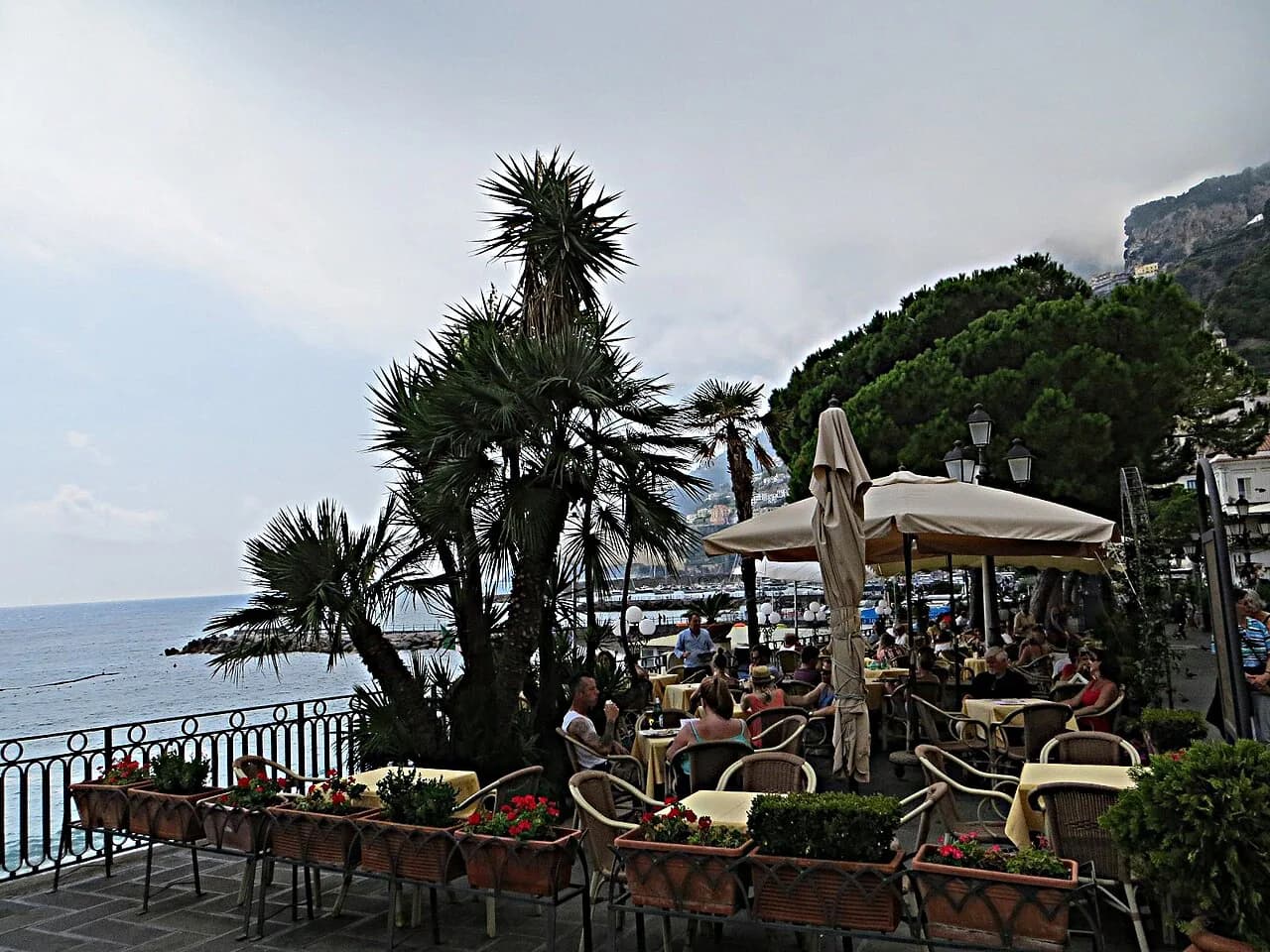
On this coast the view is part of the bill. A terrace above the water, whether at Bacco Furore or at one of the sea-view addresses in the Corriere round-up, will feel like a premium over a plain room a few minutes inland, and the cooking is not automatically better for it. Decide which you are paying for before you sit down: the panorama, or the pasta.
A practical compromise is to take the view at lunch, when tables are easier to get and the light is better, and eat simply in the evening. Villages such as Praiano and the hamlets around Amalfi offer quieter rooms where the same fish is cooked without the theatre. If you want a broader spread of addresses, from trattorias to gourmet dining rooms, The Best Restaurants in Amalfi, Chosen by What You Want to Eat is the more detailed list to work from.
Ordering, booking and paying: coperto and the pace of lunch
Most sit-down trattorias add a coperto, a small per-person cover charge that pays for bread and service; it is normal, not a trick, and should appear on the menu. Bread brought to the table without being ordered will usually be charged this way. Check current menu prices before you order.
Lunch is the meal this coast does best. Family kitchens have few tables, so in July and August and at Sunday lunch the better-known addresses fill up; ring the restaurant directly rather than relying on a platform. Italians eat late, so an early table will be calmer than the middle of the afternoon.
If you want to learn the cooking yourself rather than just eat it, cooking classes in Amalfi exist, some run by coast restaurants, and they tend to focus on pasta and the lemon-based dishes. Otherwise, keep the meal simple: an aperitivo in the square beforehand, pasta, a second of fish, fruit, coffee. Save room for pastry later.
Dairy stops on the Monti Lattari: mozzarella di Agerola and Provolone del Monaco
The mountains behind the coast supply much of what the trattorias cook with, and a couple of dairy stops make a natural half-day between meals. Caseificio De Gennaro at Vico Equense and La Fattoria del Castello at Agerola are both named in the Corriere coast round-up; Agerola is the village known for its mozzarella, and the Lattari hills are where the Provolone del Monaco comes from. A morning visit fits best, before lunch.
Cantine Marisa Cuomo at Furore, whose labels appear at Bacco Furore, sits in the same village, but the tasting stop is not the reason to drive up here. The reason is the mountain larder and the chance to eat a trattoria lunch away from seafront pressure. Keep the drive short: the roads above Amalfi are narrow and slow.
Amalfi town, Furore, Praiano or Agerola: which base for your trattoria lunch
Choose Amalfi town if you want everything within walking distance and do not mind paying for the setting; choose Furore if you want Bacco Furore and its gorge, with a quieter village and a sea-view terrace around it. Praiano sits between the two on the coast road, and Agerola rewards a car and a taste for the dairy cooking of the Lattari hills.
Amalfi is not pizza country, but pizza exists, and the best pizza in Amalfi and along the coast is a useful list when you want a cheap evening after a long lunch. Likewise, if you have a sweet tooth, plan a stop at the pastry shops in town or pick up a gelato on the walk back to the ferry.
Book the family kitchen over the sea-view terrace
The Amalfi trattoria worth your booking is the one that cooks the coast's own dishes, not the one with the longest menu and the best panorama. Start with Bacco Furore for linguine alla colatura di alici and ndunderi, add Sensi in Amalfi town for an occasion, and take a morning at Agerola for the cheese.
Book the table directly, expect a coperto, and let lunch run long. If you are still choosing between addresses, the best pasta in Amalfi is the natural next step before you commit.
Explore more Amalfi food guides
Frequently Asked Questions
What is colatura di alici?
Colatura di alici is an amber anchovy essence made by ageing salted anchovies in barrels and drawing off the liquid that collects. On the Amalfi Coast it is used sparingly to dress pasta, giving a deep savoury flavour without tomato. It is one of the dishes put forward at Bacco Furore.
Do I need to book a trattoria on the Amalfi Coast?
In summer, yes: family kitchens have few tables and the better-known addresses fill up. Ring the restaurant directly or use its own website, and confirm the day before if you are travelling in July or August.
What is a coperto?
A coperto is a small per-person cover charge added to sit-down meals in most Italian trattorias, covering bread and service. It should be listed on the menu.
Sources
Notes for your next meal in Italy
Optional updates to our food guides.
You might also like
Continue reading
More guides you'll find useful