
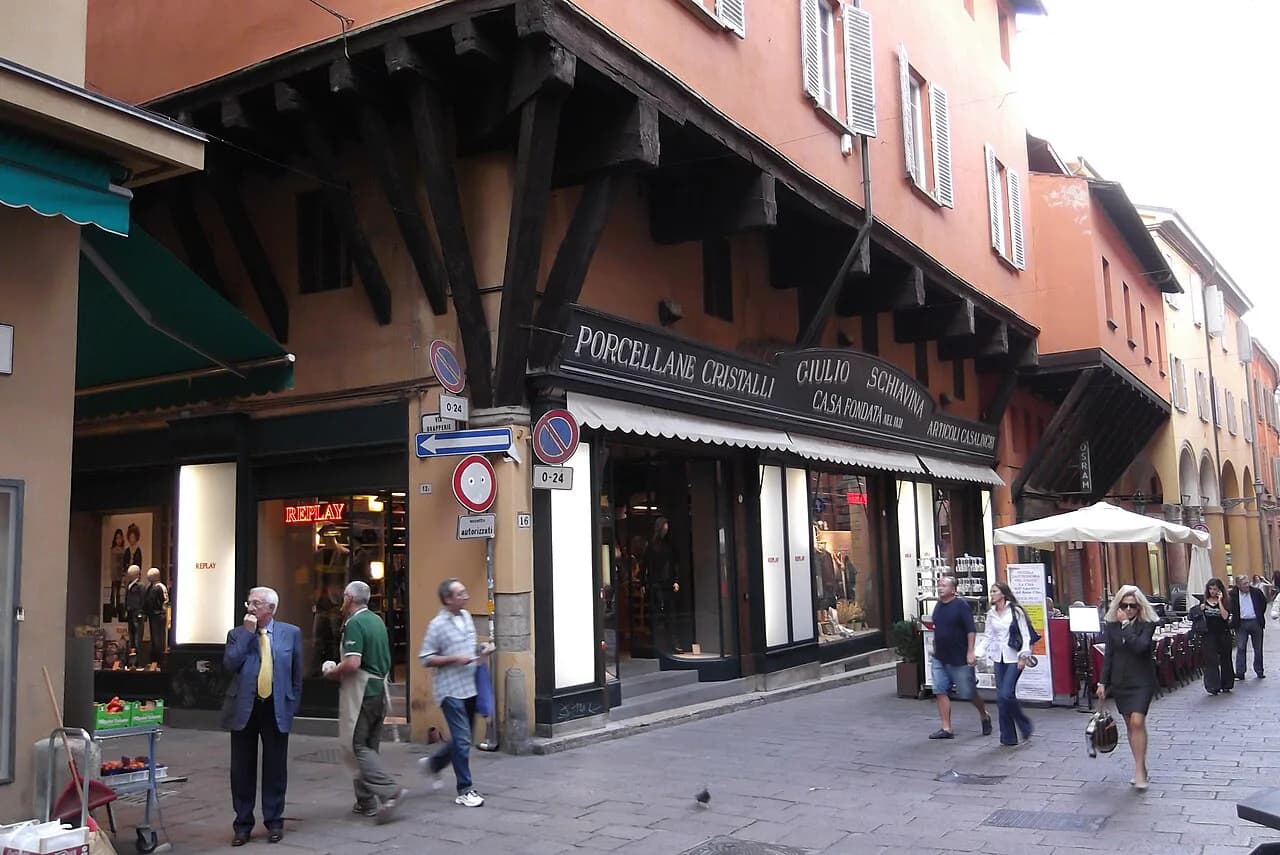
Quadrilatero, Bologna: The Old Market Streets and What to Eat There

The Quadrilatero is Bologna's medieval market quarter, a tight web of lanes running from Piazza Maggiore towards the Due Torri, where the city's food shops have clustered for centuries. Allow a couple of hours to walk it properly, dipping into the salsamenterie, bakeries and drogherie rather than treating it as a corridor between two sights. This guide gives you the street-by-street logic of the quarter, the specific Bolognese foods worth carrying away, and how to use Osteria del Sole for a lunch that works by its own rules.
Everything sits inside the historic centre, so the walk slots into a day already built around Piazza Maggiore. The lanes are narrow, largely pedestrian and busy around aperitivo time, which is worth planning around if you want space to browse.
What the Quadrilatero is
The Quadrilatero is the old market area at the heart of the historic centre, animated by a craft, mercantile and commercial tradition that goes back to the Middle Ages. Walk out from behind Piazza Maggiore and you enter narrow, fragrant alleys lined with workshops and shops where families have passed the trade down from generation to generation.
Look up and down as you go: the quarter keeps its characteristic buche, the small wall openings that once served the shops, alongside historic premises that have preserved their original fittings and architecture, and even old pharmacies that still carry the feel of the old spice shops. Some modern architecture sits among the medieval fabric, with exterior and interior spaces kept to the original design.
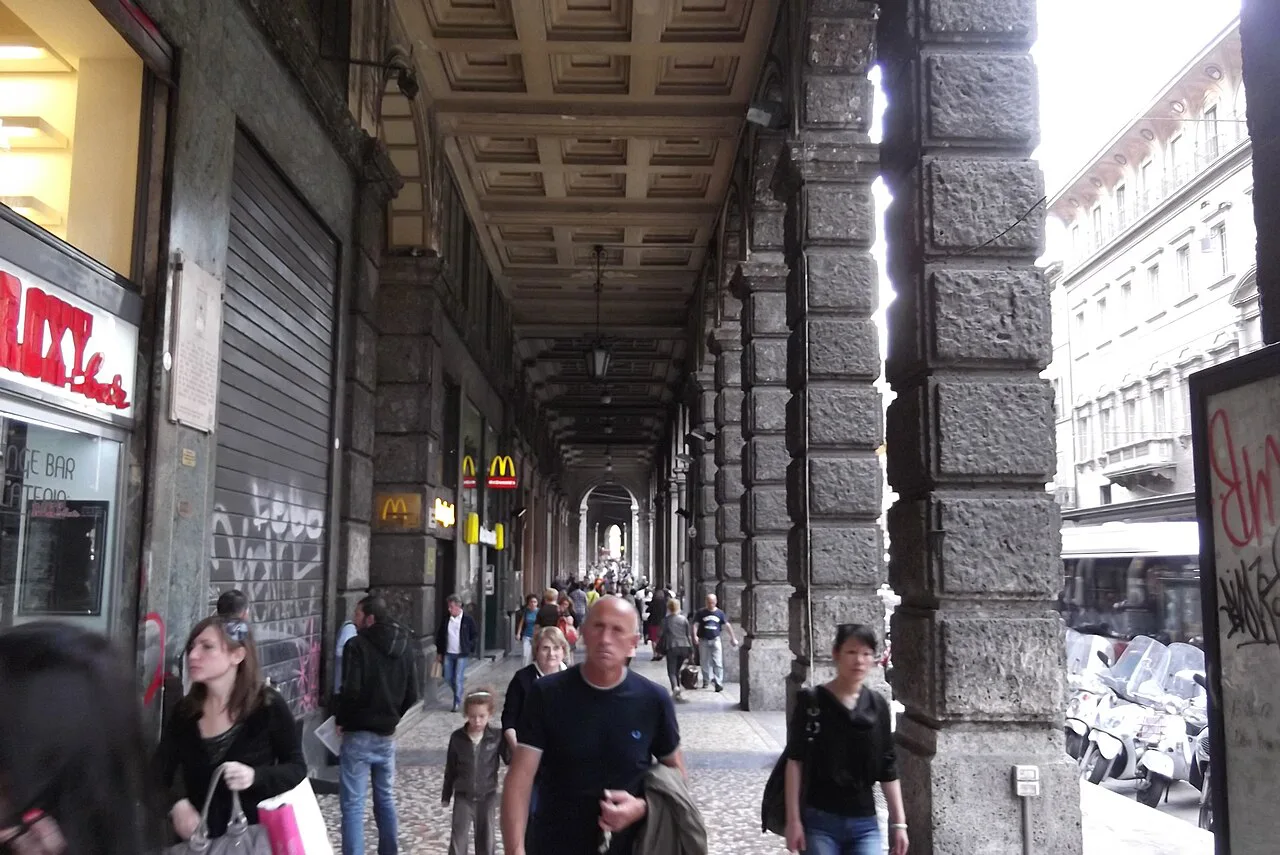

Where it is and how to walk it
The perimeter of the Quadrilatero del gusto is marked by the crossings of via Rizzoli, via dell'Archiginnasio, via Farini and via Castiglione, with tiny lanes running through the middle. Those lane names are a map of the old trades: the streets took their names from the arts and crafts once practised along them, so via Drapperie recalls the cloth workers and via Pescherie the fishmongers who gave the lanes their names.
Start at Piazza Maggiore and work north-east, letting the trade names steer you rather than following a fixed route: via Clavature, via Drapperie, via Capraie and via Pescherie Vecchie all sit within a few minutes of each other. The lanes are short, so a loop back to the starting point costs little time.
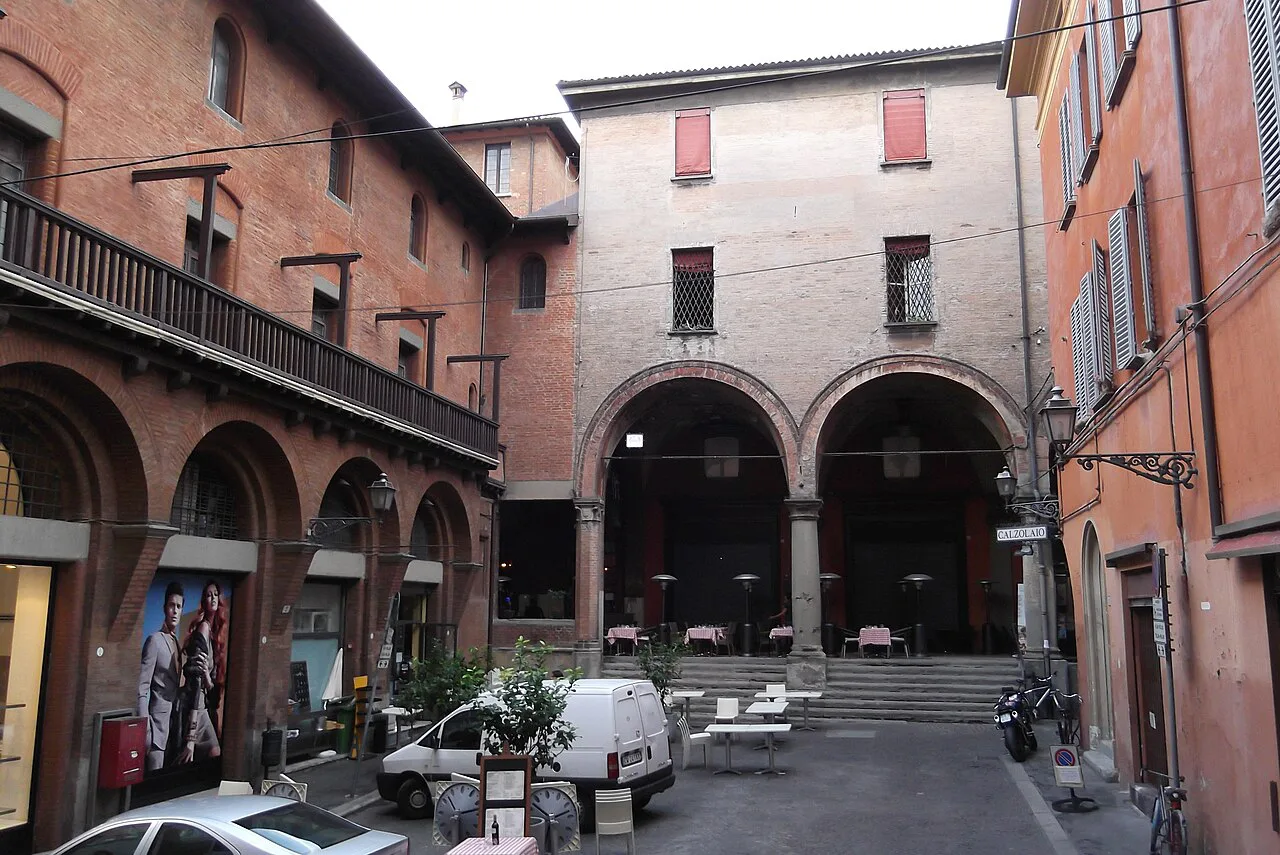

Via Drapperie and via Capraie: salumi, cheese and fresh pasta
The old salsamenterie and botteghe on via Capraie and via Drapperie are where you taste the cornerstones of Bolognese food: cheeses and salumi, the city's mortadella above all, plus fresh pasta, rosticceria items, preserves and sweets. Buy in small quantities as you go rather than planning one large shop, since the lanes are dense with counters worth stopping at.
For a proper look at one of these counters, Antica Salumeria Tamburini on via Caprarie is the kind of old-school salumeria the quarter is known for.
Via Clavature and the Mercato di Mezzo
Via Clavature is one of the main arteries of the Quadrilatero and holds one of the entrances to the Mercato di Mezzo, a historic spot in Bologna's food culture with small counters offering a range of dishes to eat at communal tables or take away. It is the most practical stop if you want a sit-down bite inside the market rather than assembling a picnic from shops.
Osteria del Sole in Vicolo dei Ranocchi
In Vicolo dei Ranocchi sits Osteria del Sole, described as the oldest osteria in Bologna and the only one that has kept its original formula: it serves wine, and today drinks generally, while everyone brings their own food from outside. That single rule changes how you plan a lunch here, so buy bread, salumi or a slice of rosticceria in the surrounding lanes first and carry it in.
It is a genuinely different way to eat in the centre, and a good use of the quarter's shops: assemble a plate from a salumeria and a bakery, then sit down with a glass.
Bakeries, Certosino and pinza bolognese
The historic bakeries in the area turn out bread and sweets continuously, along with one of Bologna's most traditional cakes, the Certosino. The other name to know is pinza bolognese, a sweet filled with mostarda, the pear and quince preserve typical of the region, which is worth trying before you leave the city.
Both are sturdy, transportable things to buy: a slice of Certosino or a piece of pinza survives a day in a bag far better than fresh pasta. If coffee is your habit, Caffè Terzi is the stop to build into the same walk.
Drogherie and bottiglierie for the journey home
The quarter's drogherie and bottiglierie, the old grocery and wine shops, hold the selection of balsamic vinegar, sauces, sughi, preserves, chocolate and boxed sweets that makes the Quadrilatero useful at the end of a trip rather than the start. Bottles and jars are heavy, so buy them on your last pass through the centre instead of carrying them around all day.
Via Pescherie Vecchie: tigelle and salumi
Via Pescherie Vecchie is where the quarter's eating gets social: the premises follow one after another and it works particularly well for an aperitivo towards sunset. Order tigelle with salumi, the small round griddled breads split and filled with cured meats, and expect salumerie, greengrocers, butchers and bakeries packed into the same short street.
What holds the quarter together is atmosphere as much as shopping: history and tradition, sharing and discovery, with each shop carrying its own story. That is the argument for walking it slowly rather than ticking off individual addresses.
How long to allow and when to go
Two hours covers the quarter at a browsing pace with time for a stop at the Mercato di Mezzo or a plate assembled for Osteria del Sole. The lanes are busiest around aperitivo time in the evening, when via Pescherie Vecchie is at its liveliest but least conducive to unhurried browsing.
What's nearby
Piazza Maggiore anchors one end of the walk and the Due Torri the other, so the quarter drops neatly into a day already built around the centre. Arrive through the piazza, cross the market lanes, and come out near the towers with your shopping done.
Shop and market opening times vary, so check the Bologna Welcome listing for the area before setting out to a specific address.
Is the Quadrilatero worth building into your day?
Yes, provided you treat it as a food walk rather than a sightseeing stop: two hours, a shopping bag, and a lunch plan built around bringing your own food to Osteria del Sole. Anyone expecting a single covered market hall will be surprised; the quarter is the streets themselves, and the eating happens in the shops and at the tables along them.
Come in the late morning for calm browsing, or in the early evening if you want the buzz of via Pescherie Vecchie with tigelle and salumi. Either way, start at Piazza Maggiore and finish at the Due Torri, and the walk fits the shape of the city.
Explore more Bologna food guides
Frequently Asked Questions
Dov'è il Mercato di Mezzo a Bologna?
The Mercato di Mezzo sits in the Quadrilatero, with one of its entrances on via Clavature. It is a historic spot in Bologna's food culture, with small counters serving dishes to eat at communal tables or take away.
Qual è la piazza più famosa di Bologna?
Piazza Maggiore, which forms one end of the Quadrilatero. Walk out from behind it and you are in the narrow market lanes; the Due Torri sit at the other end of the same walk.