Best Gelato in Positano: Gelaterie Worth Your Cone
Our picks for the best gelato in Positano, from Collina Positano Bakery to Buca di Bacco, plus the flavours to order and how to spot real artisan gelato.
On this page
The short answer: Collina Positano Bakery, up in one of the town's small piazzette, is the stop for creative flavours such as sfogliatella, while Buca di Bacco, down on the seafront, is where you go for a cone with the water in front of you. Both are named by local food writers as addresses worth seeking out, and they suit different moments of the day.
This guide covers the two Positano gelaterie properly, then the local flavours worth ordering, the tests that separate artisan gelato from the displayed-for-tourists version, and how to order a cone, a cup or a brioche. It finishes with the coast's other gelaterie and the granita kiosk above town.
The best gelato in Positano: the short answer
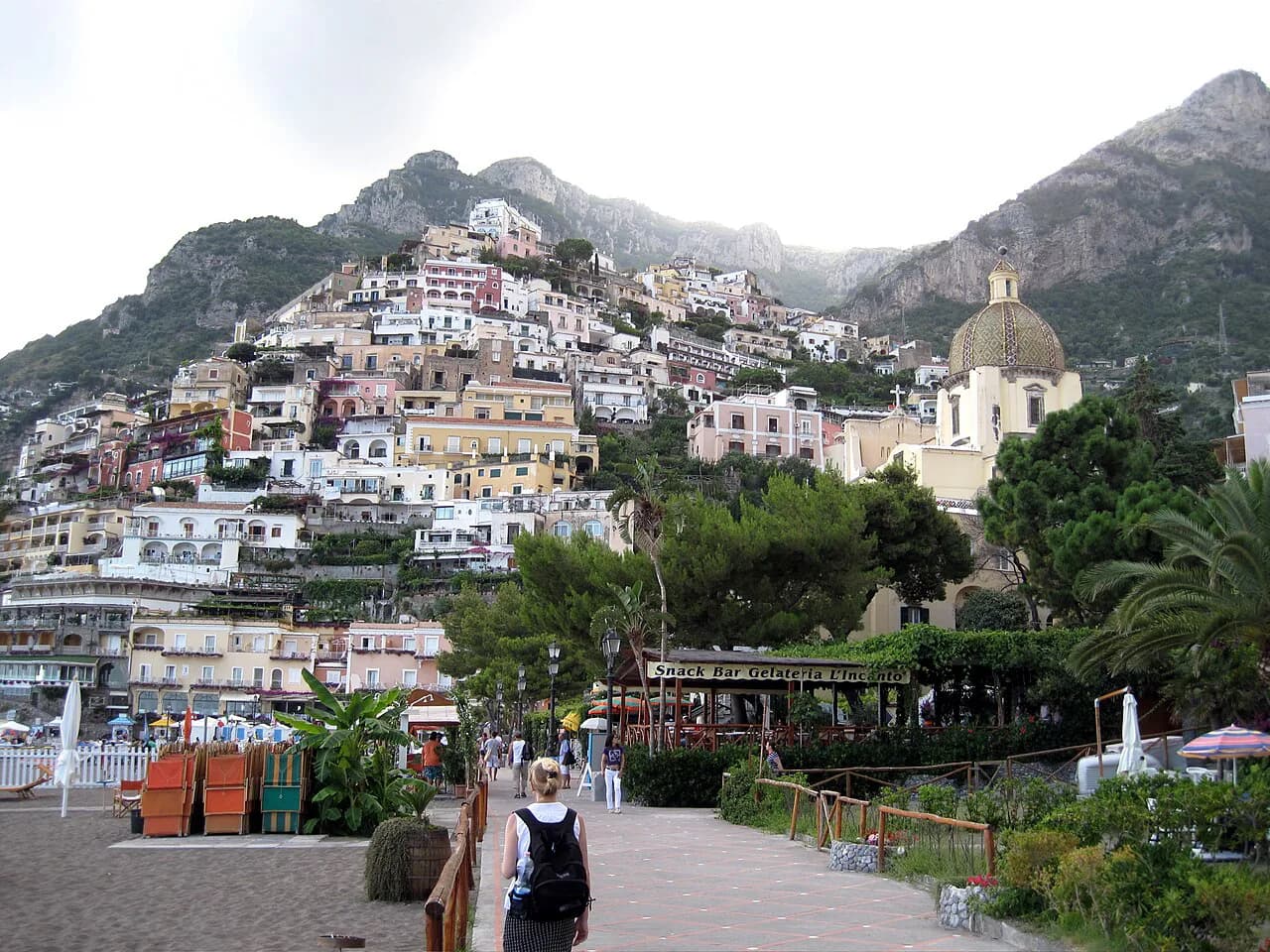
Two Positano addresses come up consistently: Collina Positano Bakery, a pasticceria, caffetteria and gelateria in the centre, and Buca di Bacco, a gelateria on the waterfront. Collina is the better pick for a sit-down pause and unusual flavours; Buca di Bacco wins on setting and on the classic Amalfi lemon scoop.
Choose by mood rather than by ranking. If you want to sit, linger and try something you cannot get at home, climb to Collina; if you are coming off the beach and want a cone in your hand within minutes, Buca di Bacco is the obvious stop.
Collina Positano Bakery: the flavour to order
Collina sits in the heart of Positano, a few minutes from the beach, and was opened in 2014 by Francesca and Luigi to keep alive a bar that had been run by their father for thirty years. It doubles as a bakery and café, so you can pair a scoop with pastries or something savoury if the timing suits a proper sit-down.
Order the sfogliatella flavour. It is gelato studded with pieces of the Neapolitan pastry of the same name, a shell-shaped shell of crisp layered dough around a sweet ricotta filling, so the scoop tastes of both cream and pastry shards. Strawberry with lemon is the other good call for a hot afternoon, and dark chocolate is there for anyone who finds fruit flavours too polite.
Collina also makes non-dairy choices for people who cannot take lactose, which is worth knowing if part of your group usually skips gelato altogether. If you are after a proper sit-down meal later, the best restaurants in Positano are worth planning around before you commit to a large lunch.
Buca di Bacco: gelato on the seafront
Buca di Bacco is right on the water at Positano, and the combination of a gelato and the sea view is the whole point. Its own publicity calls it the place to eat the best gelato in Positano, a claim to treat as marketing rather than a verdict, but the setting is genuinely hard to beat.
The range runs from simple fruit and cream flavours to more elaborate ones, with yogurt and Amalfi lemon among the picks. Beyond scoops they serve filled crêpes and waffles, so it works for a group where one person wants a cone and another wants something warm and sweet.
Expect to queue at peak afternoon and evening times, when the beach crowd moves up into town. If waiting is not how you want to spend a holiday hour, go earlier in the day or walk up to Collina instead.
What makes Positano's gelato different
The local advantage is citrus. The lemon varieties grown along this stretch of coast, and the family estates around Amalfi, give gelaterie here a fruit flavour with real acidity and perfume rather than a flat sugar hit. Almonds, Bronte pistachio and Giffoni hazelnut are the other recurring building blocks, and good shops will tell you which they use.
Positano is also a pastry town, so gelato makers borrow from the pastry counter: sfogliatella at Collina, delizia al limone and limoncello flavours at shops in Amalfi. That crossover is the reason to order something you have not seen elsewhere rather than defaulting to chocolate.
Flavours to look for: lemon, sfogliatella and dark chocolate
Lemon is the flavour to judge a shop by. Ask for the plain lemon or the Amalfi lemon variety and see whether it tastes of fruit and zest or of syrup; a good one is sharp enough to make you pull a face before the sweetness arrives. Delizia al limone, a lemon cream cake from this coast, also turns up as a gelato flavour in Amalfi and is worth ordering when you find it.
For something richer, order dark chocolate or a pistachio made with Bronte nuts; a well-made chocolate scoop should taste of cocoa rather than sugar. Sfogliatella at Collina is the local oddity to try once, and if you like it, a pastry from one of the pastry shops in Positano makes a good second stop the next morning.
How to tell artisan gelato from the tourist stuff
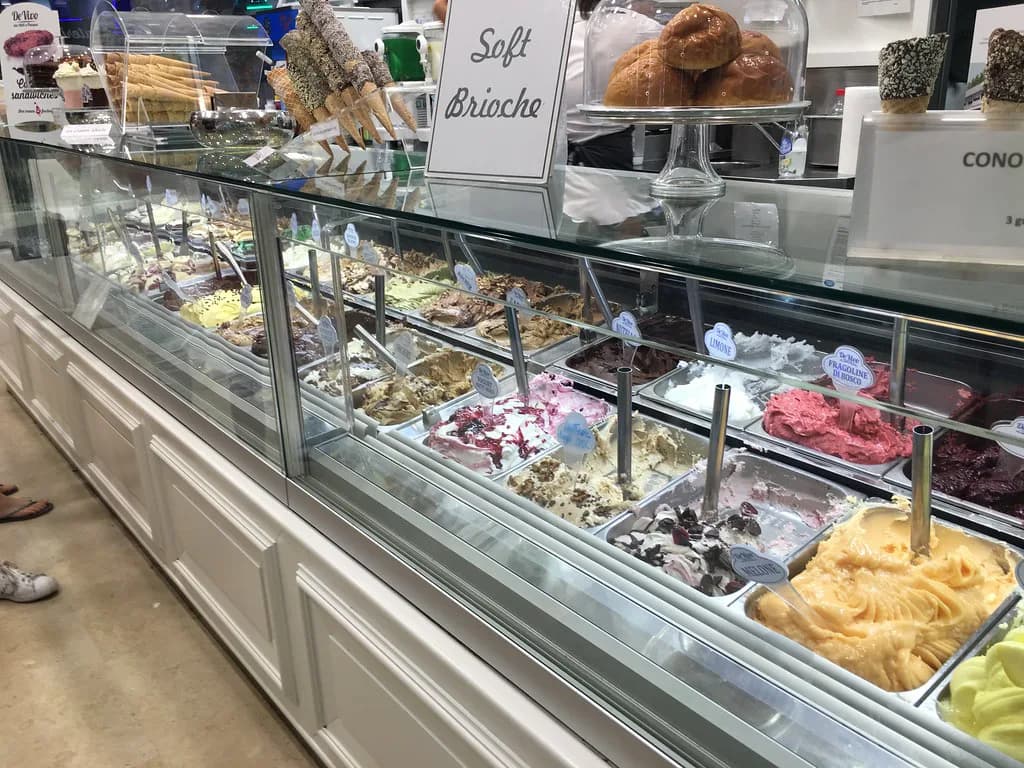
Start with the display. Genuine artisan gelato usually sits in shallow metal tins and looks a little uneven, because it is turned and refilled by hand rather than piped into perfect swirls. Mounded, brightly coloured gelato with matching sprinkles is built to photograph well, not to taste of much.
Then read the flavours. If pistachio is neon green, the colour is coming from something other than nuts. Natural pistachio gelato is a dull khaki-brown, lemon is pale cream rather than yellow, and banana is grey-beige.
Finally, look at the shop's turnover and its menu. A short list of flavours, a shop that sells out of things, and a visible kitchen all suggest gelato made on site. A list of forty flavours in early October usually means a base mix rather than seasonal fruit.
Cone, cup or brioche: how to order
Order at the counter and pay after you have chosen, which is the usual gelateria rhythm in Italy. You can ask for a cup (coppetta) or a cone (cono), and the sizes are usually named piccolo, medio and Grande; the staff will scoop the flavours you point at. If you want a brioche, ask for a brioche con gelato, a sweet bun split and filled with your scoop, which is the Southern Italian way to eat gelato for breakfast.
Panna, unsweetened whipped cream, is often offered on top; at Buca di Bacco the version with cream is a valid order rather than an indulgence. Do not expect a fresh cone at every shop, and if you need a dairy-free scoop, ask which flavours are made with soya base rather than guessing from the labels.
Prices vary by size, flavour and where you sit, so read the board before you commit to the large cone. Some gelaterie charge more for flavours made with nuts or chocolate, and a seafront address can cost more than a shop a street back.
Gelato further along the coast: Amalfi, Ravello and Maiori
In Amalfi there are two strong stops a couple of minutes apart. Pasticceria Savoia, founded in 1918 by the Amatruda family and still family-run, sells the Savoia flavour, an almond gelato marbled with crunch, chocolate and amaretti, and the Cubana, chocolate with rum and hazelnut crunch. Close by, Cioccolato e Gelato Andrea Pansa works with Latte Nobile milk, Amalfi lemons and Bronte pistachio, and its crema di Nonna Adriana is a custard-based scoop.
In Ravello, Baffone Gelateria Artigianale sits a few steps from Piazza Duomo, run by siblings Ugo and Valentina D'Angelo. It makes gelato daily in-house, with vegan options and flavours such as ricotta and pear and a ricotta with Strega liqueur; it is the stop to plan after a walk around the town's villas.
In Maiori, Geljada sits on the lungomare, the long seafront promenade, and offers the usual classics alongside sweeter combinations such as salted caramel. It also does soya-based gelato and sorbet, which makes it a sensible stop if part of your group needs dairy-free options.
Granita at Lemon Point above Positano
Lemon Point is a small kiosk in a panoramic piazzetta in Nocelle, above Positano, just before the long staircase down to town. It serves granita, the icy Sicilian-style slush, made to order with local organic citrus, along with fresh spremute and a lemon coffee; locals and walkers treat its lemon granita as the standard for the area, though any best-of verdict is only ever an opinion.
It is a different pleasure from gelato and a good reason to walk up rather than take the bus. If you are walking the stairs down to Positano in summer, start early and carry water. If gelato is just part of a bigger plan, cooking classes in Positano or a walk around Marina Grande can fill the rest of the day.
Sorbetto, soy and lactose-free options
Sorbetto, or sorbet, is dairy-free by definition and is usually made from fruit and sugar, so it is the safe order for anyone avoiding milk. Collina Positano Bakery offers lactose-free choices, and Baffone and Geljada offer vegan or soya-based scoops alongside the dairy range.
Ask at the counter about allergens. Nut-based flavours such as pistachio and almond carry an obvious allergy risk, and cream toppings are added by default at some shops, so say no panna if you need to avoid it. It is also worth checking current prices and opening hours, as both vary by season.
Which gelato stop suits your day
If you want an interesting flavour and a seat, go to Collina Positano Bakery and order the sfogliatella or the lemon and strawberry. If you want the classic seaside cone with a view, Buca di Bacco is the stop; go before the afternoon rush.
For a day that moves along the coast, build in Savoia or Pansa in Amalfi, Baffone in Ravello and Geljada in Maiori, and walk up to Lemon Point for granita if you are heading to Nocelle anyway. Save room for dinner, too: the best pasta in Positano is not something to reach full before.
Explore more Positano food guides
Frequently Asked Questions
What are ice cream shops called in Italy?
A gelateria is a shop selling gelato; the plural is gelaterie. A pasticceria is a pastry shop, a caffetteria is a café, and a bar in Italy is where you go for coffee or a drink rather than a late-night venue.
What are the most popular gelato flavours in Italy?
The classics are chocolate, pistachio, hazelnut, stracciatella, fiordilatte and lemon. On the Amalfi Coast, lemon and other citrus flavours made with local fruit are the ones to order, along with pastry-inspired scoops such as sfogliatella and delizia al limone.
How can you tell authentic gelato in Italy?
Look for gelato in shallow metal tins, turned and refilled by hand, with natural colours: dull khaki pistachio and pale lemon rather than neon shades. A short, changing flavour list and a visible production area are good signs; thirty-five perfectly swirled flavours usually are not.
Which Italian city has the best gelato?
There is no agreed winner, and any claim would be an opinion. Italy has strong gelato traditions in many cities, from Turin and Florence to the south, and on the Amalfi Coast the quality of local citrus makes lemon the flavour worth judging a shop by.
Sources
Notes for your next meal in Italy
Optional updates to our food guides.
You might also like
Continue reading
More guides you'll find useful