Best Pasta in Genoa: Where to Eat Pesto, Trofie and Pansoti
Where to eat the best pasta in Genoa, from trattorias serving pesto on mandilli de saèa to the pastifici selling fresh trofie, pansoti and corzetti.
On this page
The best pasta in Genoa splits into two answers: eat it in a trattoria, where pesto is pounded to order and tossed with mandilli de saèa or trofiette, or buy it fresh from a pastificio and cook it yourself. Both are part of the same food culture, and the city is unusually well supplied with both. This guide names the trattorias and the pasta shops, the local shapes each one is known for, and where they sit in the city.
Genoa's pasta is Ligurian first: trofie, the short twisted noodles rolled by hand; trenette, flat thin strips; mandilli de saèa, literally silk handkerchiefs, cut by knife into small lasagne; and filled shapes such as pansoti and corzetti, the latter stamped with a carved wooden mould. The sauces follow the same logic, with pesto leading and potato and green bean alongside it. Once you know those names, ordering in the city becomes far simpler.
What pasta Genoa is known for
Trofie are short, hand-rolled twists that hold a thick sauce; trenette are flat strips, often cooked with cubed potato and green beans so the pesto clings to everything on the plate; mandilli de saèa are small squares of egg pasta cut with a knife, thin enough to be described as silk. Filled pasta runs to pansoti, and corzetti are stamped discs, traditionally made in the Levante, pressed with a wooden stamp. These are the shapes you will see most often on Genoese menus.
Pesto alla genovese is what makes the city's pasta distinctive. Its ingredients are basil, pine nuts, garlic, olive oil, coarse salt and cheeses, combined in a mortar, and the basil traditionally comes from the Genoa district of Prà. Basilico Genovese carries DOP status, and the leaves grown there are small, spoon-shaped and deeply aromatic. The practical point for a visitor is that a good Genoese kitchen treats the sauce as the dish, not a garnish.
A useful test when ordering is how the pesto is paired. Mandilli de saèa suit a looser, creamier sauce; trofie need a thicker one to cling to the twists; trenette with potato and beans is a meal in itself rather than a starter. If a menu lists the shape rather than the sauce, ask which pesto it comes with, since kitchens vary in which combinations they keep on the card.
Trattoria delle Grazie: pesto on mandilli de saèa in the vicoli
In the narrow lanes a few steps from the Porto Antico, Trattoria delle Grazie keeps one of the most faithful menus to Genoese cooking, rotating dishes with the seasons and leaving the classics largely untouched. The signature plate here is pesto on mandilli de saèa, the silk handkerchief squares cut by knife. The kitchen's pesto is creamy and carefully balanced rather than overpowering, and in 2023 the dish was listed at 10 euros.
It is an essential trattoria rather than a grand one, which is precisely why it suits a straightforward lunch between the port and the old town. The trade-off is that a short seasonal card means the dish you came for may not always be on it, so treat the mandilli as the aim rather than a guarantee. Via delle Grazie, 48 is the address, in the heart of the vicoli.
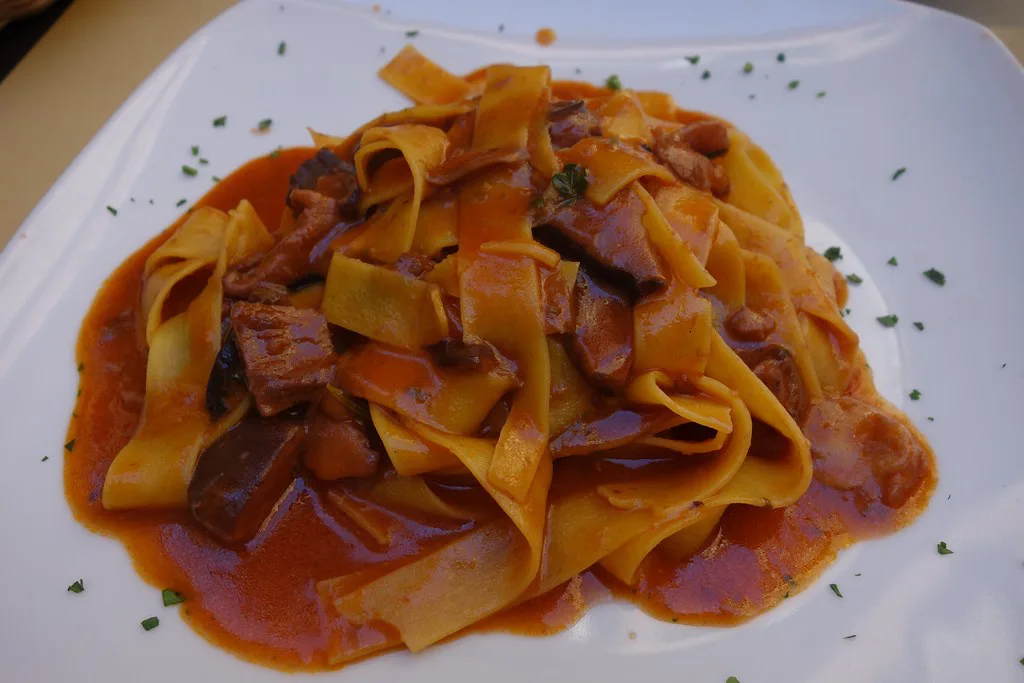
Trattoria della Raibetta: trenette with potatoes and beans
Trattoria della Raibetta takes its name from an old legume market that once stood in the district, and it has long been a fixed point facing the port in the old centre. The cooking is uncomplicated and regional, and the pesto is made in the traditional way, vivid green, decisive and salty. It is the address for anyone who wants the classic Genoese combination served without reinvention.
Order the trenette dressed with pesto, potato and green beans, listed here as trenette avvantaggiate, a long pasta made with chestnut flour that gives it a nutty edge; in 2023 it was priced at 12 euros. The potatoes and beans make it a full plate rather than something to follow a primo, which is worth knowing when planning a multi-course meal. Vico Caprettari, 12r puts you a short walk from the aquarium and the port area.
Trattoria dell'Acciughetta: traditional trofiette near the Acquario
Trattoria dell'Acciughetta sits just steps from the Acquario in Piazza Sant'Elena, run by a young team that revisits Ligurian ingredients in contemporary compositions. The surprise is that its trofiette al pesto are deliberately plain and traditional, listed on the menu as an evergreen and made with good ingredients rather than culinary tricks. In 2023 the plate cost 12 euros, and it is a useful compromise for a group where some want tradition and others want something more modern.
Trofiette here are the small, twisted shape with pesto worked through, a good benchmark for the city's signature dish in a setting that feels more current than the old-guard trattorias. If you are eating around the aquarium and the port, this is the closest strong option for a proper plate of Genoese pasta. Piazza Sant'Elena is the address.
Trattoria Rosmarino: a modern trattoria near Piazza De Ferrari
A few steps from Piazza De Ferrari, Trattoria Rosmarino balances Ligurian tradition with some contemporary touches on a deliberately compact menu. The short card changes regularly, which is a sign of attention to fresh ingredients rather than a fixed tourist offer. Trofiette with a fine, well-balanced pesto are a constant alongside the other regional classics.
That compactness is the point: you get a focused kitchen in a central location, but fewer alternatives if the table wants variety. It suits a lunch in the middle of a day in the centre, when you want good pasta without crossing the city. Salita del Fondaco, 30 is the address, and our pick of the best restaurants in the Centro Storico covers the wider neighbourhood if you want to build a crawl.
Il Genovese and the pesto culture around it
Il Genovese is the address most closely identified with pesto in the city, and Roberto Panizza, its chef, is described as an ambassador and scholar of the recipe, to the point of founding a competition dedicated to it. That reputation makes it a place to eat pesto as a subject rather than just a sauce. If pesto is the reason for your visit to Genoa, this is the name to plan around.
Expect a menu that treats the sauce seriously, with the traditional combinations and a kitchen built around the recipe. The trade-off is that a restaurant with this profile attracts attention, so a table at peak times is worth arranging in advance. If you want to go deeper into the ingredient side, our guide to pesto in Genoa covers the basil, cheeses and method behind the sauce.
Buying pasta to cook yourself: the pastifici of Genoa
Genoa's pastifici, the fresh pasta shops, are as important to the city's pasta culture as its trattorias. They sell trofie, pansoti, corzetti, ravioli and lasagne by weight, along with sauces and ready dishes, which makes them useful for self-caterers and for anyone with a kitchen. Many are shops with a counter rather than restaurants, so you buy to take away rather than eat in.
Buying by weight means you can mix shapes for a single meal, and a small quantity of pesto or salsa di noci will cover pasta for two. If you are staying in an apartment, this is the most economical way to eat well in Genoa. The trade-off is that fresh pasta is best cooked the same day, so buy it close to when you plan to eat rather than at the start of a long day out.
Pasta Fresca Assirelli in Sampierdarena
Pasta Fresca Assirelli opened in 1967 and is still run by the founder's daughter, Caterina, keeping the traditions of this historic Sampierdarena pastificio alive. The counter covers the great Ligurian classics, corzetti, pansoti and trofie, but also reaches beyond the region with orecchiette and plin. It is a good single stop if you want both local shapes and something different for another meal.
Among the condiments there is salsa di noci, the walnut sauce, adjusted here with a touch of cream, as well as sauces for wild boar, mushrooms and fish. That makes it practical for assembling a full dinner from one counter. Via Carlo Rolando, 27 in Sampierdarena is the address, west of the centre.
Il Trofiaio: three shops and a long list of pasta and sauces
Il Trofiaio has grown to three shops in Genoa, one in the centre on Piazza Colombo, one at Piazzale Bligny and one on Via Corradi in Sestri Ponente, and alongside the pasta it runs side ventures such as aperifritto, fried focaccine with cheese. The core of the offer is simple: flour, water, salt and sometimes egg, used for traditional preparations and for fillings from across Italy. The name is a fair warning that trofie are the thing to buy.
Local lore puts the number of recipes on offer at 57, spanning pasta, sauces and ready dishes, so it is a place to browse rather than dash into. The central branch on Piazza Colombo is the easiest to reach if you are staying in the old town. For a self-catering dinner, pick a shape and a sauce from the same counter and you have a complete plate.
Reggio Pasta Fresca in Sestri Ponente
Reggio Pasta Fresca traces its history to 1920, when Giacomo opened the first shop in Sestri Ponente, and the family business later split into a salumeria and a pastificio. The pasta side makes egg pasta, filled shapes and bronze-drawn pasta, but the real strength is pasta flavoured in the dough itself, with borragine, basil, marjoram or chestnuts. These are not sauces but the pasta itself, which changes the flavour of the whole dish.
Buy a flavoured shape and keep the sauce simple, since the dough is already doing the work, and a plain butter or oil dressing will let the borragine or chestnut come through. The Sestri Ponente location, on Via Sestri, 26, is a reason to make the trip west if you are staying near the centre.
Lo Scolapasta at the Mercato Orientale
Inside the Mercato Orientale on Via XX Settembre, Lo Scolapasta runs a corner dedicated to fresh pasta, with the pasta extruder visible and a firm attachment to regional recipes. The market setting means you can shop for other ingredients in the same visit, which is convenient if you are cooking. It is a good place to see pasta being made while you buy it.
Do not miss the tortelli di magro, the meatless filled pasta, a Ligurian staple that works well with a simple butter or vegetable sauce. The Mercato Orientale is in the centre, close to Piazza De Ferrari, so it slots easily into a morning of shopping. Via XX Settembre, 75r is the address.
La Pasta Fresca Danielli: bricchetti and ravioli al pesto
La Pasta Fresca Danielli supplies hotels, restaurants and boats but also sells to the public, with pasta and sauces available over the counter on Via Galata, 41r. The shop has become known for shipping Ligurian flavours across Italy, which says something about how well its pasta travels. It is a useful address in the centre for both pasta and a sauce to go with it.
The things to buy here are bricchetti and ravioli al pesto, the shop's known specialities, both of which carry the city's signature flavour into a filled shape. If you want a single purchase that answers the question of what Genoese pasta tastes like, a bag of ravioli al pesto is a straightforward choice.
Pasta Fresca Gemma and Pasta Fresca Belvedere
Pasta Fresca Gemma has been trading since 1935 and is a reference point for pasta in all its forms, with three shops in the city on Via Monticelli, Via Giovannetti and Piazza Palermo. Beyond pasta, the offer includes condiments, ready dishes and flours, plus a broad range of wholemeal pasta and sweets such as pandolce and canestrelli. It is a good stop if you want one shop to cover a whole meal and a dessert.
Pasta Fresca Belvedere keeps a simple counter where everything produced is on display, with the Ligurian classics alongside pumpkin ravioli, gnocchi and lasagne al ragù. For anyone still hungry, there are polpettoni and torte salate, the savoury pies that are part of Genoese tradition. Via Gaetano Colombo, 16r is the address, and the staff's advice on matching pasta to sauce is a reason to ask rather than guess.
How to order pasta in Genoa
Order by shape and sauce together, and expect the shape to tell you something about the sauce: trofie with pesto, trenette with potato and beans, mandilli with a creamy pesto, pansoti with a walnut or herb sauce. Portions in trattorias are usually a full plate, so a pasta primo plus a shared antipasto is often enough for two courses. If you want to eat lightly, a plate of trofie and a salad is a reasonable lunch.
Fresh pasta from a pastificio is sold by weight rather than portion, so ask for the amount you need for the number of people eating, and expect a sauce to be sold separately. For a picnic or a quick lunch, the same shops often sell ready dishes and savoury pies, which need no cooking at all. If you are eating out instead, our best restaurants guide and our cheap eats picks will fill in the rest of the day.
What to buy to take home
Pesto ingredients travel better than fresh pasta: a jar of good pesto, a piece of Parmigiano Reggiano and a bag of dried pasta will survive the journey home. For the full list of what pesto is made from and how the DOP basil fits in, see our guide to pesto in Genoa. Dried trofie or corzetti are also easy to pack and will remind you of the city long after the trip.
Fresh pasta, by contrast, is best eaten in Genoa within a day or two of buying, so plan any purchase for the end of the trip rather than the beginning. A small cool bag is worth the space if you want to carry pansoti or ravioli home. Between the two, the dried shapes and a jar of sauce are the safer souvenirs.
Where to eat your first plate of Genoese pasta
For a first plate, choose Trattoria delle Grazie for mandilli de saèa in the vicoli or Trattoria della Raibetta for trenette with potato and beans facing the port, and let the shape lead your order. If you want to cook, head to a pastificio such as Assirelli in Sampierdarena or Lo Scolapasta in the Mercato Orientale and buy pasta and sauce together. Both routes answer the question of the best pasta in Genoa in their own way.
Explore more Genoa food guides
Frequently Asked Questions
What pasta is Genoa known for?
Genoa is known above all for trofie, the short hand-rolled twists served with pesto, and for trenette, flat strips often cooked with potato and green beans. Mandilli de saèa, small squares of thin egg pasta cut by knife, are another local signature, and the city's filled shapes include pansoti and corzetti, the latter stamped with a carved wooden mould.
Is it rude not to finish your plate in Italy?
Leaving food is not a formal offence, but in a small trattoria a nearly untouched plate may be read as a comment on the cooking. Order what you can eat, and if a portion is too large, say so politely rather than leaving it silently. In Genoa, pasta portions are usually a full plate, so a primo plus a shared starter is often enough.
Can I buy fresh pasta in Genoa to cook at home?
Yes. Genoa's pastifici sell trofie, pansoti, corzetti, ravioli and lasagne by weight, along with sauces and ready dishes. Shops such as Pasta Fresca Assirelli, Il Trofiaio, Reggio Pasta Fresca and Lo Scolapasta at the Mercato Orientale are among the addresses to look for, and buying there is the most economical way to eat well if you have a kitchen.
Sources
Notes for your next meal in Italy
Optional updates to our food guides.
You might also like
Continue reading
More guides you'll find useful