Breakfast in Genoa: What to Eat and Where to Find It
Breakfast in Genoa means espresso and focaccia in the caruggi, or a cornetto at the bar. Here is what to order, where to go and how the morning works.
On this page
Breakfast in Genoa is short and salty: an espresso or cappuccino at a bar, a cornetto, and very often a warm slice of focaccia. In the caruggi, the narrow lanes of the old town, Genoese think nothing of dunking that focaccia into a cappuccino, a habit the city's own tourism office describes as normal here. This guide sets out what to order, the streets where the morning happens, the sit-down versus counter trade-off, and how paying works.
What breakfast in Genoa actually looks like
The default Genoese breakfast is a bar breakfast, eaten standing or perched on a stool, and it rarely runs longer than twenty minutes. You order coffee first, add a cornetto if you want something sweet, and add focaccia if you want something savoury and substantial. Bakeries open early and sell focaccia by the slice or by weight, which makes them the other obvious morning stop.
The city's tourism office frames the morning as a slow start in the old town: coffee and a cornetto near Sottoripa or Via San Lorenzo, with the option of warm focaccia to dip in cappuccino. What it does not do is name specific cafés, so plan your breakfast by neighbourhood and by what looks busy with locals rather than by a fixed list.
Why Genoese dip focaccia in cappuccino
Dipping focaccia into cappuccino looks odd to visitors from Britain and Ireland, where coffee is treated as a sweet course on its own. In Genoa it is simply how a lot of people eat breakfast: the salty, oily bread softens in the milky coffee and the two work as one dish. If you order it, ask for the focaccia warm, and eat it while it still is; cold focaccia is a different, chewier thing.
The habit also explains the pacing of a Genoese morning. There is no expectation that coffee must be finished before the bread arrives, and no ceremony about it. If you would rather keep them apart, order an espresso with the focaccia and a cappuccino afterwards, which is an equally normal way to do it.
The classic order: espresso, cappuccino and cornetto at the bar
At the counter, the order goes in the sequence you want it: espresso, cappuccino, cornetto, a slice of focaccia. Espresso is one small, strong coffee; cappuccino is espresso with hot milk and foam, and in Italy it is a morning drink, which is why you see it at breakfast and rarely after lunch. A cornetto is the Italian croissant, plainer than the French version and often glazed or filled with jam or cream.
Standing at the bar is the fast option in most Italian cafés, and a table adds a few minutes if you want to read, plan the day or rest your feet. Italian cafés commonly post their prices, so glance at the board or list at the counter before you order. Sitting down buys you time and a seat, not a different coffee.
Focaccia for breakfast: what to ask for and how it is sold
Genoese focaccia is a flat, oily bread, dimpled with finger marks, salted on top and baked in large trays. At breakfast you buy it by the slice or by weight, often cut from a tray at a bakery counter, and you can ask for it warm. In the old town it turns up in two sweet-leaning versions as well: with raisins, or dusted with sugar, which the city's tourism office lists as the afternoon merenda (snack) alternative to plain focaccia.
Focaccia is also a useful breakfast for a day of walking, because it is filling without being heavy. Buy it from a bakery rather than a bar where possible: the trays are larger, the bread is fresher, and you are more likely to be offered it warm. For a wider survey of the city's bakeries and their specialities, our guide to bakeries in Genoa covers the rest.
Where to start: Sottoripa and the streets around Via San Lorenzo
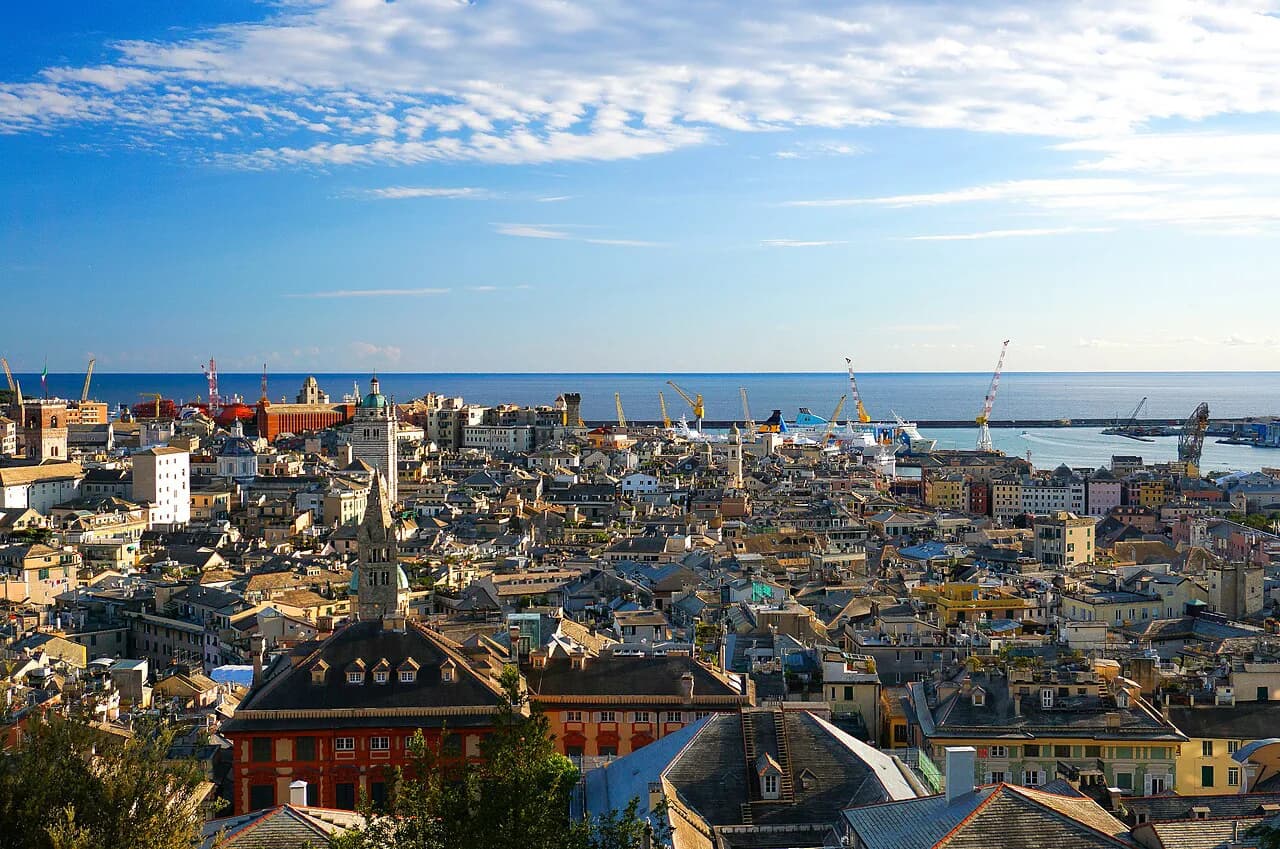
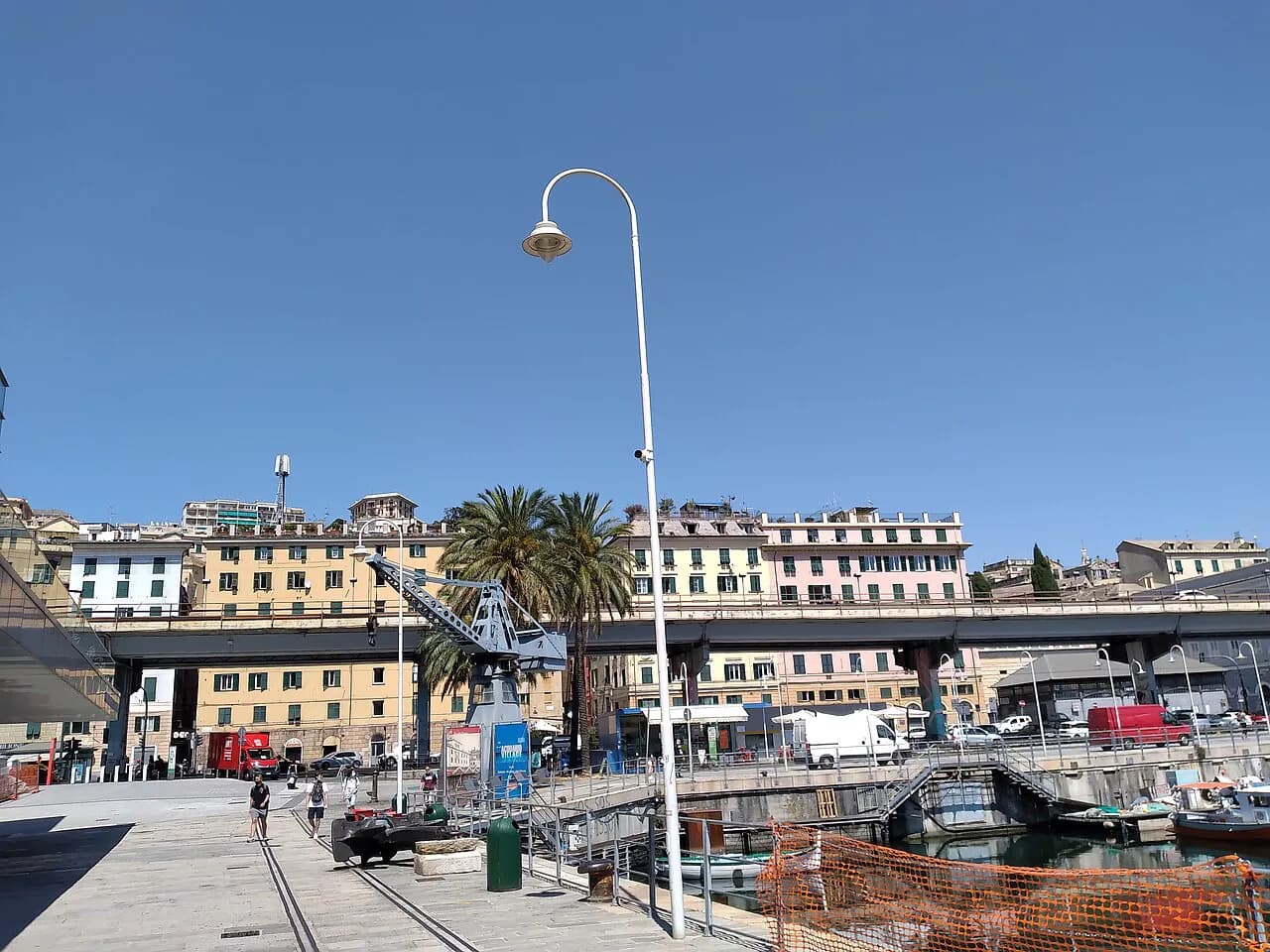
Sottoripa is the arcade running along the Porto Antico side of the old town, and it is the obvious first stop if you are staying near the port or arriving early. The tourism office suggests a café in Sottoripa or near Via San Lorenzo to start the day, with the Cattedrale di San Lorenzo a minute or two away for orientation. Both areas have a steady through-traffic of Genoese in the morning, which is the signal you want.
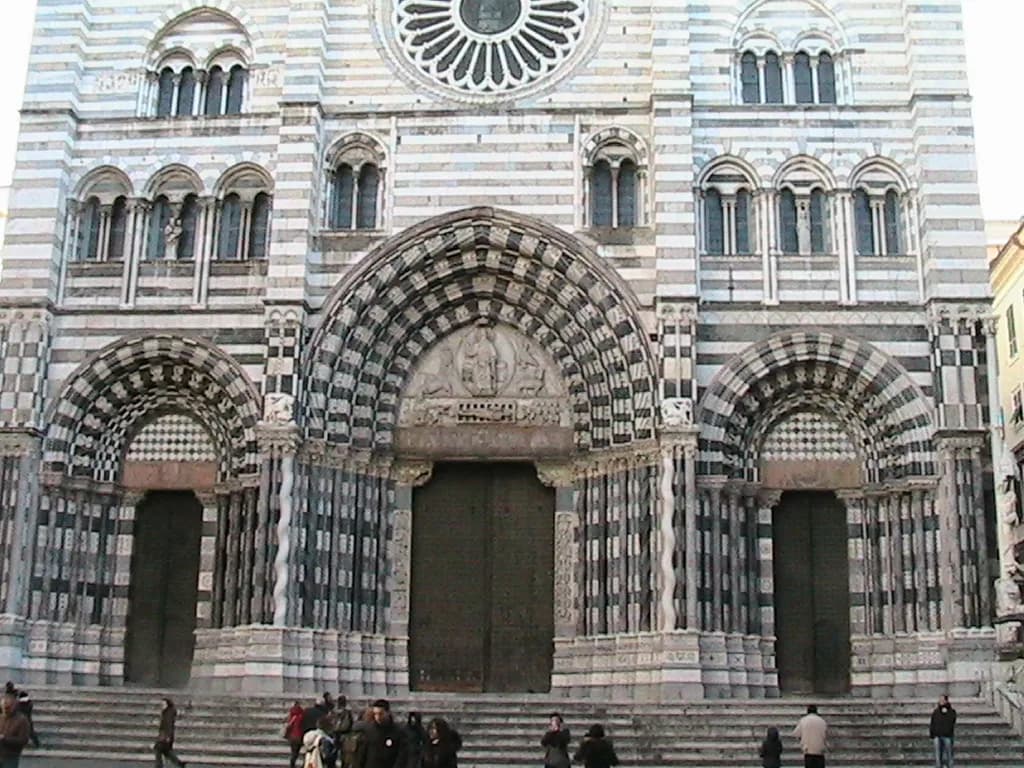
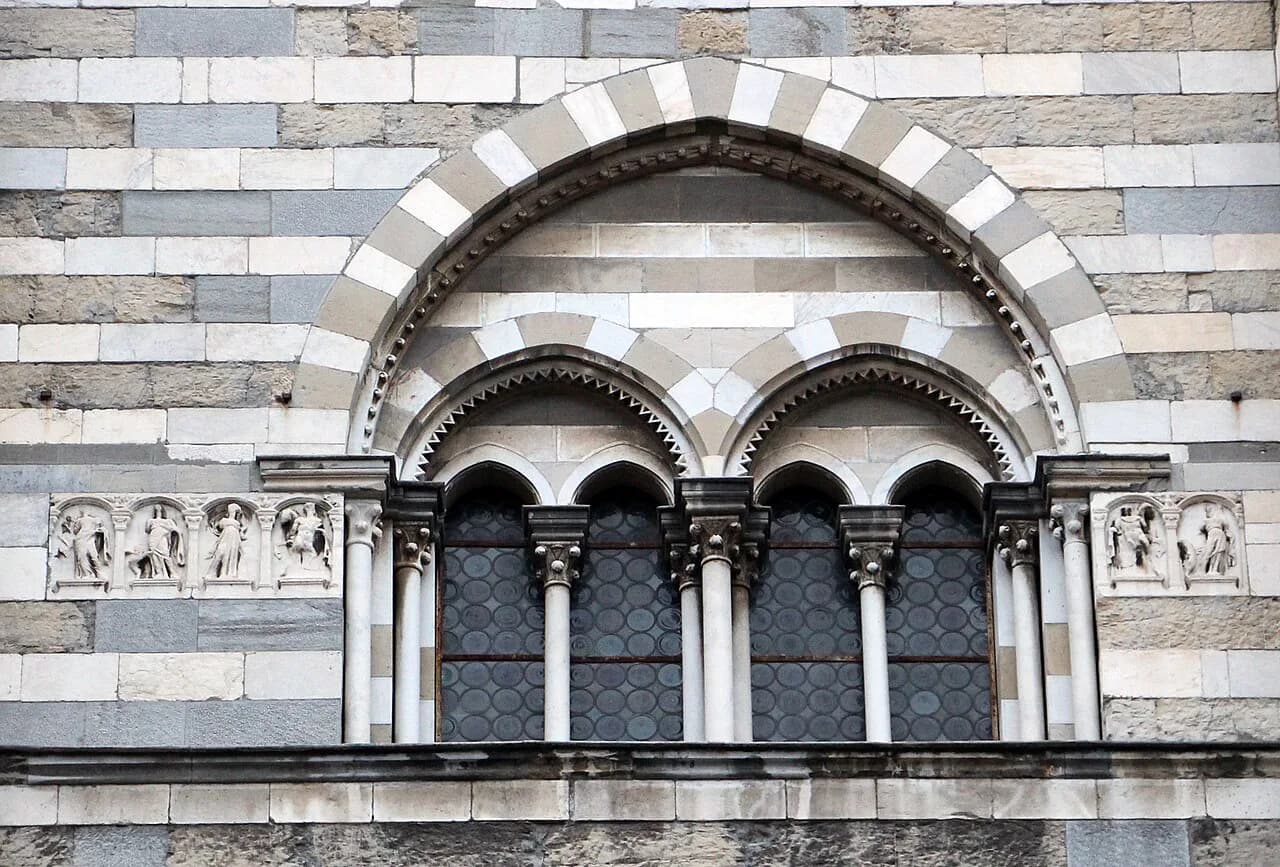
The Cattedrale di San Lorenzo, Genoa's cathedral, has a black-and-white striped façade and sits at the heart of this part of the old town. Use it as a landmark rather than a morning destination: you are here for coffee and bread, and the cathedral square works best as the point where you decide which lane to take next.
Eating breakfast in the caruggi: Soziglia, Campetto and Via della Maddalena
The caruggi are Genoa's narrow old-town lanes, and the quarter around Soziglia, Campetto and Via della Maddalena is where the city's historic workshops cluster. The tourism office describes this as the area for stationers, jewellers, fabric workshops and old bookshops, and it holds a similar density of small bars and bakeries that serve the people working there. Walk these lanes in the morning and you get breakfast in the middle of ordinary Genoese city life.
Piazza San Matteo, the small square lined with the medieval alberghi of the Doria family, and Via Garibaldi, the Strada Nuova of the UNESCO-listed Palazzi dei Rolli, are close enough to fold into the same walk. Neither is a breakfast destination, but both make natural endpoints for a morning that begins with coffee and ends with a slow loop back. Plan the walk first and pick your bar when you see one with a crowd at the counter.
For a proper sit-down meal later in the day, the trattorias hidden in these same lanes are the ones to note for lunch. Our guide to the best restaurants in Genoa maps the Centro Storico eating scene by quarter, so you can keep breakfast light and leave room for a plate of trofie al pesto, the twisted pasta with green basil sauce, at midday.
The mid-morning option: sweet focaccia and panera
If you eat breakfast early, a second small stop mid-morning is entirely normal in Genoa. The tourism office names two options for the merenda: focaccia again, including the sweet versions with raisins or sugar, or panera, a coffee semifreddo that the city's tourism office says was created in Genoa in the nineteenth century. Panera is a frozen, creamy coffee dessert, closer to a very cold mousse than to ice cream, and it works as a mid-morning refresher on a warm day.
Treat the merenda as a flexible slot rather than a fixed hour. If you have had a late, large breakfast, skip it and save the appetite for lunch; if you were up early and walked the caruggi before nine, a slice of sweet focaccia or a panera around eleven makes the rest of the morning easier. Either way, eat it sitting in a piazzetta rather than walking, which is how the city's own tourism office describes the pleasure of the stop.
How to order and pay at a Genoese bar
In most Italian bars you pay at the till first, then take the receipt to the counter and order. The till is the cassa, the receipt is lo scontrino, and the barista will want to see it, so keep it in your hand rather than folded in a pocket. At a busy morning counter this is faster for everyone: you are not holding up the queue while someone finds change.
If you plan to sit at a table, say so when you order or look for table service, because the price list often distinguishes the two. Ask for the bill at the end rather than paying at the counter when you are seated, or you may end up paying twice for the same coffee.
Sitting down versus standing at the counter
Standing at the counter is the Genoese default for a working morning: you drink your coffee in a couple of minutes, eat your focaccia, and leave. It is also usually the cheaper option, since Italian cafés commonly price counter service below table service; the difference is on the price list, so check it before you commit. A table buys you time and a seat, not a different coffee.
Choose the table when you have a reason: a group that needs to plan the day, a rainy morning, or a long breakfast before a train. Choose the counter when you are alone and the city is already busy. The trade-off is minutes and euros, not quality, and both are legitimate ways to have breakfast in Genoa.
Breakfast near the main sights without the tourist markup
The area around the Porto Antico and the cathedral draws the heaviest foot traffic, and the bars closest to those landmarks are the ones most likely to price for it. Walk a few lanes inland, towards Soziglia, Campetto or Via della Maddalena, and the same coffee and focaccia come from places serving residents and shopkeepers. The city's tourism office itself starts the Genoese morning in the cafés of Sottoripa and Via San Lorenzo, in the heart of the caruggi, which is a good rule to copy.
Use the presence of Genoese at the counter as your test. A bar where people are standing, drinking espresso in one go and greeting the staff by name is a better bet than one with a picture menu facing the street. Keep an eye on the price list displayed outside or by the till, and walk on if the figures look out of line with the rest of the quarter.
What to drink: coffee, cappuccino and a mid-morning pause
Espresso is the everyday breakfast coffee: small, strong and drunk standing. Cappuccino is the milky version, and while ordering it after a meal will draw a look, at breakfast it is entirely standard, including as the thing you dip focaccia into. If you want a longer drink, ask for a caffè lungo, an espresso with more water, rather than expecting an American filter coffee to be on the bar.
For a second coffee later in the morning, the etiquette is the same: order and drink at the counter, and keep it to a short pause. The tourism office's account of the Genoese day includes the merenda stop as a proper break rather than a rushed one, so sit if you can.
Which Genoese breakfast to choose
For a first morning in Genoa, do the simple thing: pick a bar between Sottoripa and Via San Lorenzo, order an espresso or cappuccino with a warm slice of focaccia, and eat it the way the city does, dipping if you like. Then walk the lanes of Soziglia, Campetto and Via della Maddalena, and take a second stop for sweet focaccia or a panera when you feel hungry again.
If you would rather sit down, spend the extra and take a table, but do it on a morning when you have nowhere to be. Save the counter routine for days when you are moving on, and leave lunch free for a trattoria plate of pesto, which is the meal Genoa does best.
Explore more Genoa food guides
Frequently Asked Questions
What do Italians usually eat for breakfast?
Most Italians eat a light breakfast at a bar: coffee, usually espresso or cappuccino, with a cornetto or a piece of bread or focaccia. It is a short stop, often standing at the counter, rather than a full sit-down meal.
Is cappuccino only a morning drink in Italy?
Cappuccino is traditionally a breakfast drink, and ordering one after lunch or dinner is unusual rather than forbidden. At breakfast it is completely standard, and in Genoa it is often paired with a slice of focaccia.
What is Genoa known for?
Genoa is known for its vast old town of narrow caruggi, its port and the Palazzi dei Rolli, a UNESCO-listed group of noble palaces. On the food side, focaccia, pesto and panera are the names to know.
Do I pay before or after eating at an Italian bar?
At a counter, pay at the till first, then hand the receipt to the barista when you order. If you are seated at a table, ask for the bill at the end instead, since table service is often billed differently.
Sources
Notes for your next meal in Italy
Optional updates to our food guides.
You might also like
Continue reading
More guides you'll find useful