Pesto in Genoa: What to Order and Where to Eat It
Pesto in Genoa means trofie or trenette with potatoes and green beans, dressed with basil, pine nuts and pecorino. Here is what to order and where to eat it.
On this page
Order pesto in Genoa and you get a cold, uncooked sauce of basil, pine nuts, garlic, Parmigiano Reggiano and pecorino, loosened with olive oil and tossed through warm pasta. The classic plate pairs it with trofie or trenette, boiled potatoes and green beans, so the sauce clings to starch rather than sitting on top of it. This guide covers what the sauce is, which pasta to ask for at the table, and the trattorias and osterie in the historic centre where pesto is the point of the meal.
What pesto alla genovese is and what goes into it
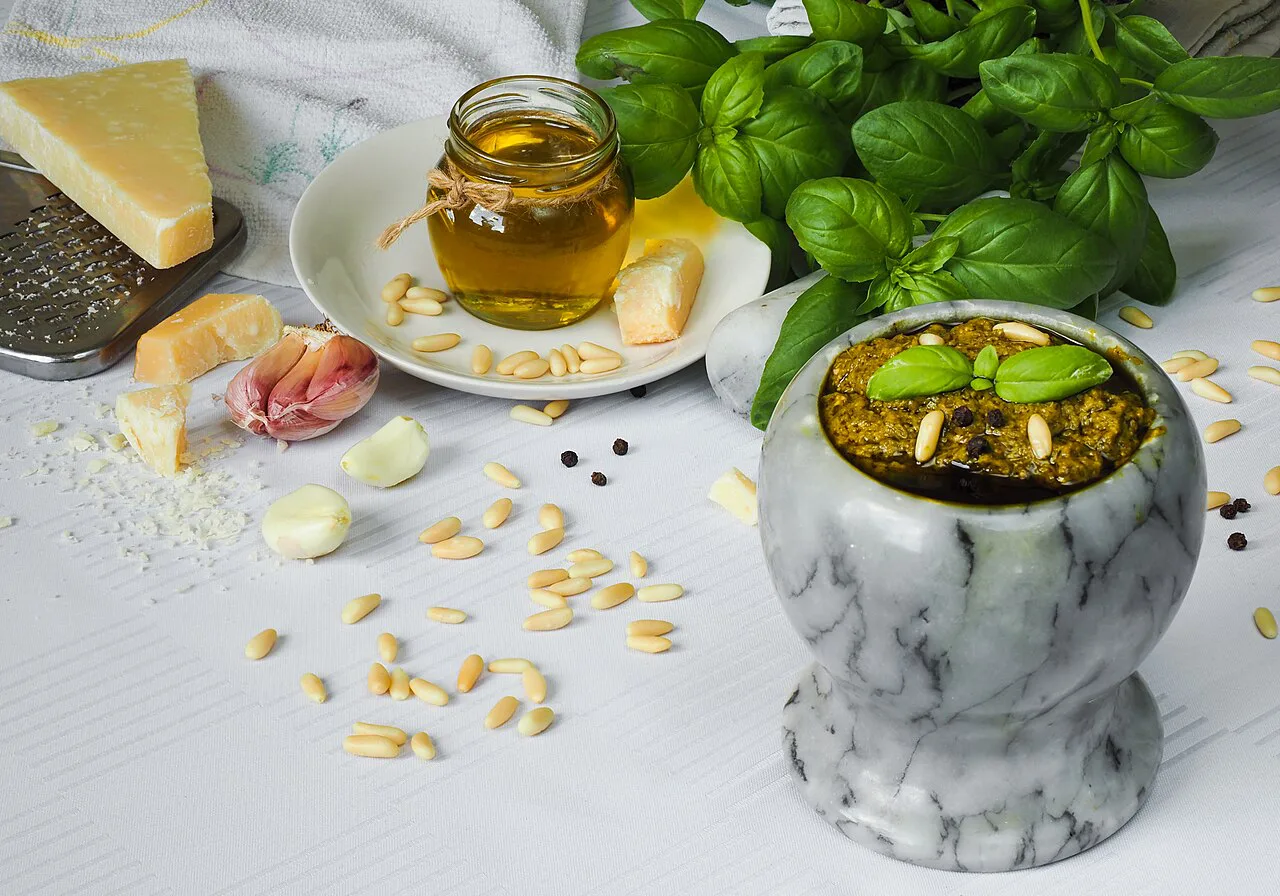
Pesto alla genovese is made from basil, pine nuts, garlic, Parmigiano Reggiano, pecorino, olive oil and coarse salt, pounded together cold rather than cooked. The proportions are not fixed: the sauce changes with the season, with how long the cheese has aged and with the hand of whoever makes it, which is why no two bowls taste identical. Genoa's version leans on basil from the Prà neighbourhood, small concave leaves grown on the Tyrrhenian slope that carries the Basilico Genovese DOP name, a protected designation for the local crop.
The cheese blend matters as much as the herb. Genoese cooks combine Parmigiano Reggiano with a sharper pecorino, often Fiore Sardo, and use Vessalico garlic, a small variety from the Ligurian hinterland that is milder than the bulbs sold elsewhere. The result should be creamy, aromatic and bright green, sharp enough to wake up the pasta without turning bitter.
The name confuses visitors because alla genovese also describes a slow-cooked meat and onion sauce served in Naples. In Genoa, pesto is the green, uncooked one, and a menu listing pesto genovese means the basil sauce rather than the meat ragù. If a menu says simply pesto, assume the basil version.
Trofie, trenette and mandilli de saèa: which pasta to order with pesto
Trofie are the shape most associated with the sauce: short, twisted rolls of flour, water and salt, made without egg and rolled by hand into a spiral so the pesto catches in the grooves. They are boiled with potato and green beans so the whole plate arrives dressed as one, and the chestnut-flour version gives a nuttier, more rustic bite. Order trofie when you want the version a Genoese family would cook at home.
Trenette are the long, flat alternative, and the classic plate is trenette al pesto with potato and green bean. Some kitchens use trenette avvantaggiate, a long format enriched with chestnut flour that gives the pasta a rougher surface and a faintly sweet edge. Mandilli de saèa, literally silk handkerchiefs, are thin squares of egg pasta cut by knife, and they carry pesto in broad, soft folds rather than trapping it in twists. Ask for trofie for texture, trenette for the traditional long shape, mandilli when the kitchen makes them.
Whichever you choose, the potatoes and green beans are not garnish. They are cooked in the same water as the pasta and tossed with the sauce, adding starch that thickens the pesto and sweetness that balances the garlic. A plate without them is a different dish, so check what the menu lists before ordering. For more shapes across the city, our guide to the best pasta in Genoa covers the wider repertoire beyond pesto.
Trofie al pesto with potatoes and green beans: the classic plate
The canonical Genoese plate is trofie al pesto with cubed potato and green beans, all boiled together and dressed while hot so the sauce loosens and coats every piece. Visitgenoa calls trofie a symbol of Genoese cooking and the pesto pairing the version to seek out in a typical trattoria. It is a cheap, filling dish built from pantry ingredients, which is why it appears on nearly every menu in the centre.
Expect the sauce to be stirred through rather than spooned on top, and expect it to be served warm rather than hot. If the pesto arrives as a cold dollop crowning dry pasta, it has not been assembled properly. A good plate tastes of basil first, then pine nut and cheese, with garlic as a background note.
Where to eat pesto in Genoa: trattorias and osterie in the historic centre
The addresses worth knowing cluster in the Centro Storico, the maze of caruggi between the port and Piazza De Ferrari. A local map of pesto stops picks out a mix of old-school trattorias and newer osteria-bistrots, all treating the sauce as a regional reference rather than a novelty. Book ahead for dinner at weekends, and expect small dining rooms where tables turn once or twice an evening. For the wider eating landscape beyond pesto, start with our pick of the best restaurants in Genoa.
Lunch is the easier meal to plan around pesto, since many trattorias serve the dish at midday alongside workers from nearby offices and market stalls. Walk-in tables are likelier before one o'clock, and the lunch menu often sticks closer to the classics than the evening carte. If you are eating on a budget, our cheap eats in Genoa guide covers the lower-priced end of the centre.
If the pesto hunt takes you through the caruggi at midday, keep pizza for another meal: the city's wood-fired slices and focaccia-like pans are a separate pleasure. Our guide to the best pizza in Genoa names the places worth the detour.
Trattoria delle Grazie near the Porto Antico
Trattoria delle Grazie sits on Via delle Grazie, a short walk from the Porto Antico, in a narrow street that puts it within reach of the waterfront without sitting in the thick of it. The kitchen works to a seasonal carte of Ligurian classics, and the pesto is described as creamy and well balanced. It is a straightforward neighbourhood trattoria rather than a designed room, so the appeal is the cooking and the location.
Order the mandilli de saèa if they are on: the thin egg-pasta squares are the house vehicle for the sauce. Ask for trofie if you want the more familiar shape, and expect potatoes and green beans to come with it. The dining room is small, so book by phone for a party of more than two.
Trattoria della Raibetta and the trenette avvantaggiate
Trattoria della Raibetta takes its name from an old legume market once held in the lane, and it has long been a reference point for the historic centre opposite the port. The cooking is traditional and unsentimental, with pesto made to the classic recipe and used across the fresh pastas. The trenette avvantaggiate, the chestnut-flour long pasta, is the version most rooted in the regional repertoire.
Order the trenette with potato and green bean if you want the version closest to the Ligurian tradition, and take the plain trofie if you prefer a cleaner basil flavour without the chestnut note. The room is in the caruggi a few minutes from the port, which makes it a practical stop before or after the waterfront. Pesto here is one of several regional plates on the carte, so pair it with a Ligurian starter rather than ordering two pasta courses.
Trattoria dell'Acciughetta and Trattoria Rosmarino: the trofiette
Trattoria dell'Acciughetta on Piazza Sant'Elena is a young team's project near the aquarium, and the kitchen reworks regional ingredients in a modern frame while keeping a few traditional plates intact. The trofiette al pesto, smaller twisted trofie, appear on the menu as an evergreen, made with careful ingredients in the straightforward way. Choose it if you want a contemporary room and a properly traditional plate in the same meal.
Trattoria Rosmarino, just off Piazza De Ferrari on Salita del Fondaco, keeps a short carte that rotates often, which signals fresh produce rather than a long freezer list. The trofiette come with a fine, well-balanced pesto, and the rest of the menu covers the Ligurian classics. Its central position makes it the easiest of these addresses to fold into a day of walking the centre.
Both rooms are small and popular, so reserve by phone earlier in the day rather than turning up at nine expecting a table. At either, ask whether the trofiette come with potato and green bean or plain; the answer tells you how the kitchen reads the dish.
Il Genovese and Roberto Panizza, the pesto specialist
Il Genovese is the trattoria fronted by Roberto Panizza, who owns the Pesto Rossi 1947 producer and has run this Genoese restaurant since 2010. The kitchen's stated approach is Genoese tradition original and not reworked, which means the plates read like home cooking done with good ingredients. For a visitor who wants to understand what the sauce is meant to taste like, it is the most focused address in the city.
Panizza argues that the sauce is unpredictable by nature, since basil, cheese and oil all shift with the season, the ageing and the producer, and that the most common fault among non-Genoese cooks is using too much basil. He favours the mortar as the traditional tool but accepts that a blender makes an excellent pesto at home. Order the classic pasta with potato and green bean here and treat the rest of the menu as context.
How pesto is made: mortar, ingredients and the mistakes to avoid
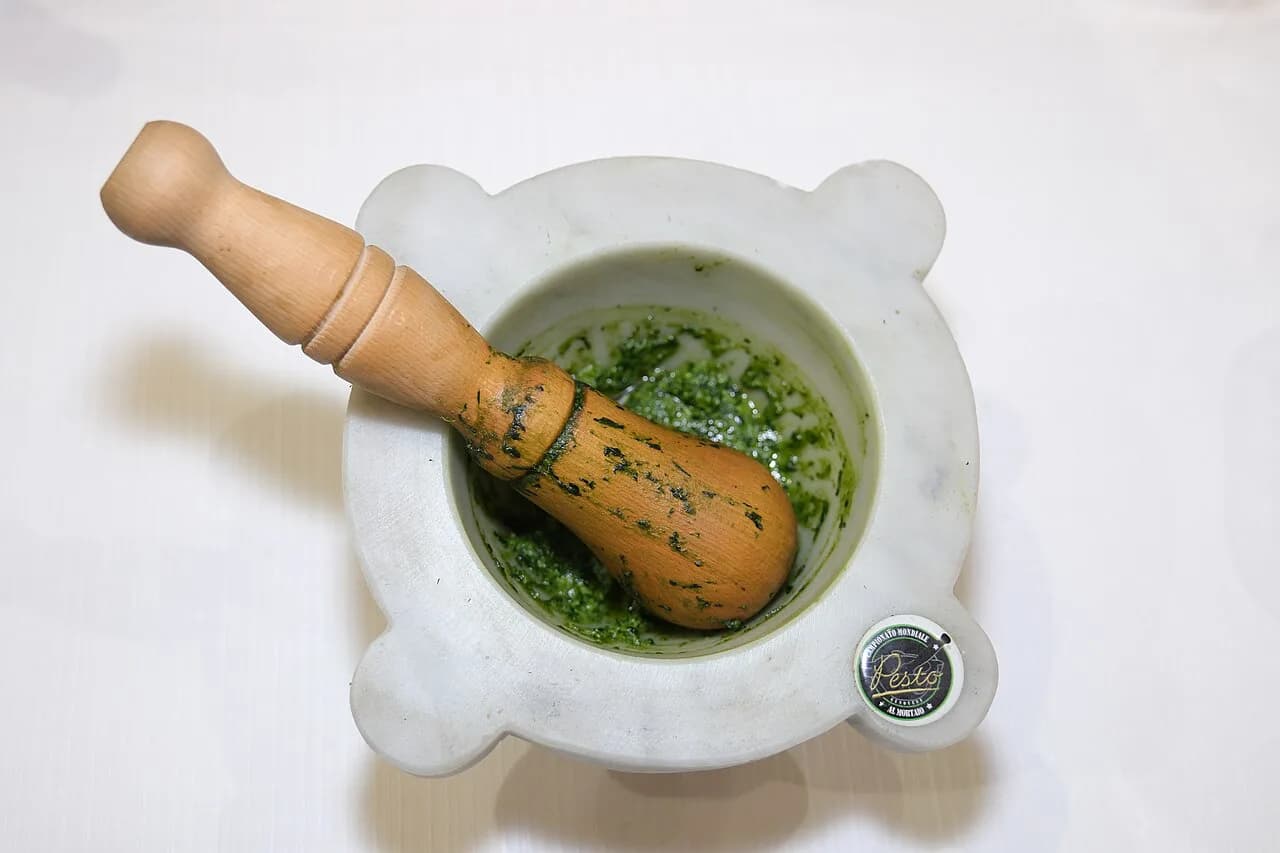
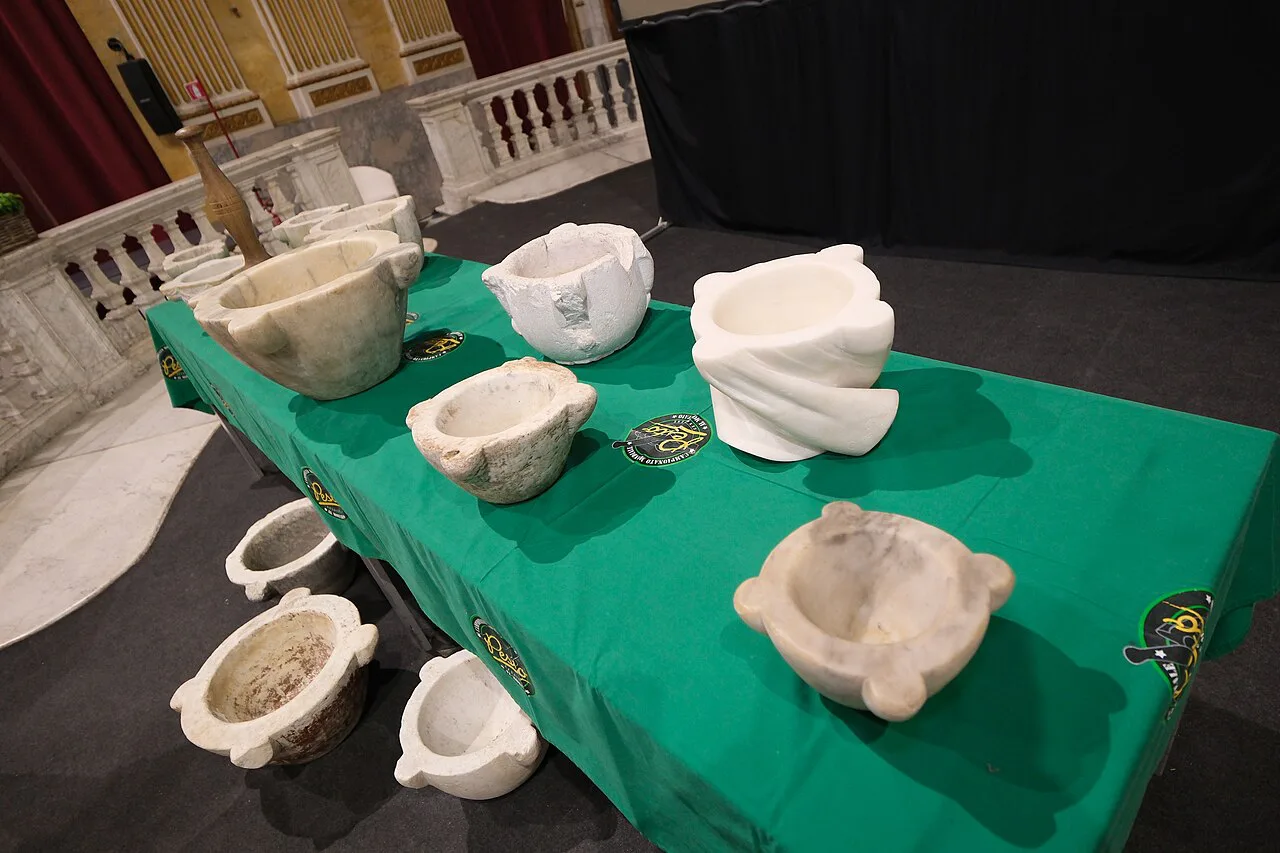
The traditional method is a marble mortar and a wooden pestle: crush the garlic with coarse salt, add basil a little at a time, then pine nuts and cheese, and work in the oil last until the mixture is a creamy, emulsified sauce. The slow crush keeps the basil from heating up, which preserves the colour and the fresh aroma. A blender works, but it introduces air and heat, so pulse briefly and accept a slightly looser texture.
The most common error is overdoing the basil, which makes the sauce strong and hard to digest, especially when the leaves are not the Genovese variety. Balance the herb with enough cheese and oil, taste before adding more garlic, and season with salt early rather than at the end. Home cooks in Genoa rarely weigh anything, so the recipe is a starting ratio, not a fixed formula.
Pound or pulse the sauce just before serving, and loosen it with a spoonful of the pasta water before tossing. That starchy water is what turns a thick paste into a dressing that coats the trofie evenly. Leftover pesto keeps better under a film of oil in a sealed jar than spooned into a bowl.
Basilico Genovese DOP and why the basil matters
Basilico Genovese DOP is the protected name for basil grown in the Genoese area, and the Prà district is its best-known cultivation zone, with greenhouses on the Tyrrhenian slope that catch the sea breeze. The leaves are small, concave like a spoon and strongly scented, which is why they carry the sauce rather than disappearing under the cheese. The designation is a guarantee of origin and method, not a brand, so look for it on menus and shop labels.
Outside Genoa, cooks substitute whatever basil is available, and the result is often harsher and more bitter, which is why the DOP crop is worth seeking out when you are in the city. If you want to take the ingredients home, buy a jar of pesto produced locally rather than a supermarket tub, and check the label for the basil origin. For the rest of the city's food shopping, our bakeries in Genoa guide covers the bread and focaccia side of the same streets.
Which address should you book for pesto in Genoa?
Choose Il Genovese if pesto is the reason you are eating out and you want the sauce as the kitchen intends it. Pick Trattoria della Raibetta for the chestnut-flour trenette and a traditional room in the caruggi, or Trattoria Rosmarino and Trattoria dell'Acciughetta if you want a shorter walk from Piazza De Ferrari and a more contemporary setting. Trattoria delle Grazie is the practical choice near the Porto Antico.
Whichever you choose, order trofie or trenette with potato and green bean, ask for the mandilli if the kitchen makes them, and go at lunch if you want an easier table. Book by phone for dinner, and treat the pesto as one part of a Ligurian meal rather than the whole of it.
Explore more Genoa food guides
Frequently Asked Questions
Is alla Genovese pesto the same as basil pesto?
Pesto alla genovese is a basil pesto, but the name means the specific Genoese version with pine nuts, garlic, Parmigiano Reggiano, pecorino and olive oil, pounded cold. In Naples, alla genovese describes a slow-cooked onion and meat sauce, so the same words point to a different dish on a southern menu.
What is the secret ingredient for perfect pesto?
Roberto Panizza of Il Genovese treats balance as the secret: good Basilico Genovese DOP leaves, well-aged Parmigiano Reggiano, Ligurian olive oil and restraint with the basil. He describes the sauce as unpredictable by nature, since the ingredients change with the season and the producer, so proportion matters more than any single extra ingredient.
Sources
Notes for your next meal in Italy
Optional updates to our food guides.
You might also like
Continue reading
More guides you'll find useful