Best Pasta in Taormina: Where to Eat Sicilian Shapes
Pasta in Taormina means fresh maccheroni, pasta alla Norma and seafood primi. Here are the Sicilian shapes and sauces to order and the places known for them.
On this page
The best pasta in Taormina is Sicilian pasta, not a generic Italian menu with a sea view bolted on. Expect fresh maccheroni, aubergine-heavy pasta alla Norma and primi built around swordfish, prawns and whatever the fish stalls had that morning. This guide sets out the shapes and sauces to look for, then the town-centre osterie, sea-view dining rooms, high-end kitchens and cheap counters where they appear.
Treat pasta as one course inside a longer Sicilian meal rather than the whole event. A primi is often followed by a secondo of grilled fish or pesce spada, with caponata (sweet-and-sour aubergine) or parmigiana (baked aubergine with tomato and cheese) among the vegetable antipasti. Ordering one pasta each plus a shared secondo is the usual way a table eats here.
The Sicilian pasta shapes and sauces to look for
Fresh maccheroni are the local benchmark: short, hand-rolled tubes that hold a heavy sauce far better than dried spaghetti. Ask for them with a seafood ragù or with swordfish, the fish that defines much of eastern Sicilian cooking. Pasta alla Norma is the aubergine classic, fried aubergine folded through tomato and finished with salted ricotta, and it is the dish to order if you want one plate that sums up the island.
Pasta with sardines belongs to Palermo's tradition more than Taormina's, so treat it as a bonus rather than the test of a kitchen. Along the Ionian coast the surer bets are prawn primi, swordfish and aubergine, and simple tomato sauces where the kitchen is not hiding behind cream. If a menu lists fresh pasta made in house alongside fish chosen that day, that is the section to read first.
Museo della Pasta makes its own tagliatelle, filled ravioli and gnocchi by hand and pairs them with seafood chosen according to what the market offers each day. The same menu carries regional classics such as caponata, parmigiana and pesce spada (swordfish), so one table can mix pasta and non-pasta plates without anyone feeling short-changed.
Osteria Santa Domenica and Tischi Toschi: town-centre Sicilian cooking
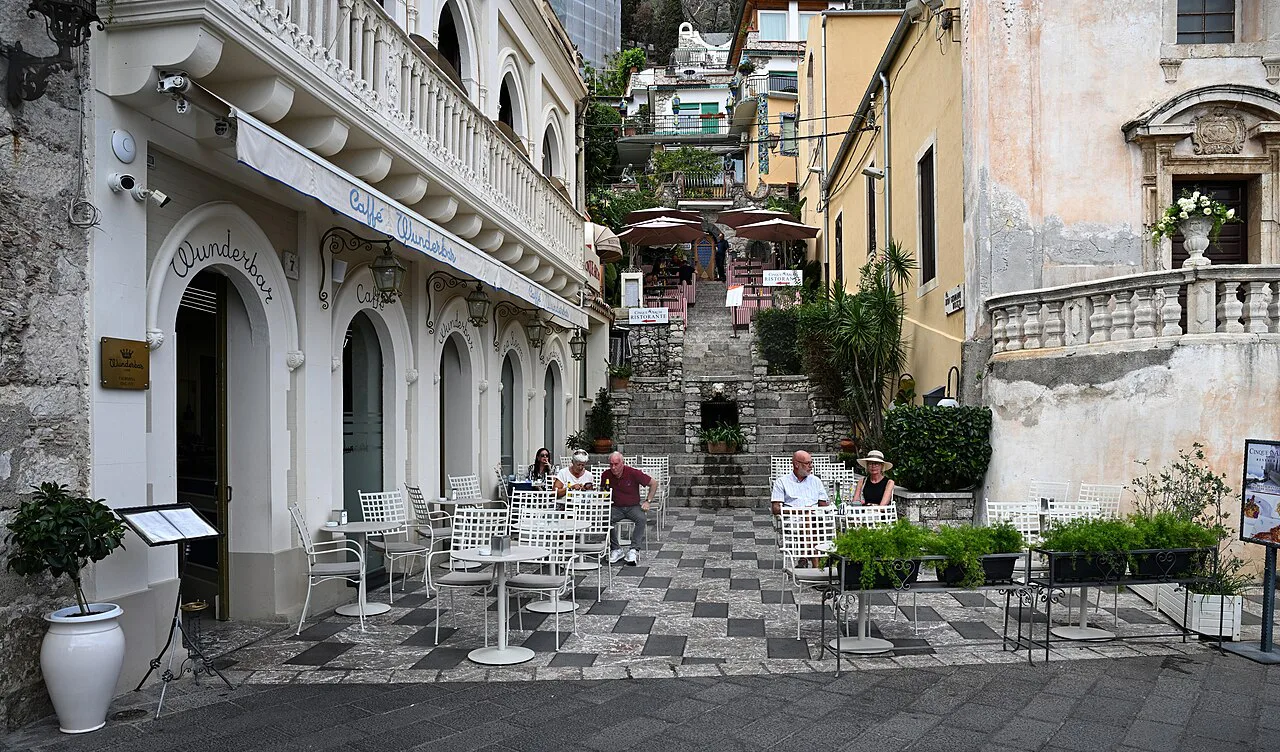
For a sit-down plate of pasta in the middle of town, Osteria Santa Domenica and Tischi Toschi are the two names to keep in your pocket. Both cook Sicilian rather than pan-Italian, which matters most at the primi. They suit a lunch where you want a proper table, a carafe of something local and no rush afterwards; Tischi Toschi also features in The Best Restaurants in Taormina if you want the wider shortlist.
Book ahead for dinner in high season, when the centre fills with visitors and the small dining rooms go first. At lunch you can often walk in earlier, and the primi portions are generous enough that two courses will see you through to an evening aperitivo.
The higher-priced end: St. George, Otto Geleng and Vineria Modì
Taormina's top tier treats pasta as a refined course rather than a bowl of comfort. St. George Restaurant by Heinz Beck, Otto Geleng and Vineria Modì all belong to the town's high-end dining rooms, where a single carefully made primi can carry a whole dinner and the cooking is precise enough that you notice the difference from a trattoria plate.
Vineria Modì leans towards Sicilian ingredients reworked with a lighter hand, while the St. George dining room is the most formal of the three. Budget for one pasta course plus a secondo and share a dessert rather than ordering a primi each and a full second round. If you want the full picture of the town's starred and special-occasion cooking, our guide to Michelin restaurants in Taormina covers the rest.
Seafood primi with a view: BLUM and Ristorante Nui
BLUM Restaurant and Ristorante Nui are the sea-view addresses for a pasta course with a horizon attached, which is what you want on a terrace rather than a heavy ragù that sits badly in the heat. The trade-off is that you pay for the position, so order one pasta each and share an antipasto of crudo or caponata.
A table at sunset is the reason to book either, and those slots go first in summer, so reserve a few days out rather than turning up. At lunch the same kitchens are calmer and the light on the water is arguably better for photographs. Neither restaurant is cheap, and splitting a primi between two before a secondo keeps the bill sane without leaving you hungry.
Cheap pasta and street food: Sikè Bistrot and Antica Rosticceria Da Cristina
Sikè Bistrot Siciliano is the address for a lighter, cheaper plate, the sort of place where a simple pasta and a salad works as a quick lunch between sights. Antica Rosticceria Da Cristina covers the other cheap end: counter food built on the same island staples, eaten standing or taken away. If you want to compare counters across town, our street food in Taormina guide maps the rest of them.
An arancino is a saffron-tinted rice ball, usually filled with ragù or with butter and ham, crumbed and fried until the outside cracks under your thumb. In Taormina you will also see it called arancina, the feminine form used in Palermo; either way it is a meal in itself and not a starter. Pair one with a granite or a coffee and you have lunch for less than a sit-down pasta, which is why the rosticcerie fill at midday.
Pasta for lunch versus pasta for dinner
Lunch pasta is a sensible move in Taormina because the town's evenings are long and the primi portions are not small. A plate of maccheroni at one o'clock leaves room for a swim or a walk up to the theatre, and the same dish at nine at night can be more than you want before a secondo. If pasta is the main event, book a table for lunch and keep dinner to antipasti and fish.
Portion size deserves a word: a Sicilian primi in a proper restaurant is often larger than a British starter, so two people sharing antipasti and ordering one pasta each is plenty. The upside of ordering primi then secondi is that you taste the whole menu rather than committing to one bowl. The downside is the bill, which is where the question of coperto comes in.
How to order and pay: coperto and the bill
Most seated restaurants in Taormina add a coperto, a small per-person cover charge for bread and service that appears as a line on the bill rather than in the menu prices. It is normal, not a trick, but it does change the arithmetic when you are comparing a cheap rosticceria with a restaurant. Ask for the menu and look for the coperto line before you sit down if the total matters.
Pay at the table in restaurants: the waiter brings the bill, you settle by card or cash, and tipping is a rounding-up gesture rather than an expectation. In cafés and bars the rhythm is different, and coffee is commonly paid at the till first before you drink it at the counter. Carry some cash for markets and small counters, where card machines can be slow or absent.
Where to eat like a local in Taormina
Eat where the menu is short and the pasta is fresh rather than listed in five sauces. Locals order maccheroni with seafood or a tomato-and-aubergine sauce, share a secondo of grilled fish and skip the dessert in favour of a granite later. The rosticcerie at lunchtime and the osterie slightly off the main drag are where that pattern holds; the terraces with photographs of the food are for the view, not the pasta.
Use the fish market and the morning food shops as a guide to what is good that week, then look for it on a menu. A kitchen that changes its seafood primi with the catch is telling you something a fixed tourist menu is not. Our guide to cooking classes in Taormina shows how that market knowledge gets taught, if you want to take the technique home rather than just eat it.
Which city in Italy has the best pasta?
There is no single winner, and anyone who names one is talking about a regional style they love. Sicily holds its own with pasta alla Norma, sardines and swordfish, while Campania and Lazio have their own claims through tomato sauces and dried pasta. In Taormina the honest answer is that you eat Sicilian pasta cooked well, not the best pasta in the country.
The practical test is freshness and restraint: a short menu, a sauce that tastes of its main ingredient and a kitchen that does not drown the pasta. Apply that in any Italian city and you will eat better than by chasing a league table.
What are some popular types of pasta from Sicily?
Fresh maccheroni lead the list, followed by pasta alla Norma with aubergine and salted ricotta, and seafood primi built on swordfish, prawns and clams. Anelletti, the small rings baked in Palermo, and the sardine pasta of the western side of the island are the other names worth knowing. Many restaurants round the island also serve pasta with caponata ingredients folded through, which is a lighter way into the same flavours as the antipasto.
Which pasta in Taormina should you book?
Book Osteria Santa Domenica or Tischi Toschi for a town-centre lunch of fresh maccheroni and a shared secondo. Choose Museo della Pasta if you want hand-made tagliatelle, ravioli or gnocchi next to caponata and swordfish on one menu. Save BLUM or Ristorante Nui for the sunset primi, and St. George, Otto Geleng or Vineria Modì for the one dinner where pasta is the centrepiece.
Keep Sikè Bistrot and Antica Rosticceria Da Cristina for the days you want an arancino and a granite instead of a table. Wherever you land, expect a coperto on the bill and a primi bigger than a British starter, so order one pasta each at most.
Explore more Taormina food guides
Sources
Notes for your next meal in Italy
Optional updates to our food guides.
You might also like
Continue reading
More guides you'll find useful