Bigoli in Padua: The Thick Fresh Pasta and How to Order It
Bigoli is the Veneto's thick, rough fresh pasta, said to have been born in Padua. Here is what it is, how it differs from spaghetti, and what to order.
On this page
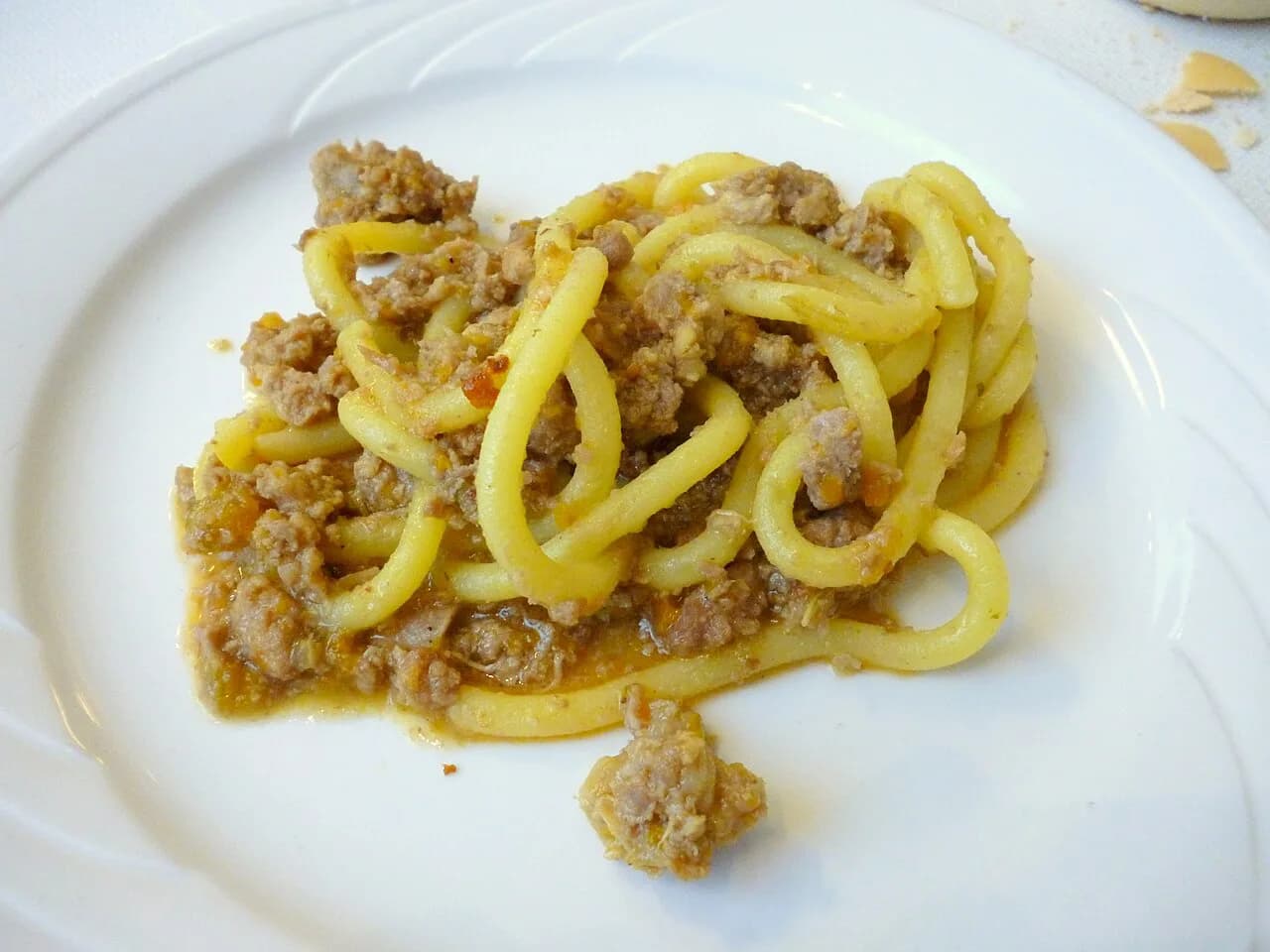
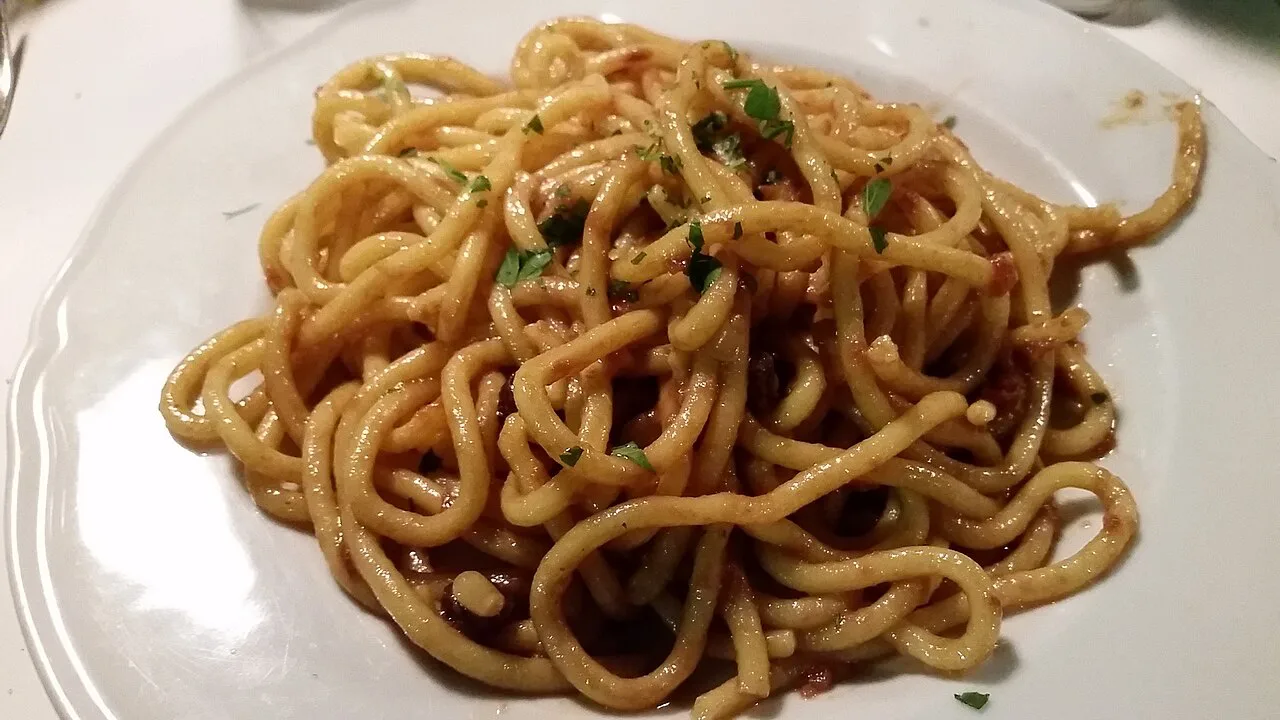
Bigoli is a thick, rough, extruded fresh pasta from the Veneto, and Padua is the city most often credited with inventing it. It arrives as long strands about two to three millimetres across, closer to a fat bucatino than to spaghetti, with a porous surface built to hold a wet sauce. This guide covers what bigoli is, how it was traditionally made and dried, how it behaves next to other long pasta, the sauces to order in Padua, and how it fits into a meal.
You will find it on menus across the city, from old osterie to modern trattorias, usually as a primo at the start of lunch or dinner rather than a stand-alone main. Treat it as the first proper course: order it, then decide whether a secondo follows.
What bigoli is: thick, rough, extruded fresh pasta
Bigoli is made from a soft dough of flour, eggs and a little milk and butter, then forced through a press rather than rolled and cut. The classic tool is the torchio, a hand press fitted with a large-hole die; a pasta extruder or a meat grinder with the cutting blade removed does the same job at home. The strands come out about eight inches long and are dusted with flour and laid flat so they do not stick together.
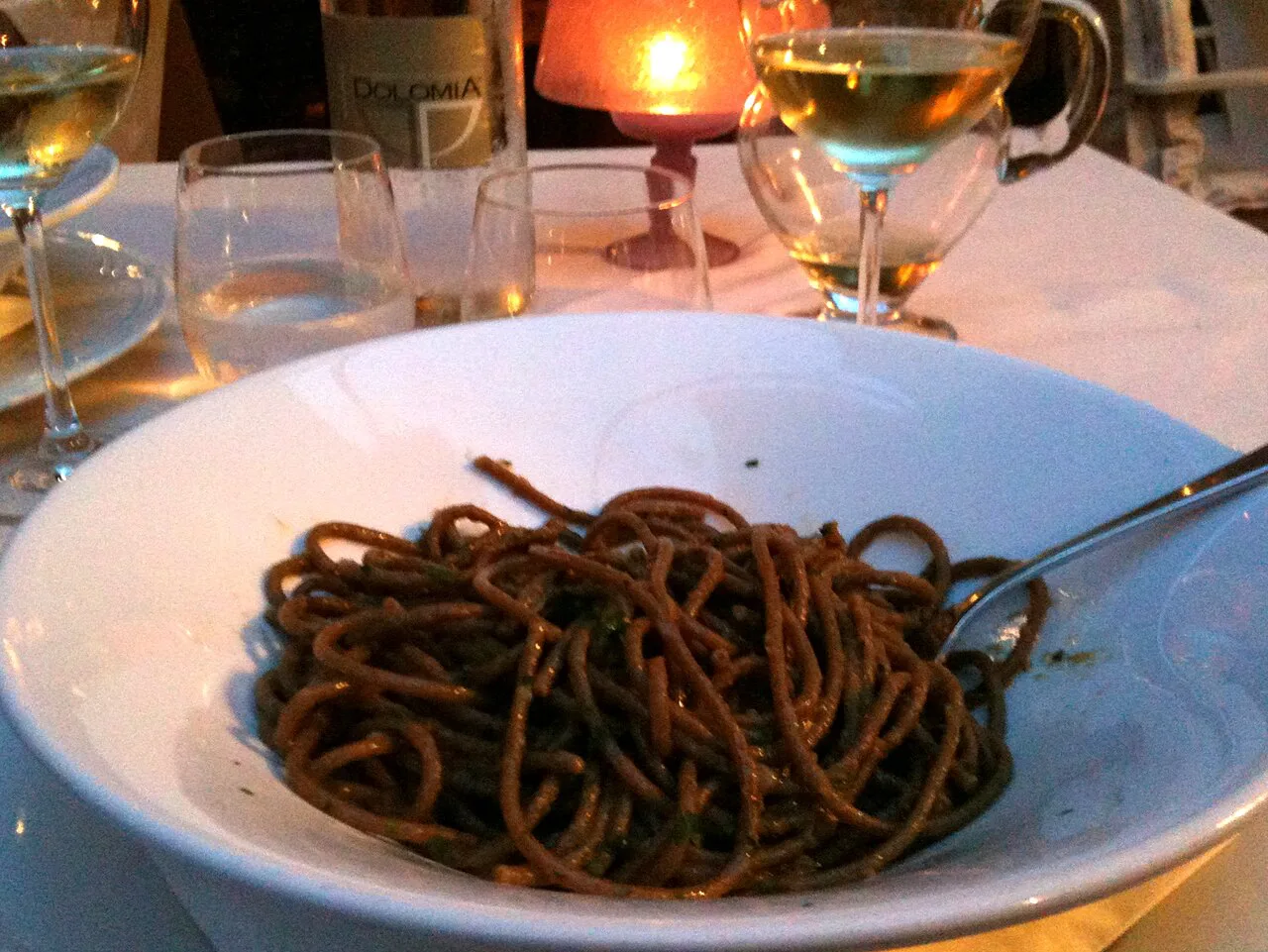
The flour is not fixed. A recipe may use all-purpose flour alone or a blend with whole wheat, which brings a nutty flavour and a slightly darker, coarser strand. Whole wheat is one traditional option rather than the definition, so do not assume a plate of bigoli will taste strongly of it.
What defines bigoli is the extrusion: the dough is pushed through holes, so the surface stays rough and slightly porous instead of smooth like rolled pasta. That roughness is the practical point. A thin oil-and-egg sauce or a meat ragù clings to it rather than sliding to the bottom of the bowl.
Why bigoli is linked to Padua
Bigoli is a Veneto pasta said to have been devised in Padua, and the city's food writing treats it as a local invention rather than a regional also-ran. The claim is repeated often enough to count as tradition, but it is a claim about origins, not a documented patent.
It began as farmhouse food. Once extruded, the strands were hung to dry on bamboo canes called perteghe, which let air circulate around the rough surface. The result was a cheap, filling pasta that kept well and could be cooked with whatever the kitchen had: cured fish, herbs, capers, or the sauce from a boiled or roasted bird.
The link to the countryside around Padua still shows in the sauces. Duck farming was long established on the Paduan plain, and duck ragù and duck broth remain standard ways to dress bigoli. Order it and you are eating a dish built around local poultry and preserved fish rather than imported luxury.
Bigoli versus spaghetti and bucatini
Against spaghetti, the difference is mainly diameter and surface. Spaghetti is round, smooth and usually dried, so it suits light sauces that coat thinly; bigoli is thicker, softer and rougher, and needs a sauce with some body to make sense of the extra surface area. If you are used to a delicate oil-based spaghetti, bigoli will feel like a heavier dish even with the same dressing.
Against bucatini, the difference is the hole. Bucatini is a dried pasta with a narrow channel through the centre, which traps sauce inside as well as out; bigoli is solid and irregular, with a coarse skin rather than an internal tube. Both handle robust sauces, but bucatini gives a firmer bite and bigoli a chewier, more yielding one.
Freshness matters too. Bigoli is usually served as fresh extruded pasta rather than a dry pantry shape, so its bite is softer and more porous than a dried pasta like bucatini. Judge it on that rough, yielding texture rather than expecting the firm al dente snap of dried durum pasta.
The sauces to look for in Padua
The most distinctly Paduan version is bigoli in salsa, dressed with sardines and capers. The cured fish and the sharp capers give a savoury, slightly briny sauce that works because the rough pasta catches both the oil and the small pieces. It is the version to order first if you want to understand why bigoli is not simply a thick spaghetti.
Duck ragù is the other sauce to seek out. The bird is cooked down into a soft, gently gamey sauce that is spooned over the pasta or used to dress other shapes; in Padua it appears both as a primo dressing and as a second course. It is a richer, sweeter counterpoint to the sardine version, and one plate of each across two meals is a good way to compare.
Beyond those two, expect bigoli with radicchio, pancetta and a melting cheese such as taleggio, or with a tomato or meat sauce. Radicchio from the Treviso area is a staple of the Veneto kitchen and turns up in pasta as well as risotto, where its bitterness cuts through the fat.
How bigoli appears on a Paduan menu
Look for bigoli under primi piatti, the first-course section, not among the mains. Portions are sized as a starter to a larger meal: one plate per person before a secondo, or two primi shared at a lighter lunch. If you are ordering a big second course such as gran bollito misto, a boiled meat platter with cotechino and hen, keep the pasta portion modest.
Prices depend on the setting, so compare a few menus before sitting down. If you want a shortlist of places to eat bigoli by style and budget, use the guide to the best restaurants in Padua to narrow the choice before you walk in.
Beyond the pasta, Padua has its own dishes worth leaving room for: baccalà alla padovana, salt cod cooked with anchovies, raisins, pine nuts, cinnamon and bay, and the local hen breed known as gallina padovana, which comes from Polverara. These are the plates that tell you whether a kitchen is cooking Paduan food or a generic Veneto menu.
If you want to compare bigoli with the city's other pasta shapes, including the filled and baked dishes that share the menu, work through the guide to the best pasta in Padua before booking a table. It is a sensible way to decide whether your one pasta meal should be bigoli or something else.
Ordering and paying in a Paduan trattoria
Many Paduan trattorias add coperto, a small per-person cover charge for bread and service. Check the menu for the coperto line so the total does not surprise you, and leave a modest tip only if the service warrants it; tipping is optional in Italy.
It is worth asking when you arrive whether a table is free or whether the kitchen would prefer you to book for later, particularly if you plan a long lunch with a secondo and dessert.
Round off the meal with something sweet from a pasticceria, or head to one of the gelaterie in the guide to the best gelato in Padua for a walk-away dessert. Either way, keep the pasta as the anchor of the meal rather than an afterthought.
If you are choosing between several traditional rooms for the same dish, the guide to trattorias in Padua sets out the old-school options where bigoli and boiled meats are the point of the menu. It is a useful cross-check before you commit to one address for your pasta course.
Reading the menu for bigoli elsewhere in the Veneto
Outside Padua, bigoli remains a Veneto pasta and appears on menus from Treviso to Verona, often with a duck sauce or with sardines and capers. The strands can be thinner or thicker depending on the kitchen. If you are planning meals across the region, the Treviso guide is a useful companion for comparing where to eat.
In Venice bigoli appears on menus dressed with anchovy, onion and sometimes a little tomato. Treat the Venetian version as a cousin of the Paduan one: same pasta, different larder.
Away from the Veneto, bigoli is rare enough that a menu mention deserves a question about how it is made, since the texture and bite vary with the kitchen.
Which bigoli to order first
Start with bigoli in salsa, the sardines-and-capers version, because it is the clearest expression of the Paduan pairing of rough pasta and a briny, oily sauce. Follow it on a second visit with duck ragù for the richer, sweeter side of the same dish.
Order it as a primo, keep the portion modest if a secondo follows, and expect a coperto line on the bill. If you are still choosing a table, use the guide to the best restaurants in Padua to match the room to the meal you want, then go and eat the pasta that Padua claims as its own.
Explore more Padua food guides
Frequently Asked Questions
What does bigoli mean?
Bigoli is the name of a thick, rough, extruded fresh pasta from the Veneto, traditionally made with a hand press called a torchio. The word refers to the pasta shape itself rather than to a sauce or a dish, so you will see it followed by whatever it is dressed with, such as bigoli in salsa or bigoli al ragù d'anatra.
What shape is bigoli pasta?
Bigoli is a long, solid strand about two to three millimetres across, with no hole through the middle and a coarse, porous surface from being pushed through a press. It is thicker than spaghetti and closer to a fat bucatino in diameter, but unlike bucatini it is not tubular.
Is bigoli always made with whole wheat flour?
No. Recipes use all-purpose flour on its own or a blend with whole wheat, which adds a nuttier flavour and a slightly darker colour. Whole wheat is one traditional option rather than a requirement, so the taste and texture vary between kitchens.
Can I make bigoli at home without a torchio?
Yes. A home pasta extruder or a meat grinder with the cutting blade removed can push the dough through a large-hole die in the same way as a traditional press. The dough rests before extrusion, and the strands are cut into lengths and dusted with flour so they do not stick.
Sources
Notes for your next meal in Italy
Optional updates to our food guides.
You might also like
Continue reading
More guides you'll find useful