Italian Aperitivo: When It Happens and What to Order
Italian aperitivo is an early-evening drink with snacks meant to open the appetite. Here is when it happens, what to order and how the bill works.
On this page
Italian aperitivo is an early-evening drink with a small snack, taken before dinner to open the appetite rather than to replace the meal. In Rome you will see it filling bars between roughly 6pm and 9pm, as office workers finish and order a spritz with something salty alongside. This guide covers what the ritual is, the drinks worth ordering, the food that comes with them, and the two service habits visitors most often get wrong.
The word comes from aperire, Latin for to open, and the drink is meant to be light and often slightly bitter so it sharpens rather than dulls the appetite. Practically, that means a glass of something sparkling and low in alcohol, a small beer or a glass of wine, with a modest plate of savoury bites. What you pay for and what you get varies by city and by bar, so expectations are worth setting before you sit down.
What Italian aperitivo actually is
Aperitivo is a pause, not a meal: a drink designed to stimulate the appetite, served with something small and savoury to nibble. The drink is usually light, refreshing and often a little bitter, and the point is to prepare the palate for dinner rather than to fill up before it. Think of it as the Italian answer to early-evening drinks, but with food built in and an earlier clock.
It is a social ritual as much as a drinks order, which is why bars treat it as a fixed part of the evening rather than an occasional special. Groups stand or sit with one round, pick at the snacks and talk, then move on to dinner later. If you are travelling with someone who does not drink, they can order a soft drink or a non-alcoholic bitter and still take part in the same ritual.
When aperitivo happens
Aperitivo sits in the early evening, and in Rome you will typically find it running from about 6pm to 9pm. That window is general rather than national: each bar sets its own hours and its own inclusions, so a place that starts earlier or finishes later is not doing anything unusual. The sensible move is to arrive between those hours and treat the exact start as the bar's call.
Is aperitivo the same as happy hour? It is close in timing but different in purpose. Happy hour is about discounted drinks; aperitivo is a pre-dinner ritual built around a light, often bitter drink and a small amount of savoury food meant to sharpen the appetite.
Can I go to aperitivo if I do not drink alcohol? Yes. A soft drink or a non-alcoholic bitter fits the format, and many bars offer their own alcohol-free twists on the spritz.
Do I need to book for aperitivo? Usually not, since it is a short early-evening stop rather than a full meal. Popular bars in city centres fill up after work, so arriving closer to 6pm gives you a better chance of a seat, especially if you want a table rather than the counter.
Because aperitivo ends before dinner, it does not usually conflict with a restaurant booking at 8.30pm or 9pm. If you have a late table, one round at 7pm is comfortable; if you have an early table, keep the drinks short and the snacking light. The trap is treating the snacks as a starter and then arriving at dinner already full.
What you drink: the spritz family and the Negroni
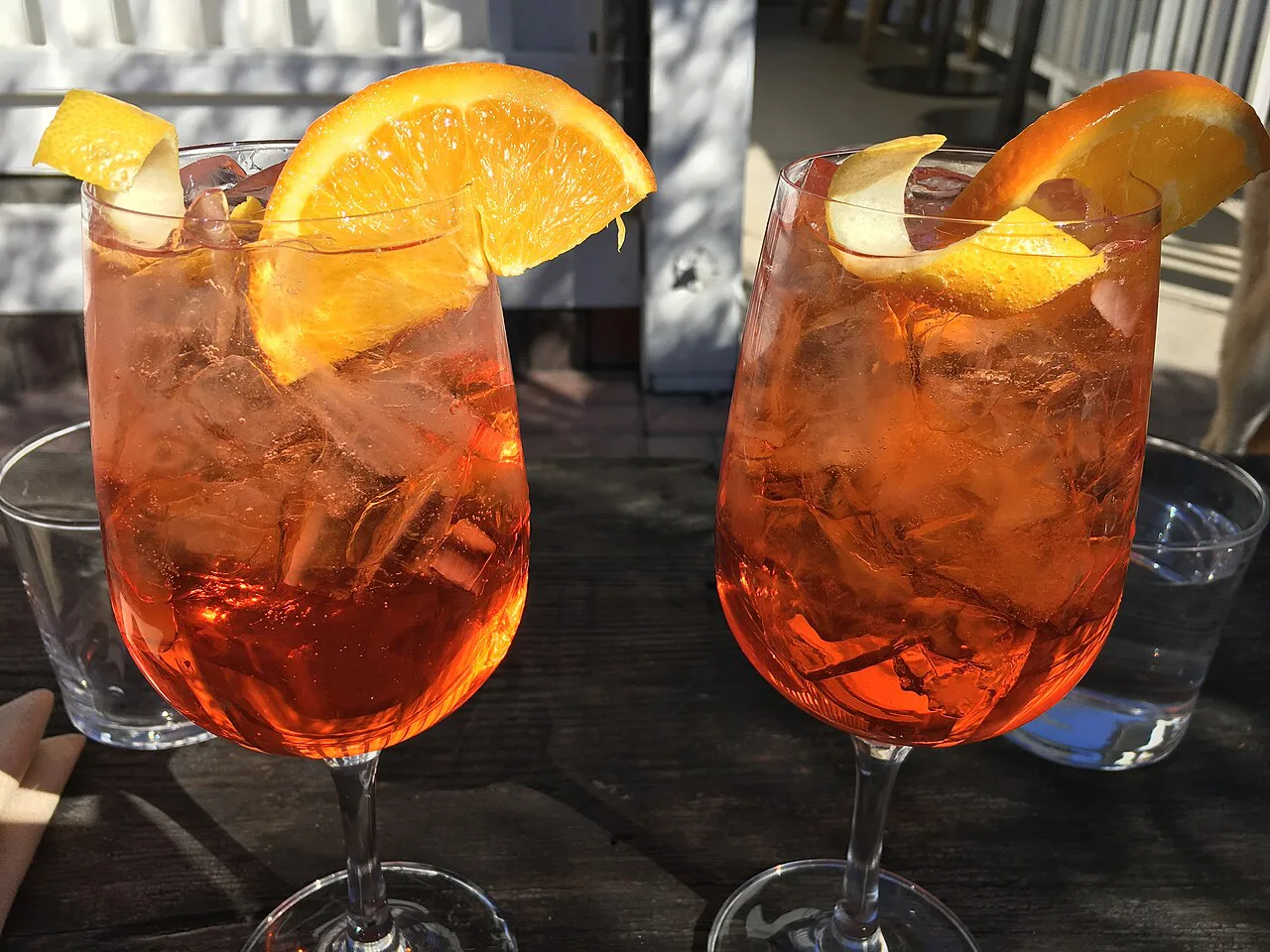
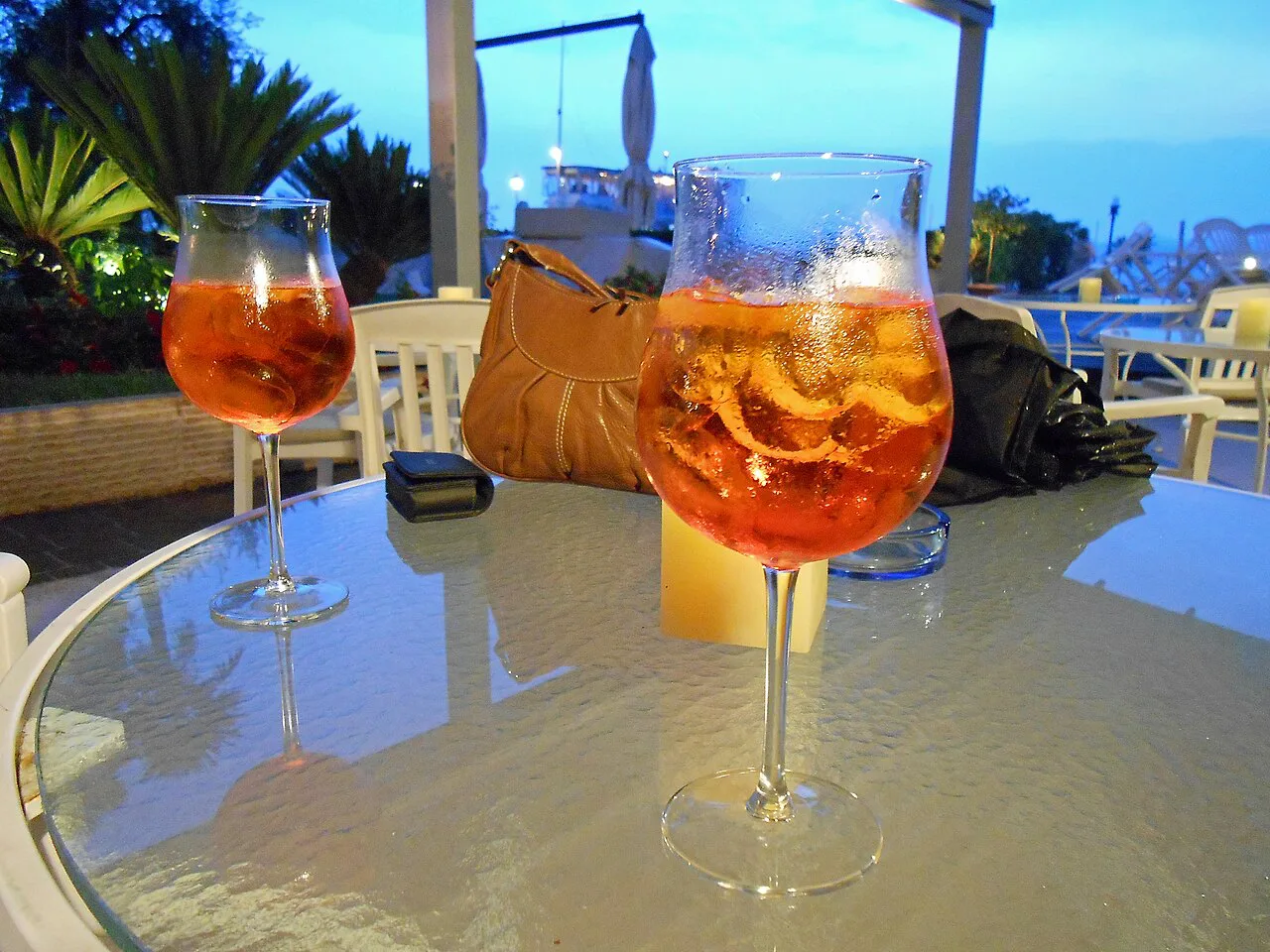
The Aperol Spritz is the default order: Aperol, prosecco and soda water over ice, bright orange and only gently bitter. If you want more bite, a Campari Spritz uses a stronger, more bitter liqueur, so the drink tastes noticeably more assertive. Both are built the same way, so the choice is really about how much bitterness you want in the glass. For the snacks, see our guide to Italian Aperitivo Snacks.
The Negroni is the other classic, made with Campari, gin and sweet vermouth and garnished with orange. It is a claim rather than a certainty that it was born in Florence in 1919 and named after the count who first asked for it, but the drink is certainly bittersweet and considerably stronger than a spritz. Order one when you want a single, slow drink rather than a long, low-alcohol one, and treat it as a sipping drink.
A small beer or a glass of wine is a perfectly normal aperitivo order and often the cheaper route. Many bars include a spritz, beer or wine with the aperitivo offer, and upgrading to a cocktail usually means paying a small upcharge on top.
What gets served alongside
The food is where cities diverge. Milan, where aperitivo is thought to have begun, keeps the appetisers modest but well made, from salami to a fresh couscous salad. That is the northern model: a small, tidy plate that sharpens the appetite without turning into dinner.
In Sicily the spread is fuller and more Mediterranean, with sun-dried tomato pâté, fresh artichokes and caponata, a cold sweet-and-sour mix of red peppers, tomatoes, aubergine, olives, pine nuts and raisins. If you are island-hopping around Sicily, expect the aperitivo table to be a genuine draw rather than a bowl of crisps.
At home, the same logic applies: taralli (small savoury ring biscuits), peanuts, pizzette (little pizzas) and grilled vegetables all do the job. The food is there to make you hungry, so salty and savoury beats sweet every time.
How the price works
Aperitivo pricing works in two ways. In the first, the drink comes with the snacks included, so the price on the menu covers both and you simply choose your drink. In the second, a house spritz, beer or wine is part of the offer and you pay a small upcharge to switch to a cocktail.
The trade-off is straightforward: the included drink is usually the better value, and the upgrade buys you choice rather than volume. Ask what is included before ordering if the menu is not explicit, and remember that a second round is a second charge. Drink prices and upcharge amounts are set by each bar and are best read off the menu or the board at the counter.
If you dislike bitterness
Bitterness is the point of many aperitivo drinks, but it is not compulsory. A Hugo spritz is made with elderflower syrup and fresh mint, light and floral rather than bitter, and it is the easiest swap for anyone who finds Campari or Aperol too sharp. It still looks and behaves like a spritz, so you are not drinking something odd while everyone else has a stemmed glass.
Beyond that, a glass of prosecco, a small beer or a soft drink all fit the format. Many bars also offer their own twists on the classics, so ask what they recommend if the list leans bitter.
Regional differences: north and south
Aperitivo comes in many shapes and sizes depending on where in Italy you are. In Milan the cocktails are elegant and the appetisers modestly sized but delicious, while further south in Sicily you find a varied spread of Mediterranean delights. The drink stays roughly the same; the food on the table is what changes from region to region.
That regional variation is the main thing to plan around. If you are in the north, expect a smaller, tidier plate with more emphasis on the drink; if you are in the south, expect a fuller table. Either way, one round before dinner is the norm, and a second is optional.
Standing at the counter or sitting at a table
In a bar or café you can usually stand at the counter or sit at a table, and sitting down often costs more. Many bars include a spritz, beer or wine with the aperitivo offer, and upgrading to a cocktail usually means paying a small upcharge on top. Ask what is included before you order if the menu is not explicit.
The common mistake is treating the snacks as a starter and then arriving at dinner already full. Keep the drinks short and the snacking light if you have an early table, and remember that a second round is a second charge.
Tipping and the bill
Tipping for aperitivo is not a fixed rule. Tipping is appreciated in Italy, whether at a bar for a morning cappuccino or over an evening spritz, but there is no obligation to add a set percentage to a drinks bill. Rounding up or leaving small change is normal practice; treating it as compulsory is not.
If you are seated at a table, any cover or service charge will be shown on the bill or the menu, so check that line rather than guessing. In Italy it is normal to settle up before you leave, and carrying a little cash avoids any awkwardness at a small bar.
Making aperitivo at home
The home version needs three things: a bitter liqueur, a decent bottle of prosecco and soda water. Aperol, Campari and Select all work as the bitter base, and elderflower syrup covers the non-bitter option. There is no need to buy an expensive bottle of fizz for mixing.
For the food, keep it simple and salty: taralli, peanuts, pizzette and grilled vegetables, with caponata if you want the Sicilian version. Set everything out before people arrive, because the whole point is that the food is already there when the first drink is poured.
Aperitivo in Milan, Rome and Sicily
Aperitivo changes character with the city. Milan, the supposed birthplace, does it elegantly with modest, well-made appetisers. Rome fills the 6pm to 9pm window with bars full of office workers and spritzes. Sicily puts on the fuller Mediterranean table, with caponata, artichokes and sun-dried tomato pâté doing the work. Sardinia has its own version of the same ritual, so it is worth reading about aperitivo in Alghero to see how the evening plays out there.
Match your expectations to the region rather than to a single national standard. In the north, expect a smaller plate and more emphasis on the drink; in the south, expect food with more variety. Either way, one round before dinner is the norm, and a second is optional.
Order one round before dinner
Aperitivo is best treated as a single, unhurried round between about 6pm and 9pm: choose a spritz if you want low-alcohol and refreshing, a Negroni if you want something stronger and slower, or a Hugo if bitterness puts you off. Check whether the snacks are included before you order, and decide between the counter and a table knowing that sitting down usually costs more. Do that and the ritual does exactly what it is meant to: it opens the appetite without spoiling dinner.
Explore more Italy food guides
Frequently Asked Questions
Is aperitivo the same as happy hour?
It is close in timing but different in purpose. Happy hour is about discounted drinks; aperitivo is a pre-dinner ritual built around a light, often bitter drink and a small amount of savoury food meant to sharpen the appetite. Some bars do offer reduced prices during the window, but the food and the early-evening slot are what define it.
Can I go to aperitivo if I do not drink alcohol?
Yes. A soft drink or a non-alcoholic bitter fits the format, and many bars offer their own alcohol-free twists on the spritz. You still get the snacks and the same early-evening slot, so there is no reason to skip it.
Do I need to book for aperitivo?
Usually not, since it is a short early-evening stop rather than a full meal. Popular bars in city centres fill up after work, so arriving closer to 6pm gives you a better chance of a seat, especially if you want a table rather than the counter.
Sources
Notes for your next meal in Italy
Optional updates to our food guides.
You might also like
Continue reading
More guides you'll find useful