Ortigia Market, Syracuse: What to Buy and How It Works
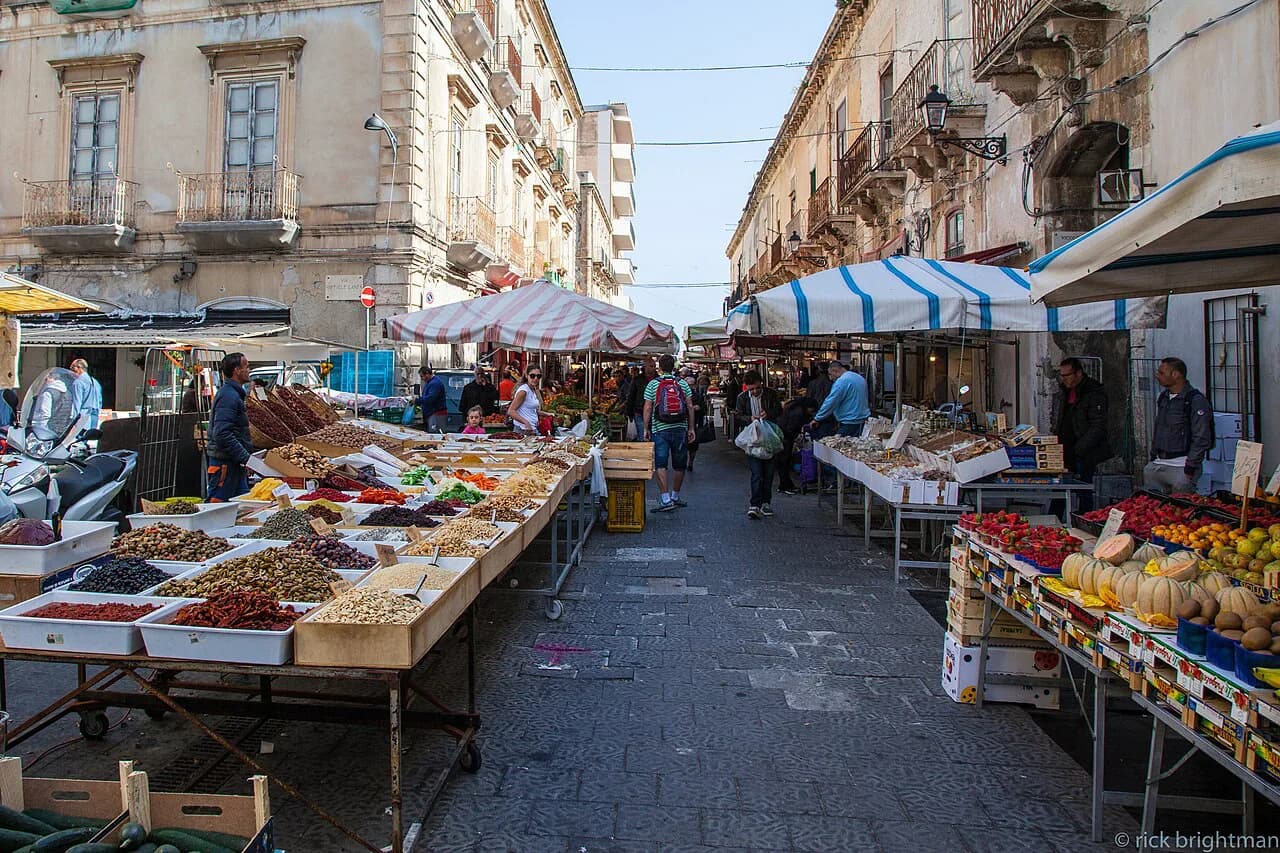
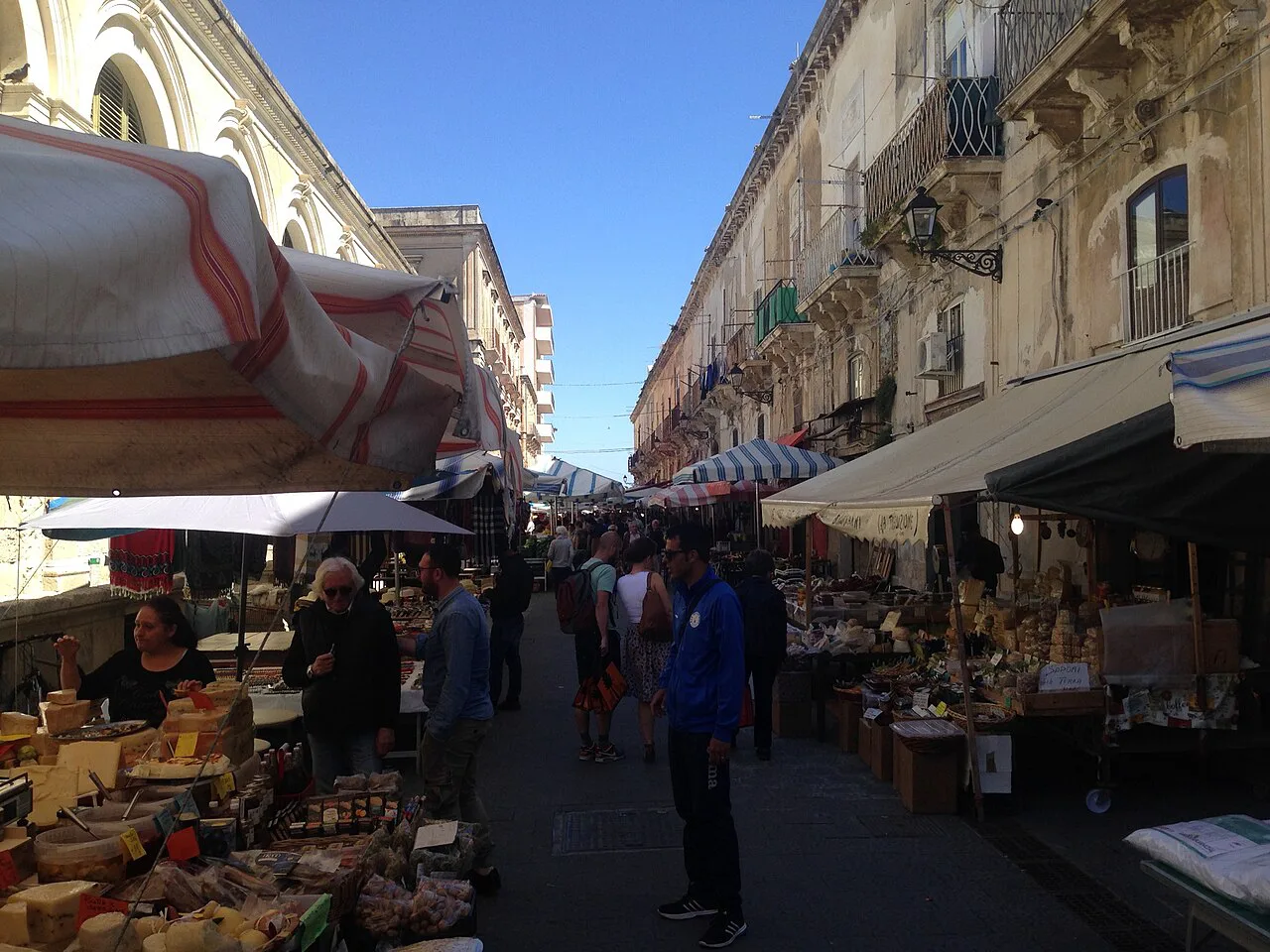
Ortigia market is Syracuse's food market off Via Emmanuele de Benedictis, strong on fish, seafood, vegetables, cheese and deli counters.
On this page
The Ortigia market is the food market on Syracuse's island of Ortigia, set around Via Emmanuele de Benedictis. It sells fish, seafood, vegetables, meat, dairy and deli goods, and the vendors call out their wares in local dialect. This guide covers what is sold, how the stalls work, what to buy for a market lunch and how the surrounding Graziella quarter fits in.
Where the market sits on Ortigia
The stalls run along and around Via Emmanuele de Benedictis on Ortigia, the small island joined to the rest of Siracusa by a bridge. The market sits in the Graziella quarter, the old fishing neighbourhood behind the market street. Look for the Church of San Paolo, the parish church of the quarter, as a landmark when you approach from the island's centre.
From the Temple of Apollo, the Doric temple near the bridge end of Ortigia, the market is a short walk through the lanes of the island. You do not need a ticket or a plan: walk in, follow the noise and the crates, and you are there. Read it as part of a morning on the island rather than a detour, and you can also browse our Syracuse Attractions: 5 Visitor Guides if you are mapping the day around it.
How the stalls work: the calls and the rhythm
The distinctive sound of the market is the vanniate, the sung calls vendors use to describe their produce in the local dialect. It is not a performance put on for visitors; it is how the stallholders draw attention and move stock, and it shapes the pace of the whole street. Walk slowly, let the calls wash over you, and treat the busiest stalls as the ones worth a second look.
This is a working food market rather than a souvenir row. Stalls are grouped loosely by type: produce and vegetables in one stretch, fish and seafood in another, with delis and dairy counters close by. Go with a rough list and a bag, and you will shop the way the locals do.
Fish and seafood: what to look for and what to ask
Sicily sits in the Mediterranean, and the market's fish counters reflect that with a strong showing of seafood and local catch. Swordfish is a speciality, sold as steaks sliced off a whole fish by the pescivendolo, the fishmonger. If you want a single portion, point at the fish and ask for a trancio, a steak, and let the fishmonger cut it to size.
Sardines are sold fresh and often already filleted on trays. Ask for a small quantity by weight and the fishmonger will weigh it out; you do not need to buy a whole tray. Look for clear eyes and firm flesh, and if you are cooking in an apartment, ask the fishmonger to clean and fillet the fish for you.
Vegetables and fruit: tomatoes, figs and fichi d'india
The produce stalls are piled with tomatoes, herbs and seasonal fruit. Tomatoes are ripe and sweet when in season, sold loose by the kilo, so buy a handful rather than a crate. Bunches of wild asparagus, tied with coloured string, turn up in spring and are good in an omelette.
Figs are a summer highlight, and the market also sells fichi d'india, prickly pears, the cactus fruit that grows wild across the Sicilian countryside. Vendors sometimes label a variety bastardi. Handle them with care: the fruit is spiny on the outside and sticky inside, so ask the vendor to peel them if you plan to eat on the spot.
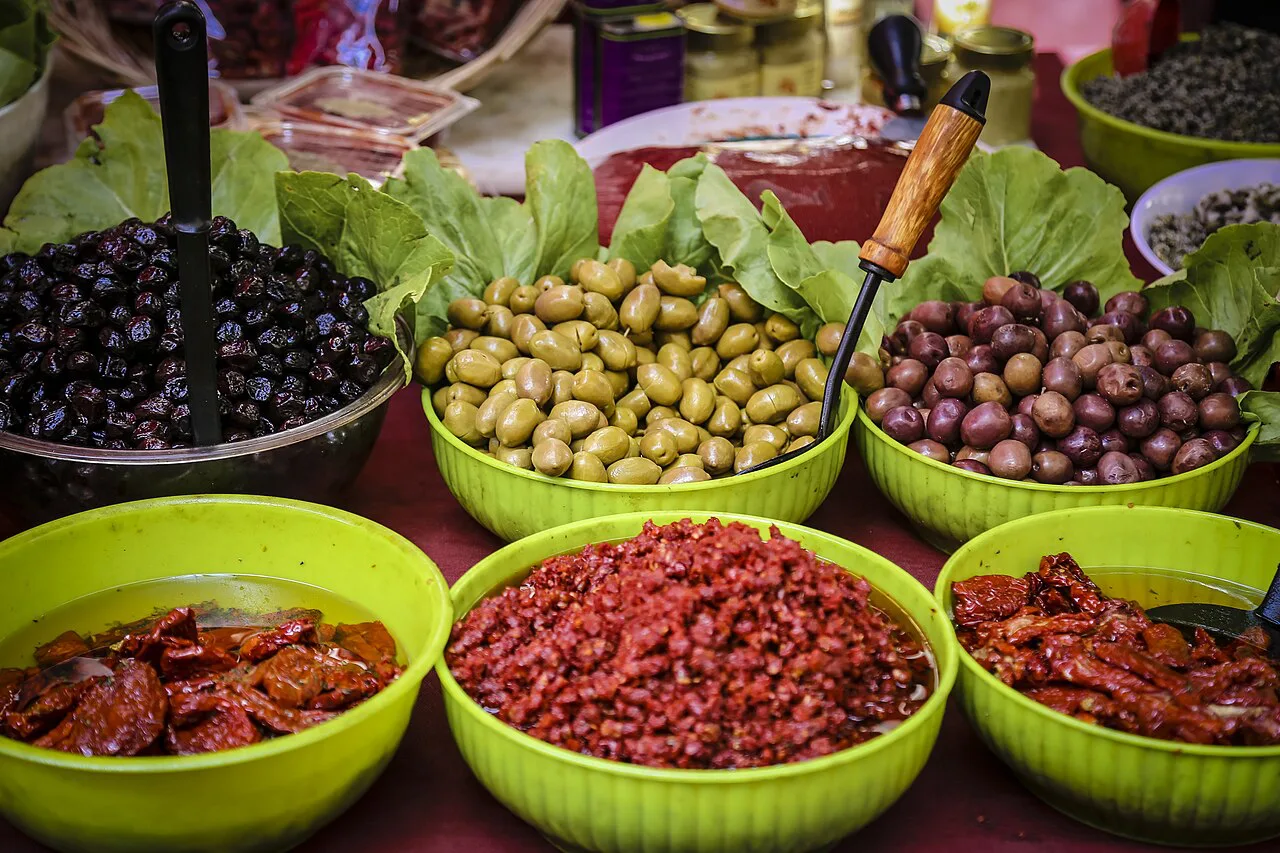
Herbs are sold in bunches, and basil is a reliable buy for a simple lunch. Tomatoes, basil and good olive oil are the basis of a Sicilian-style salad that needs nothing more than salt and bread. Pick up a lemon too, and you have the makings of a fish dressing or a drink.
Cheese and deli counters: ricotta three ways
The deli and dairy counters are where a market lunch comes together. Ricotta is a local speciality, made with sheep's milk and sold fresh, baked or salted. Fresh ricotta is soft and creamy, baked ricotta comes in colourful mounds, and salted ricotta is firmer and grateable over pasta or vegetables.
Ask for a small tub of fresh ricotta and a piece of baked ricotta to take away. The delis also sell cured meats, cheeses and prepared foods, so you can assemble a picnic without cooking. If you want a sit-down meal instead, our guide to the best restaurants in Syracuse covers the wider city.
Building a market lunch: bread, oil, salt and a bench
A market lunch needs four things: bread, olive oil, salt and somewhere to sit. Buy a loaf of ciabatta or similar from a bakery or deli counter, add tomatoes, basil, fresh ricotta and a little salt, and you have a proper Sicilian lunch. The waterfront and the squares around Ortigia give you plenty of benches and steps.
If you are staying in an apartment, buy fish and vegetables at the market and cook them simply: sardines with fennel, pine nuts and lemon zest, or a tomato and basil salad with ricotta on bread. If you would rather eat out, our Ortigia restaurants guide covers the neighbourhood's tables.
Finish with something sweet from a pastry shop or gelateria nearby; our guides to pastry shops in Syracuse and best gelato in Syracuse cover the options around the island. If you want a coffee or an aperitivo later, the waterfront at Lungomare Alfeo is the obvious place to sit.
Buying a small quantity and paying
The fishmongers and produce stalls sell by weight, so you can ask for un etto (100 grams) or mezzo chilo (half a kilo) of whatever you want. Point at what you want, say the quantity, and the vendor will weigh it and tell you the price. Cash is the simplest way to pay at a market stall.
Prices vary with the season and the catch, so compare a couple of stalls before you buy. A whole fish is often better value than pre-cut fillets, and a small amount of a good cheese goes further than a large piece of a cheaper one.
The streets around the market
The Graziella quarter around the market is one of Ortigia's old neighbourhoods, with narrow lanes and the Church of San Paolo at its heart. Walk a few steps off the market street and you are among fishermen's houses and small workshops rather than tourist shops. It is worth a slow loop before or after you shop.
The Temple of Apollo sits near the bridge end of Ortigia, a few minutes' walk from the market, so you can combine the two without much extra legwork. If you want a sit-down lunch after shopping, the best restaurants in Syracuse, Sicily guide is the place to start.
For coffee and a pastry, our guide to granita in Syracuse covers the summer version of the city's breakfast habit. If you are still planning the day, our Syracuse hub rounds up the city's food guides.
Should you go to Ortigia market?
Yes, if you want to see a working Sicilian food market rather than a tourist attraction. Come with a bag, some cash and a rough idea of what you want to cook, and you will leave with a proper lunch. Go when the fish counters are full and the calls are loudest, and you will see the market at its best.
If you would rather eat out, use our guide to the best restaurants in Syracuse to pick a table. Either way, the Graziella quarter and the market street are the heart of the island's food life.
Explore more Syracuse food guides
Sources
Notes for your next meal in Italy
Optional updates to our food guides.
You might also like
Continue reading
More guides you'll find useful