Risotto all'Amarone: Verona's Wine Risotto Explained
Risotto all'Amarone is Verona's risotto made with Amarone della Valpolicella and Vialone Nano rice. Here's what goes into it and how it tastes.
On this page
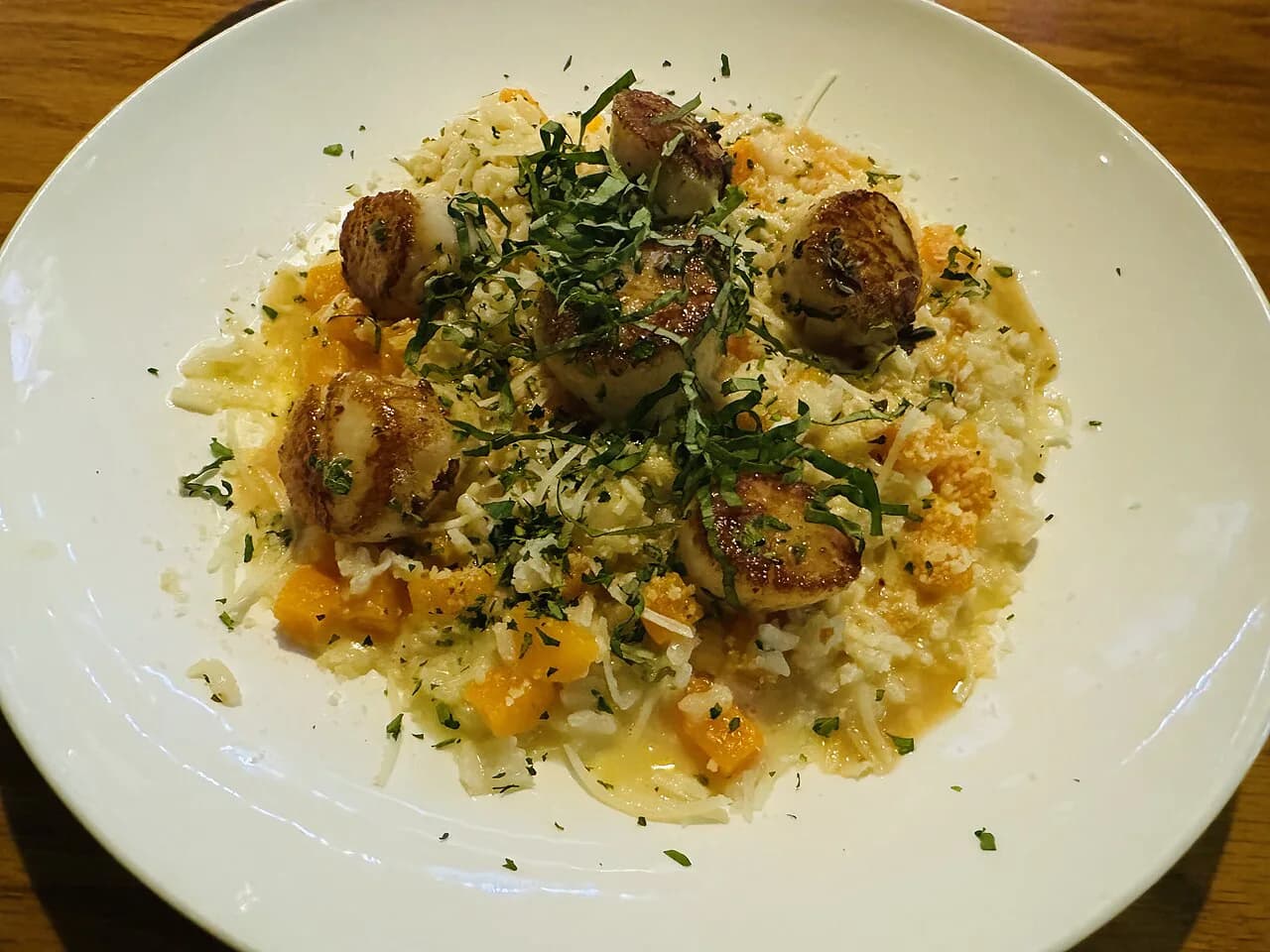
Risotto all'Amarone is a risotto from Verona made with Amarone della Valpolicella, a passito red wine, and Vialone Nano rice, and it tastes full and velvety with mature-fruit and raspberry-jam notes from the wine. It is a first course rather than a main, so it sits at the start of a Veronese meal. This guide covers the two defining ingredients, the rest of the pan, the method step by step and how to order it.
The dish is one of the most beloved of the Veronese repertoire and a flagship of many of the city's restaurants, which treat Amarone as a cooking wine despite its cost. That choice is the whole point: the wine's structure carries the flavour, and the rice is there to hold it.
Why Amarone and Vialone Nano define the dish
Amarone della Valpolicella is a passito red wine made in the Valpolicella zone of Verona province, smelling of ripe fruit and raspberry jam and tasting full and velvety. Its concentration is what makes the risotto work: a lighter red would fade against the stock and cheese. Because passito wines are made from grapes dried before pressing, the glass you cook with has more weight than an everyday red.
Vialone Nano is a starchy rice grown in the irrigated land of the upper Tartaro river basin and prized for risotti, because the starch it releases thickens the cooking liquid into a creamy sauce. The starchy grains of Vialone Nano hold their shape as they release that starch, and the stirring in the method is what draws it out.
The other ingredients in the pan
Beyond the wine and rice, the pan holds beef marrow or olive oil, butter, diced onion, hot stock and Monte Veronese, a cheese from the Lessinia area of Verona province. Quantities for four in the Veronese recipe run to 320 g of Vialone Nano, 60 g of grated Monte Veronese, 60 g of onion, 40 g of butter, 35 g of beef marrow or 50 g of olive oil, a litre of stock and about half a bottle of Amarone.
Two substitutions are genuine kitchen decisions rather than compromises. Beef marrow gives a deeper, meatier base; olive oil keeps the dish lighter. Monte Veronese melts into the rice at the end with a mild, savoury edge; Parmesan is the accepted stand-in when you cannot find it, and it brings more salt and bite.
How it's made, step by step
The method starts with a soffritto: brown the diced onion in half the butter with the marrow or the oil until it turns golden, then add the rice and toast it over medium heat for a few minutes, stirring vigorously. Toasting firms the outside of the grains so they stay separate while the inside releases starch later. Season with salt and pepper at this stage.
Next the Amarone goes in slowly, off a lively flame, so the alcohol evaporates quickly and leaves the wine's fruit and structure behind. Some cooks add it a little at a time and keep the pan uncovered for the same reason. The nose you are aiming for is fruit, not spirit.
Hot stock follows a ladle at a time, added only as the previous ladle is absorbed, with frequent stirring to help the starch leave the grains. Keep the liquid at a gentle boil throughout. One Veronese method gives the rice 13 to 14 minutes, but grain texture is the real guide: the rice should keep some bite, so taste as you go rather than trusting the clock.
Mantecatura: the finish that makes or breaks it
Mantecatura is the off-heat finishing step: take the pan off the flame and stir in the remaining cold butter and the grated Monte Veronese or Parmesan vigorously until the risotto turns glossy and flows slowly when you shake the pan. The cold fat emulsifies into the hot rice and gives the creaminess without cream. Skipping the vigour here is where home attempts most often end up grainy or stiff.
Let the risotto rest for a couple of minutes before serving, then plate it on warm flat plates so it spreads rather than mounds. It should ripple when tapped, not stand up like a pudding. Serve it immediately: risotto all'Amarone waits for no one, and a second helping left in the pan will tighten as it cools.
What it tastes like
Expect a full, velvety risotto with the wine's mature red fruit and a jammy raspberry note running through it, backed by the savoury depth of stock and cheese. The wine also brings a faint bitterness and warmth that keeps the dish from tasting sweet. It is rich enough that a small portion goes a long way, which is why it works as a primo rather than a main.
How to order it in Verona
In Verona, risotto all'Amarone is a primo, the first course that follows antipasti and comes before a secondo of meat or fish. Order one portion between two if you plan a full second course, or take it as your main with a contorno of vegetables on the side. It is also a fixture at celebratory lunches, so you will see it on menus that lean traditional rather than modern.
A glass of Amarone alongside reinforces the same fruit and structure in the dish, though the cooking wine and the drinking wine need not be the same bottle. If you plan a wider crawl of the city's osterie and pizzerie, keep risotto for the day you sit down properly, and compare notes with our guide to the best pizza in Verona for the more casual end of the week.
If you want the same sit-down rhythm without wine in the pan, Verona's other first courses are worth planning around: our guide to the best pasta in Verona covers the trattorias where bigoli and tortellini do the work.
Amarone, Valpolicella and Recioto: how the wines relate
Amarone sits within the Valpolicella family, the red wines of the hills north of Verona. It is made as a passito, meaning the grapes are dried before fermentation, which concentrates sugar and flavour and produces the weight the risotto needs. Recioto, the sweet passito of the same zone, is the dessert counterpart; Valpolicella and Valpolicella Ripasso are the lighter, drier wines of the everyday table.
Should you cook it or order it?
Cook risotto all'Amarone at home if you want to understand the dish: the method rewards attention at the toasting and mantecatura stages more than expensive equipment. Buy a Vialone Nano specifically labelled for risotto, and keep in mind that a lighter or cheap red fades against the stock and cheese, so the wine is the flavour. Order it in Verona when you want the version a restaurant has refined, and treat it as the primo of a longer meal rather than a quick plate.
To build a Veronese eating plan around it, the best pizza in Verona and our wider Verona restaurant guides pair well with a sit-down risotto lunch. If you would rather learn the technique with someone guiding you, cooking classes in Verona are the natural next step.
Explore more Verona food guides
Frequently Asked Questions
What is risotto all'Amarone?
It is a risotto from Verona made with Amarone della Valpolicella, a passito red wine, and Vialone Nano rice, finished with butter and Monte Veronese cheese. It is served as a primo, the first course of a Veronese meal.
What does risotto all'Amarone taste like?
Full and velvety, with the mature red fruit and raspberry-jam notes of the wine running through it and a savoury backing from the stock and cheese. The wine brings a faint bitterness and warmth that stops the dish tasting sweet.
What kind of wine is Amarone?
Amarone della Valpolicella is a passito red wine from the Valpolicella zone of Verona province, made from grapes dried before fermentation. That drying concentrates the fruit and gives the wine the weight it lends to the risotto.
Can I use a different red wine in risotto all'Amarone?
You can, but you change the dish: a lighter red fades against the stock and cheese and the risotto loses its fruit depth. Veronese recipes call for Amarone della Valpolicella itself, and some accept another red only as a fallback.
What can I use instead of Monte Veronese?
Parmesan is the standard substitute in Veronese recipes, and it brings more salt and bite than Monte Veronese. Adjust the seasoning at the end accordingly, since Parmesan is saltier.
Sources
Notes for your next meal in Italy
Optional updates to our food guides.
You might also like
Continue reading
More guides you'll find useful