Trattorias in Verona: Where to Eat the City's Own Dishes
Trattorias in Verona serve the city's own cooking: pastissada de caval, bigoli, gnocchi and Lessinia salumi. Here are named osterie and what to order at each.
On this page
The trattorias worth your evening in Verona are the old osterie in the historic quarters, where the cooking is Veronese rather than generic Italian: horse stew with polenta, hand-cut bigoli, gnocchi, bean soup and cured meats from the Lessinia hills. The four named below split into two types, so pick by temperament. Sottoriva seats you at shared tables under the porticoes and takes no bookings, while Al Duca and Trota da Luciano want a reservation and run their rooms in sittings.
What follows is a short guide to those tables, the dishes to order by name and the ordering rhythm of a Veronese dinner, from primi to the house wine in a carafe. Pizzas, pasta specialists and classes are covered elsewhere on the site; this page stays with the trattoria table.
What a trattoria means in Verona
In Verona, trattoria and osteria are used loosely for the same kind of place: a family-run room with a short menu of local cooking, plain tables and prices kept modest. The food is the point rather than the décor, and the dishes come from the city and its hills rather than from a national repertoire.
The classic Veronese bettola, the old riverside tavern where workers ate a hot plate and drank a cheap glass of wine, has largely gone as the Adige embankments were raised and the mills disappeared. What survives is the habit: local wine, a handful of traditional dishes and a room where regulars outnumber visitors.
That makes the distinction from a ristorante practical rather than academic. A trattoria here is where you go for pastissada and polenta in a plain, rustic room with a carafe of the house wine, not for a tasting menu or a long wine list.
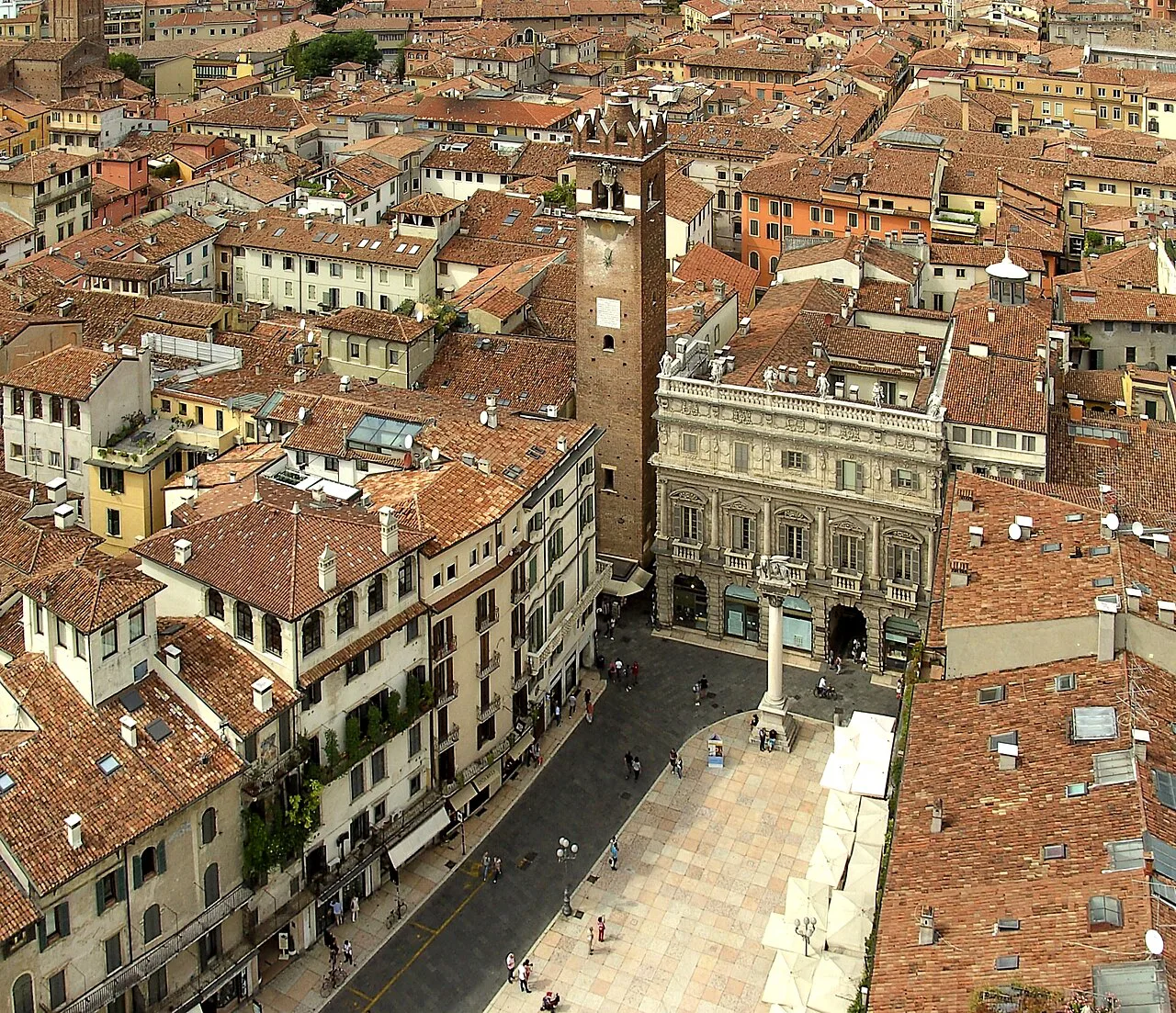
The Veronese dishes to order
Pastissada de caval is the dish to try at least once: horse meat cooked slowly with wine and spices until it falls apart, served with polenta to mop the sauce. It appears on the menus at Sottoriva, Al Duca and a le Petarine, and it is the clearest taste of the city's own cooking.
Bigoli are thick, rough-surfaced pasta strands that hold a heavy sauce, and in Verona they turn up with donkey ragù or, at a le Petarine, with tastasal, the seasoned minced pork mixture also used in the filling of the city's Christmas tortellini. Gnocchi come with pastissada sauce at Trota da Luciano, while pasta e fasoi is a thick pasta-and-bean soup that Al Duca does well. Order one of these as your primo and you are eating Verona rather than Italy in general.
The hills north of the city supply the rest of the table. Lessinia is the source of the cured meats and cheeses on the taglieri, a board of sliced salumi and cheese that makes a sensible shared start, and Monte Veronese is a cow's-milk cheese from the same hills, often melted into a first course.
If you want Veronese cooking in a deeper register, look for risotto all'Amarone, made with the red wine of the Valpolicella, and note that the rice most often used for it is Vialone Nano.
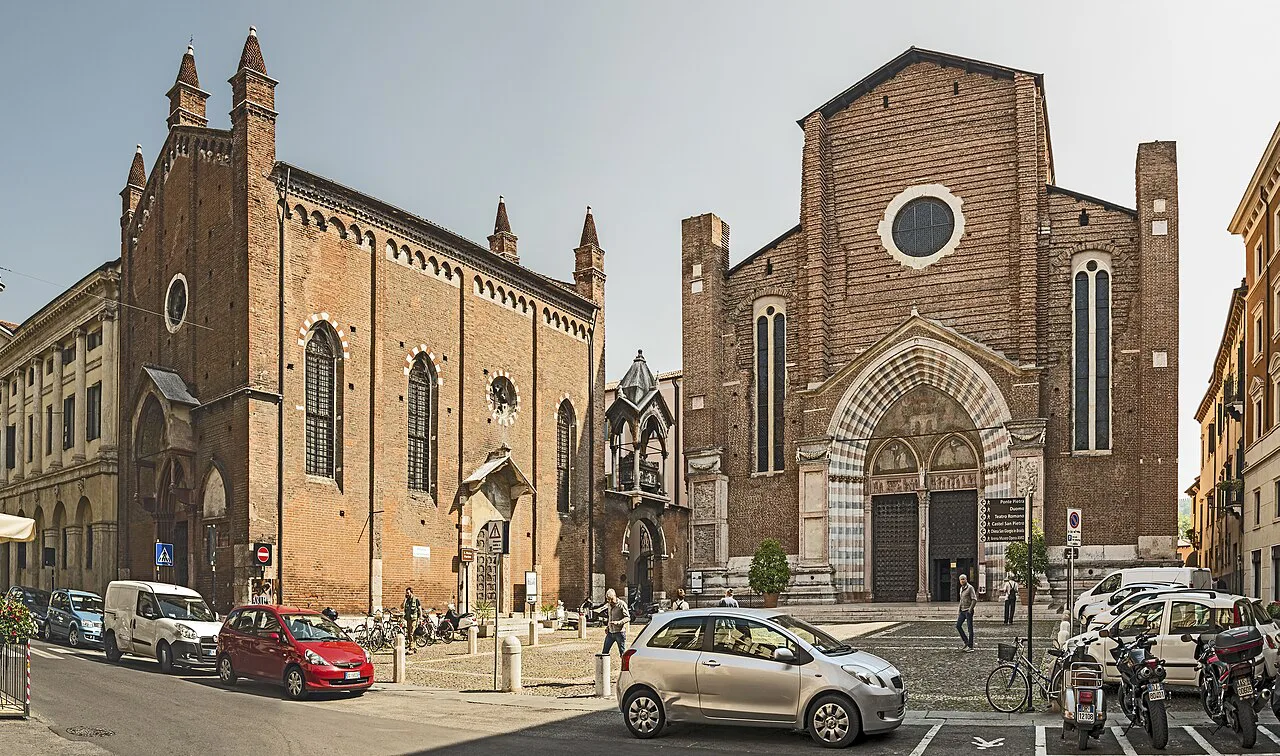
Osteria Sottoriva: shared tables under the porticoes
Osteria Sottoriva sits under the porticoes of via Sottoriva, one of the most atmospheric streets in the historic centre, and it is the most old-fashioned of the group: a handful of tables, no tablecloths, flowers on the wood, and a menu you have to squint at because it hangs on a polenta board with notes in dialect. The room fills with Veronese regulars, so expect to share a table with people you did not arrive with.
The house does not accept reservations, and sharing tables is part of how it works, so go early and accept the possibility of a squeezed seat. The menu is short: polpette, pastissada de caval with polenta and boards of cured meats from the Lessinia hills.
Wine is what you drink here. Water is allowed mainly so you can rinse your glass for the next pour, so if you want a soft drink with dinner this is not the place to count on it, and no-booking, share-a-table dining is not the right choice for a large group or a hurried meal.
Osteria al Duca: two floors and two sittings near the Arche Scaligere
Near the Arche Scaligere, the medieval tombs of the della Scala family, Osteria al Duca occupies a thirteenth-century building with rustic furnishings and cooks in two sittings over two floors, so booking matters. Local story has it that Romeo lived in the building, which the house trades on lightly; treat it as a tale rather than a fact to plan around.
Order pasta e fasoi or the house pappardelle all'anatra, and consider the set option with several courses and a small dessert if you want to work through the cooking. The kitchen is broad rather than short, with a long list of first and second courses, so the menu rewards a minute's reading.
The wine list runs to around 150 labels, with a house wine in a carafe as the everyday option. The two-sitting system means your time at the table is fixed, so plan the evening around it.
Osteria a le Petarine: a menu that follows the market
In the Carega quarter, named for the chairs the leather workers and cobblers once sat on, Osteria a le Petarine announces itself at the door with a sign in dialect saying you eat what there is, slowly. The menu changes often with whatever has come in fresh, and nothing is precooked, so there is no point arriving with a fixed idea of a specific dish.
When it is on, order luganeghe e fagioli, the local pork sausage with beans, or maccheroncini with tastasal and Monte Veronese. Pastissada de caval is a fixture, and the atmosphere is family and rustic rather than polished, which suits a long, unhurried lunch.
Because the kitchen cooks what it has, this is the table for anyone who would rather be surprised than assured, and the wrong one for a diner who needs a predictable menu. If you have your heart set on a particular pasta, check the board at the entrance before you sit down.
Trattoria Trota da Luciano: a certain address near piazza delle Erbe
Trattoria Trota da Luciano, on via Trota a few steps from piazza delle Erbe, has been running since 1968 as a family place with a rustic room, old signage, a wooden interior and a short flight of steps down into the dining room. The seats are limited, so a reservation is the sensible move.
Start with the large tagliere of cured meats and cheeses from the Lessinia hills, then take bigoli with donkey ragù or gnocchi with pastissada de caval. The farona al forno, a baked guinea fowl, is the lighter route, and the desserts are made in house.
It sits close enough to the Erbe that you can walk over after the morning market, which makes it a practical lunch before an afternoon in the centre. The cooking is traditional Veronese, with homemade pasta and desserts.
Booking, sharing tables and the pace of dinner
Choose by how you like to eat. For a no-bookings osteria with shared tables and a menu hung on a board, go to Sottoriva; for a bookable room with two sittings and a deeper list, Al Duca; for a changing menu that follows the market, a le Petarine; for a long-established family address near the Erbe, Trota da Luciano.
The Veronese dinner runs slowly, with the primo followed by a secondo and contorni, the vegetable sides, and the table kept for the evening. In a two-sitting house the timing is fixed; in the smaller osterie nobody will hurry you out, but nobody will rush your food either.
One more address for meat is Trattoria La Palma on via Legnago, a family-run trattoria with a kitchen built on meat cooked over the fireplace and a wine cellar strong on Italian and French bottles. It is a different proposition from the old-centre osterie: a broader room, an à la carte line and a booking line, so look at the site before you travel out to it.
How to read the menu and order
Menus are organised by course: primi are the pasta and rice dishes, secondi the meat and fish, contorni the vegetable sides ordered separately, and dolci the desserts. A tagliere of salumi and cheese usually sits at the top as a shared starter, and a meal of primo plus secondo plus one contorno is a full dinner for most appetites.
House wine comes in a carafe or by the glass, and it is the normal drink with these dishes; ask for the vino della casa rather than choosing blind from a list. If you want pasta in particular, the best pasta in Verona page goes deeper into the city's first courses, and cooking classes cover how some of these dishes are made.
The coperto, a small per-person cover charge, is standard on the bill in this part of Italy, and the menu usually lists it. Ask for the conto when you want it rather than waiting, and check the bill before paying; cash is still normal in small osterie, though cards are widely taken.
Which Veronese table fits your evening?
Pick Sottoriva if you want the old Verona of shared tables and a short menu, and book Al Duca or Trota da Luciano if you would rather have a table of your own and a fixed sitting. A le Petarine suits anyone happy to eat whatever came in that morning, and La Palma is the choice for a meat-led dinner away from the centre.
Whichever you choose, order pastissada de caval with polenta once, take a tagliere from the Lessinia hills to start and drink the house wine. The rest of the evening is best left unhurried.
Explore more Verona food guides
Frequently Asked Questions
What does trattoria mean in Italian restaurants?
In Italy a trattoria is a family-run, plainly furnished restaurant with a short menu of local cooking and moderate prices. In Verona it overlaps with the osteria, and both serve the city's own dishes rather than a national menu.
Where can I find the best pasta in Verona?
The trattorias on this page are the places for Veronese first courses: bigoli with donkey ragù at Trota da Luciano, pasta e fasoi at Al Duca and maccheroncini with tastasal at a le Petarine. The best pasta in Verona page explores the city's first courses in more depth.
What is Verona famous for?
For food, Verona is known for pastissada de caval, bigoli, gnocchi, bean soup and cured meats and cheeses from the Lessinia hills. Outside the table, the city is known for the Arena and the medieval centre around piazza delle Erbe.
Sources
Notes for your next meal in Italy
Optional updates to our food guides.
You might also like
Continue reading
More guides you'll find useful