
Caffè San Marco: Trieste's historic café on Via Battisti

Caffè San Marco is Trieste's best-known historic café: a book-lined, Viennese-feeling room on Via Battisti in the Borgo Franceschino quarter, open since 1914. Go for the coffee and the atmosphere, not for a quick takeaway cup, and treat it as a half-hour pause in a walk between the Grand Canal and Piazza Unità d'Italia. This guide covers where the café is, its story, what to order and how the sitting-down trade-off works; for the wider picture, see Trieste Attractions: 6 Visitor Guides.
What Caffè San Marco is and why it matters in Trieste
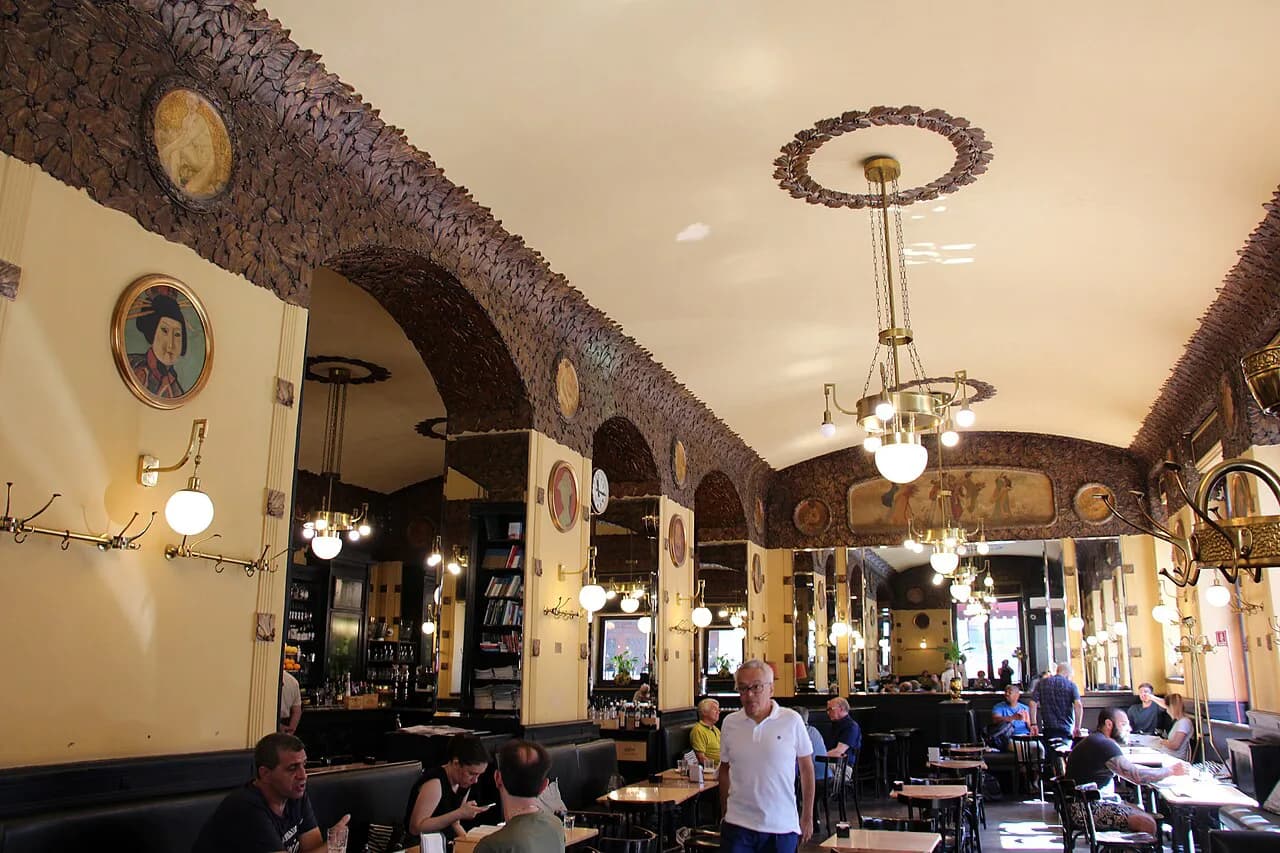
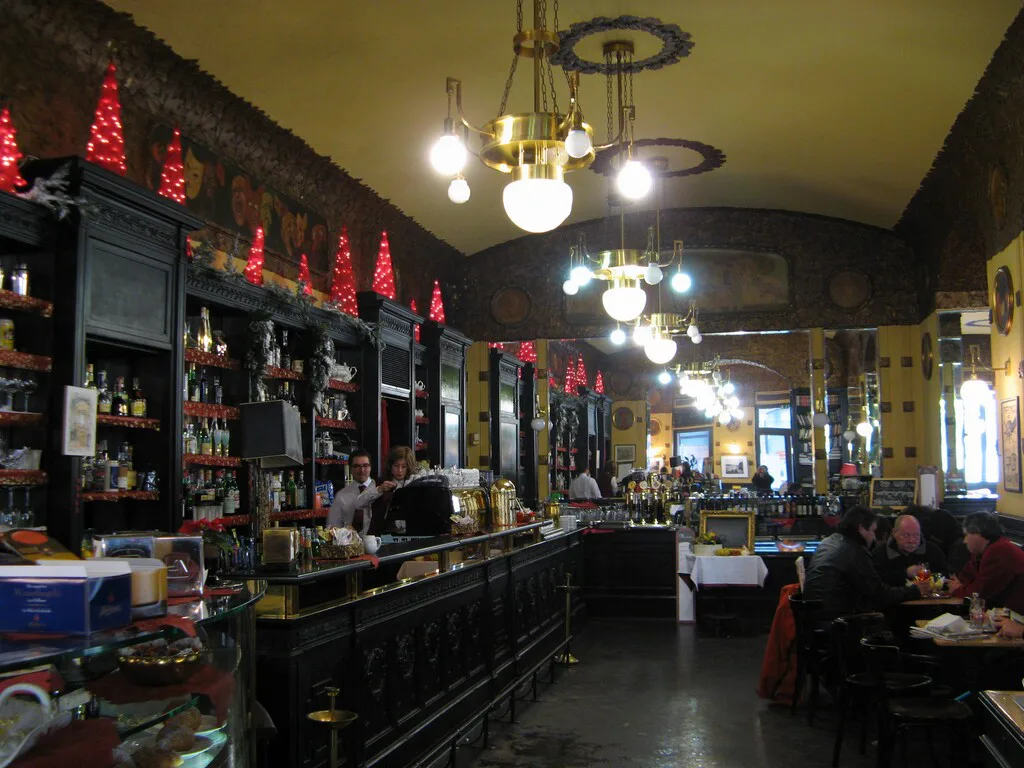
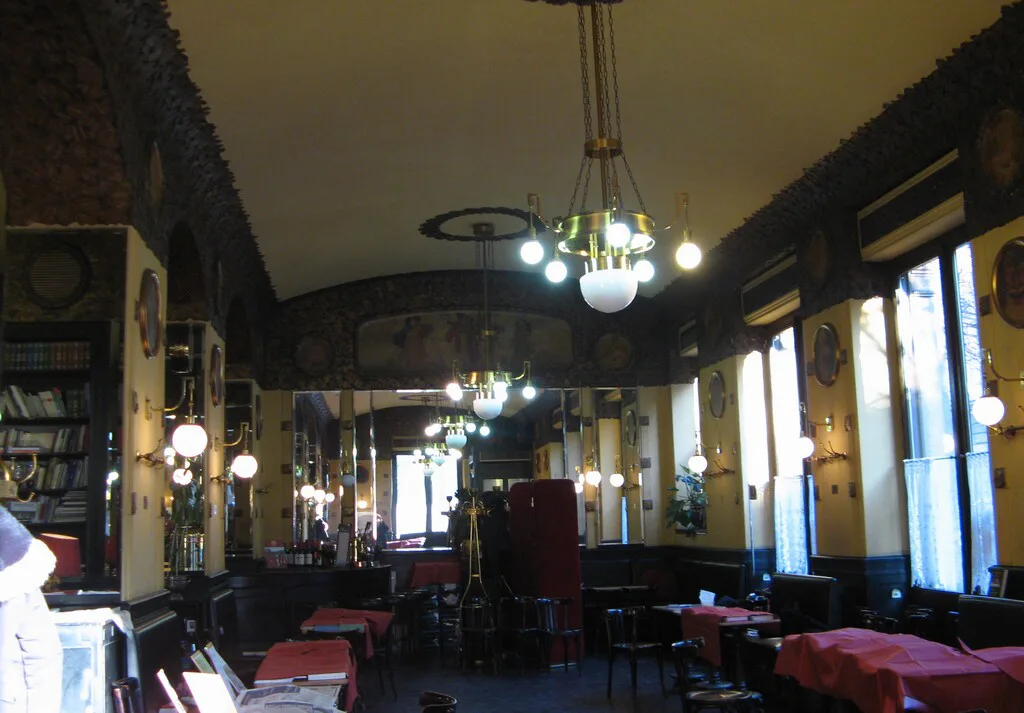
This is a historic coffee house rather than a restaurant with a café attached. The room is the attraction: marble, mirrors, a long counter and walls of books that make it feel closer to a reading room than to a modern espresso bar. Trieste built its identity on coffee trading, and the city's historic cafés are where that trade turned into daily ritual. San Marco is one of the best-preserved examples.
What lifts it above a pretty interior is its past as a gathering place for writers and intellectuals in early twentieth-century Trieste. That literary association is the reason the café appears in so many accounts of the city, and it still shapes the way people use the room. Come expecting a place to sit with a book or a newspaper, not a fast turnover.

Where it is: Via Battisti 18, Borgo Franceschino
The café sits at Via Battisti 18, in the Borgo Franceschino, the nineteenth-century grid of streets laid out between the old city and the new quarters. This puts it a short walk from Piazza Unità d'Italia and the Grand Canal, which makes it an easy stop mid-morning or mid-afternoon rather than a separate excursion. Use Via Battisti as your anchor when you nav.
The street runs roughly parallel to the seafront blocks, so if you are coming from the waterfront you are walking inland and uphill a little. The café's own site lists its contact details if you want to confirm before setting out. Nearby you also have Caffè degli Specchi, on Piazza Unità d'Italia, which is the other obvious historic café in the centre.
Its history from 1914 and the writers who gathered there
Caffè San Marco opened in 1914, which places it at the tail end of the Habsburg period in a city that was then one of the empire's great ports. Its early decades coincided with Trieste's dense literary and political life, and it became a meeting point for writers, journalists and irredentist circles. Treat the more colourful stories about who plotted what at which table as claims rather than settled fact.
Its inclusion on the Historic Cafés Route reflects that pedigree: the network exists precisely for places where the coffee house served as a civic institution, not just a business. For a visitor, the practical takeaway is that you are sitting in a room with a documented century of use. That is worth a few extra minutes over your cup.

What to order: coffee, a pastry, a light lunch
Start with coffee. Order a caffè or, if you want the local habit, an espresso drunk standing at the counter; the café also serves the full range of Italian coffee-bar drinks. If you are hungry, expect pastries and light dishes alongside the coffee rather than a full restaurant menu. The kitchen does more than coffee, but the café does not present itself as a lunch destination first.
Trieste has its own sweet repertoire, and a café stop is a sensible place to try it. The local pastries include presnitz, a rolled pastry filled with dried fruit, chocolate and spices, and pinza, an Easter cake. Order one to share if you are only peckish; the coffee is still the point.
If you want a proper sit-down meal afterwards, the city's traditional cooking is a short walk away: gnocchi di pane, jota and goulash are the dishes to look for. For a more formal lunch, Antica Trattoria Suban is the classic address in Trieste. It is a different kind of stop: a restaurant rather than a café.
How it works: table service and the price of sitting down
The main decision at any Italian café, and at San Marco in particular, is whether to stand at the counter or take a table. Counter service is usually cheaper because you are not paying for the table, the waiter and the setting; table service costs more and often carries a small cover charge. The room is the reason most visitors come, so sitting down is the point of the visit. Pay the difference knowingly.
If you sit, order from the waiter and pay at the end; if you stand, order and pay at the till first in the usual Italian way. Prices are not published in the sources here, so read the menu board or ask before ordering if you are watching the budget. Opening times can shift, so it is worth checking the café's own site before making a special trip.
How long to allow and when to go
Allow thirty to forty-five minutes if you are sitting down with a coffee and a pastry, and up to an hour if you plan to read or write for a while. This is a place to slow down rather than tick off. Mid-morning and mid-afternoon are the calmest windows; the pre-lunch and post-work hours are busier with locals.
You do not need to book a table for a coffee, and there is no ticketed entry; it is a working café. If you want a table at a peak time, arrive slightly before the rush rather than reserving. Outdoor seating is not something the café advertises, so plan to sit inside if the weather is fine.
Nearby: Piazza Unità d'Italia and the Grand Canal
Piazza Unità d'Italia is the obvious next stop: a vast seafront square framed by grand Habsburg-era buildings. Caffè degli Specchi sits right on it, and comparing the two historic cafés is a reasonable way to spend an afternoon. Both are about the room as much as the coffee.
Walk north and you reach the Grand Canal, with its moored boats and the church of Sant'Antonio Taumaturgo at the head. The Mercato Coperto di Trieste is also within easy reach if you are shopping for lunch, and the city's food streets cluster around this area. Use the café as a fixed point and wander from there.
How to get there on foot or by public transport
Because Via Battisti sits in the centre, walking is the simplest way: from Piazza Unità d'Italia it is a short uphill stroll, and from Trieste Centrale station it is a twenty-minute walk through the Borgo. If you are arriving by train, the station is the natural starting point for a café-first morning. The city's buses cover the centre well if you are staying further out.
If you are combining the café with the station, note that Italo runs high-speed services to Trieste; check current times and fares on the Italo website rather than relying on old timetables. The walk from the station passes through the shopping streets of the Borgo. That makes an easy loop with the café in the middle.
Is Caffè San Marco worth a stop?
Yes, if you want one historic café with a real story rather than a chain espresso. Sit down, order a coffee and a pastry, and give the room twenty minutes before moving on to the square. If you are watching the budget, stand at the counter instead. Either way, it earns its place in a day around Piazza Unità d'Italia.
Explore more Trieste food guides
Frequently Asked Questions
Do you need to book a table at Caffè San Marco?
No. It is a café, not a restaurant, so you turn up and either take a table or stand at the counter. At busy times you may wait a few minutes for a seat. Check the café's own site if you are planning around a specific visit.
Is there outdoor seating?
The café does not advertise an outdoor terrace, so plan on sitting inside, where the historic room is the reason to visit. If al fresco is essential, Caffè degli Specchi on Piazza Unità d'Italia is the alternative.