
Pasticceria Penso in Trieste: What It Was and What Happened

Pasticceria Penso is no longer a working pastry shop: the via Diaz shop in Trieste closed in November 2021, ending 103 years of trading. The Stoppar family, who ran it, kept a second address on the same street called Penso Caffè.
This page sets out what the shop was: its founding in 1918, the cakes that made its name, the Julian pastries on the counter and the streets around via Diaz. It is history and orientation for anyone walking central Trieste who has heard the name and wants to know what is left of it.
A Trieste pastry shop from 1918 to 2021
Pasticceria Penso stood in via Diaz, in the heart of Trieste, and had been in business since 1918. The shop was founded by Italo Stoppar, whose family carried on his recipes. When it closed, the count in the local press was 103 years of continuous pastry making, spanning two world wars and the economic crises in between.
The last baking day fell on the Friday before the closure was reported in mid-November 2021, when the ovens were switched off and the mixers stopped. The family's own explanation, given to Il Piccolo, pointed to two years of pandemic disruption; reporting also noted the weight of high running costs for a shop in that central stretch of Trieste.
Contemporary accounts describe a shop that never turned itself into a bakery: it stayed a pasticceria to the end, with windows full of sugar-worked celebration cakes for weddings and communions as well as everyday pastries. That insistence on the sweet side of the trade is what people in Trieste remember when the name comes up.

Why the Sacher torte made its name
The Sacher torte was the shop's signature and the reason local headlines called it a paradise for the cake. It is a dense chocolate sponge brushed with apricot jam and cloaked in dark chocolate glaze, served in thin wedges with unsweetened whipped cream on the side. Trieste's long Austrian chapter explains why a Viennese cake sits so comfortably in a Giulian pastry shop.
A visit to the counter was not only about Sacher. Local reports list Dobos torte and rigo jancsi among its specialities alongside it — the layered Hungarian cakes that share the Viennese and Mitteleuropean repertoire, both built on chocolate and cream. If you have eaten in Budapest or Vienna, you would recognise the family resemblance.

The Julian pastries: pinza, putizza and presnitz
Beyond the cakes, the shop's display held the pastries that belong to Trieste rather than to Vienna. The putizza is a rolled sweet bread spiralling with nuts, raisins and honey; the pinza is a softer, simpler sweet bread from the same family of baking. Both are the kind of thing a Trieste household buys by weight, not by the single piece.
The presnitz is a long spiral of flaky pastry packed with walnuts, almonds, raisins and honey, sold in thick slices. Krapfen, the filled and fried doughnuts that appear across Austria and northern Italy, also had a place in the case, along with fave, the small almond-and-sugar sweets tied to Trieste's spring. These are the names to recognise on any Trieste pastry counter.
Where Pasticceria Penso stood
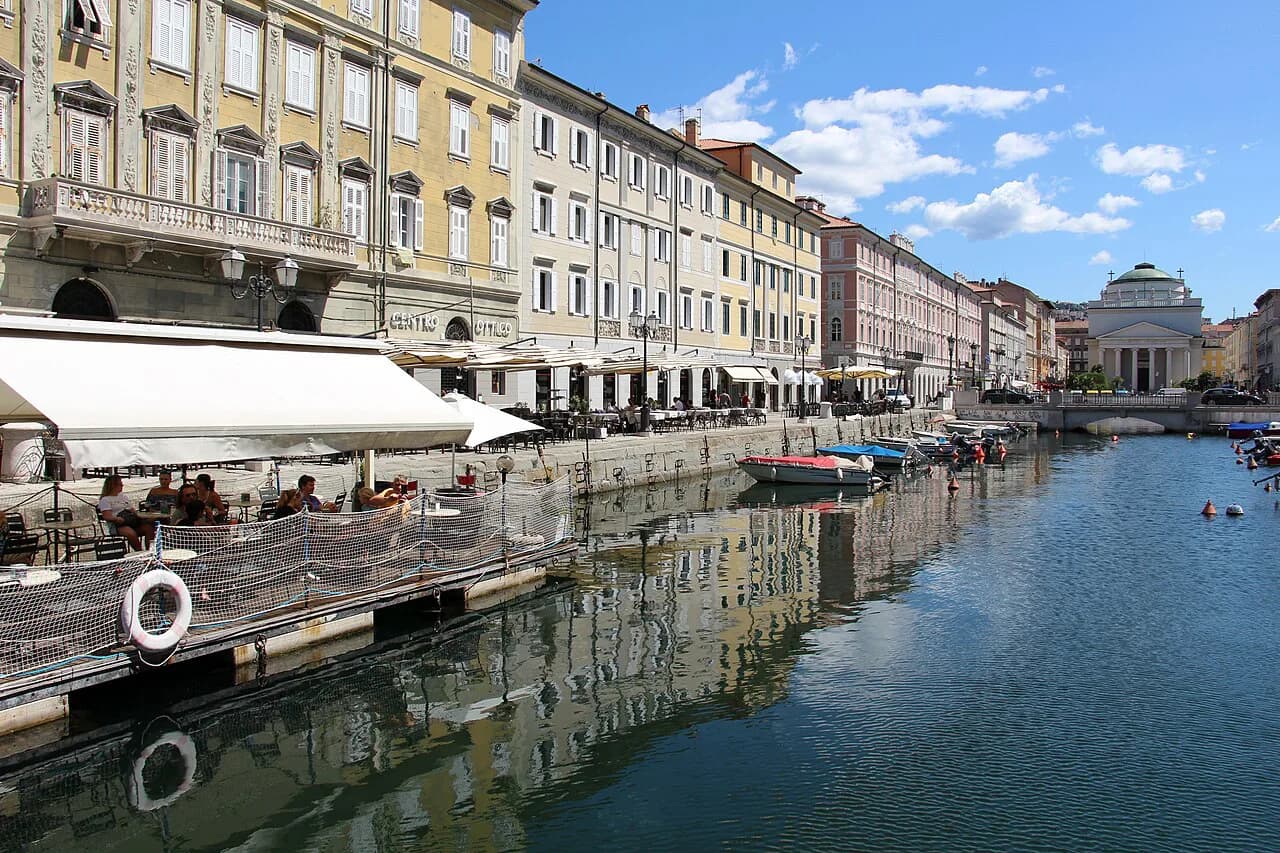
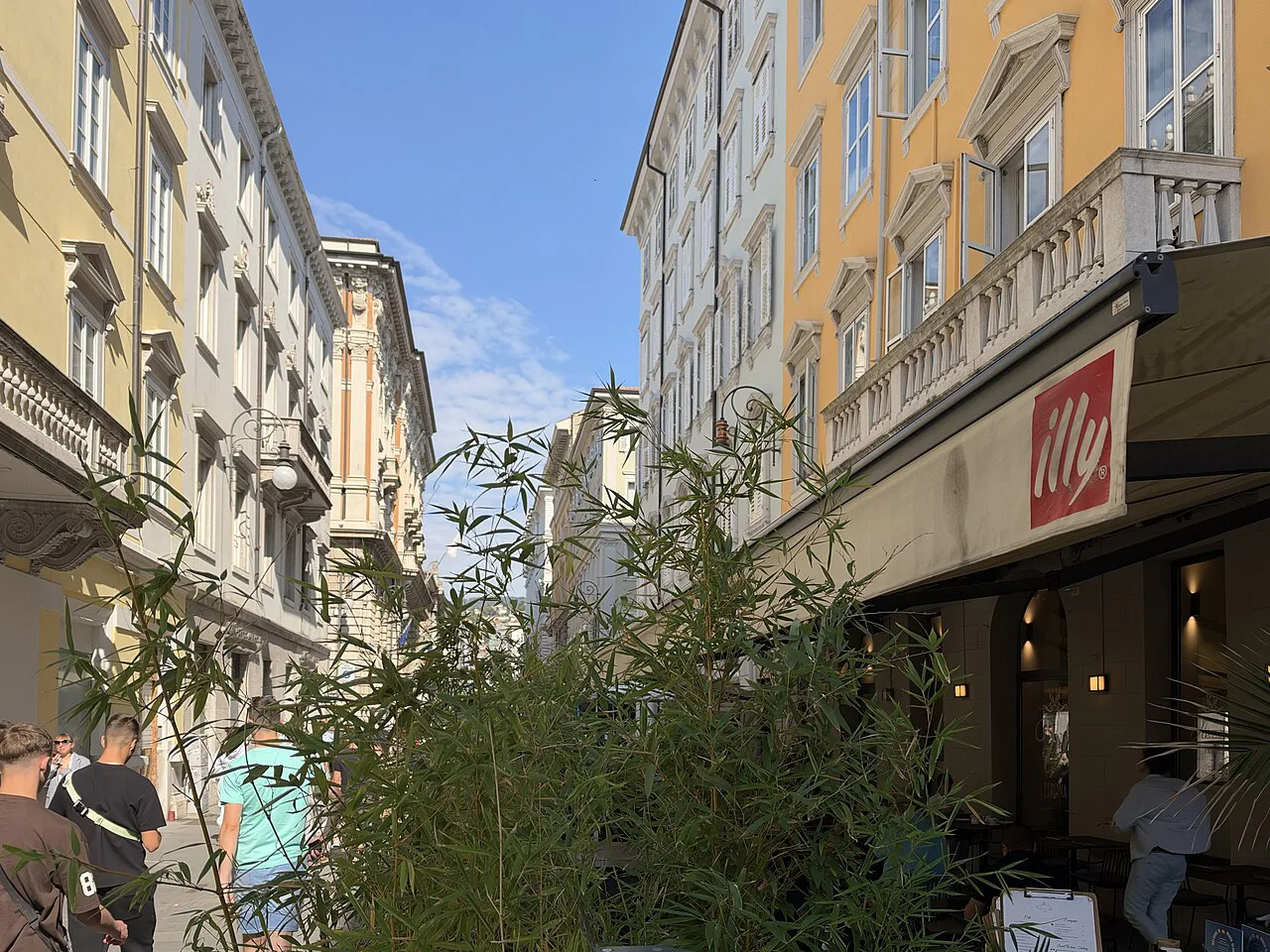
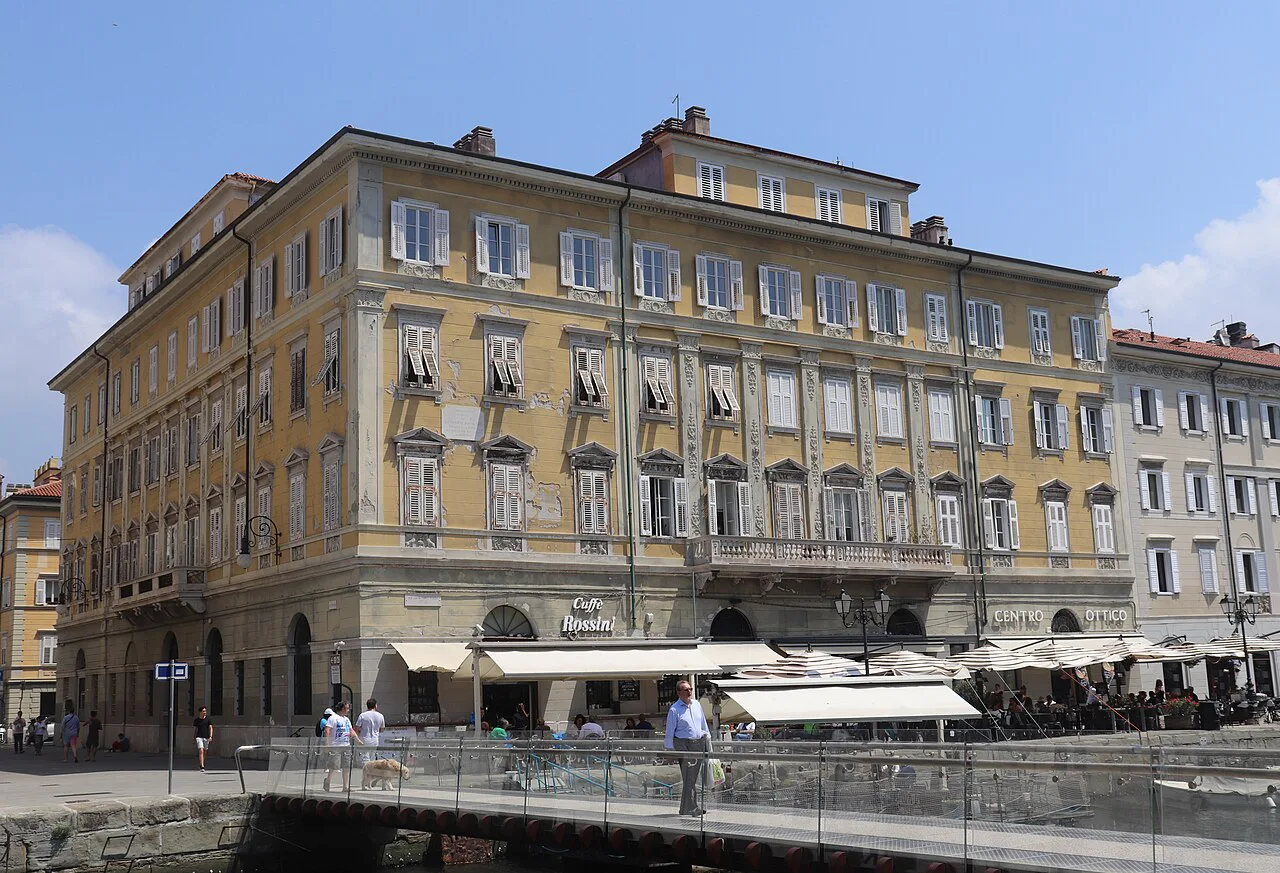
The shop was at via Diaz 1/D, a short central street that runs between the Grand Canal area and Piazza Venezia, a few minutes on foot from Piazza Unità d'Italia. Via Diaz is narrow, busy with offices and shops, and easy to cross without noticing a particular number, which is why it helps to fix the address before you look for it.
Trieste's centre is compact and largely walkable: from the railway station you can reach via Diaz through the Borgo Teresiano grid in well under half an hour, and trams and buses run through the surrounding streets. If you are planning a day of eating around this part of town, the broader Trieste Attractions: 6 Visitor Guides collection maps the places within walking range.
The 2021 closure and what it means for a visit
The closure was reported in November 2021 by Trieste's local press, closing out more than a century of trading, the ovens having been switched off on the Friday before. For a traveller today that means there is no Pasticceria Penso counter to visit in via Diaz. You can still walk the street and see the building, but the pastries exist now only in memory.
When a historic shop closes, the honest advice is to treat it as history rather than as a stop on a food itinerary. The names of the pastries it sold, from putizza to presnitz, are still worth knowing because they will show up elsewhere in Trieste, and a pastry shop will usually be glad to explain what is on the tray if you ask.
Penso Caffè: the family's other address
The Stoppar family kept trading. Their other point, Penso Caffè, is described at the time of the closure as the continuation of the business: one report places it on the same street, via Diaz, while another places it in the neighbouring Piazza Venezia and records the family's hope of moving the pastry laboratory to the vicinity so the sweet side of the work could carry on.
Treat Penso Caffè as a café stop in central Trieste rather than as a replacement for the old shop. Its current offering, hours and whether it sells pastries are not set out in the published reporting, so confirm them on the spot. If you are walking via Diaz or Piazza Venezia anyway, it is the natural place to sit down.
Trieste's coffee-and-cake habit
Trieste takes its cafés seriously, and the local rhythm suits a mid-morning pause: a coffee at the counter, a pastry standing up, then back out into the city. Ordering at the bar is normal and usually quicker than sitting at a table; in many Trieste cafés you pay at the till first or after, depending on the house, so watch what the people ahead of you do.
The pastry repertoire here leans Mitteleuropean rather than purely Italian: layered cakes, nut-and-honey rolls and yeasted sweet breads sit alongside cornetti. That mix is the legacy of the city's Austrian period, and it is the reason a Trieste pasticceria can feel closer to a Viennese konditorei than to a bar in Rome.
Nearby in central Trieste
Piazza Venezia is the immediate landmark for the lower end of this part of central Trieste and a useful point to reorient yourself; Piazza Unità d'Italia, the city's seafront square, is a short walk south. Between them you cross the Borgo Teresiano grid, so a wander in this area naturally takes in a coffee house or two.
For a longer sit-down meal in the city, Antica Trattoria Suban is one of Trieste's long-established addresses and is listed among the Locali Storici d'Italia. It is a different kind of stop from a pastry counter, but it fits the same urge to eat in the city's older rooms.
Is the old pastry shop worth seeking out?
Pasticceria Penso is worth knowing about as part of how Trieste ate for a century, but there is nothing left to buy at via Diaz 1/D. Walk the street for the geography, and remember the name when you see Sacher torte, putizza or presnitz on a Trieste counter.
If you want to sit down in the area, Penso Caffè on the same street is the family's surviving address, and Piazza Venezia and Piazza Unità d'Italia give you an easy walking loop around it.
Explore more Trieste food guides
Frequently Asked Questions
Is Pasticceria Penso still open?
No. The pastry shop in via Diaz, Trieste, closed after 103 years of trading, reported in November 2021. The Stoppar family's other business, Penso Caffè, continues in the area — one report places it on the same street, another in neighbouring Piazza Venezia.
What is a putizza?
A putizza is a rolled sweet bread filled with nuts and honey, one of the pastries that Pasticceria Penso was known for. It is sold sliced, and it belongs to the same family of baking as the pinza and presnitz.
Where can I buy Sacher cake in Trieste?
Pasticceria Penso, once the city's best-known source of Sacher torte, no longer trades, so look for it in Trieste's other pastry shops and cafés. Ask at the counter what is baked in-house that day.