
Mercato Coperto di Trieste: What to See at the City's Covered Market

The Mercato Coperto di Trieste is a working covered market in a rationalist building from the 1930s, set on Via Carducci at the edge of the old centre. It is worth a short visit for the building as much as the shopping: a trapezoidal hall with a clock tower, designed so that the city's women street sellers finally had a proper roof. This guide covers where it is, how to walk there, what is sold on each floor and which architectural details to look up for. See also our Trieste Attractions: 6 Visitor Guides.
A working market in a 1930s rationalist shell
This is not a museum piece or a food hall styled as a market: it is a covered market that still trades, housed in a building from the 1930s. The structure was financed by Sara Davis, the daughter of a wealthy English merchant, so that the women who sold produce on the city's streets would have somewhere sheltered to work. The building is listed among the stops on the city's rationalist architecture route, which is the best frame for a visit.

Where it is on Via Carducci
The address is Via Carducci 36/B, a street running through the Borgo Teresiano grid just inland from the waterfront. The market sits on a corner block, so you will usually spot the clock tower before you reach the entrance. Coming from Piazza Unità d'Italia, walk north into the grid of straight streets and look for Via Carducci; the whole approach is flat and takes only a few minutes.

Why Sara Davis paid for it
Sara Davis commissioned the market to give the venderigole, Trieste's women street sellers, a permanent home out of the weather. The name comes from the local dialect and simply means the women who sold their goods on the public street. Keep that in mind as you walk in: the building was conceived as workplace infrastructure for ordinary traders, not as a civic showpiece, which is part of its charm. The Museo LETS record of the market sets out Davis's role clearly.
Camillo Iona's design and the clock tower
The architect Camillo Iona drew up the market in the 1930s, and the sources date the work slightly differently: designed in 1935 according to TRIESTEMETRO, built between 1933 and 1936 according to Museo LETS. What matters for a visitor is the result: a trapezoidal plan that fills an awkward corner site and a clock tower crowning the whole thing. Walk round the outside before going in, because the shape only makes sense when you see how it fits the street block.
Two floors: produce below, flowers above
The market is laid out over two levels. Fruit and vegetables are sold on the ground floor, with flowers and seasonal goods on the upper level. That split tells you how to shop it: start downstairs for a picnic lunch of tomatoes, fruit and cheese, then go up for the flower stalls, which are the more photogenic half of the building. The structure was built to hold up to 300 sales counters, so give the aisles a proper walk rather than peering in from the door.
Rationalist details to look for
The building was experimental for its time, and the innovations are mostly things you can see without a guide. Natural lighting and ventilation were designed in from the start, and the walls were finished in a blue coating chosen because the colour repels flies. Look up at the roof lights and along the walls as you walk the aisles; these are the details that make the market worth ten minutes of your attention rather than a quick errand.
The interior's Lloyd Triestino connection
Inside, the market's interiors were modelled on the salons of the motorship Victoria, launched by Lloyd Triestino in 1931 and regarded as an advanced piece of ship design. That reference gives you something specific to look for: the proportions and finish of a liner's public rooms translated into a produce hall. It is an unusual link between Trieste's maritime past and its everyday shopping, and it rewards a slow lap of the upper floor.
How to visit and what to buy
Walk in and browse: this is a market, not a ticketed attraction, and there is no set route. For a picnic, buy fruit and vegetables downstairs and ask the stallholder to choose ripe pieces for eating that day; that is the sort of purchase the ground floor is set up for. Bring cash as a sensible default at Italian market stalls, and keep an eye on what is in season rather than chasing a fixed list. The market's page on the city tourism site is the place to check current opening times before you set out.
How long to allow
Half an hour covers the stalls and the architecture comfortably; twenty minutes is enough if you are shopping rather than looking. Mornings are the natural time for a produce market, when the stalls are fully laid out and the traders are busy, and a weekday visit will be calmer than a Saturday. The building is a working space, so walk and photograph with one eye on the people queueing at the counters.
Nearby: Piazza Unità d'Italia and the Borgo Teresiano
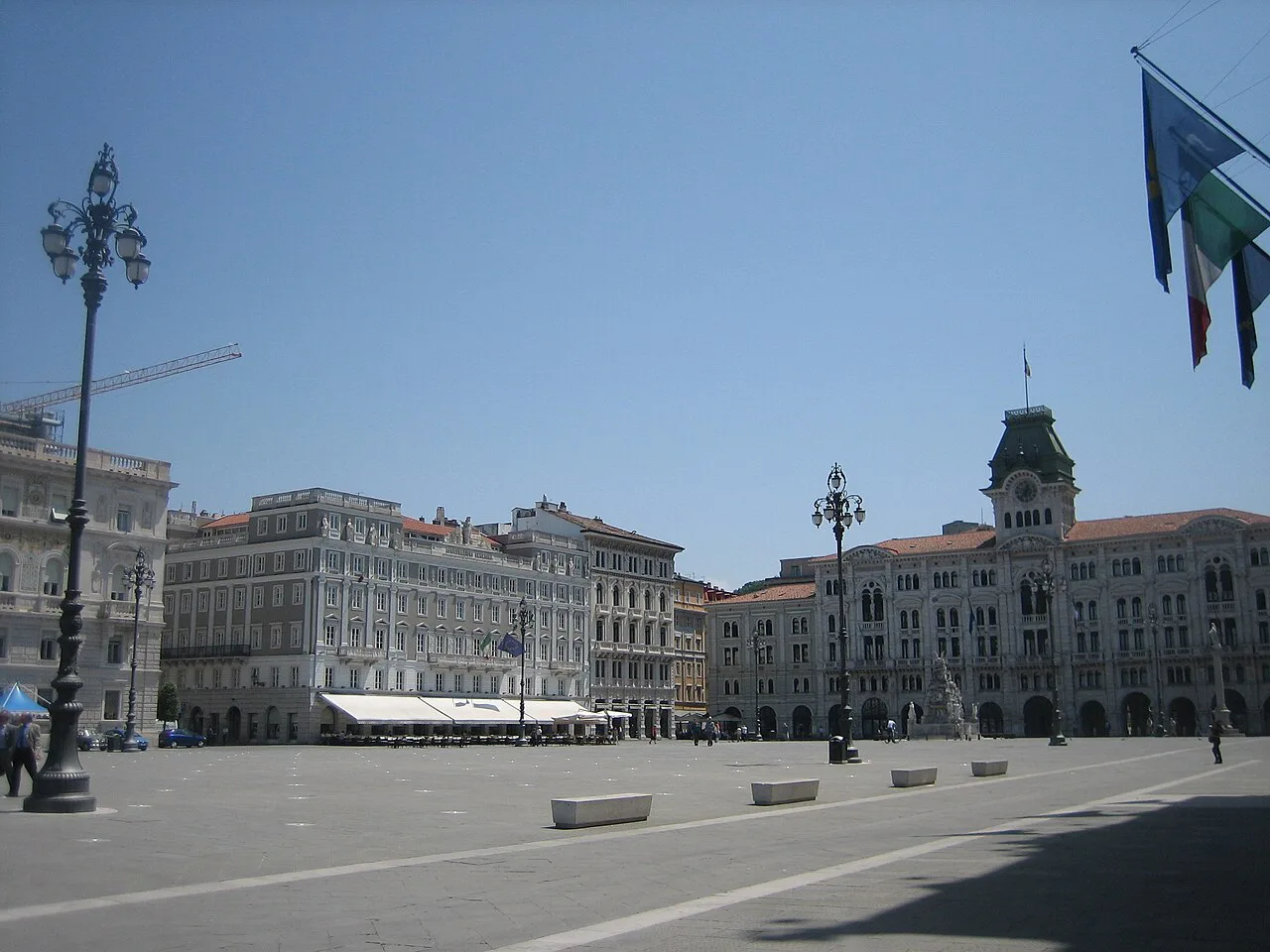
The market sits a short walk from Piazza Unità d'Italia, the city's seafront square, so it slots easily into a morning in the centre. The surrounding Borgo Teresiano streets are laid out on a regular grid, which makes navigation simple and puts you back on the waterfront quickly. If you want a proper sit-down meal after the market, Antica Trattoria Suban is the classic Trieste address for a long lunch, though it lies further out of the centre.
For a coffee before or after, Caffè degli Specchi faces the square and is the most central of the city's historic cafés. A little further into the grid, Caffè San Marco in the Borgo Franceschino makes a good second stop if you are walking the centre at leisure. Either works well as a bookend to a market visit, and both are the kind of place where you pay at the till first and then hand the receipt to the barista.
Is the Mercato Coperto worth a detour?
Yes, if you are already in the centre and want half an hour of real Trieste rather than another church interior. Come for the venderigole story, the blue walls and the clock tower, and leave with fruit for lunch. Skip it only if markets hold no interest for you; the building is handsome but compact, and it will not fill an afternoon.
Explore more Trieste food guides
Frequently Asked Questions
Who designed the Mercato Coperto in Trieste?
The architect was Camillo Iona, who drew up the rationalist building in the 1930s for the benefactor Sara Davis. The sources date the project slightly differently, so treat the mid-1930s as the accurate frame rather than a single year.
What is sold inside the Mercato Coperto?
Fruit and vegetables are sold on the ground floor, while flowers and seasonal goods are on the upper level. The stalls are working market counters, so what you find depends on the season and the day.
How do I get to the Mercato Coperto from Piazza Unità d'Italia?
Walk north from the square into the Borgo Teresiano grid and look for Via Carducci, where the market stands at number 36/B. The route is flat and short, and the clock tower makes the building easy to identify.