Ricciarelli and Panforte: Siena's Two Almond Sweets
Ricciarelli are soft almond biscuits with a cracked sugar top; panforte is a dense spiced fruit and nut cake. Here is how they differ and what to buy.
On this page
Ricciarelli and panforte are Siena's two signature almond sweets, and they are opposites in the hand: ricciarelli are small, soft almond biscuits with a cracked white top, while panforte is a dense, chewy spiced cake packed with nuts and candied fruit. If you only buy one, choose ricciarelli to eat within days and panforte to carry home as a gift. This guide explains what each sweet is, how the protected IGP names work, which Siena producers carry them, and how to buy and eat both.
What ricciarelli and panforte are, in one answer
Ricciarelli are almond biscuits built on ground almonds, egg white and sugar, shaped into small ovals and dusted with icing sugar so the surface cracks as they bake. Panforte is a flat, round cake in which whole and chopped almonds, hazelnuts and candied fruit are bound with honey and sugar, then spiced and baked dense rather than light. One is a biscuit for coffee, the other a sliceable cake for a cheese board or a gift box.
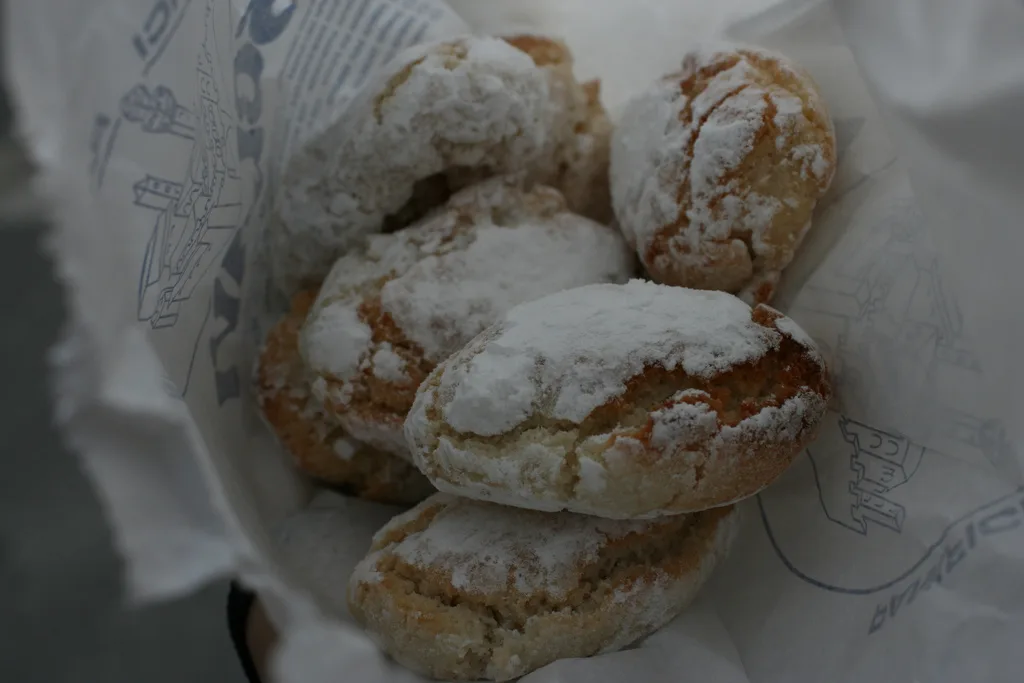
Ricciarelli: soft almond biscuits with a cracked sugar top
The texture of a good ricciarella is soft and slightly marzipan-like in the centre, with a thin, crisp sugar shell from the icing sugar coating. They are made with almonds rather than wheat flour, which is why the classic versions are naturally gluten-free. A retailer listing for Ricciarelli al Cioccolato from La Fabbrica del Panforte describes the recipe as almonds, dark chocolate, egg white and sugar, suitable for coeliacs, with a chocolate finish on the outside.
Ricciarelli are at their best within a few days of baking; the crust softens as they sit. Buy them from a pasticceria that sells them loose or in small boxes, and eat them the same week. If you are carrying them home, keep them flat in your hand luggage so the sugar top does not rub off.
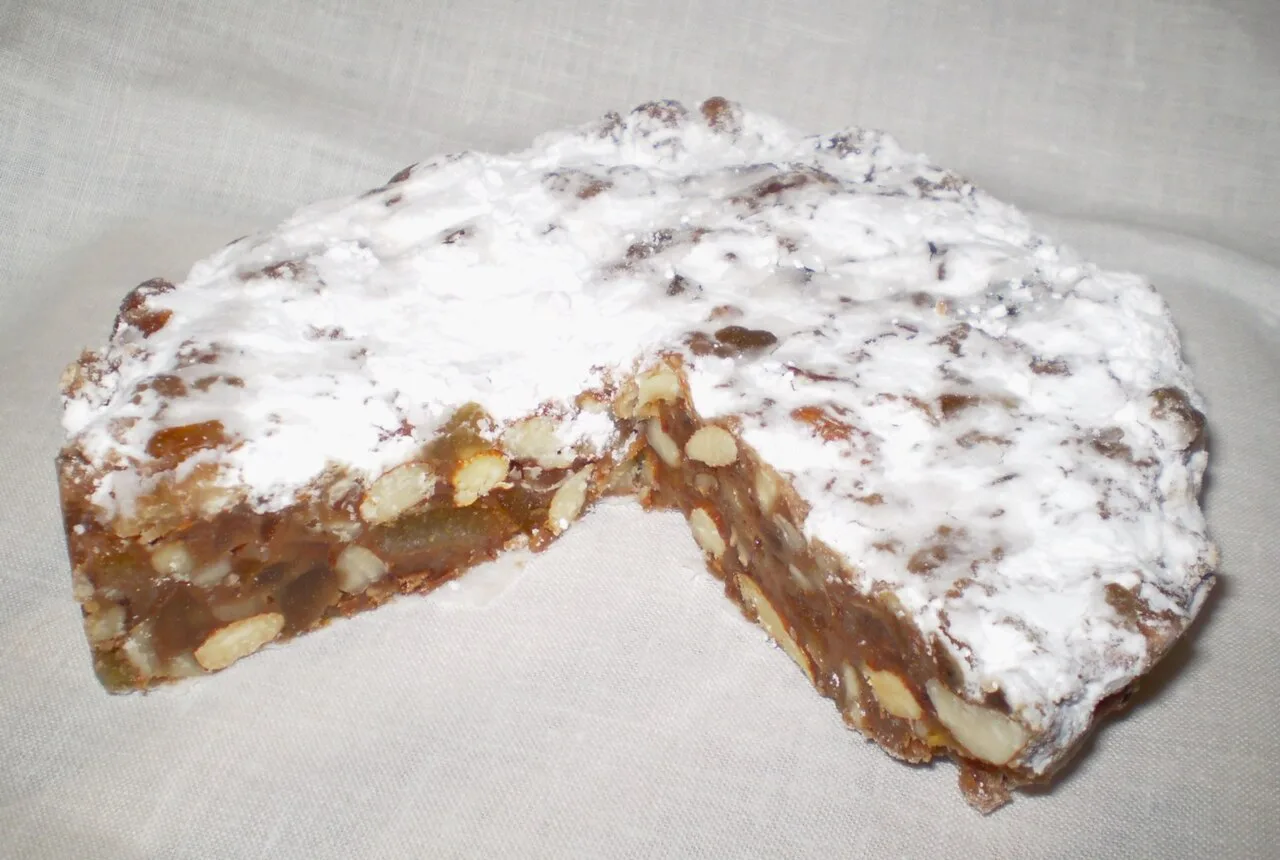
Panforte: a dense spiced fruit and nut cake
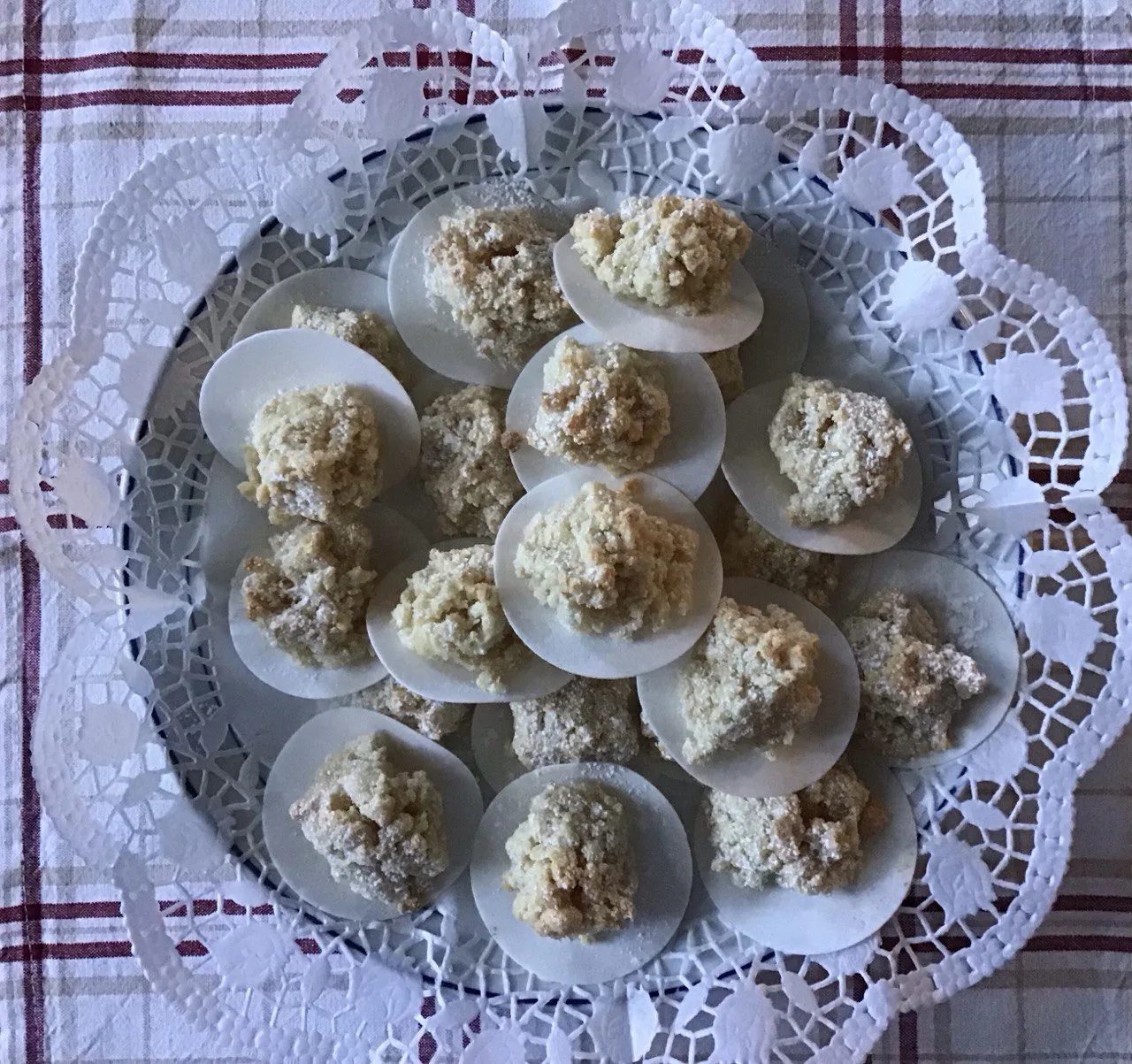
Panforte means strong bread, and the name fits: the cake is heavy with almonds, candied peel and honey, flavoured with spices in the cinnamon and clove family. It is baked in shallow rounds, dusted with icing sugar and cut into thin wedges, because a little goes a long way. Panforte Margherita is a version sold by Marabissi in Siena, lighter in spice and heavy on the candied fruit.
Because there is little free moisture in the mixture, panforte keeps far longer than ricciarelli and travels well in a suitcase. That makes it the better gift from Siena in summer or for anyone who will not eat the sweets straight away. A 100g Panforte Margherita box sold by the Oselladore retailer gives you a small, giftable size to try before committing to a larger round.
How the two differ in texture, sweetness and keeping time
Ricciarelli are softer and sweeter, with the almond flavour forward and a powdery sugar finish. Panforte is chewier and spicier, less sweet per bite because the nuts and peel balance the honey, and it is usually eaten in thinner slices. Neither is a light snack; both are concentrated sweets best with an unsweetened coffee or a small glass of vin Santo.
On keeping time, ricciarelli are the fragile one: plan to eat them within a week and store them in a tin. Panforte can sit in a cupboard for weeks and is often bought ahead as a Christmas gift, though in Siena it is sold all year. If you are buying for someone else, panforte is the safer choice; if you are buying for yourself in Siena, buy ricciarelli first.
The IGP labels: what the protected names cover and when the marks arrived
Siena's two protected sweets are recorded by La Nazione under the names panforte and ricciarello di Siena, both Indicazione Geografica Protetta, or IGP. La Nazione reports that the ricciarelli IGP mark arrived in 2010 and the panforte mark in 2013. The protected name is reserved for sweets made in the province of Siena following the traditional recipe, so a biscuit sold elsewhere as an almond biscuit cannot call itself Ricciarelli di Siena.
In practice the IGP tells you two things: the sweet was made within the province and it follows the registered method, which for ricciarelli means the almond-based mixture rather than a plain wheat biscuit. It does not tell you which producer is best, so use it as a minimum standard and then choose by bakery. The mark appears on boxes and labels, often with the European IGP symbol.
Many small Siena bakeries make excellent ricciarelli without the IGP, and they cannot use the full protected name. If the label matters to you, look for Ricciarelli di Siena rather than simply ricciarelli. If you are buying to eat that day, a loose biscuit from a good counter is a fine choice either way.
Which Siena producers are in the IGP committees
La Nazione reports that nine producers were part of the two IGP committees for ricciarelli and panforte: Nannini, Pasticceria Le Campane, Storie di Dolci, La fabbrica del panforte, Masoni, Sclavi, Fiore, Marabissi and Corsini. These are the names to look for on boxes carrying the protected Siena labels. The mark covers very different styles, from larger national brands to small pastry shops.
La Fabbrica del Panforte, part of the committee group, sells an IGP ricciarelli made with almonds, a useful benchmark for the classic style. Nannini and Marabissi are among the better-known names in the group, while Pasticceria Le Campane and Storie di Dolci are smaller Siena shops. This is not a ranking; these are simply the producers named as working under the protected name.
Where to buy ricciarelli and panforte in Siena
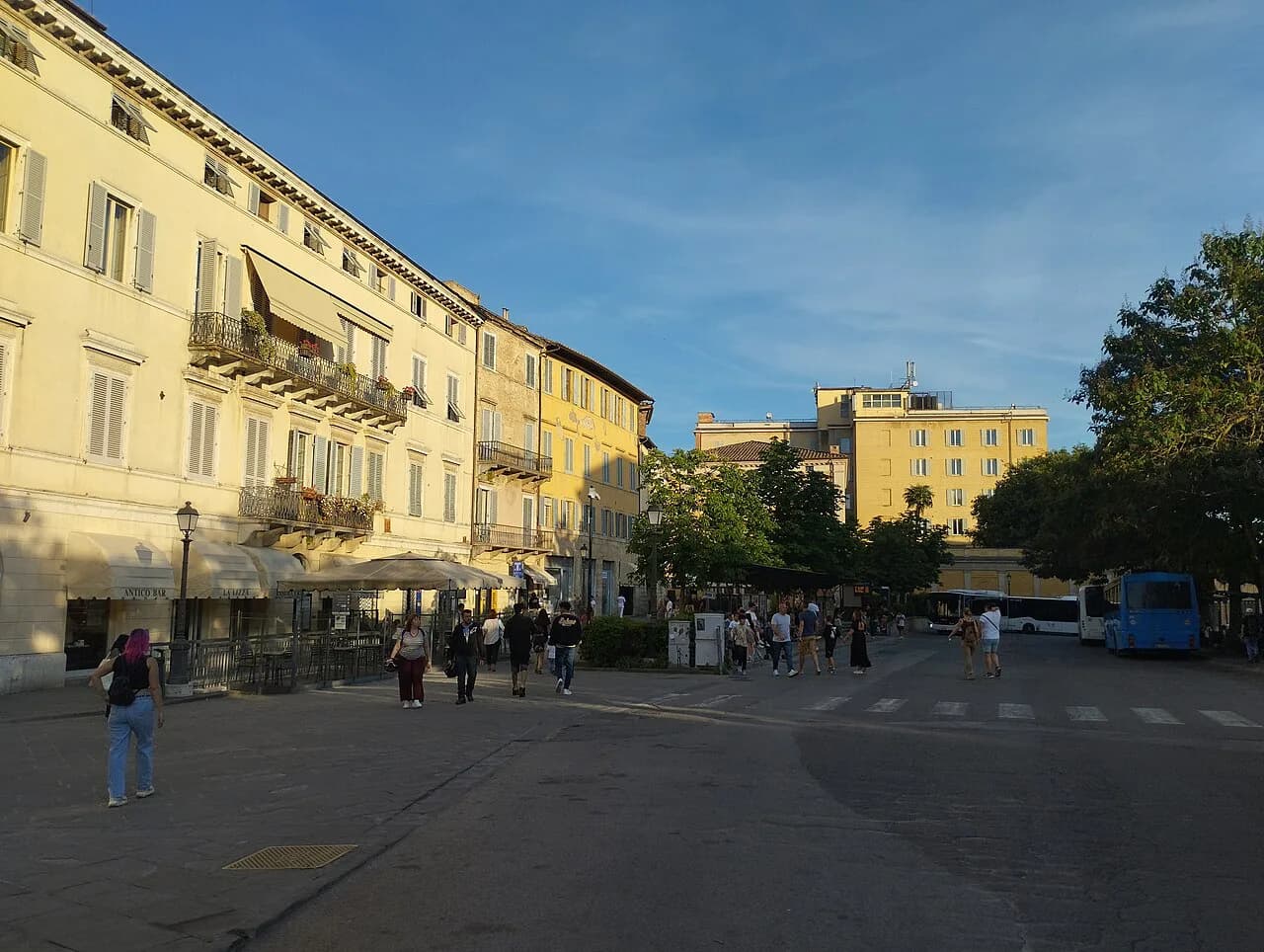
The simplest way to buy is to walk the streets between Piazza del Campo and the Duomo and look for a pasticceria with trays of ricciarelli in the window. Ask for a few pieces rather than a sealed box, so you can try before buying gifts. For panforte, the specialist shops sell rounds in different sizes and will often slice a large one for you. If you want a café stop earlier in the day, see our guide to aperitivo in Siena.
If you want to build a sweet-and-savoury day, eat lunch at one of the best restaurants in Siena and then buy ricciarelli for the afternoon; the biscuits are light enough after a big meal. For a sit-down slice of panforte with a coffee, find a café with a pastry counter; you pay at the till first as usual in Italy.
Beyond the sweets, Siena is a pizza and street-food city too, and a slice of pizza before an evening walk is a good counterweight to all the sugar. If you are planning a full day of eating, it helps to know where the best pizza in Siena is before you start on the almond biscuits.
Chocolate and gluten-free ricciarelli: what changes in the recipe
The classic ricciarella is already made without wheat flour, but check the label for traces if you are coeliac. The chocolate Ricciarelli al Cioccolato from La Fabbrica del Panforte are described as gluten-free and suitable for coeliacs, with a dark chocolate component in the filling and cocoa on the outside. The result is less sweet on the outside and more bitter, closer to a chocolate truffle in flavour.
Panforte is not normally gluten-free: the mixture can include flour to bind it, and the candied fruit and spices vary by producer, so read the ingredient list on the box before buying for a coeliac. Neither sweet is a low-sugar option, so buy small quantities and share.
How to eat them: with coffee, after a meal, or as a gift to carry home
At a café, order a ricciarella with an espresso or a cappuccino before noon, and eat it with your fingers. After a meal, a thin slice of panforte with a small glass of vin Santo is the traditional close to a Siena dinner. At home, serve panforte in thin wedges with a sharp cheese such as pecorino, where the sweetness and spice balance the salt.
As a gift, panforte is the practical choice because it survives the journey and looks handsome in its paper wrapper. Ricciarelli are better for people you will see within a few days, or for yourself on the train home. If you are taking a cooking class in Siena, ask whether the teacher covers Siena sweets; many do, and it is a way to learn the shaping before you buy.
What to pay in euros for a box or a single piece
At the Oselladore online shop, a 250g box of La Fabbrica del Panforte's Antichi Dolci di Siena chocolate ricciarelli is listed at €7.70 and a 100g box of Marabissi Panforte Margherita at €4.80. These are that retailer's online prices, not a guide to what a Siena pasticceria charges for a loose biscuit or a market stall charges for a slice. Expect to pay more per gram for small gift boxes and less for loose sweets sold by weight.
If you are buying several boxes as gifts, compare the price per 100g rather than the box price, because sizes vary widely between producers. A large panforte round can be better value than several small boxes, and a shop will often slice it for you. Keep your receipt if you are taking food back to the UK or Ireland, as customs rules on animal products do not apply to these sweets but value limits can.
Which sweet should you buy first?
Buy ricciarelli first if you are in Siena now and will eat them within a few days; buy panforte if you need a gift that survives the trip home. The IGP label tells you the sweet was made within the province of Siena to the registered method, and the producers named in the committees are Nannini, Pasticceria Le Campane, Storie di Dolci, La fabbrica del panforte, Masoni, Sclavi, Fiore, Marabissi and Corsini. Start with a small box of each from a pasticceria, then decide which one fills your suitcase.
Explore more Siena food guides
Frequently Asked Questions
What is the difference between amaretti and ricciarelli?
Amaretti are crisp, small biscuits made with apricot kernels or bitter almonds, often eaten with coffee. Ricciarelli are softer, larger almond biscuits from Siena with a cracked icing-sugar top. The texture is the giveaway: amaretti snap, ricciarelli bend.
How do you pronounce ricciarelli?
Ricciarelli is pronounced reech-chee-a-REL-lee, with a rolled r and a double c that sounds like the ch in cheese. The double l is a light sound, not a hard l. Panforte is pan-FOR-teh.
Can you freeze ricciarelli?
Ricciarelli freeze reasonably well because they are almond-based, but the icing sugar crust will soften on thawing. Freeze them in a single layer, then eat within a month. Panforte does not need freezing and keeps for weeks in a tin.
How long do ricciarelli last?
Ricciarelli are best within a few days of baking and are usually eaten within a week. Sealed boxes from larger producers may carry a best-before date, but the texture is at its best fresh. Panforte keeps far longer, often several weeks.
Sources
Notes for your next meal in Italy
Optional updates to our food guides.
You might also like
Continue reading
More guides you'll find useful