Aperitivo in Catania: Where to Go and How It Works
A guide to aperitivo in Catania: what the early-evening drink and snacks involve, where to go in the centre, and what a spritz and tapas cost.
On this page
Aperitivo in Catania means an early-evening drink with snacks, usually taken between roughly six and nine, or a sit-down version that stretches later into the night. The drink is the anchor and the food ranges from a few olives to a full board of arancini, salumi and local cheese. This guide covers the piazzas and neighbourhood bars where it happens, the two menu styles you will meet, and what the bill looks like.
It sits alongside the city's bigger food traditions, from the seafood at La Pescheria to the pasta dishes that fill a proper lunch, and it is the easiest way to start a Catania evening without committing to a full restaurant table.
What Aperitivo Means in Catania and When It Happens
The word comes from the Latin aperitivus, meaning something that opens, and the drink is meant to wake up the appetite before dinner. The modern habit grew out of Turin, where Antonio Benedetto Carpano created vermouth from white wine infused with more than thirty herbs and spices, and the idea then spread across Europe. In Catania the format keeps that pre-dinner purpose but adds a strong local larder.
Timing in Catania runs later than in northern Italy. The evening round typically starts around seven and can roll on for hours, while a separate lunchtime aperitivo is served at some venues as a lighter midday pause. If you want the classic version, aim to arrive early in the evening rather than at British pub-o'clock; if you want a quiet table, lunch is the calmer option.
The Snack Board: What Comes With the Drink
In Sicily the food often arrives on a tagliere, a wooden board cut in the shape of the Trinacria, the three-cornered symbol of the island. Expect nuts, local salumi and cheeses, and the standards that make the format feel genuinely Sicilian: arancini (fried rice balls, usually with ragù or cheese inside), bruschette topped with cappuliato (a sweet-sour Sicilian pepper and onion relish) and salmoriglio (a lemon, oil and herb dressing) spooned over toasted bread.
Beyond the board, a proper spread may include small portions of cous cous, grilled vegetables, tartine, pizza or focaccia, olives and taralli (small savoury rings). The quantity varies sharply by venue, so the drink price tells you a lot: a cheap spritz usually means a modest bowl of nuts, while a pricier aperitivo buys you a proper plate. If you are eating a full dinner afterwards, keep the snacking light.
Aperitivo in the Centre: Piazza Scammacca
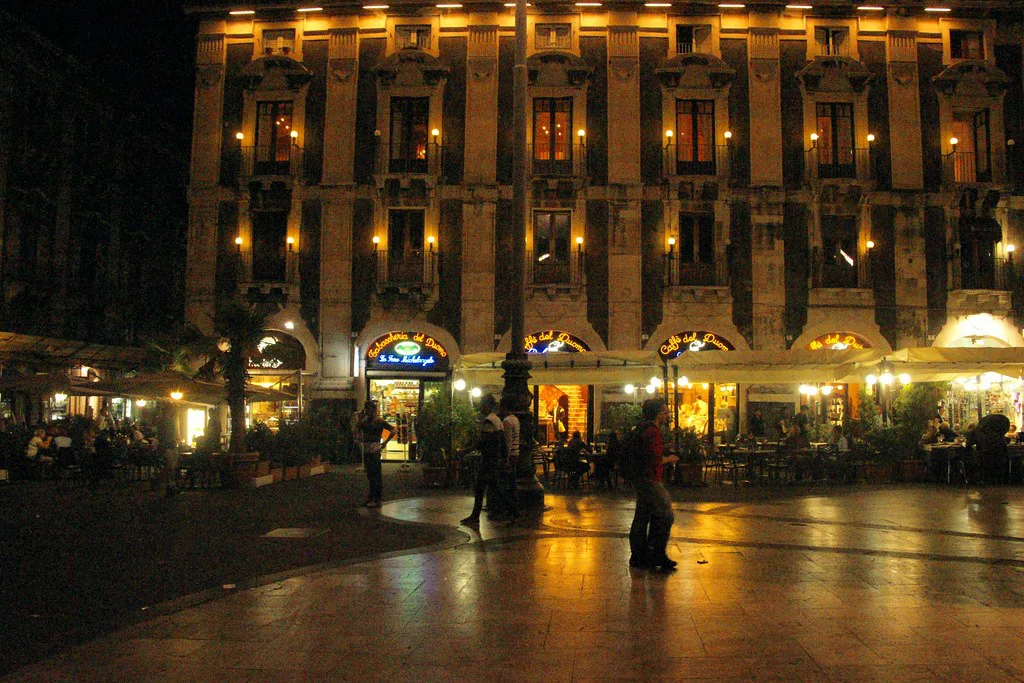
Piazza Scammacca, a few steps from the Duomo, serves its aperitivo inside the Church of Maria SS. del Rosario, a building of more than four hundred years that now holds a cellar, a cocktail bar and five different kitchens. It is an unusual setting for a drink: the room is used for cultural and musical events, and the food comes out of several kitchens rather than one.
The format here is a full aperitivo rather than a token bowl of crisps, served at both lunch and dinner, with cocktails and wines matched to local produce. It suits a group that wants one long, atmospheric stop in the centre instead of bar-hopping, and it is an easy walk from the cathedral and the fish market.
A Rooftop Aperitivo with a View at Palazzo Sangiorgio
Palazzo Sangiorgio runs a rooftop lounge bar above the historic centre, built around a mini pool with sofas, small tables and planting, and open to visitors as well as hotel guests. The draw is the view over the domes and rooftops as the light goes, with music and low lighting in the evening. It is the polished, view-led end of the Catania aperitivo spectrum.
The food is finger food and small bites by chef Jonathan Mirabella, built on Sicilian tradition but plated in a contemporary style, and the bar mixes cocktails with a serious list of wines and bubbles. The trade-off is cost: the rooftop experience carries a premium over a neighbourhood bar, and you are paying for the setting as much as the drink. It works best for a birthday, a couple's evening or a treat at the end of a day walking the centre; for a cheap, chatty round with locals, head elsewhere.
Four Neighbourhood Spots: Teapot, The Yard, Uzeta and Collage
Teapot on Viale Libertà mixes a wide food menu with teas and cocktails, and its signature Teapot Spritz uses violet syrup, prosecco and tonic. In 2024 the venue listed its aperitivo at ten euros with a soft drink and fifteen with alcohol, served every day, which makes it one of the more straightforward deals in town for a group that cannot agree.
The Yard Hostel on Viale XX Settembre has an international, low-lit food and drink area, with a Nepitella cocktail that reworks the mojito with white rum, lemon, coconut water and mint, plus crostoni (large toasted bread with toppings) including aubergine and tuna tartare versions. In 2024 it listed aperitivo from ten euros, running Tuesday to Thursday from six in the evening until midnight and Friday and Sunday until half past midnight.
Uzeta Bistrò Siciliano on Via Penninello leans into local tapas, from panelle chips (chickpea-flour fritters) with lime mayonnaise to arancini in a spiced ragù, with cocktails such as the Etna Spritz and Sicilian Mule. Its 2024 listing put tapas from five euros and cocktails from eight, with aperitivo Tuesday to Saturday from seven in the evening until two and Sunday from half past twelve.
Collage on Via Nicola Spedalieri takes a more international line, with the Capotanino cocktail built on orange and fennel chutney, allspice and a pepper distillate, and an Oriental Express Negroni with gin, vanilla, lime and tonic. In 2024 its tapas started at seven euros, so it suits a smaller, more curated round rather than a big group.
What to Drink: Spritz, Aperol and the Differences That Matter
Aperol is a bitter-sweet orange liqueur, while a spritz is a cocktail made with Aperol plus prosecco and soda. The distinction is the single most useful thing to know at a Catania bar, because ordering an Aperol gets you a measure of liqueur, and ordering a spritz gets you a long drink.
The most-ordered drinks in the city include the Espresso Martini with vodka, coffee and coffee liqueur, the Negroni with gin, red vermouth and Campari, the Hugo Spritz with prosecco, elderflower syrup, soda and mint, and a Negroni sbagliato that swaps gin for prosecco. Non-alcoholic versions of mojito and spritz are widely available, along with fruit juices and iced tea, so nobody in the group is stuck with water. If you are drinking, keep it to one or two before dinner and eat something alongside; the local culture is convivial, not competitive.
Aperitivo di Mare and Aperitivo di Terra: Choosing Your Menu
Piazza Scammacca splits its aperitivo into two styles. Aperitivo di mare brings the sea, with tuna sashimi, salmon, red prawn tartare and salt-cured fish, in a format that recalls drinks with friends by the water. Aperitivo di terra stays on land with arancinetto (small arancini), scacciata (a baked Sicilian stuffed bread or flatbread), potato tortino, mushroom cutlet, drowned cauliflower and broccoli polpette, aimed at anyone who wants traditional local flavours.
The choice is straightforward: seafood eaters take the di mare, and anyone who prefers vegetables, bread and fried nibbles takes the di terra. If you are sharing, order one of each and treat the table as a small buffet. Just ask what is in the seafood selection on the day if you have allergies, since the fish changes with what is available.
Prices and How Aperitivo Is Served and Paid
At the neighbourhood level, the 2024 figures give a useful yardstick: ten euros for a Teapot aperitivo with a soft drink, ten euros as the starting point at The Yard, tapas from five euros at Uzeta and from seven at Collage. A cocktail itself was listed from eight euros at Uzeta. Treat these as that year's published numbers rather than a fixed 2026 price list.
The pattern to expect: the drink sets the price, the snacks come as part of it, and anything beyond the included plate is charged separately. At the rooftop and the church venue, food and drink are priced individually, so ask for the menu before you order.
Booking and Timing: Lunch, Sunset and the Late Round
A lunchtime aperitivo is a shorter, lighter version, useful if your evening is already booked with a restaurant dinner. The evening round begins around seven and, at Uzeta and similar bars, can run very late. The rooftop at Palazzo Sangiorgio is best timed for sunset, when the light does the work; the church at Piazza Scammacca rewards a slightly earlier arrival so you can see the room before the music starts.
Booking is worth it for the rooftop, for a group of six or more, and on weekends when the popular spots fill quickly. Elsewhere, walk-ins are usually fine early in the evening. If your plan also includes a proper dinner, see our round-up of the Best Restaurants in Catania and pair a light aperitivo with a later table rather than stacking two big meals.
Which Aperitivo Fits Your Evening?
Choose Piazza Scammacca if you want atmosphere, history and a proper plate of food in one stop; choose Palazzo Sangiorgio if the view is the point and you are happy to pay for it. For a casual round with friends, Teapot, The Yard, Uzeta and Collage cover different budgets and moods, and all sit within a short walk of the centre. Decide by whether your priority is food, setting or price, then book the one that matters most.
Whichever you pick, order a spritz rather than an Aperol, share a board so you taste more than one thing, and leave room for dinner, because Catania's main event is still the table. If you want to eat well the rest of the day, start with breakfast and work up to pasta alla Norma in the evening.
Explore more Catania food guides
Frequently Asked Questions
What does fare un aperitivo mean?
It means having a drink and a few snacks before dinner, usually between early and late evening, with the food meant to open the appetite rather than replace the meal. In Catania the snacks can be substantial, so many people treat it as a light first course rather than a full dinner.
How much does eating and drinking in Catania cost?
For aperitivo, 2024 listings put a drink with snacks at around ten euros at Teapot and The Yard, with tapas from five to seven euros at Uzeta and Collage, and cocktails from eight euros. A full restaurant dinner costs more, and the rooftop and church venues price food and drink separately, so ask for the menu before you sit.
Sources
Notes for your next meal in Italy
Optional updates to our food guides.
You might also like

Continue reading
More guides you'll find useful