Best Pasta in Catania: Where to Eat It and What to Order
Where to eat the best pasta in Catania, from pasta alla Norma to spaghetti ai ricci di mare, and the trattorias to book for each dish.
On this page
The best pasta in Catania is pasta alla Norma, and the second best depends on whether you want fish, pistachio or a cheap plate of something enormous. Catania treats pasta as a city signature rather than a background course, and the venues below each have one dish worth ordering by name. This guide separates the dishes from the tables, so you know what maccheroncini alla Norma or rigatoni con mollica actually are before you sit down.
Most of the addresses cluster around the centre and La Pescheria, Catania's fish market, which is where the fish pastas get their edge. You can eat well for a modest outlay at a student trattoria or spend more on Slow Food-sourced ingredients, and the two experiences barely resemble each other.
What Catanian pasta is: the shapes and sauces that define the city
Catania's pasta identity is built on a short list of dishes rather than a long menu. Pasta alla Norma, cartocciata (a savoury stuffed street food a little like a calzone), cipollate (spring onions wrapped in pancetta and grilled), arancini, pasta al pistacchio, involtini and polpette di cavallo all belong to the city's repertoire, though not all of them are pasta dishes. Pasta alla Norma and the pistachio pasta are the two pasta dishes you will see most often.
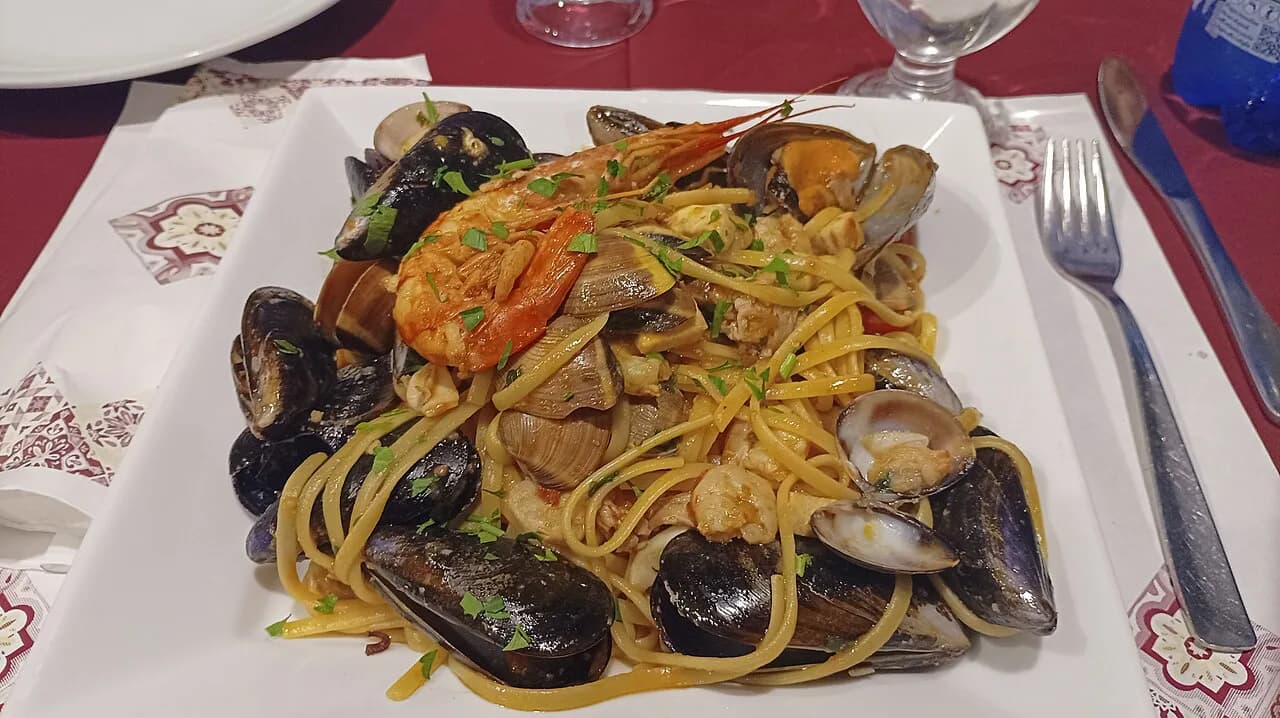
The fish side is just as important. Spaghetti ai ricci di mare (sea urchin), rigatoni con mollica (with toasted breadcrumbs) and linguine con uova di pescespada (swordfish roe) are the plates that separate a good Catanian kitchen from a generic one. The Best Restaurants in Catania, Picked by Style and Budget covers where to eat them, and you will find several of the names below there.
Order by shape and sauce together, not by shape alone. Maccheroncini alla Norma and rigatoni con mollica are both pasta, but the first is a tomato-and-aubergine dish and the second is a breadcrumb-led one, so ask what the kitchen does best before committing to a plate.
Pasta alla Norma: what it is and why it is Catania's signature plate
Pasta alla Norma is Catania's default pasta: a tomato sauce built with aubergine, finished with grated ricotta salata and basil. It appears on menus from student trattorias to smart dining rooms, which makes it the fairest way to compare two kitchens on the same dish.
The dish is treated as a point of local pride rather than a tourist plate. You will find it as maccheroncini alla Norma at Mé Cumpari Turiddu and on the long menu at Trattoria del Cavaliere, with the versions differing in the pasta shape and the generosity of the ricotta. For more on the dish itself, see our guide to Pasta alla Norma.
The fish side of Catania pasta: ricci di mare, acciughe and pescespada
Catania's fish pastas are best judged by how little the kitchen does to them. Spaghetti ai ricci di mare need fresh urchins and little else, while linguine con uova di pescespada rely on swordfish roe for a salty, faintly bitter depth that stands up to a plain olive oil dressing.
Eat these within sight of La Pescheria if you can. Osteria Antica Marina sits at the market itself, with outdoor tables that are practically part of it; the kitchen puts out spaghetti ai ricci di mare, grilled fish and prawns.
The trade-off is simple: at a small market-side dining room the tables fill at lunch and dinner, so booking ahead matters more than picking the trendiest room.
The pasta to order at each of the places below
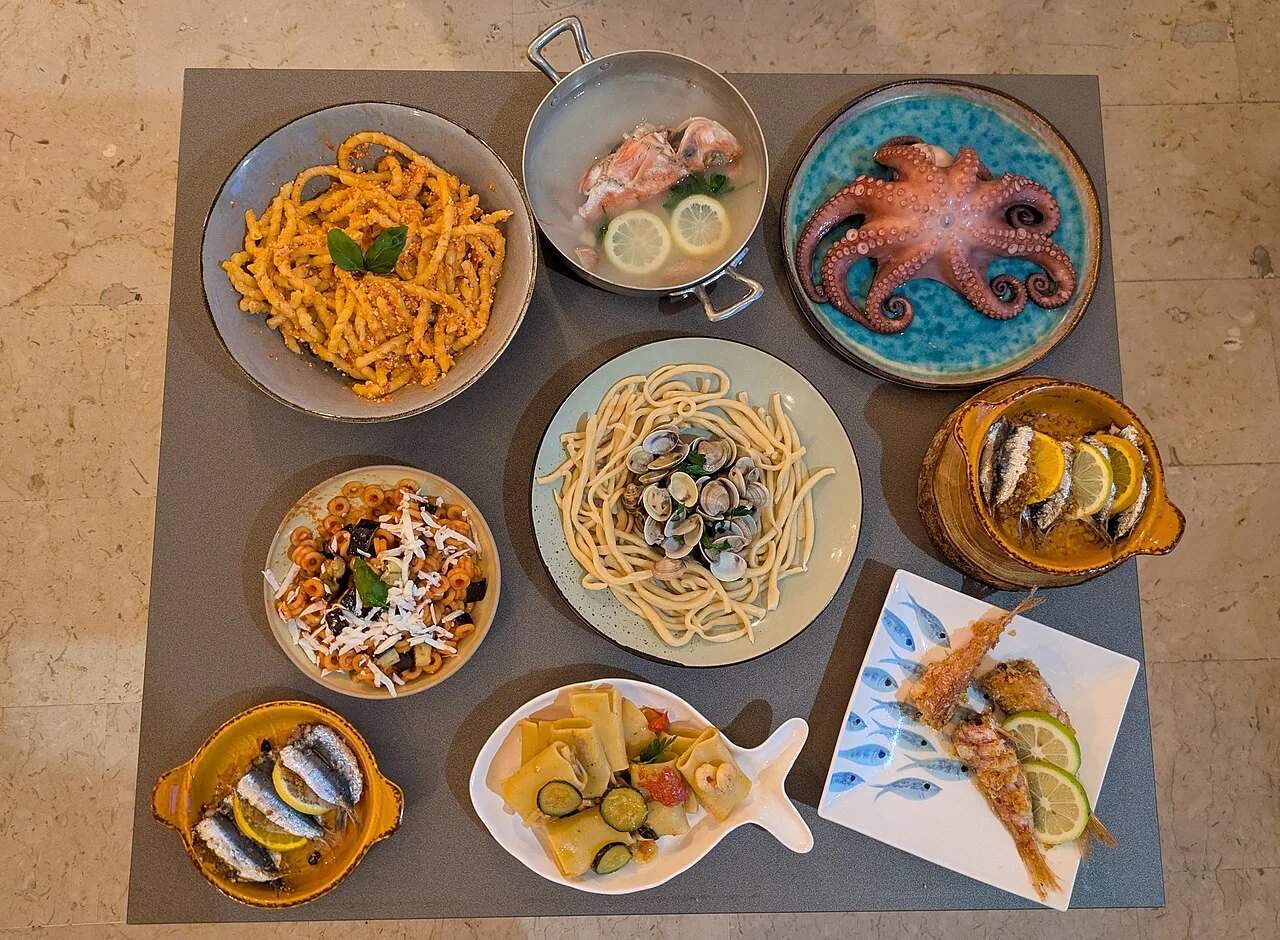
These are the plates worth crossing town for, venue by venue. Pasta al pistacchio, maccheroncini alla Norma, rigatoni con mollica and spaghetti ai ricci di mare each belong to a different kind of meal, from a quick student lunch to a slower fish dinner.
Mé Cumpari Turiddu: Slow Food ingredients and maccheroncini alla Norma
Mé Cumpari Turiddu is the most polished of the Catanian pasta addresses, run by Roberta Capizzi in the city centre. Most of the ingredients come from Slow Food Presidia or from her own garden, which is where the vegetables and citrus for the jams come from, and the kitchen applies a contemporary eye to traditional Sicilian cooking.
Order the maccheroncini alla Norma, or the spaghetti alla Turiddu with anchovies and toasted breadcrumbs if you want the house signature. The cellar holds more than 200 Sicilian wines and 60 liquors, and the sommelier Giovanni can point you to a glass that suits the plate.
This is the splurge of the group, so it suits a dinner where you want to sit, talk and eat slowly rather than a quick lunch between sights.
Osteria Antica Marina: spaghetti ai ricci di mare beside La Pescheria
Osteria Antica Marina is the address for market-side fish pasta. It sits at La Pescheria, Catania's largest fish market, with outdoor tables that are practically part of the market and an indoor room lined with colourful Sicilian tiles.
The menu works à la carte or as a set price, and the spaghetti ai ricci di mare is the plate to order, with grilled fish and prawns alongside. The dining room is small, so book ahead for both lunch and dinner.
La Siciliana: rigatoni con mollica and family-run fish cooking since 1968
La Siciliana has been run by the La Rosa family since 1968 and is now in the hands of the brothers Vito, in the kitchen, and Salvo, in the dining room. It is the place for plain, classic Sicilian fish cooking, with warm wood-panelled walls and decorative plates hanging around the room.
Order the rigatoni con mollica or the linguine con uova di pescespada, and consider the ripiddu nivicatu, a squid-ink risotto with squid and cheese shaped to look like Etna. It is the most old-fashioned meal on this list and the better for it.
Trattoria del Cavaliere: big portions, low prices, pasta al pistacchio
Trattoria del Cavaliere is the Catanian classic for volume over finesse, popular with the city's student population and families. Portions are large and occasionally enormous, prices are low, and the long menu covers essentially every Catanian dish you might be looking for.
Order the pasta al pistacchio, the involtini or the horse meat, which is a Catanian staple rather than a novelty. The grilled meat selection can be ordered by weight, which makes it easy to share across a table.
Trattoria La Pentolaccia: traditional Sicilian cooking in the centre
La Pentolaccia has been a trattoria in central Catania since 2001, on Via Coppola, serving traditional Sicilian cooking from antipasti through to desserts. Its site describes fresh pasta, selected meat and fish, seasonal salads and handmade desserts, with regional wines alongside.
It opens Tuesday to Sunday for lunch from 12.30 to 14.30 and dinner from 19.00 to 23.00, and closes on Mondays; tables can be booked by phone or online. For a weekend dinner in the centre, book ahead.
Scirocco Sicilian Fish Lab: street-food seafood at the edge of the fish market
Scirocco Sicilian Fish Lab occupies an old butcher's shop at the edge of La Pescheria, and the white tiles, meat hooks and bright red awning give away its past. It serves fried fish in a paper cone, and there is often a queue, but the format is street food rather than a sit-down pasta lunch.
Order the warm octopus, prepared to order, the Cono di Mare with mullet, anchovies and the fish of the day, or the Cono Terra Mare with fried vegetables, broad beans and pistachios for a vegetarian option. Eat it standing or walking through the market instead of waiting for a table.
How much pasta in Catania costs and how to pay
Pasta in Catania spans a wide range: student trattorias keep prices low with big portions, market-side fish pasta costs more because the fish does, and Slow Food-sourced cooking sits at the top. A private pasta-making class in the city is priced from 80 euros per person, which gives a useful sense of what a hands-on food experience costs relative to a plate.
For the cooking class, a 30% deposit is paid in advance and the balance is settled on site in cash, which is a reminder to carry euros even in a city where cards are widely accepted. At restaurants, ask for the bill at the table rather than expecting it to arrive unprompted.
Booking, closing days and the August question
Small dining rooms fill quickly, and the market-side tables at Osteria Antica Marina are the ones most likely to be gone by the time you arrive. La Pentolaccia takes bookings by phone or online and is closed on Mondays, which is the one closing day set out clearly for any of these addresses.
For the rest, a phone call the same morning is the practical move, especially for a group. If you are in Catania in August, confirm directly with the restaurant you want, because individual kitchens set their own summer breaks.
If you would rather learn the shapes than just eat them, the private pasta class in Catania runs for about three hours and covers orecchiette, cavatelli and gnocchetti, finishing with a lunch of what you made. It is booking-only and starts from a two-person minimum.
Which one to choose for a quick lunch, a family meal or a splurge
For a quick lunch, head to Scirocco Sicilian Fish Lab at the market and eat fried fish from a cone, or take a table at Trattoria del Cavaliere for a large, cheap plate of pasta al pistacchio. For a family meal, La Pentolaccia and La Siciliana both offer traditional cooking in comfortable rooms, with the former closed on Mondays.
For a splurge, book Mé Cumpari Turiddu and order the maccheroncini alla Norma with a glass from the Sicilian list, or take a market-side table at Osteria Antica Marina for spaghetti ai ricci di mare. Either way, the pasta is the reason to be there, not an afterthought.
Which Catania pasta table suits your day
Match the table to the meal: a market cone or a student trattoria for lunch, La Siciliana or La Pentolaccia for a family dinner, and Mé Cumpari Turiddu when you want the Slow Food version of the city's cooking. Whichever you pick, order a named Catanian dish rather than the generic pasta on the menu.
If you have time for only one, make it pasta alla Norma in some form, because it is the dish that tells you most about the kitchen behind it.
Explore more Catania food guides
Frequently Asked Questions
What is the difference between pasta alla Norma and maccheroncini alla Norma?
They are the same dish in different shapes: pasta alla Norma is the general name for the tomato and aubergine sauce finished with ricotta salata, and maccheroncini refers to the short maccheroni shape used for it at Mé Cumpari Turiddu.
Is pasta in Catania expensive?
It varies widely. Student trattorias keep prices low with generous portions, market-side fish pasta costs more because of the fish, and Slow Food-sourced restaurants sit at the top. Ask the price of the day's fish before ordering it by weight.
Do I need to book a table for pasta in Catania?
For small market-side rooms and weekend dinners, yes. A same-morning phone call is usually enough for a weekday lunch, and La Pentolaccia accepts bookings by phone or online.
What pasta should I order if I do not eat fish?
Pasta alla Norma, pasta al pistacchio and rigatoni con mollica are all fish-free, and Scirocco Sicilian Fish Lab serves a Cono Terra Mare with fried vegetables, broad beans and pistachios.
Sources
Notes for your next meal in Italy
Optional updates to our food guides.
You might also like
Continue reading
More guides you'll find useful