Best Pasta in Rimini: What to Order and Where
Rimini's pasta is Romagna sfoglia, rolled thin and cut into tagliatelle and pappardelle. What to order, how it is made, and how to judge a plate.
On this page
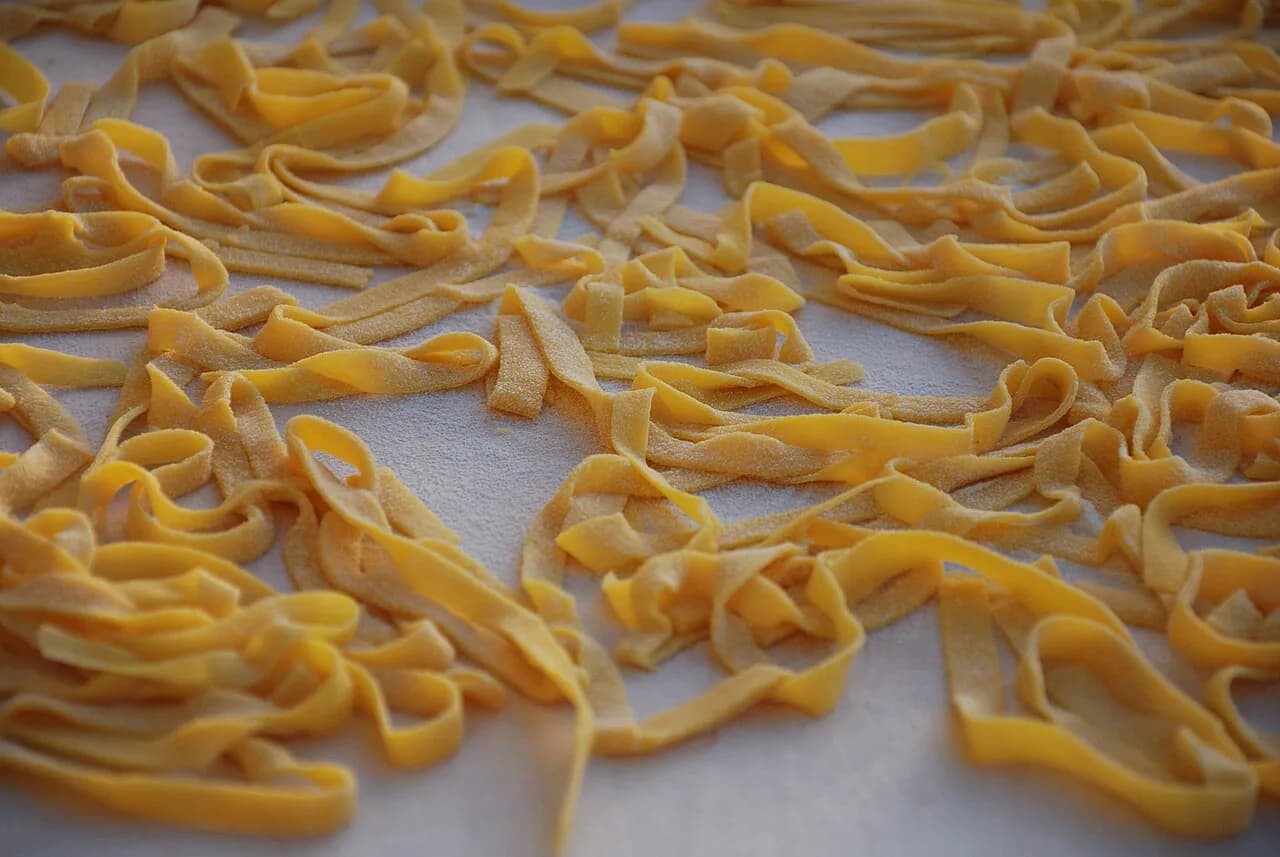
The best pasta in Rimini is the pasta of Romagna: fresh egg dough called sfoglia, rolled thin and cut by hand into long ribbons. The shape to order first is tagliatelle, the wide ribbon that holds ragù; pappardelle, tagliolini and lasagne come from the same sheet. This guide covers those shapes and sauces, the skill behind a good plate, and how to choose where to eat it.
Rimini's restaurants are covered in the guide to the best restaurants in Rimini, but pasta deserves its own page. The city's seafront and old town pull in different directions, and what you get on the plate changes with that choice. The answer is to treat pasta as a course worth ordering deliberately rather than an afterthought beside fish.
What Romagna pasta is: sfoglia rolled thin and cut by hand
Romagna pasta starts as a sheet of egg dough, the sfoglia, rolled out very thin and cut into shapes. The tradition is domestic as much as restaurant: a local account of Rimini's pasta-making scene describes the sfoglia as an art once handed from mother to daughter, now less automatically passed on. That history explains why sfoglia is a marker of care here: a kitchen that rolls its own is telling you the pasta is a destination, not a vehicle.
Sfoglia is a working method rather than a style label. The aim is a thin, elastic sheet with enough egg to hold its cut edge. If you order a ribbon and it comes out dense or blunt-edged, the sheet was too thick or too wet. Because it is fresh and egg-based, the cooking is fast: the pasta should be tender with a slight bite, and the sauce should cling.
The shapes to order in Rimini
The local pasta repertoire described for Rimini includes tagliatelle, pappardelle, tagliolini and lasagne, all cut from the same sfoglia. Think of them as different widths of the same sheet. Tagliatelle is the everyday ribbon; pappardelle is wider and heavier; tagliolini is the fine, narrow cut; lasagne is the sheet layered with ragù and béchamel. Ordering tagliatelle al ragù is the most direct way to test a kitchen's sfoglia.
The sfoglina's cut changes what each shape does on the plate. Wider ribbons generally carry richer, heavier sauces, while finer cuts suit lighter dressings; lasagne is a baked dish built from the same dough. A good ragù is slow-cooked and rich enough to coat, not flood, the pasta. Romagna cooking also uses the sfoglia for filled shapes and baked dishes, so a menu built around fresh pasta will list them all under the same heading.
Why the sfoglina matters
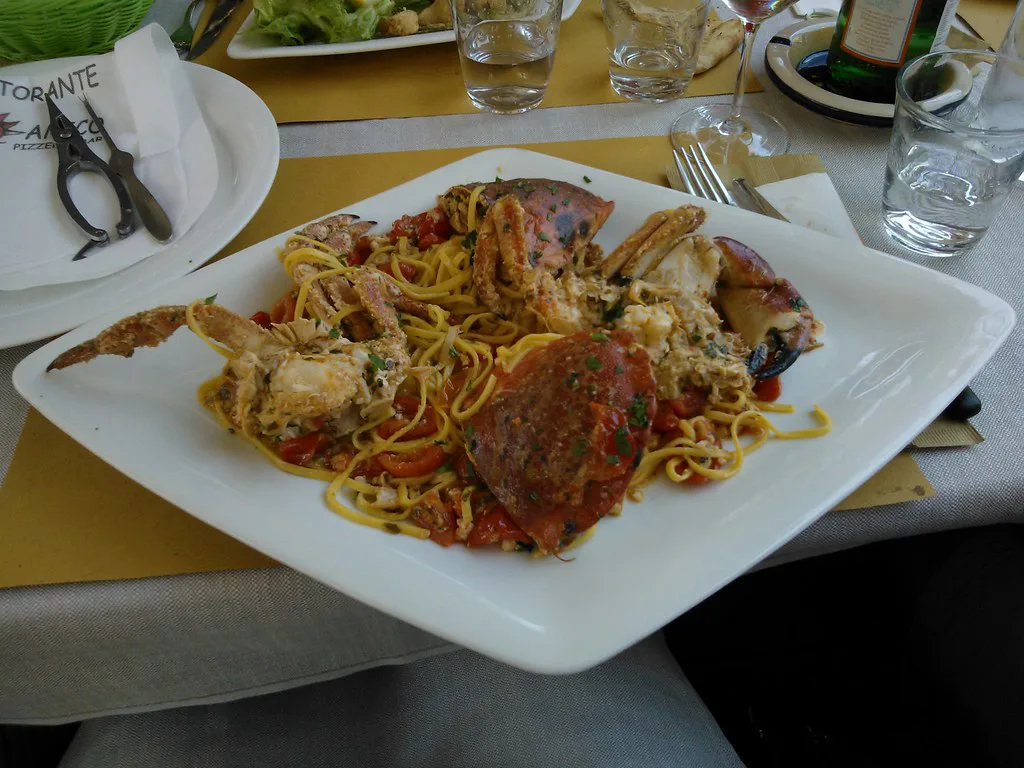
A sfoglina is the woman who rolls the sfoglia, and the Rimini courses name that role for the instructor. That naming is a signal: rolling a sheet by hand is a trained skill, and it shows in the thickness, the cut and the texture of the finished pasta. It is why a plate of tagliatelle made from a proper sfoglia is treated here as a dish in its own right, not a background starch.
The difference on the plate is mostly texture. Hand-rolled sfoglia is slightly irregular, with a rougher surface that pulls sauce in rather than letting it slide off. It cooks unevenly at the edges in a way that feels right, rather than factory-uniform. That is why a simple ragù or a butter and sage sauce can carry a whole plate here: the pasta itself is doing some of the work.
How pasta is taught in Rimini: the sfoglina-led courses
Rimini's food education takes sfoglia seriously. A local report describes a range of courses across the region, from amateur evenings to professional training, including a sfoglina-led class teaching the rolling and cutting of tagliatelle, pappardelle, tagliolini and lasagne. In 2018 the report covered courses at several different schools with different emphases: shaping, flour choice, and coloured or filled pasta.
The fact that these courses exist says something useful about ordering. A kitchen that teaches or practises sfoglia is likely to treat it as a craft rather than a commodity. It also means you can use course content as a checklist: a good plate should reflect correct dough, a thin sheet and a clean cut.
One example is the evening course on sfoglia and fresh pasta at Cescot in Rimini, a hands-on class listed on the school's own site; its enrolment page states that sign-ups for that edition are closed, so you would need to look for a later edition before planning around it. The practical point is that demand for this skill is woven into Rimini's food culture. The cooking classes in Rimini guide covers the broader course scene for anyone who wants to learn rather than just eat.
Choosing where to eat pasta in Rimini
Rimini divides between the seafront and the old town, and the two give you different kinds of meal. Seafront menus lean on fish and pizza; inland, and in the old town, you are more likely to find the fresh-pasta dishes built on sfoglia. Treat a plate of tagliatelle as the tell, and order it where a kitchen is making its own. For the full picture of where to sit down, see the guide to the Best Restaurants in Rimini.
At lunch, a plate of tagliatelle is the practical choice: you eat well and still have the afternoon free. In the evening, pasta works as a first course before fish, and that is how many local menus are built. Keep the portion light at midday if you plan to swim; a heavy ragù and a beach afternoon do not sit well together.
Rimini's other great carbohydrate is the piadina, the thin griddle flatbread of Romagna, and the two are not in competition. Piadina in Rimini covers where to find a good one and what goes inside it. Treat pasta as the seated, slower meal and piadina as the quick one.
How pasta fits a Rimini day
A sensible Rimini day puts pasta at lunch and the beach or the evening passeggiata around it. The passeggiata is the Italian evening stroll, and in Rimini it fills the seafront before dinner. Pasta fits either end of the day: a quick tagliatelle at lunch, or a first course before an evening walk.
If pizza is what you want rather than pasta, the best pizza in Rimini is covered separately, and it is fair to say the two are different meals: pasta is a seated course, pizza is the shared, quicker option.
Is the pasta worth planning around?
Yes, if you order the local shapes. Put tagliatelle al ragù at the top of your list, order pappardelle when you want a wider ribbon, and treat lasagne as the baked version of the same sfoglia. Look for fresh pasta made in house where a kitchen makes its own, and let a slightly rough, hand-cut texture be the sign you are in the right place.
For the wider restaurant picture, pair this with the Best Restaurants in Rimini; for the quick, griddled alternative, keep Piadina in Rimini in mind. The single most useful move is to eat your pasta at lunch and keep the seafront for the view.
Explore more Rimini food guides
Sources
Notes for your next meal in Italy
Optional updates to our food guides.
You might also like
Continue reading
More guides you'll find useful