Trattorias in Rimini: Where to Eat Romagnola Cooking
Trattorias in Rimini and the Romagna hills, with the dish to order at each: hand-rolled pasta, grilled meat, piadina and typical bills.
On this page
The trattorias worth your evening in Rimini split into two groups: the seafood kitchens inside town, and the family-run rooms a short drive inland, where the cooking is Romagnola rather than Adriatic. The inland ones are where the oldest stories sit — Zaghini has been open since 1895 — and where bills stay lowest. This guide names the specific dish to order at each place, from hand-made piadina to cappelletti in brodo, and explains how a meal runs.
What a trattoria in Rimini serves that a restaurant does not
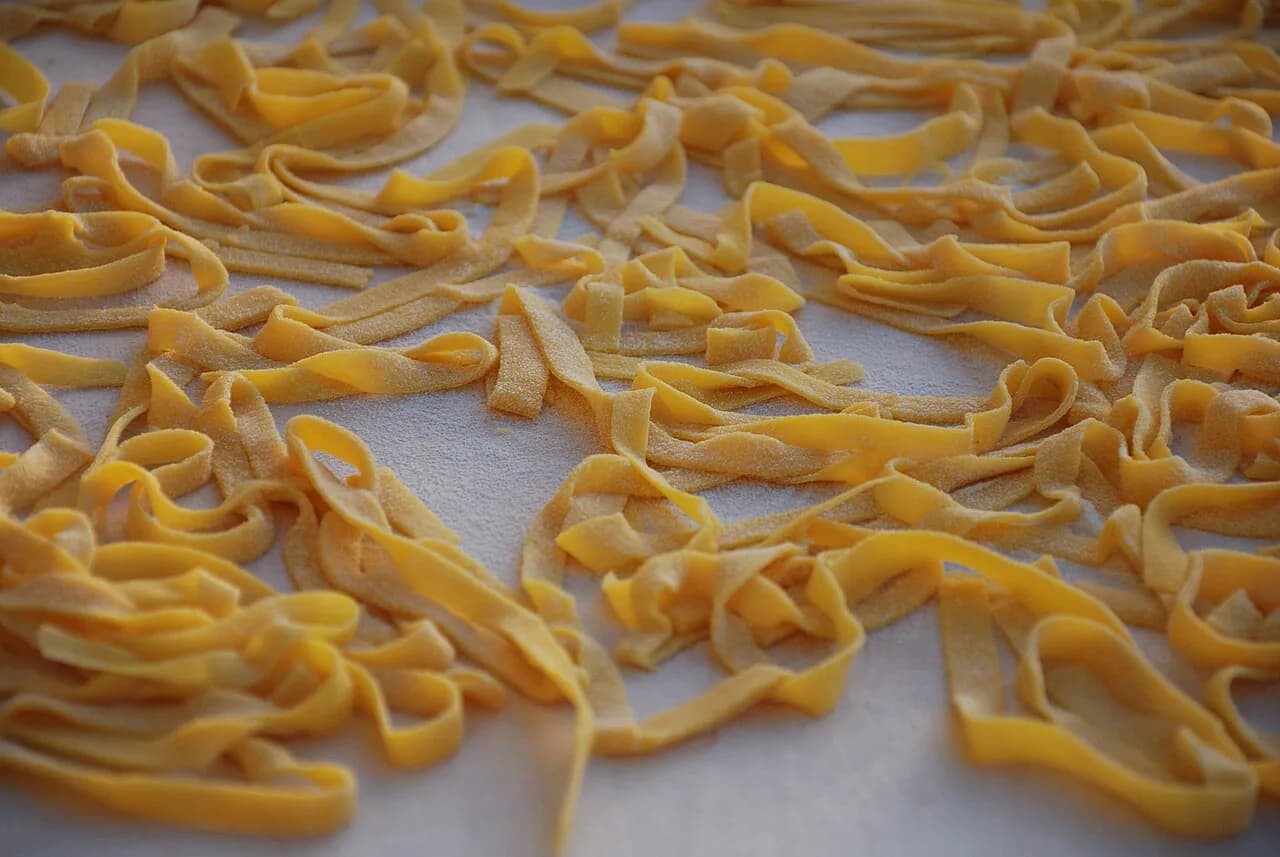
A trattoria is a family kitchen that happens to have tables: short menus, hand-made pasta, local meat grilled over coals, and a house wine poured from the cask rather than a printed cellar list. In the Romagna hills this means generous portions of the region's own dishes, cooked the way the family has always cooked them, in rooms that double as the village's meeting place. You go for the cooking and the conviviality, not for polished service or a tasting menu.
What a trattoria is not is a fixed format. At Zaganti the host reads the day's dishes aloud, while Da Savino prints nothing resembling a degustazione; either way the ritual runs primo, secondo, dolce, and nobody minds if you take it slowly. Menus lean on what the kitchen has, so the smart move is to ask what arrived that morning before you decide.
Trattoria La Marianna in Rimini: a century of fish cooking
Trattoria La Marianna is the town's benchmark for fish, a Rimini institution that has been cooking the Adriatic catch for around a century. It is the place to go when you want seafood rather than hills cooking: expect the day's fish treated simply, without a heavy hand. For a wider survey of the town's tables, our pick of the best restaurants in Rimini puts it in context.
Order fish and keep the rest light — a plate of pasta to start, then whatever the kitchen recommends from the counter. This is not the cheapest way to eat in Rimini, but it is the most characteristic seafood meal in town. Book ahead in summer, when the seafront fills with visitors.
La Baracca on Via Marecchiese: hand-made piadina and grilled meat since 1977
La Baracca opened in April 1977, when Enzo and Anna took over a building that looked, as the name says, like a shack; their daughters Cristina and Katja now run it from the same address on Via Marecchiese. The kitchen makes fresh pasta by hand, grills first-choice meat over coals or in the oven, and turns out the house piadina by hand. This is the place for a Romagnola dinner rather than a fish one, and it has rooms if you want to stay the night.
Start with the piadina, order a plate of hand-rolled pasta, then move on to grilled meat — the kitchen's stated strengths. Since the piadina is the point of the meal, it is worth understanding the flatbread properly before you sit down; our guide to Piadina in Rimini explains the styles and where else to eat it.
Abocar in Rimini: two kitchens from Camilla Corbelli and Mariano Guardianelli
Abocar is the town's more contemporary option, run by Camilla Corbelli and Mariano Guardianelli and billed as two kitchens — a setup that reads as a more ambitious, less traditional proposition than the hill trattorias. It suits an evening when you want a modern plate rather than a carafe of house wine and a bowl of cappelletti.
Treat it as the special-occasion slot in a week of trattoria meals, and book rather than turning up. If you only have one evening in town and want the old Romagna ritual, choose a hill table instead.
Worth the drive into the hills: Zaghini at Santarcangelo di Romagna
Zaghini has been open in Santarcangelo di Romagna since 1895, first in Piazza Balacchi and, from the 1960s, in Piazza Gramsci with a pensione attached. It is a proper old trattoria: no tasting menu, just primo, secondo and dolce, with the classics repeated rather than reinvented. The signature is pollo allo spiedo, chicken roasted on a spit still turned by hand, and the tagliatelle have a local reputation.
Beyond the chicken and tagliatelle, the kitchen makes cappelletti and strozzapreti to dress with ragù, maltagliati with beans and passatelli. Meats are local — lamb, rabbit, sausage — and the wine list leans on the territory, above all Sangiovese. The source that lists the house classics puts a typical bill at around €35.
Trattoria Da Savino at Coriano: filled pasta and piadina
Da Savino opened in 1950 at Cavallino, in the Comune of Coriano, and is now run by Savino and Pasquina's grandson Marco. The cooking stays tied to local produce: cured meats and cheeses to eat with piadina — the low, thin style used along the coast — then filled pastas such as raviolacci verdi alla robiola and tagliatelle al ragù.
Secondi run to rabbit in porchetta and galletto alla cacciatora, and in autumn faraona with chestnuts and pumpkin. Desserts are home-made, zuppa inglese included. Portions are generous, and the same survey puts a typical bill just under €30.
Trattoria Zaganti at Verucchio: the day's menu read aloud
Zaganti sits in Verucchio, on the hill toward San Marino, and has fed workers and lorry drivers for sixty years. The room looks much as it did in the 1980s, and the host recites what the kitchen has that day rather than handing you a printed list.
In winter the order is cappelletti in brodo; otherwise cannelloni with ricotta, tortelli with mushrooms and passatelli, served in broth or dry with tomato. Grilled sausage and lamb are the secondi, followed by crostata or panna cotta, and the house Sangiovese still arrives in a carafe. Expect a typical bill of about €20.
Trattoria dell'Autista at Savignano sul Rubicone
Trattoria dell'Autista, at Savignano sul Rubicone in the Forlì-Cesena province, belongs to the same tradition of long-running family kitchens selected among Romagna's historic trattorias. It is the furthest of the inland names here, which makes it a sensible stop if you are driving the Via Emilia rather than basing yourself on the coast.
Plan it as a lunch stop on a travel day rather than an evening out from Rimini, and give the kitchen your full appetite: these are generous tables.
How a trattoria meal works: courses, house Sangiovese, the bill
The structure is fixed: antipasto if you want it, a primo of pasta or passatelli in brodo, a secondo of grilled or roast meat, then dolce. In the hills the house Sangiovese comes by the carafe, and nobody expects you to work through a wine list. Ordering a primo and a secondo each is normal; sharing a primo to leave room for the grill is also fine.
Portions are generous, so a full three courses is a big meal — consider skipping the antipasto if you want the chicken or the grilled sausage. The hill trattorias are on the lower side for a typical meal by the published figures; the coast and the seafood kitchens run higher. Pay at the table as usual, and it is worth asking whether the bill includes coperto, the per-person cover charge.
What to order on your first visit
If you eat one trattoria meal in the area, make it a hill table and order the house speciality: pollo allo spiedo at Zaghini, or cappelletti in brodo at Zaganti if it is cold. At La Baracca, order the hand-made piadina alongside grilled meat. Those dishes cover the range of Romagnola cooking faster than any menu survey.
If you are staying on the seafront, give one evening to La Marianna for fish and one to La Baracca for piadina and grill, then drive inland for the rest. Family kitchens in the villages tend to fill at weekends, so ring ahead for a table. For a change from trattoria cooking, the best pizza in Rimini and the best gelato in Rimini cover the casual end of the day.
Which trattoria should you book first?
Book Zaghini if you want the full old-Romagna ritual — spit-roasted chicken, hand-rolled tagliatelle, a carafe of Sangiovese — and accept the drive to Santarcangelo. Choose Da Savino for filled pasta and piadina, or Zaganti for the plainest lunch with the menu read aloud. Stay in town and La Baracca gives you hand-made piadina and grilled meat without leaving Via Marecchiese.
Whichever you pick, order the dish the kitchen is known for, take the house wine and leave room for dolce. That is how a trattoria meal in Romagna is meant to run.
Explore more Rimini food guides
Frequently Asked Questions
What food is Rimini famous for?
Rimini and the surrounding Romagna are known for piadina, the thin flatbread eaten with cured meats and cheeses, and for hand-rolled pasta such as tagliatelle, cappelletti, strozzapreti and passatelli. Grilled and roast meat — chicken on the spit, sausage, lamb, rabbit — is the standard secondo, and Sangiovese is the local wine. On the coast, fish cooking is the other half of the picture.
Which is fancier, an osteria or a trattoria?
Neither is reliably fancier. Both are informal, family-run places with short menus and modest bills, and in Romagna the words are used loosely. What matters more is the individual kitchen: a hill trattoria serving spit-roasted chicken is a very different evening from a modern two-kitchen setup in town, whatever the sign says.
Where do locals eat in Rimini?
The long-running family kitchens tend to sit inland, in villages such as Santarcangelo di Romagna, Coriano, Verucchio and Savignano sul Rubicone, where workers and lorry drivers fill the tables at lunch. In town, the seafood trattorias are the local standbys. Booking ahead helps at weekends; family kitchens in the villages tend to fill then.
Sources
Notes for your next meal in Italy
Optional updates to our food guides.
You might also like
Continue reading
More guides you'll find useful