Pastry Shops in San Gimignano: Where to Eat Tuscan Sweets
A guide to sweet stops in San Gimignano, from Bristot's Sienese sweets and the Forno Boboli bakery counter to Gelateria Dondoli, with what to order at each.
On this page
San Gimignano has three addresses worth planning a sweet stop around: Bristot for Sienese pastries, Forno Boboli for bread, focaccia and pizza at a bakery counter near Porta San Matteo, and Gelateria Dondoli for gelato on Piazza della Cisterna. This guide sets out what each one is for, which specific sweets and breads to ask for, and how a pasticceria counter differs from a bakery where you sit down.
The useful distinction is between buying to take away and eating on the spot. Bristot's sweets are the sort that travel well in a box, Boboli has seats inside and a broader savoury menu, and Dondoli is a walk-around dessert tied to the square. Deciding which of those you want first saves a lot of wandering inside the walls.
What San Gimignano's pastry shops are like, in one answer
The town's pastry and bakery scene is small and specialised rather than a street of competing windows. Bristot produces Sienese-style sweets, from almond biscuits to filled shortcrust, and sells online. Forno Boboli is a historic oven revived as a modern bakery, with breads, focaccia and pizza alla pala at the counter plus seating for a proper plate.
Add Gelateria Dondoli on Piazza della Cisterna and you have a complete sweet day, though each place suits a different moment. Treat this as a set of jobs rather than a ranking: one for the sweet box, one for lunch, one for the walk back to the car.
Bristot: Sienese sweets from a San Gimignano workshop
Bristot began in 1957 as the Industria Dolciaria, founded at San Gimignano by Giosuè Settefonti with two partners to make typical Sienese sweets tied to feast days, and a partner's Bristot surname became the company name in 1963. Since 2012 Gianni Pieragnoli has run it with a deliberately handmade approach, mixing simple ingredients such as eggs, flour and sugar with fruit jams, almonds, cocoa and creams.
That means the range runs from typical sweets of the Siena lands to classic pasticceria and biscuits made for recurring feast days such as Christmas. If you only know Tuscan baking through cantucci, this is the broader local repertoire in one producer.
What to order at Bristot: mandorla, pasta frolla, sfoglia and glazed chocolate
The counter is organised by dough rather than by occasion. The mandorla group covers small almond-paste sweets that are soft inside and firmer outside, while pasta frolla is shortcrust with jam, chocolate or cream fillings. Pasta sfoglia brings puff pastry filled with cream, gianduia or raisins, and there are chocolate-glazed items and a savoury line alongside.
For a first selection, take one almond sweet, one jam-filled shortcrust and one cream-filled puff pastry, which gives you the three doughs the range is built around. The filled biscuits sold under names like Bauletti, Margherite and Fiorentine are the natural box to carry home, and the cream-filled Cuscino is the richer single purchase.
Buying Bristot sweets
Bristot works as a sweet-shop purchase rather than a sit-down stop, and the company also runs an online store, so a box can be ordered for delivery if you misjudge quantities. If you are driving, buy before a long afternoon rather than last thing, so chocolate-glazed pieces do not soften in a warm car.
Set a rough budget before you point at the display, because boxes of small pastries add up when you choose by the piece. Ask for a mixed selection and let the staff choose the proportions, which gives you a box that looks like the counter rather than a bag of one thing.
Forno Boboli: a 1909 oven reborn as a modern bakery
The Magnelli family fired the Boboli oven at the start of the twentieth century in a large space near Porta San Matteo, and the bakery stayed at the heart of local life before closing in 2018. In 2022 Simone and Damiano Bruni, twin pizzaioli who grew up in family pizza al taglio shops, reopened it with the Magnelli heirs, keeping the stone vaults but rebuilding the bakery line and adding seating.
The result is closer to a European bakery than a traditional Italian forno: bread and leavened goods share the space with a café counter and hot food, rather than being a laboratory with a serving hatch. For a visitor that flexibility is the point, since the bakery opens from eight in the morning until nine at night, covering breakfast, lunch and an early evening plate.
At the Boboli counter: pane toscano, focaccia and pizza alla pala
The breads use Italian flours, led by Molino Grassi, fermented with liquid sourdough. The house version of pane toscano sciocco sits alongside wholegrain and seeded loaves and rye recipes, with bread at five to seven euros per kilo. Focaccia appears in both Ligurian and Tuscan styles, and the twins' own background shows in Roman-style pizza alla pala.
Order at the counter and take a tray, which is the fastest way through at busy times. If you want one thing to judge the place by, make it the pizza alla pala: it is the item that connects the new bakery directly to the family's pizza history.
Sitting down at Boboli for breakfast, lunch or an evening plate of salumi and cheese
There are around seventy seats inside and roughly twenty-five more outside in the warmer months, so Boboli can be a sit-down stop rather than a takeaway only. Breakfast brings the café counter together with crostate, torte della nonna, pan co' santi and sweet focaccia with chocolate.
At lunch the menu widens to mixed salads, boards of local salumi and cheese, crostoni and beef burgers, and those dishes carry through into the evening alongside wine by the glass and cocktails. That makes it a sensible fallback when you want a table and a plate of salumi rather than another standing counter.
Pan co' santi and the Boboli breakfast case
Pan co' santi appears in the Boboli breakfast case, sitting with the crostate and torte della nonna, so you can try it alongside a cappuccino instead of ordering a pastry. It is also the most transportable thing on the sweet side, which matters if you are moving on later.
Sweets made for recurring celebrations are a Bristot speciality too, which is why both shops change through the year.
Gelateria Dondoli in Piazza della Cisterna: saffron and Vernaccia flavours
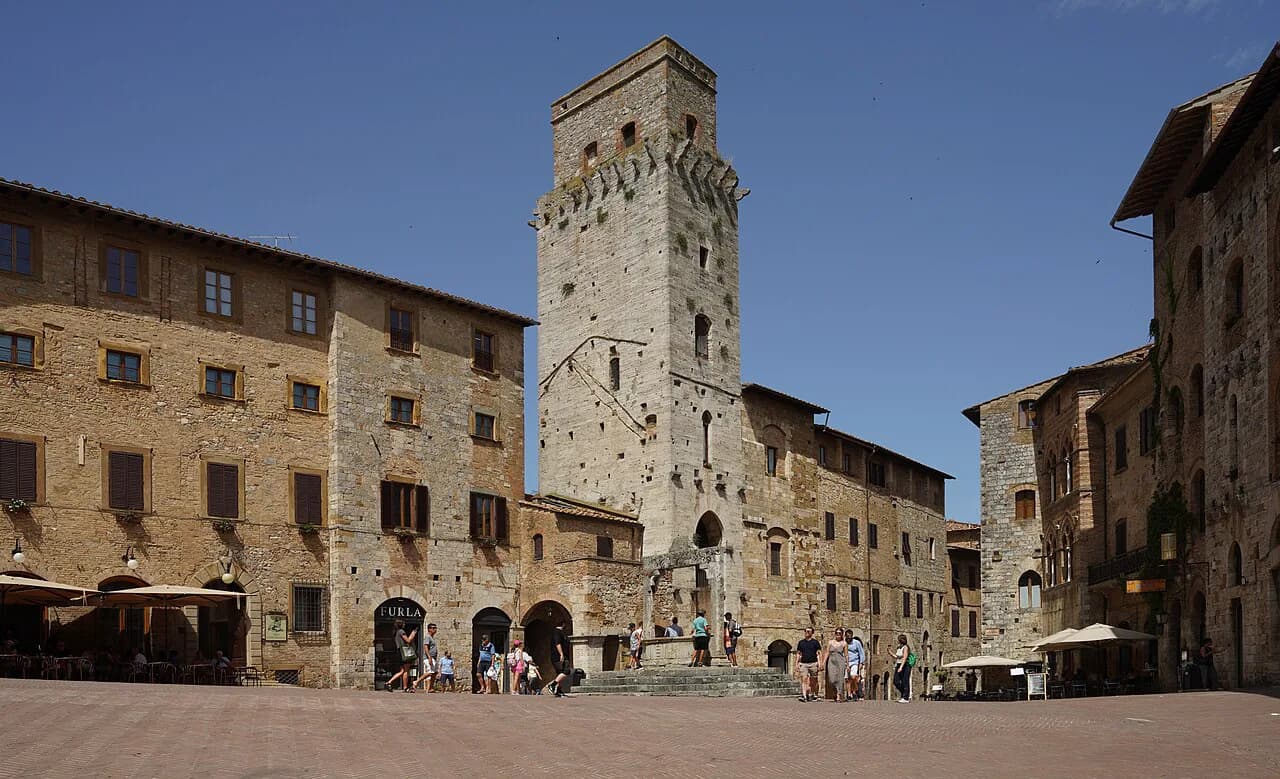
Dondoli is an artisan gelateria at Piazza della Cisterna 4 under the towers, making gelato each day from selected ingredients with an emphasis on seasonality. The listed specialities include saffron, Vernaccia, aromatic herbs and seasonal recipes, which is where the shop's own character sits rather than in plain chocolate or fruit.
Fruit flavours are made from selected fruit with water and sugar and no added flavourings or colour, while milk flavours use biodynamic milk from a local supply chain. Order a saffron or Vernaccia scoop next to a fruit one to taste the two sides of the shop, and use the app to pick size and flavours before showing the screen at the counter.
The trade-off: pastries in the centre versus focaccia and bread at the bakery
Choose Bristot when the goal is Sienese sweets to take home, Boboli when you want something savoury, a seat and a plate, and Dondoli when the dessert is part of a walk through the centre. Trying to do all three in one afternoon is possible in a town this compact, but the boxes from Bristot are easier to carry if you buy them last.
If you want a proper meal rather than a counter stop, book a table and keep the bakery for breakfast or a between-meals snack, which is where Boboli's flexible format works hardest. A sit-down evening is a different kind of stop from a morning coffee and a tray.
How to order at a pasticceria or bakery counter
At these counters you point at what you want rather than reading a menu, and small sweets are usually sold by the piece, so say how many you want rather than naming a weight. At a bakery like Boboli, counter items are served over the bancone to eat in or take away.
If you are buying a box as a gift, ask for it to be packed for travel and keep the receipt in case you want to order the same selection from the producer's online store later. For Bristot in particular, the e-shop is the simplest way to send sweets on after you get home.
Which San Gimignano sweet stop fits your day?
Build the day around one clear purpose: a box of Bristot's almond, shortcrust and puff pastry sweets if you are carrying Tuscany home, a tray of pizza alla pala and a seat at Forno Boboli if you want lunch, and a saffron or Vernaccia scoop at Dondoli if the afternoon is for walking. Each stop does one job well, and none of them needs the others to make sense.
For the rest of the day's eating, from a full lunch to an early evening glass of Vernaccia, plan around our pick of the best restaurants in San Gimignano and let the bakery counters fill the gaps between meals.
Explore more San Gimignano food guides
Sources
Notes for your next meal in Italy
Optional updates to our food guides.
You might also like
Continue reading
More guides you'll find useful