Cafes in Pisa: Historic Coffee Bars and What to Order
Cafes in Pisa worth planning a stop for, from Caffè dell'Ussero to coffee near the Duomo. How counter ordering works and which Pisan cakes to try.
On this page
Plan your coffee stops around three addresses: Caffè dell'Ussero inside Palazzo Agostini, a café on Piazza dei Cavalieri facing the Scuola Normale Superiore, and a terrace a few steps from the Duomo. This guide covers what each is like, which Pisan pastries to order with espresso, and the counter-versus-table decision that changes what you pay. It sticks to coffee and pastries, so pair it with our picks for proper meals in the city.
In Pisa, as across Italy, a café is a bar: you can stand at the counter for a quick espresso or sit at a table and pay more for the service. Most people treat the morning stop as a two-minute ritual, then save their sitting for later in the day. Knowing which you want before you walk in keeps the bill predictable and the stop short when the city is busy.
Cafes in Pisa: the short answer on where to drink coffee
Start with Caffè dell'Ussero, the café in Palazzo Agostini that was founded in 1775, then build the rest of the morning around the squares: Piazza dei Cavalieri, framed by the Palazzo della Carovana and the Scuola Normale Superiore, and Piazza del Duomo beside the cathedral and the Leaning Tower. Those three give you a historic interior, an academic square and the sightseeing heart of the city. Fill the gaps with whatever bar you pass on Borgo Stretto or along the Arno, the two natural walking routes through the centre.
The city's café culture is tied to its university: Caffè dell'Ussero drew students, professors and writers for two centuries, which is why the historic cafés feel like public living rooms rather than quick-service counters. That history is the reason to choose them over a random bar. For a full day of eating around them, keep our best restaurants in Pisa list to hand.
How ordering works in a Pisa cafe: al banco versus al tavolo
Two prices normally exist for the same coffee: al banco, standing at the counter, and al tavolo, served at a table. The table price is higher because you are paying for service and the seat, and on a terrace facing a monument the gap tends to widen. Decide before you order, because switching from the bar to a table after the fact is awkward for everyone.
The Italian routine is straightforward. Order and pay at the till or the bar first, keep the receipt, then hand it to the barista and drink standing. Say 'un caffè' and you get an espresso; ask for un cappuccino only in the morning, since Italians generally stop ordering milky coffee after late morning. A cornetto, the Italian croissant, is the standard companion.
This matters most around Piazza dei Miracoli and Piazza dei Cavalieri, where a terrace seat costs more than the same espresso taken standing a few metres away. If you want the view, budget for it and treat it as the price of the table rather than the coffee. If you want the coffee, stay at the bar.
Caffè dell'Ussero at Palazzo Agostini: one of Italy's oldest cafes
Caffè dell'Ussero occupies part of Palazzo Agostini and was founded in 1775, which local reporting presents as making it the third-oldest café in Italy after the Florian in Venice and the Greco in Rome. It was among the country's first literary cafés, counting Domenico Guerrazzi, Giuseppe Mazzini and Giosuè Carducci among its regulars, and in 1799 it hosted meetings of well-off Bonapartists.
Its later life was equally theatrical: in 1899 it became a café chantant where early Lumière moving images were shown, and in 1905 it hosted a screening of a talking film. In January 2024 the Agostini family took over direct management for the first time in the café's history, with the stated aim of running it as a proper coffee house rather than an all-purpose bar.
That reopening shaped what you find inside. The coffee comes from the Bontadi roastery in Rovereto, which has been roasting since 1790, the chocolate from Majani in Bologna, working since 1796, and the espresso machine is a reproduction of the historic Faema E61 built to order. The point is to sit in a room where the coffee service itself carries the history.
What to order at Caffè dell'Ussero: coffee, chocolate and pasticceria pisana
Order an espresso or a hot chocolate and let the setting do the rest. For the national day of historic venues in 2024 the café paired a guided visit to Palazzo Agostini with a tasting of pasticceria pisana: torta con i bischeri and torta di semolino, a semolina cake, served with tea and hot chocolate.
Pisan pasticceria is the thing to look for with coffee anywhere in the city, not just here. Ask what is baked that day instead of assuming a specific cake is on the counter, and check current prices or dates with the café before you order. If you want a savoury sit-down meal afterwards, move on to our best pasta in Pisa picks rather than stretching a coffee stop into lunch.
Coffee beside Piazza del Duomo: a terrace near the Leaning Tower
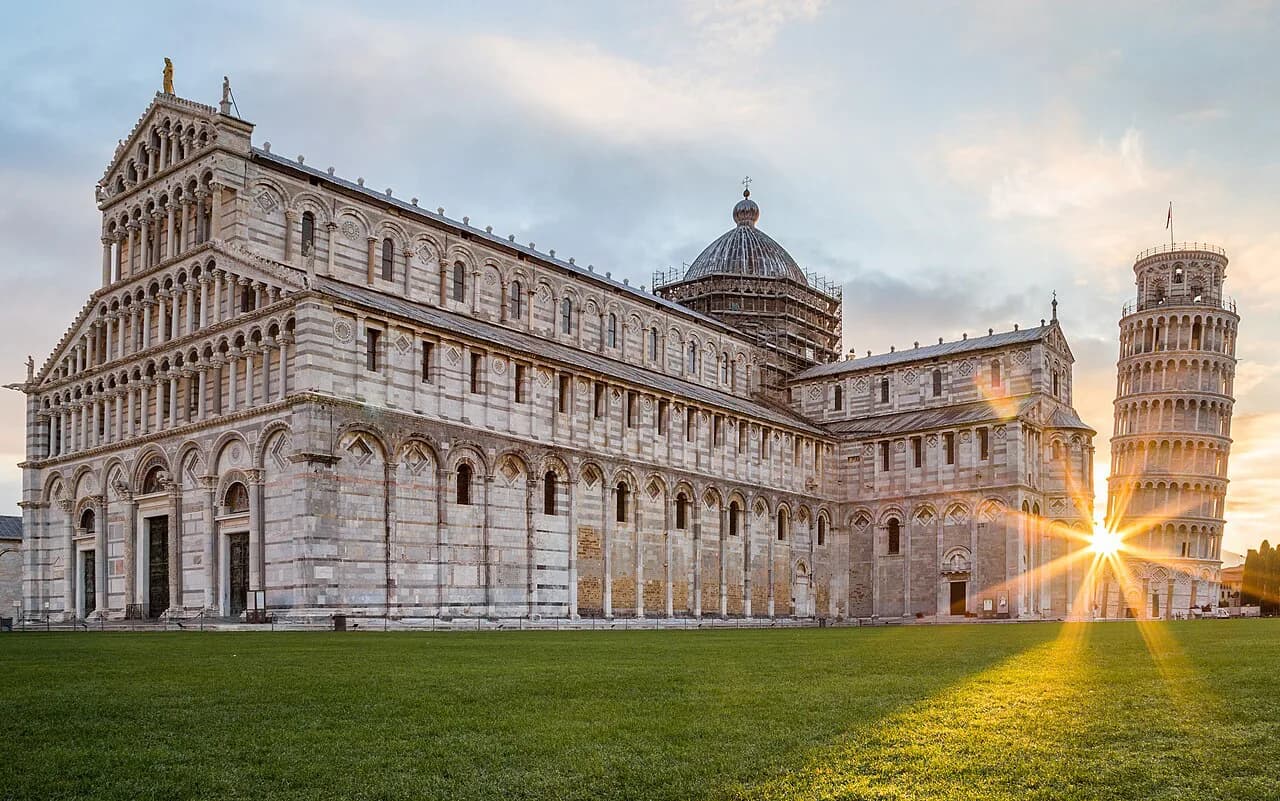
Around Piazza del Duomo, a stop for coffee is a decision about location: you are buying proximity to the Leaning Tower and cathedral rather than a famous café name. That is the place where the table-versus-bar choice costs you most in relative terms.
Go early, when the square is quiet and the terrace is pleasant, or late in the afternoon once the coach groups have moved on. Order at the bar if you simply want an espresso and a pastry standing up, and take a table only if the view is the point. Either way, the stop works best as 20 minutes rather than a long sitting.
Piazza dei Cavalieri: coffee on Pisa's academic square
Piazza dei Cavalieri is one of the city's most striking squares, framed by the Palazzo della Carovana and the Scuola Normale Superiore. A seat on or near it suits a quiet morning coffee or a late-afternoon pause more than a rushed sightseeing break, because the square itself is the draw. The university crowd gives the area its academic feel.
Order an espresso at the bar or a macchiato if you want a little milk without committing to a cappuccino. If breakfast or a slower sit-down start is what you are after, compare the options with the rest of our breakfast in Pisa recommendations before deciding.
Cafes along Borgo Stretto and the Arno for a mid-morning stop
Borgo Stretto is the natural corridor between the historic centre and the river, and it carries a cluster of cafés and pastry shops. Walk the street mid-morning, when the bars are busy with locals but not yet overwhelmed.
Cross to the Arno for a straightforward pause on the riverbank and use the walk to decide where to eat later. If a sit-down lunch is next, our lunch in Pisa guide covers the transition from coffee to a full plate. Keep the coffee stop short and the meal separate; that is how the day stays affordable.
Coffee, cornetto or a sit-down breakfast: matching the cafe to the time of day
Early morning belongs to the bar: an espresso and a cornetto standing up, five minutes, no table. Mid-morning suits a historic interior such as Caffè dell'Ussero or a seat on Piazza dei Cavalieri, when you want to linger over a second coffee. A sit-down breakfast is its own category and worth planning around rather than improvising.
By afternoon, switch to a table by the river or under the arcades, order a coffee and a cake, and let the stop double as a rest. Save the terrace at Piazza dei Miracoli for early or late in the day, when the view is the reward rather than a crush. If you would rather learn the pastry side hands-on, our cooking classes in Pisa cover fresh pasta and dough work.
Cafes near the sights versus the streets locals use
Cafés facing the Duomo and the Tower charge for the address, and that is a fair trade if you want the view with your coffee. Walk ten minutes into the centre, towards Borgo Stretto or Piazza dei Cavalieri, and the same espresso comes with a calmer room and a lower table premium. The trade-off is atmosphere: monumental squares feel like an event, side streets feel like a city.
Time your visit against the tour traffic. Early morning and the hour before dinner are the quiet windows around the main monuments, while late morning is when the groups peak. If you are building a whole eating day around these stops, the best pizza in Pisa list is the place to look for a later meal.
Which Pisa cafe should you build your morning around
Build the morning around Caffè dell'Ussero if you want history with your espresso, Piazza dei Cavalieri if you want a quiet academic square, and Piazza del Duomo if the monuments are the point. Take the bar price when you just want coffee, and pay for the table only when the seat is worth it. Then leave the rest of the day to a proper meal.
Explore more Pisa food guides
Frequently Asked Questions
What is a coffee bar called in Italy?
A bar. In Italian towns a café is a bar, and the same counter may serve espresso in the morning and aperitivo later. Order 'un caffè' and you get an espresso; ask for a cappuccino before late morning.
Is it caffè or café in Italian?
In Italian the word is caffè, with the accent on the final letter, and it means coffee as well as the venue. Café with an acute accent is the French spelling. On a sign in Pisa you will usually see caffè or bar.
Where can you get breakfast in Pisa?
Most bars serve a standing breakfast of espresso and a cornetto from early morning. For a fuller, seated breakfast, plan around a café or pasticceria rather than a counter bar, and check our breakfast in Pisa guide for options.
Sources
Notes for your next meal in Italy
Optional updates to our food guides.
You might also like
Continue reading
More guides you'll find useful