Culatello di Zibello: What It Is and How to Eat It
Culatello di Zibello DOP is a hand-tied cured pork from the Bassa Parmense. Learn how it is made, what to buy and how to serve it at home.
On this page
Culatello di Zibello DOP is a cured pork speciality from the Bassa Parmense, the lowland along the Po river in the province of Parma, and the consortium that protects it calls it the re dei salumi, king of cured meats. It is made from a single trimmed muscle of the pig's hind leg, salted, massaged with wine and garlic, sewn into a bladder casing and aged slowly in cool, humid cellars. This guide covers what it is, why the Po valley climate matters, how it tastes next to prosciutto crudo, and how to buy, slice and serve it.
What culatello di Zibello is
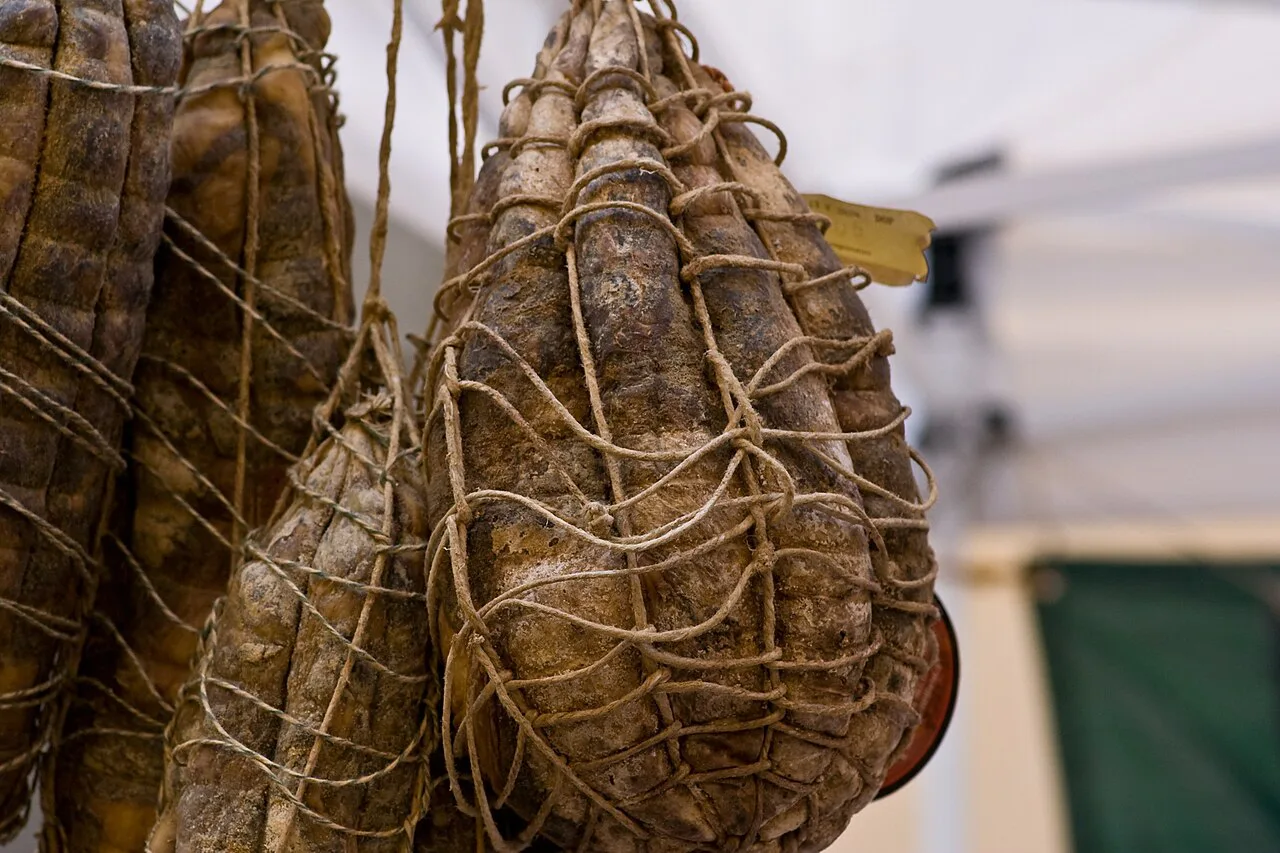
Culatello is not a whole ham. The maker takes the lean eye of the pig's thigh, trims away skin, bone and most of the fat, then binds the remaining muscle into a pear shape by hand. The consortium describes the work as still entirely manual, which is why the product is scarce and priced accordingly. The result is a dense, dark-red salume with a thin ribbon of fat and a savoury, almost sweet depth that comes from long ageing rather than heavy salting.
The name has two parts: culatello, from the dialect word for the pig's rear, and Zibello, the small town in the Bassa where the tradition is centred. Only meat cured inside the delimited zone under consortium rules may carry the DOP name, so a packet labelled simply culatello is not the same thing as Culatello di Zibello DOP.
The Bassa Parmense: eight comuni and the Po valley climate
The consortium limits production of Culatello di Zibello DOP to eight localities in the province of Parma: Zibello, Busseto, Polesine, Soragna, Roccabianca, San Secondo, Sissa and Colorno. All sit in the flat, foggy strip of land beside the Po, the lowland climate the consortium credits with the culatello's slow maturation. If you are weighing up which Parma cured meat to buy, the geography helps: culatello belongs to the damp Bassa, while Prosciutto di Parma comes from the province's ham zone.
The climate is central to the product. Long, cold, humid winters and hot, sticky summers give the meat a slow, uneven ageing rhythm, and the consortium credits that seasonal swing with the aromas the culatello develops. That is why producers cluster along this stretch of the Po rather than curing the same meat elsewhere.
How it is made: pork, Fortana wine, garlic and a bladder casing
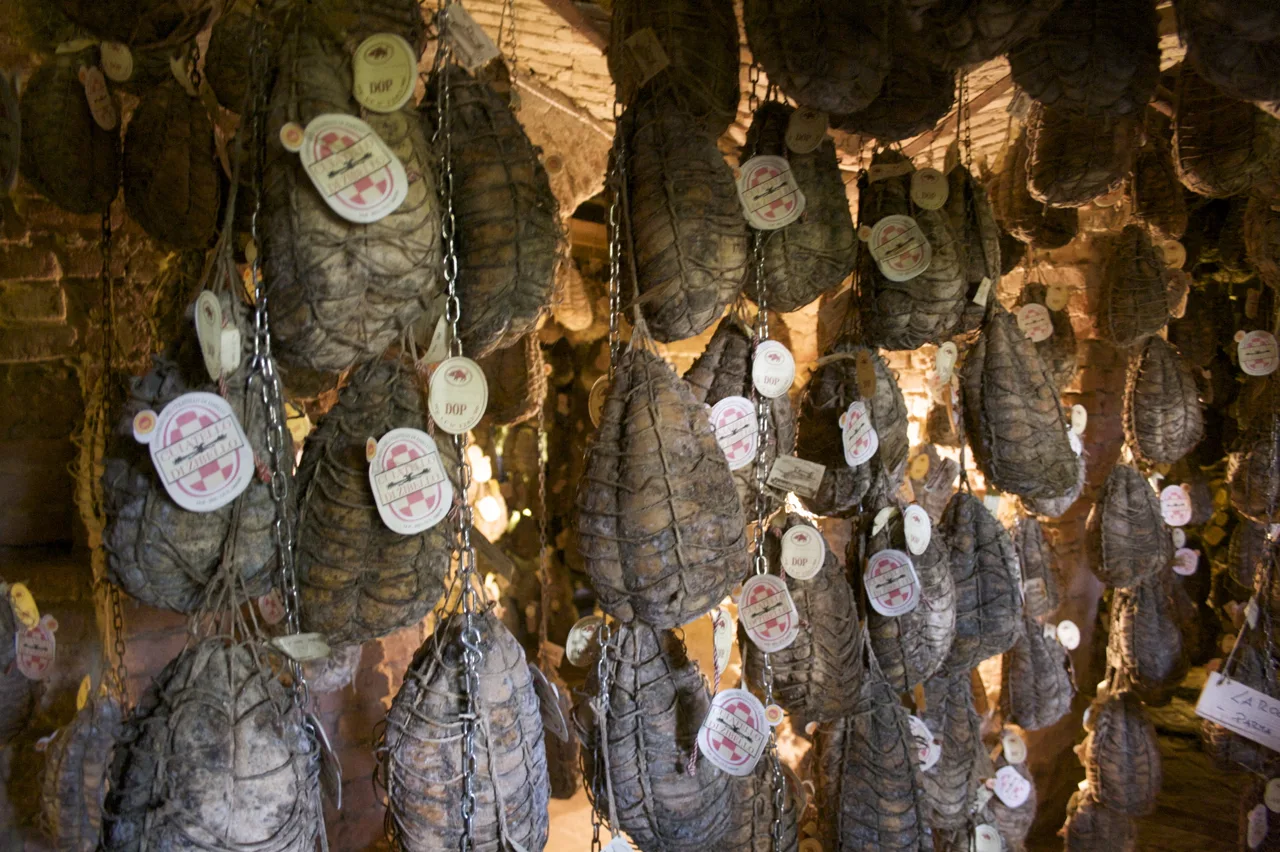
The Antica Corte Pallavicina, the Spigaroli family's estate at Polesine Parmense, publishes its method in detail. Its DOP culatello is made only in the winter months from heavy pigs weighing 180 to 230 kg; the trimmed muscle is massaged with Fortana wine and garlic, then salted with salt and cracked pepper. The listed ingredients are pork, salt, pepper, Fortana wine and garlic, with no nitrates, sugars, flour or other additives.
After salting, the meat goes into a pig's bladder, which forms the natural casing, and is tied by hand into its characteristic shape. It dries briefly, then hangs in the estate's historic cellars, which the family dates to 1320, where the microclimate finishes the job. The producer describes the DOP culatello as aged for under 18 months, including one summer of fermentation, and sells it whole and vacuum-packed at about 4 kg.
The consortium frames the origins carefully: it records that the Pallavicino family, who ruled the Bassa, sent culatello to the Sforza in Milan around 1300, and that a banquet in 1332 is said to have served it at a wedding between the Rossi and Sanvitale families. Treat those as tradition rather than documented fact; the manual craft behind the salume is the part you can actually taste.
What culatello tastes like, and how it differs from prosciutto
Culatello is softer, moister and more intensely savoury than prosciutto crudo, with a sweetness that comes from the fat and a faint tang from the wine and long ageing. Because the muscle is boned and compressed into a casing, the slices are round and compact, with none of the open, silky drape of a sliced prosciutto. It is also saltier and richer per slice, so a little goes further on a board.
Prosciutto crudo is the whole leg, bone and all, salted and air-cured and sliced in wide, silky drapes; culatello is a single boned muscle pressed into a bladder casing and tied by hand, so it slices into compact rounds. If you are choosing one for a dinner board, culatello suits small portions eaten on its own, while prosciutto is easier to drape over bread or melon. Buy both only if you have the fridge space and a sharp knife: culatello rewards thin slicing and suffers when cut thick.
Buying it: whole, in pieces or already sliced
Culatello is sold whole in its bladder, as a half or smaller piece, or pre-sliced under vacuum. A whole piece of the Antica Corte Pallavicina DOP culatello weighs about 4 kg, give or take 5%, and is sold vacuum-packed, which tells you how serious the purchase is. Smaller cuts and sliced packs are the practical choice for a household that will not get through several kilos.
Look for the DOP mark and the consortium's guarantee on the tie or label, and check the ingredient list: the classic recipe is pork, salt, pepper, wine and garlic. Prices vary by weight and ageing, so ask the counter or check the producer's shop page before committing; the same estate's online shop also lists an order minimum, which matters if you are buying from abroad.
How to prepare and slice a whole culatello at home
The consortium sets out the ritual step by step. Untie the string, then wet the bladder casing thoroughly so it lifts away without tearing the meat, and trim off the yellowed outer fat while keeping the white fat beneath. Wipe away any dark patches or surface mould from the lean part, then wrap the culatello in a cloth soaked in dry white wine and leave it lean side down in a bowl for at least a day before slicing.
Slice it very thin, against the grain, and let the slices come up to room temperature before serving; cold culatello tastes of nothing much. A long, narrow knife or a proper affettatrice helps, and any cut face should be covered with cling film or a cloth so it does not dry out in the fridge. Use the offcuts and the fattier end for cooking rather than the board.
How to serve it, and what to drink alongside
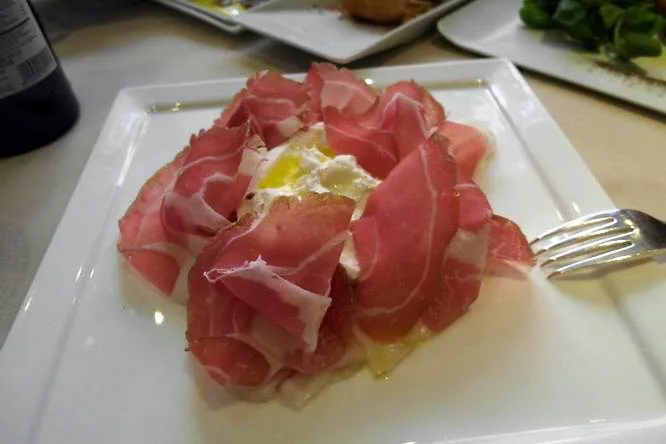
The consortium is clear that culatello is at its best simply as it is, in very thin slices, with nothing more elaborate than good bread and perhaps a little butter. On a board, pair it with something sharp and fizzy to cut the richness: a dry Lambrusco or a crisp white from the nearby hills works better than a heavy red. It is also worth folding a slice into anolini filling or a ragù, where its depth does more work than prosciutto would.
Keep portions small: two or three slices per person is a generous starter, and the meat is rich enough that a large plate becomes tiring. If you are building a Parma-style board, add Parmigiano Reggiano and a few drops of traditional balsamic, and let the culatello sit at the edge rather than the centre.
Where to try it in and around Parma and Zibello
The Antica Corte Pallavicina at Polesine Parmense runs a spaccio aziendale, a company outlet at its restaurant Al Cavallino Bianco, where you can buy the culatello and other Spigaroli salumi directly. That is the most straightforward way to taste before you buy a whole piece, and it puts you in the middle of the production zone rather than in central Parma.
In Parma itself, culatello appears on the boards and in the filled pastas of the city's better trattorias, often alongside prosciutto and coppa. Use our guide to the best restaurants in Parma to pick a table where the salume board is treated as a course rather than an afterthought, and ask what is sliced that day.
Is culatello worth buying over prosciutto?
Buy culatello if you want a small, intense, hand-made salume to serve in thin slices as a centrepiece, and buy prosciutto if you want an everyday ham that drapes over bread and keeps well. The DOP label and the eight-comune zone are your assurance of origin, and the Antica Corte Pallavicina's whole culatello shows what a serious piece looks and weighs like.
If you are in the Bassa, go to Polesine Parmense and buy from the farm shop, where you can taste before committing. If you are staying in Parma, order a board in a good trattoria first and decide afterwards whether a whole piece belongs in your suitcase.
Explore more Parma food guides
Sources
Notes for your next meal in Italy
Optional updates to our food guides.
You might also like
Continue reading
More guides you'll find useful