Prosciutto di Parma: What It Is and How to Order It in Parma
Prosciutto di Parma is a DOP cured ham from Parma province, salted and air-cured for at least 24 months. Here is why it tastes sweet and how to order it.
On this page
Prosciutto di Parma is a dry-cured pork leg from a defined part of Parma province, made with nothing more than pork and salt and aged for at least 24 months. Its defining trait is sweetness: the ham is made with only a low level of salt and no additives, so the meat tastes round rather than aggressively savoury. You will see it on menus across Italy as prosciutto crudo, which means salted and air-dried ham, as opposed to prosciutto cotto, the cooked ham.
This guide covers what the DOP label protects, how to read the five-point ducal crown stamp, and how the ham is sliced and served in Parma and beyond. It also explains what to ask for at a salumeria counter by weight, and how a single ham fits into an aperitivo, a lunchtime panino and an antipasto. Where you eat it in the city, the best restaurants in Parma have their own dishes built around it.
What prosciutto di Parma is: a pork leg, salt and air
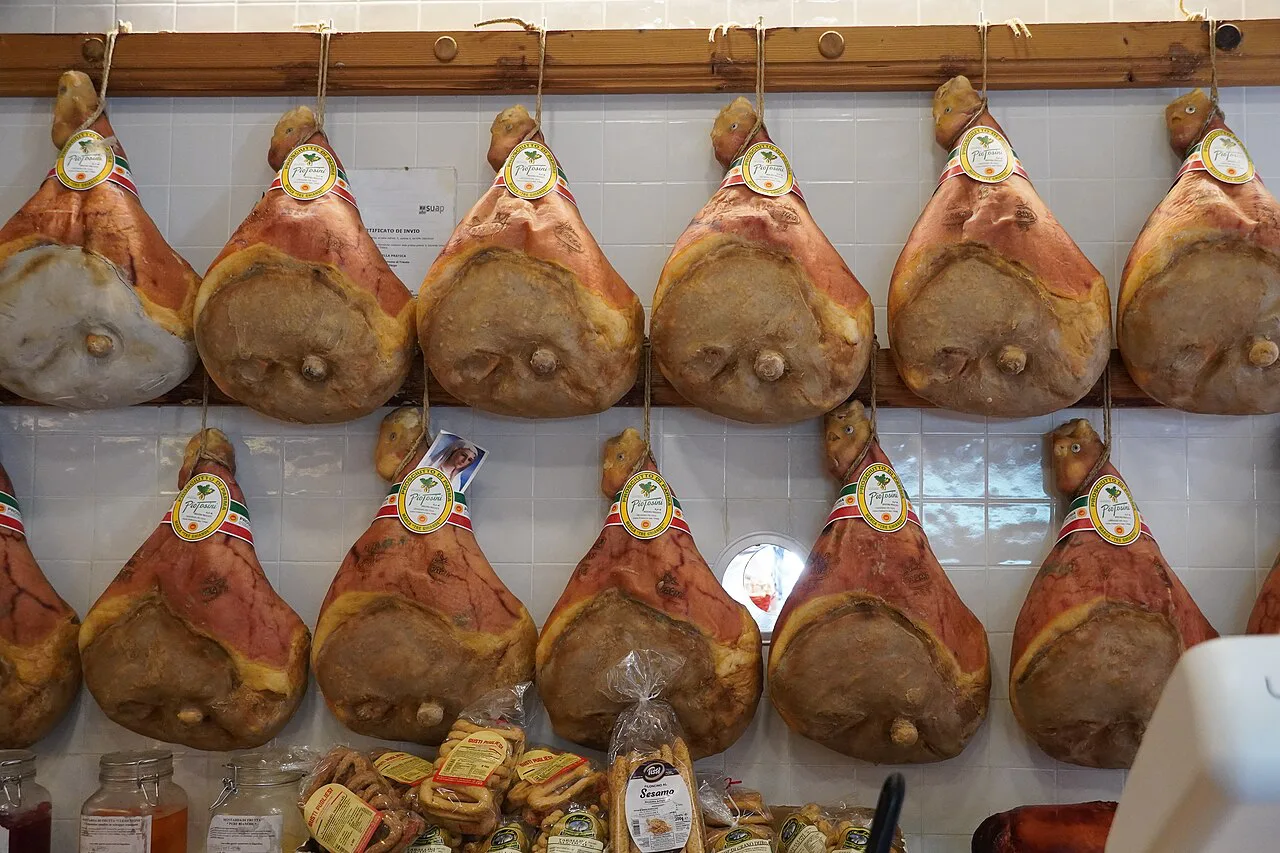
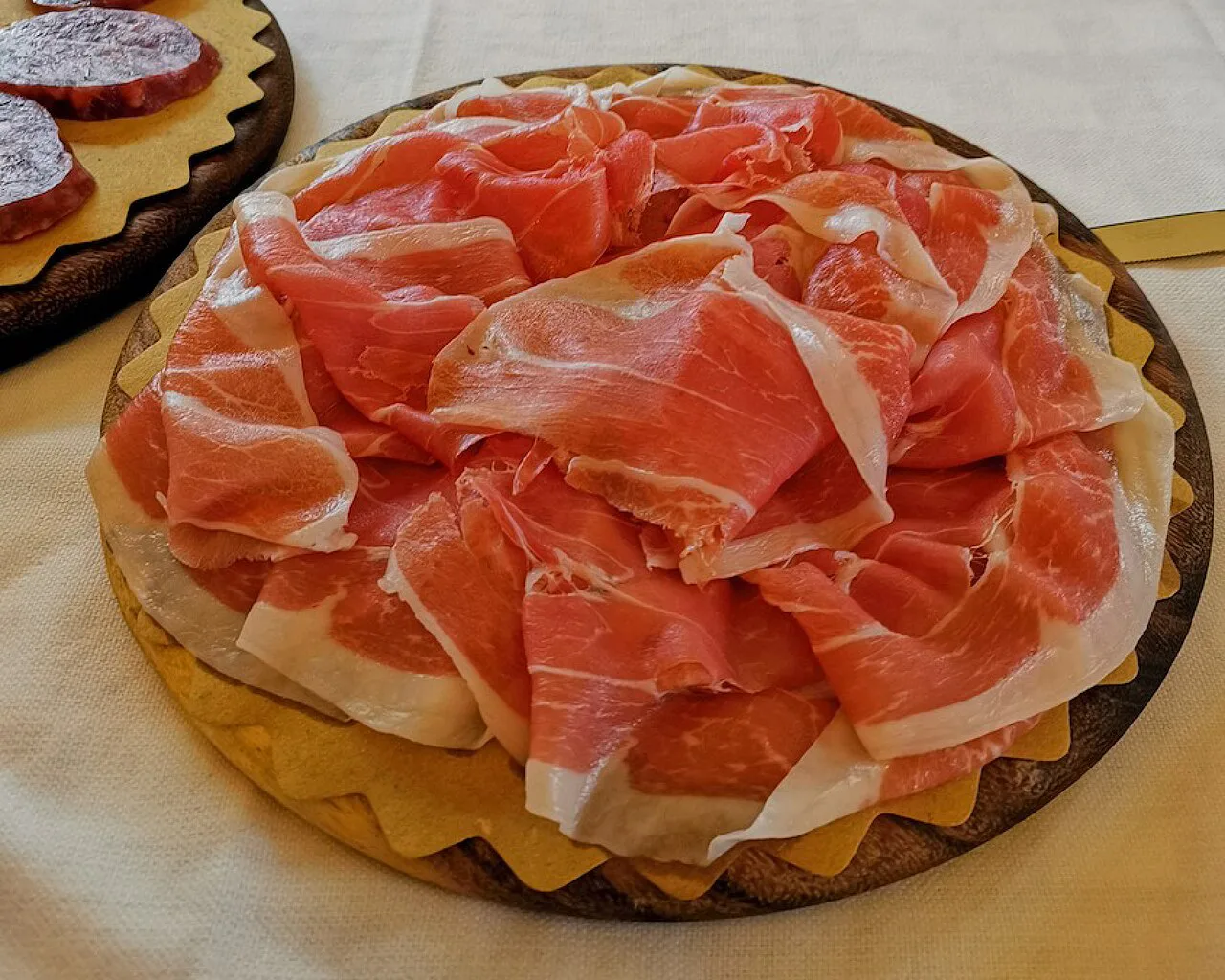
Prosciutto di Parma is a whole pork leg salted and air-cured, with pork meat and salt the only ingredients. The ham is typically aged at least 24 months, and longer ageing gives a drier, more concentrated texture and flavour.
The curing happens in the open air of the Parma hills, where a mild climate allows the ham to dry slowly without additives. That natural rind and deep pink colour, with a layer of pink-tinged fat, are part of what distinguishes it from other Italian hams.
Why prosciutto di Parma tastes sweet rather than salty
The ham's sweetness comes from a light hand with salt: the ham is made with only a low level of salt and no additives, which is one reason it is known for its unmistakable sweetness. The result is a ham that tastes softly savoury, with a delicate fat that melts rather than clings.
That sweetness is also why Prosciutto di Parma pairs so well with fruit and with sparkling or light white wines, and why it rarely overwhelms a dish. The fat is edible and desirable: it carries flavour and is part of the pleasure, so do not strip it off.
The DOP rules: where it is made and where the pigs come from
Prosciutto di Parma carries DOP (Denominazione di origine protetta) status, a European protected-origin label, which ties the curing to a defined zone of Parma province bounded by the Enza and Stirone rivers. The pigs themselves may come from several Italian regions, including Emilia-Romagna, Lombardy, Veneto and Tuscany, as long as the curing happens inside that zone.
That tight geography is why the name is protected: a similar ham made elsewhere in Italy cannot legally be sold as Prosciutto di Parma. When you see the name, you are buying a defined provenance, not just a style of ham.
How to be sure you are buying certified Prosciutto di Parma
Certified Prosciutto di Parma is produced and inspected under the rules of the Consorzio del Prosciutto di Parma, the body that has protected and promoted the ham since 1963. Seeing the certified Prosciutto di Parma name on the ham tells you it has met the DOP standard rather than being an uncertified lookalike.
At a counter, ask for Prosciutto di Parma by name and look for certified DOP labelling on the packaging. That is your simplest guard against paying Parma prices for a generic crudo.
Prosciutto crudo versus cooked ham: what 'crudo' means
On an Italian menu, crudo means raw-cured: the ham is salted and air-dried, never cooked, and served as thin slices. Cooked ham is prosciutto cotto, a different product with a pale pink colour and a softer, wetter texture.
So when a panino lists prosciutto crudo, expect the sweet, silky cured ham, not a slice of sandwich ham. If you want the cooked version, say cotto explicitly.
How it is sliced and served: antipasto, figs and melon, panini and primi
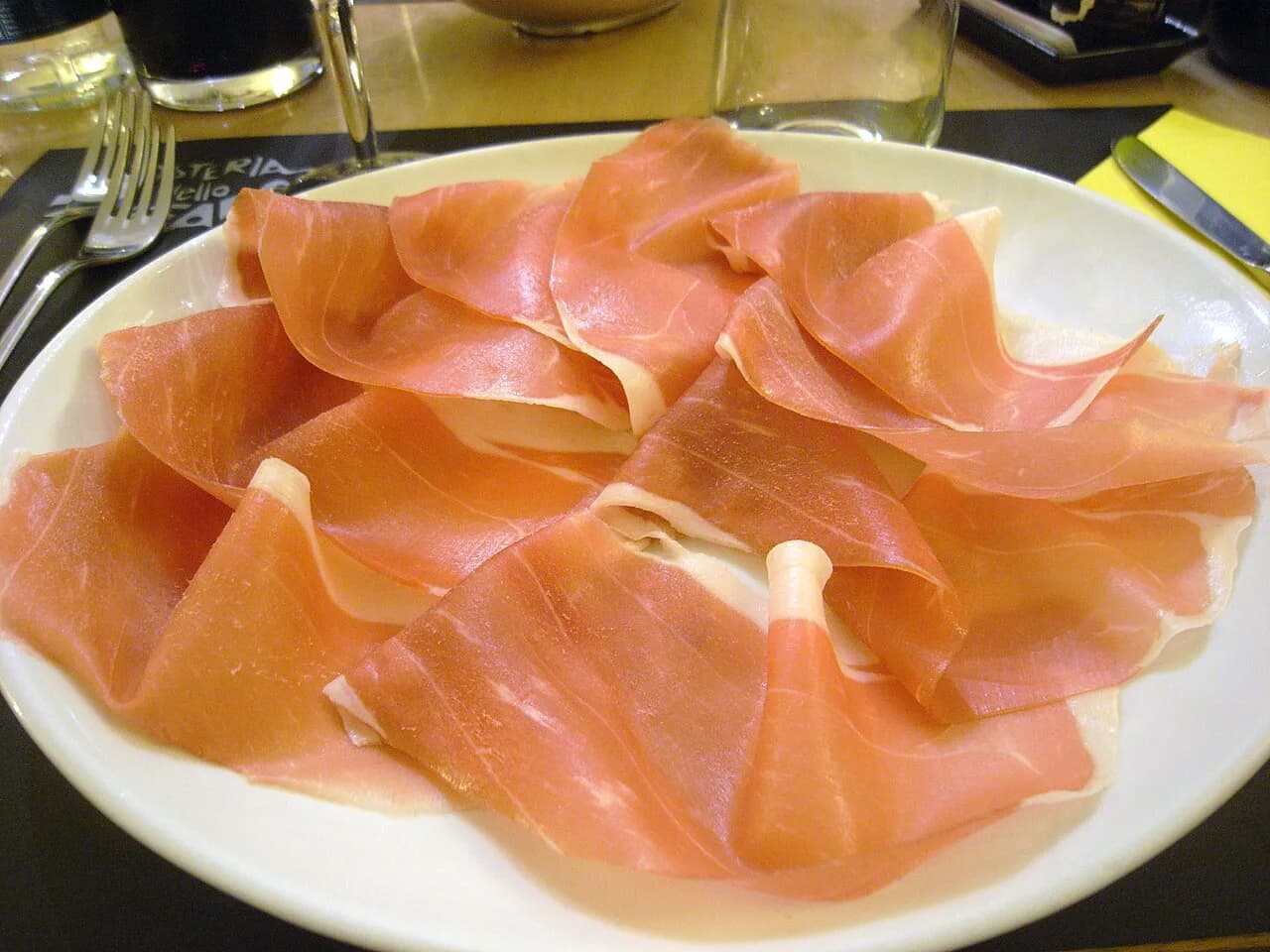
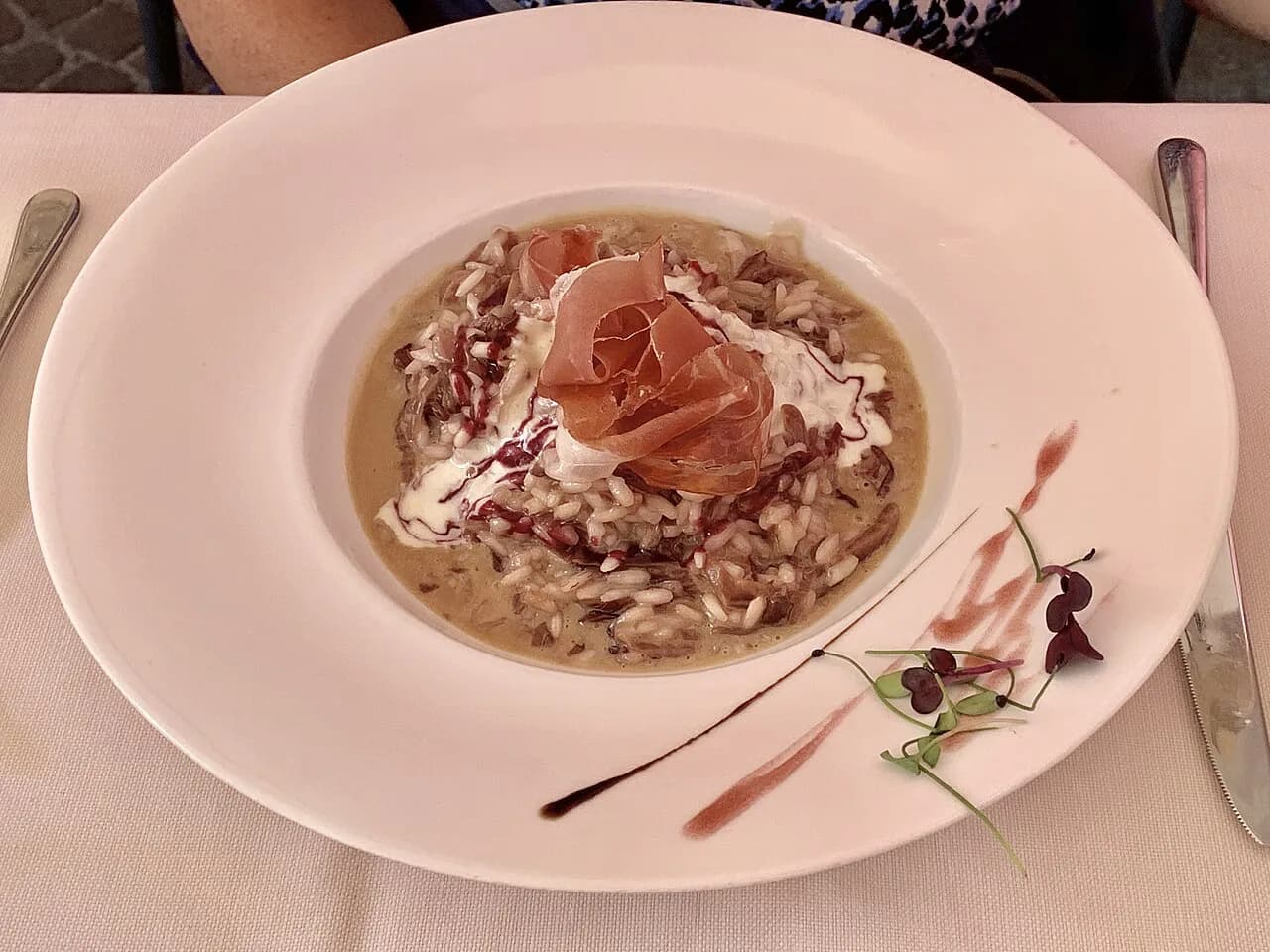
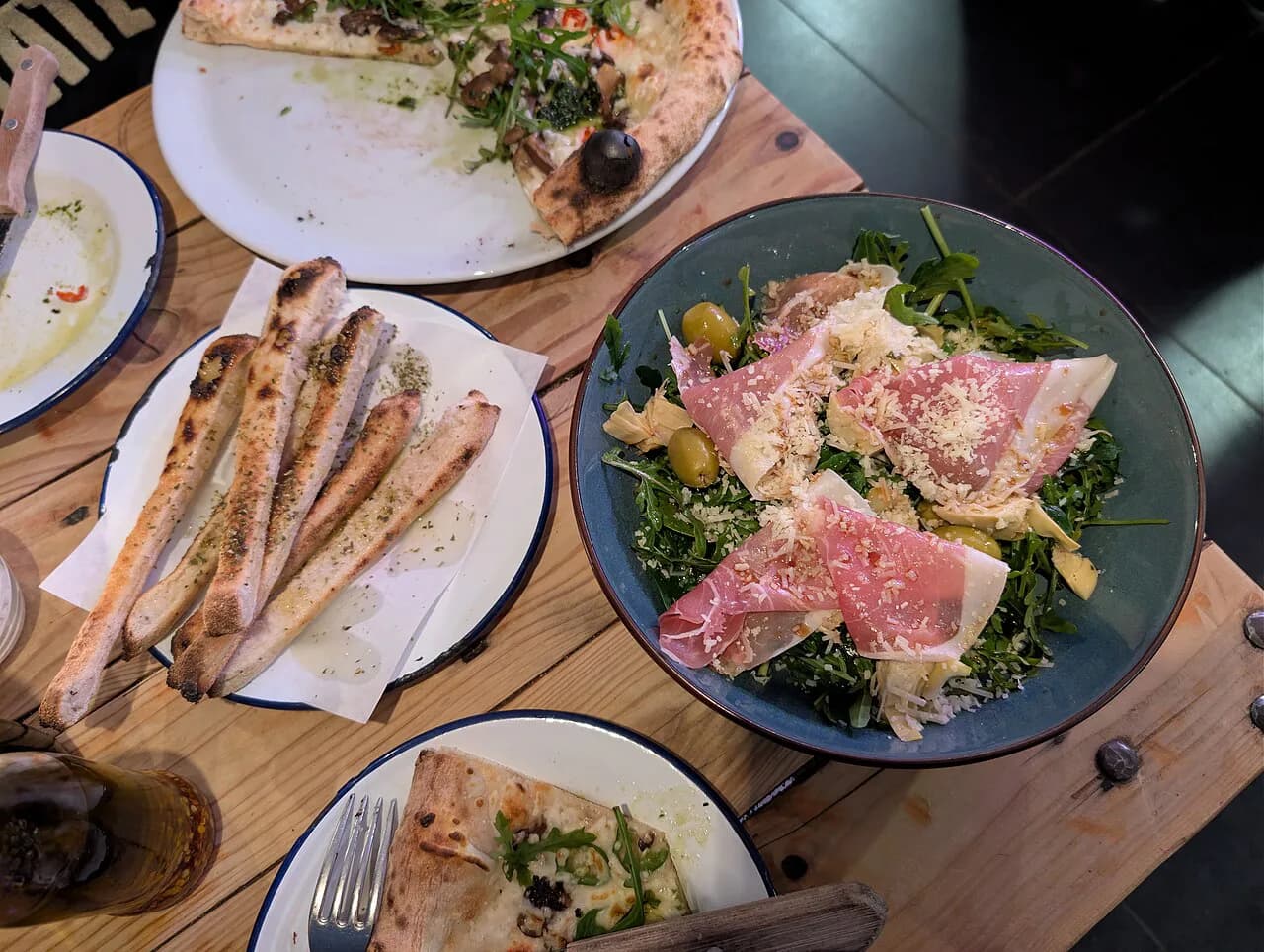
Prosciutto di Parma is sliced paper-thin and served most often as an antipasto, either alone or with bread such as grissini. It is extremely versatile: it can be served as an antipasto with figs and melon, used to stuff panini, and folded into primi and salads for a salty-sweet lift.
Those pairings are suggestions, not rules: figs and melon bring sweetness that flatters the ham, and a Lambrusco or a light white such as Malvasia or Sauvignon can balance the fat. At dinner in Parma, look for it alongside an antipasto or wrapped around a breadstick before the main plate.
What to look for at a salumeria counter and buying by weight
At a salumeria (delicatessen), ask for Prosciutto di Parma and specify the age if you want a drier, more intense slice: a 24-month ham is the standard, and longer-aged hams of over 30 months are also sold. Ask the counter to slice it thin and to include a little of the fat, which is where much of the flavour sits.
Buying by weight means you choose the quantity, from a few slices for a panino to a larger piece for a table. At a specialist counter such as Volpetti in Rome, whole hams and sliced portions are sold online, though a whole leg is a serious purchase aimed at restaurants or large gatherings.
Prosciutto di Parma across a day in Parma
In Parma, prosciutto fits naturally into an aperitivo, a lunchtime panino and a dinner antipasto. Start with a plate of it alongside something sparkling before dinner, or order a panino filled with crudo and a little mozzarella at lunch.
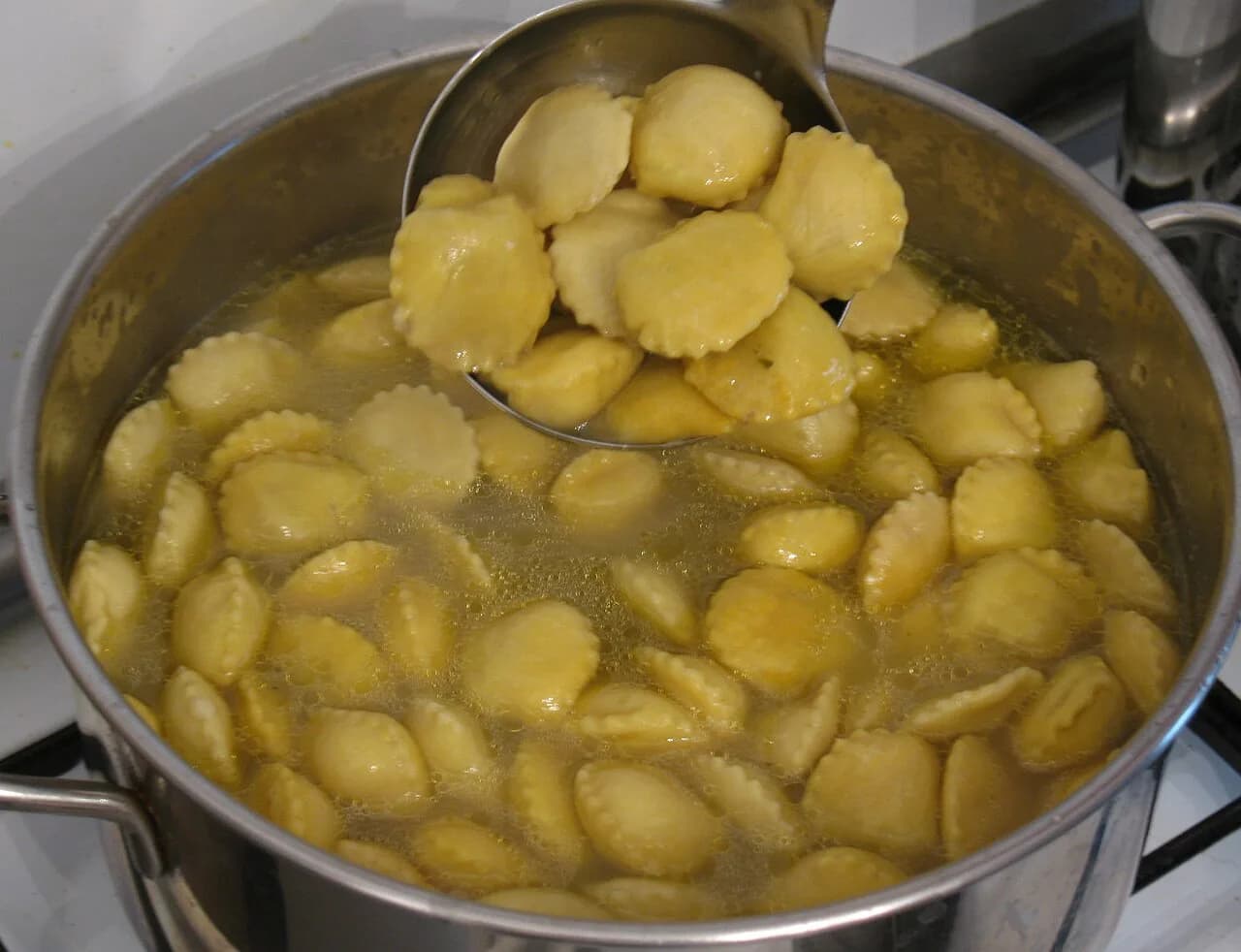
For dinner, look for it on an antipasto board before anolini in brodo or a plate of culatello, the prized local salume that makes an interesting comparison. If you want a fuller plan for where to sit down, the best restaurants in Parma gathers the places worth booking.
A simple rule for a day in Parma: eat the ham where it is treated as an ingredient, not a garnish. A good salumeria counter and a restaurant that slices to order will show the difference.
Should you order Prosciutto di Parma or another salume?
Order Prosciutto di Parma when you want something delicate and sweet, and look for the certified Prosciutto di Parma name and DOP labelling to be sure of what you are buying. It is the gentlest of the Parma salumi, and it works best sliced thin, with a little fat left on, and paired with something sweet or sparkling.
If you want a bolder, deeper cured meat, culatello is the local alternative, while a plate of anolini makes a natural next course. Either way, the ham is a starting point rather than the whole meal.
Explore more Parma food guides
Frequently Asked Questions
Is prosciutto di Parma the same as Parma ham?
Yes. Prosciutto di Parma and Parma ham are the same product, a DOP dry-cured ham from a defined zone of Parma province. The Italian name is the one you will see in Italy.
Can you eat the fat on prosciutto di Parma?
Yes. The fat is edible and part of the ham's character, carrying much of the sweet flavour. It is fine to leave it on the slice rather than trimming it away.
How long is prosciutto di Parma aged?
The DOP standard is at least 24 months. Some hams are aged longer, which gives a drier and more concentrated slice; ask at the counter if you want a specific age.
Sources
Notes for your next meal in Italy
Optional updates to our food guides.
You might also like
Continue reading
More guides you'll find useful