Trattorias in Bergamo: Where to Eat the City's Own Dishes
Trattorias in Bergamo for the city's own cooking: casoncelli, polenta taragna and nosecc, plus how an osteria differs from a restaurant and what to order.
On this page
The trattorias in Bergamo are where you eat the city's own cooking: casoncelli, polenta taragna and nosecc, among family-run rooms rather than places chasing a national menu. Città Alta, the walled upper town, has the deepest cluster of named tables, with a handful of osterie in Città Bassa and the wider province worth the trip. This guide names the addresses, says what each one is for and tells you which dishes to order. Explore more places to eat with our guide to the Best Restaurants in Bergamo.
Bergamo splits in two: the medieval Città Alta on the hill, reached by funicular or on foot, and the modern Città Bassa below. Which side you eat on shapes the evening — a table up in the old town, or a quieter room in the lower town. The rest of this guide is organised by that decision and by the food itself.
What a Bergamo trattoria actually is
A Bergamo trattoria is defined by its cooking — cucina bergamasca, the mountain-and-valley food of the province — rather than a generic Italian menu. The register is informal: simple tables, generous plates and a menu built on the dishes the kitchen has always made. The Taiocchino taverna in Bergamo, for instance, describes its rooms as informal and colourful, with dialect poems printed on every table.
The food tells you where you are. Casoncelli, the filled pasta of the Bergamo area, are the benchmark dish, and they are the thing to order first if you want to judge a kitchen. If you want the background on the pasta itself, our guide to casoncelli explains the fillings and the difference between the Bergamo and Brescia versions.
Città Alta or Città Bassa: where to book your table
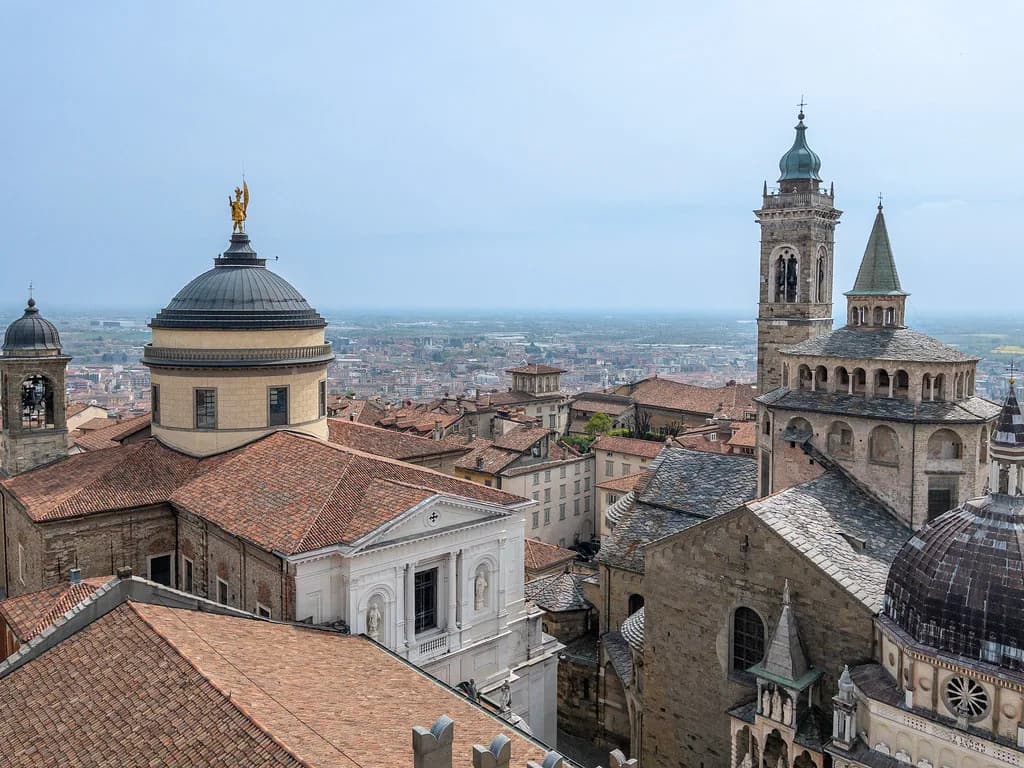
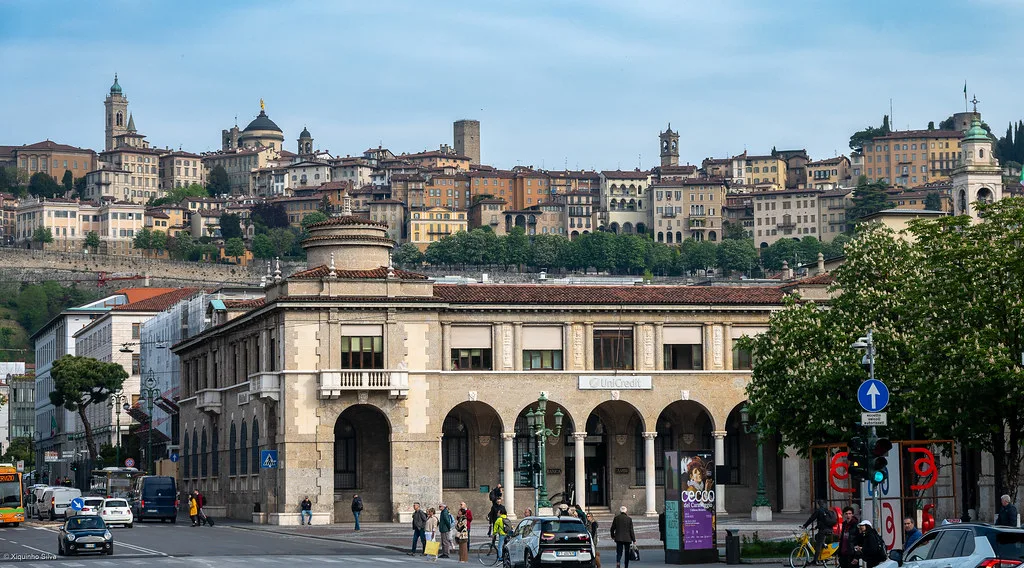
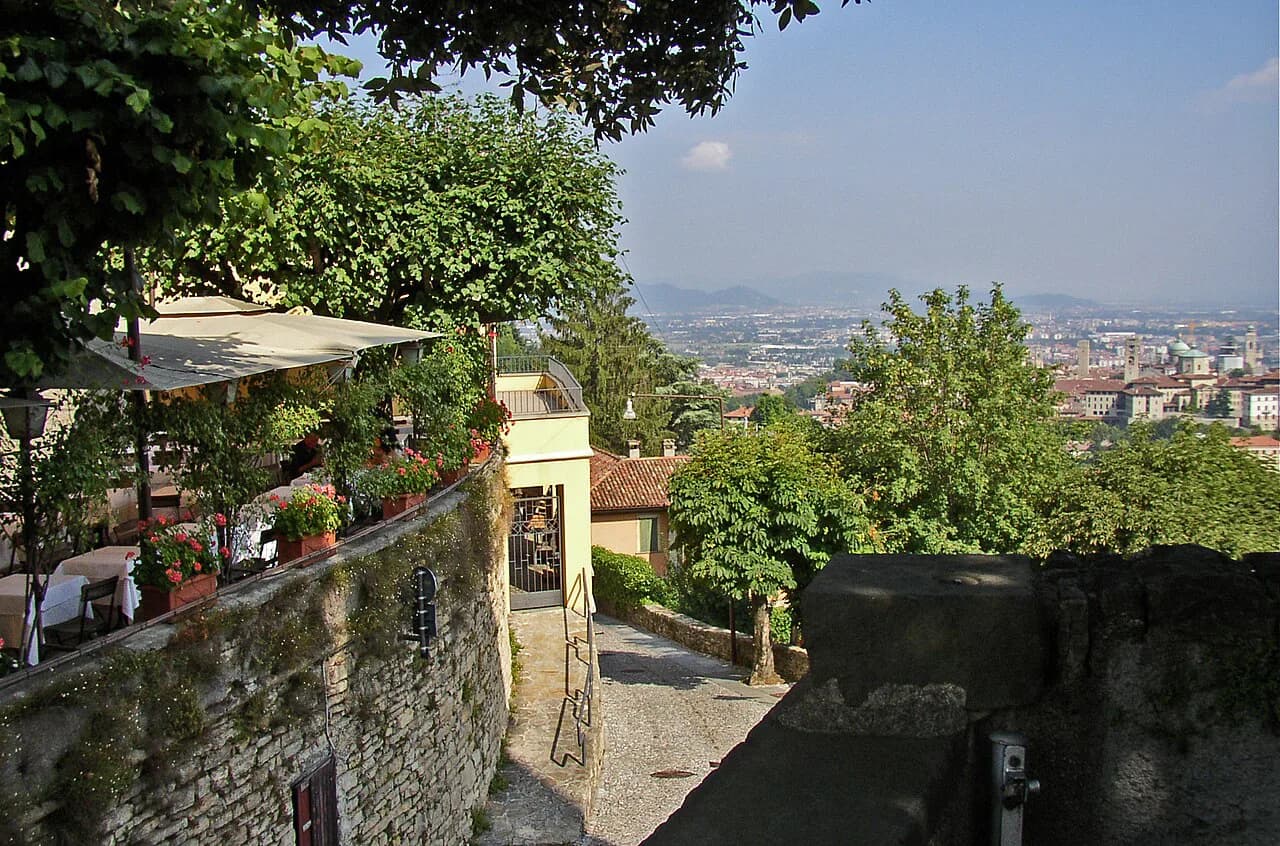
Città Alta is the walled upper town, still completely surrounded by its Venetian walls, which have been a UNESCO World Heritage site since 2017. That setting is why so many of the city's best-known tables sit inside the walls, from old tavernas to hilltop restaurants. Eating up here means a climb or a funicular ride, and the reward is the atmosphere of the old town at night.
Città Bassa is where the city works: the lower town mixes historic cores with modern streets, and its osterie tend to be calmer and easier to reach on foot. If you are staying down here, you can eat well without taking the funicular. The trade-off is simple — Città Alta gives you the postcard, Città Bassa gives you an easier evening.
Taiocchino: a colourful taverna from the Taiocchi family
Taiocchino is the Taiocchi family's Bergamo taverna, a room that leans on old trattoria atmosphere with a modern, brightly coloured look. It is part of a trio: the same family also runs Trattoria Taiocchi in Curno and Nonna Alda in Città Alta. If you want a lively table with friends rather than a hushed dinner, this is the one to pick.
The menu is explicitly built on bergamasca home cooking, the dishes the family describes as those their grandmothers made. Expect salumi and formaggi from the province, typical first and second courses, and a wine list of local labels to go with them. It is an informal, sociable room, so it suits groups and celebrations better than a quiet dinner for two.
What to order at Taiocchino
Start with the house staples. The nosecc are cabbage rolls stuffed with meat, browned and finished in tomato, served with polenta — a plate that reads as winter food and is one of the family's signature secondi. Alongside it comes polenta taragna, made with bramata flour and buckwheat and enriched with cheeses from the Bergamo valleys, which the restaurant describes as the most loved in the province.
For dessert there is a house twist: the Mokamisù, a tiramisù-style sweet with a surprise you have to unscrew before eating. It is a bit of theatre rather than a classic, but it fits the room's playful character. Order it if you want one memorable finish rather than a standard dolce.
Trattoria Sant'Ambroeus and Ristorante La Marianna in Città Alta
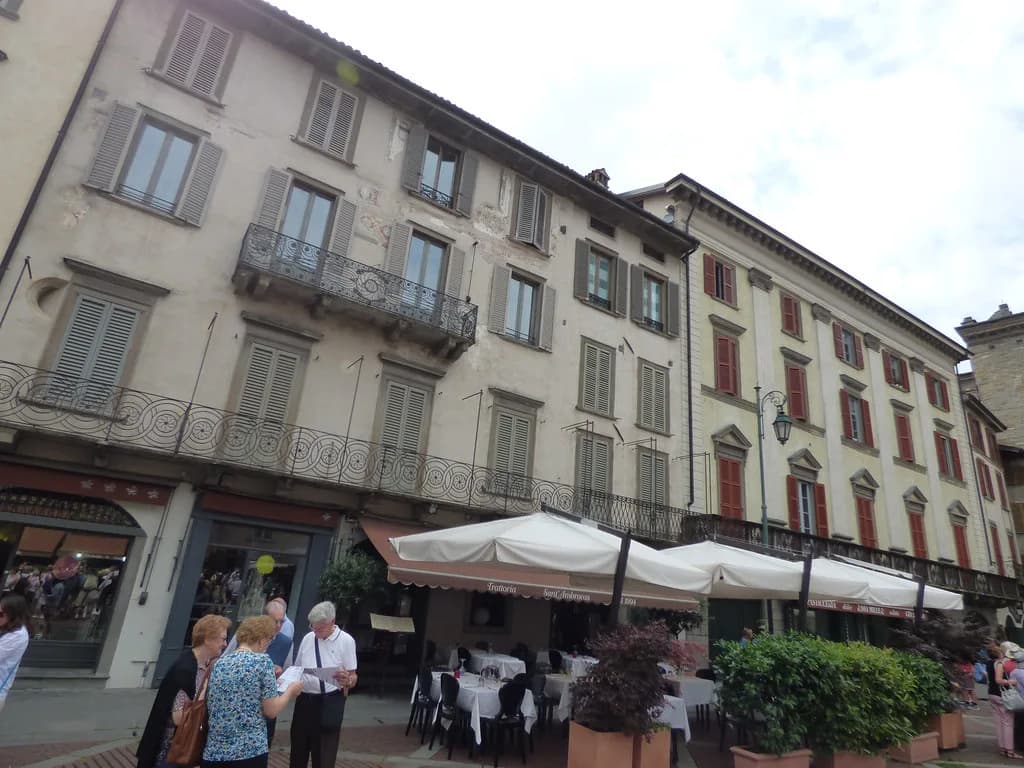
Both Trattoria Sant'Ambroeus and Ristorante La Marianna appear in the Ristoranti Bergamo group, a collective of restaurants across the province that promotes local cooking through shared initiatives. Sant'Ambroeus sits in the setting of Piazza Vecchia, the main square of the upper town, while La Marianna is another Città Alta address in the same group.
For a visitor, the value of the group is that it gathers local kitchens across the province in one place, from old trattorias to more contemporary rooms. Use the group's site to read each restaurant's story before you choose. Both Città Alta addresses make sense if you plan to spend the evening inside the walls.
Da Mimmo and La Vendemmia: two Città Alta institutions
Da Mimmo has been in Città Alta since 1956 and is listed among the Ristoranti Bergamo group, which makes it one of the longer-running addresses in the upper town. La Vendemmia, the Osteria alla Fara, is a small room of about 25 seats in Città Alta — the kind of place to book when you want a quieter dinner rather than a big table.
The two suit different occasions. Da Mimmo is the long-running Città Alta stop, with decades behind it; La Vendemmia is the intimate choice for a couple or a small group. If you want the wider picture, our guide to the Best Restaurants in Bergamo covers the range from osterie to special-occasion dining.
Osteria al Gigianca: the trattoria the city rates most highly
Osteria al Gigianca is described as the top city trattoria, including by Slow Food, with Gigi Pesenti and Alessia Mazzola running it for around a decade. The kitchen serves baccalà mantecato — whipped salt cod — with polenta crostini, a risotto with peppers and missoltino pâté, and the house casoncelli. For a single dinner that captures what Bergamo cooking can do, this is the table to aim for.
Also on the menu are coniglio alla bergamasca with polenta — rabbit cooked the Bergamo way — and a dish called pecora gigante. The cooking stays rooted in the province rather than reaching for a national or international menu. Book ahead, since a room of this reputation fills quickly.
Osteria Tre Gobbi: the oldest osteria in the city
Osteria Tre Gobbi is described as the oldest osteria in Bergamo, now a refined restaurant in the heart of Città Bassa. The kitchen is run by Filippo Cammarata, who trained under Niko Romito, and it works to three stated values: seasonal ingredients, no food waste and imagination on the plate. That makes it the pick if you want old-osteria history with a more contemporary kitchen.
Because it sits in the lower town rather than inside the walls, it is an easier booking on a night when you do not want the funicular. The trade-off is that you give up the Città Alta setting in exchange for a calmer, more modern dinner.
The view question: hilltop and funicular-side tables
A hilltop table buys you the panorama. Baretto di San Vigilio sits at the top of the San Vigilio hill right by the historic funicular exit, with a romantic setting, and it works both for a drink with a snack and for a simple dinner. La Ripa in Città Alta has a bohemian, romantic character of its own. Both are worth considering if the view matters as much as the food.
Ristorante La Marianna is the other Città Alta name to keep in mind, part of the same Ristoranti Bergamo group. The trade-off with all of these is convenience: a hilltop or upper-town table means a climb back down after dinner. For a short trip, pick one view dinner and spend the other evenings in the lower town.
Reading a Bergamo menu
The dishes to know are few and worth memorising. Casoncelli are the filled pasta; polenta taragna is the buckwheat-and-cheese polenta; nosecc are the cabbage rolls; missoltino is sun-dried lake shad, a preserved fish from the Bergamo lakes served as a pâté or with polenta. Salumi and formaggi from the valleys open most meals.
If you want to go deeper into how the filled pasta varies across the region, our guide to Casoncelli separates the Bergamo style from the Brescia one. The rule of thumb is to order the local dish in the local room: a trattoria making casoncelli by hand is doing the thing it exists to do.
Trattoria or ristorante? How the two differ
The line between a trattoria and a ristorante is about register rather than rules. A trattoria tends to be family-run and informal, with a shorter menu built on the province's dishes; a ristorante may be more polished, with a wider wine list and a slower pace. In Bergamo both exist side by side, and some addresses have crossed from one to the other over time.
Osteria Tre Gobbi is the clearest example: once the city's oldest osteria, now a refined restaurant with a trained chef in the kitchen. If you want the old-style room, pick a taverna like Taiocchino; if you want a quieter, more modern dinner, pick an osteria-turned-restaurant. Neither is better — they answer different evenings.
Booking, groups and sharing
Match the room to the party. Taiocchino is built for groups and celebrations, with its large tables and sociable atmosphere, while La Vendemmia's 25 seats in Città Alta suit a couple or a quiet dinner. For a bigger table, phone ahead — a small room cannot absorb a walk-in group.
If you are dining with people who want different things, share: order the nosecc and the polenta taragna between you, then add a plate of salumi to start. That way you cover the Bergamo classics in one sitting.
Which Bergamo trattoria should you book?
For a first dinner that sums up Bergamo cooking, book Osteria al Gigianca: casoncelli, baccalà mantecato and coniglio alla bergamasca in one room. If you want a lively group table, choose Taiocchino and order the nosecc and polenta taragna. For history with a modern kitchen in the lower town, Osteria Tre Gobbi is the pick.
Whichever you choose, eat in Città Alta at least once for the setting, and keep a lower-town osteria for the evening you do not want the climb. Both sides of Bergamo cook its own dishes well; the decision is about the night you want, not the quality of the food.
Explore more Bergamo food guides
Frequently Asked Questions
What is the traditional pasta dish from Bergamo?
Casoncelli are the filled pasta associated with Bergamo. They appear on the menus of the city's trattorias, including at Taiocchino and Osteria al Gigianca, and are the dish to order to judge a kitchen.
What foods is Bergamo known for?
The local repertoire runs to casoncelli, polenta taragna made with buckwheat and valley cheeses, nosecc (cabbage rolls stuffed with meat and finished in tomato), missoltino (sun-dried lake shad) and the salumi and formaggi of the province.
Sources
Notes for your next meal in Italy
Optional updates to our food guides.
You might also like
Continue reading
More guides you'll find useful