Mortadella Bologna: What It Is, IGP Rules and How to Eat It
Mortadella Bologna IGP explained: what the pink cooked pork salume is made from, why it is not American Bologna, and how to buy and eat it in Bologna.
On this page
Mortadella Bologna is a cooked, finely ground pork salume made in and around Bologna, sold in thin cold slices rather than as a sausage to cook. It is pale pink, studded with white cubes of pork fat, lightly spiced and mild, which is why it ends up in panini and on antipasto boards as often as on a restaurant plate. This guide covers what goes into it, what the IGP label on the counter actually protects, and how to buy and eat it well.
It is also one of the most reliably misunderstood Italian foods abroad, because English speakers meet it under the name Bologna, sliced thin in a deli roll. The two share a name and a shape, not a recipe. Knowing the difference is the quickest way to buy the right thing.
What mortadella actually is
Mortadella is a pork salume made from finely triturated meat, mixed with cubed pork fat, salt and pepper, stuffed into a casing and cooked slowly rather than cured over months. Because there is no long maturation, it stays soft, moist and pink, and its flavour is delicate and gently savoury rather than salty. Fiorucci, a producer with a long history in the category, describes it plainly as the best-known cooked salume of the Bolognese tradition, with a mild character and no saltiness to speak of.
You eat it cold and sliced thin, as an antipasto, inside a panino or folded through a plate of gnocco fritto. Thicker cuts exist, but the thin slice is the point: it lets the fat soften on the tongue rather than sit in a slab.
Mortadella versus American Bologna
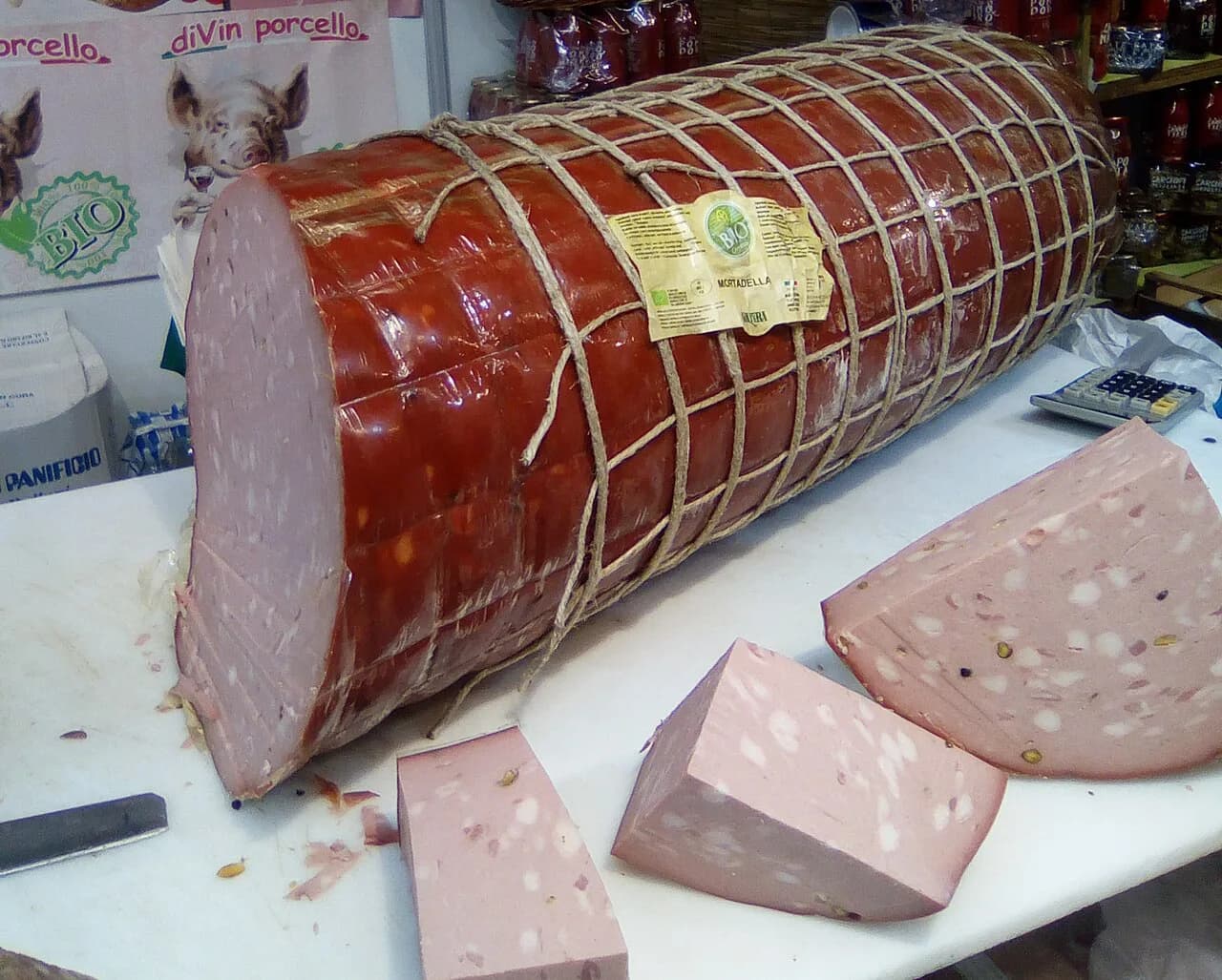
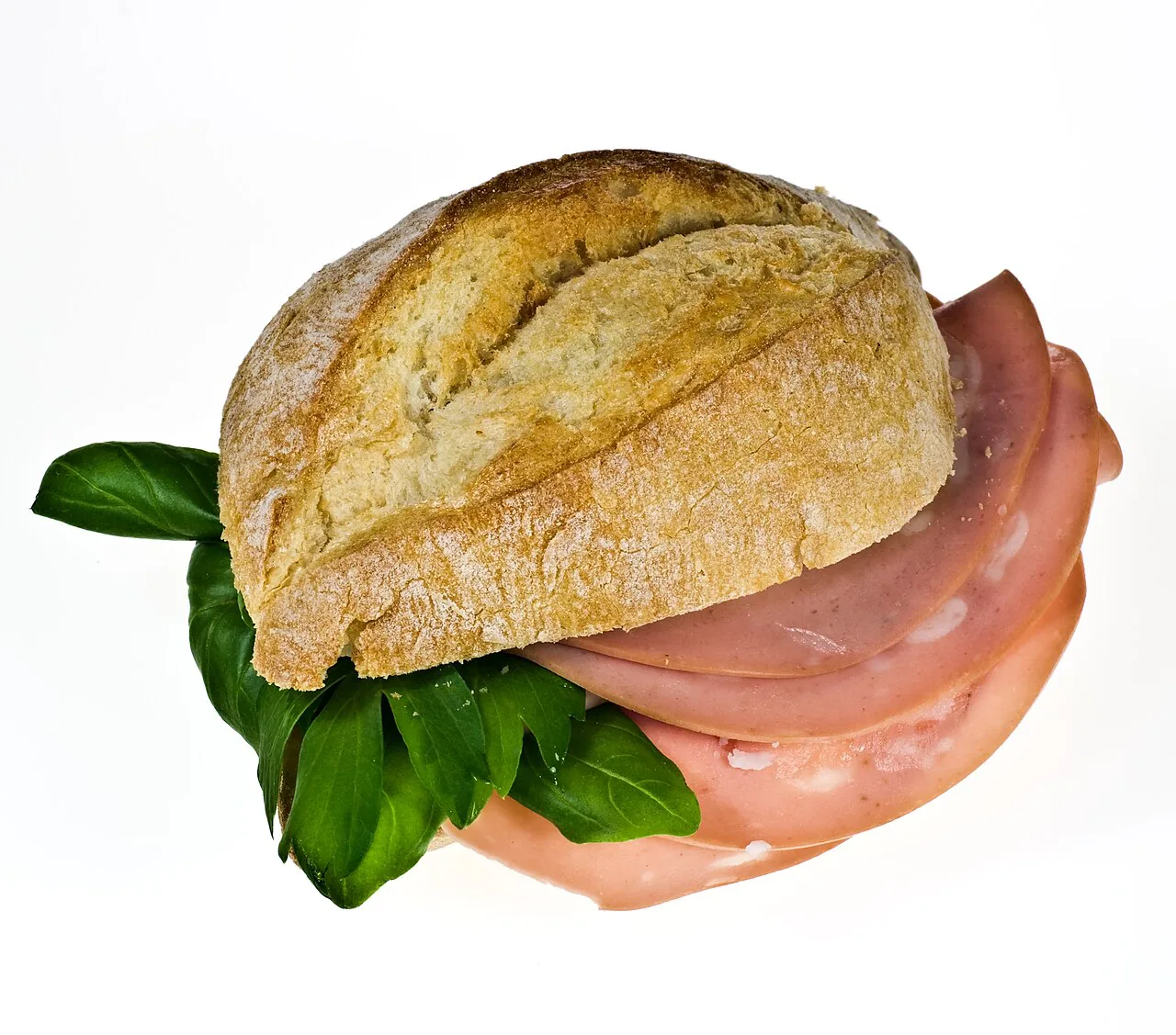
American Bologna is a fine-ground sandwich cold cut, and the name is where the resemblance largely ends. Mortadella Bologna is not smoked: it is a mixture of finely ground lean and fat pork set in a casing and cooked, with visible cubes of fat and often whole peppercorns or pistachio running through it. Il Giornale del Cibo notes that the specification requires an aromatic, lightly spiced scent with no trace of smoke. If the slice is uniform pink with no visible fat, it is not Mortadella Bologna IGP.
The practical test at a deli counter is visual before it is verbal. Look for the pearl-white squares distributed through the pink and a surface that looks velvety rather than rubbery; that texture is the whole reason the salume works on a piece of bread.
What goes into it
The ingredient list is short: pork, cubed pork fat, salt and pepper, whole or ground. Fiorucci notes that the fat cubes come from the throat for the finer products, and that production blends lean cuts and fat cuts, grinds them finely, mixes in salt and flavourings, then stuffs and cooks the mixture.
The IGP specification sets a floor for that fat, not a ceiling on how rich it tastes. Il Giornale del Cibo sets out the discipline: the slice must show pearly white squares of adipose tissue making up no less than fifteen per cent of the total mass, evenly distributed and well bound, with no pockets of fat or gelatine.
That is why picking the white bits out is missing the point. They are a required part of the product, and they are what keeps a thin slice from tasting dry.
Why the slices are pink, and why pistachio is optional
Mortadella keeps its bright pink colour because it is not air-dried: the salume is cooked and chilled rather than hung to mature, so it never takes on the deeper tones of a cured ham. Fiorucci explains the colour this way, alongside the chilling step that follows cooking and holds the product at around four degrees for roughly 48 hours before packing.
Pistachio is a permitted variant, not a defect or an upgrade in status. Il Giornale del Cibo notes that the specification allows both versions, that Bologna tends to prefer mortadella without pistachio, and that Rome, the centre and the south treat the green pieces as essential.
Producers run the same split: Gianni Negrini lists its Bologna IGP mortadelle with and without pistachio across the different sizes and casings. Read the label at the counter to see whether the mortadella you are buying is plain or studded with pistachio.
What the Mortadella Bologna IGP label covers
Mortadella Bologna has held IGP status since 1998, and the Consorzio Mortadella Bologna was set up in 2001 to protect and promote it, according to Il Giornale del Cibo. In practice the label means the salume was made to the specification: the right shape, the right fat proportion, the right colour and aroma, and no smoking.
The discipline covers shape and texture as well as ingredients: oval or cylindrical with a compact, non-elastic bite, a cut surface that is velvety and uniformly pink, and an aromatic, lightly spiced scent with no trace of smoke. Those are the checks to make at a counter, and the IGP mark is the thing to look for on the label.
Sizes on the producer side run from small cylinders of a few kilos up to whole pieces of a hundred kilos, in natural pork casings or in a bladder, which is why a counter may slice from a piece far smaller than the ones a factory ships. Gianni Negrini publishes the full range of formats and diameters on its product page, from a 700 g piece in a box up to the large whole mortadelle.
How it is made, start to finish
Production runs in a fixed order. Fiorucci describes grinding the lean and fat meats, combining them, adding salt and flavourings in the mixer, then stuffing the mixture into a casing in a way that removes air and doses the meat into its final shape.
After the long, slow cook, the mortadella is showered with water to stop the cooking and cool it, then rested at about four degrees for 48 hours to stabilise and even out before being packed, usually under vacuum. That rest is what gives a good slice its even texture from edge to centre.
Where the name and the history come from
Even the name is contested. Il Giornale del Cibo sets out two competing explanations, one tracing it to mortarium, the mortar in which the meat was pounded, the other to myrtatum, a myrtle-seasoned sausage where myrtle stood in for costly pepper, and treats both as claims rather than settled fact.
The documented history begins on 24 October 1661, when Cardinal Farnese, papal legate in Bologna, issued a bando laying down rules for making a fine cooked-pork salume, banning meats other than pork and requiring inspection and the seal of the Società dei Salaroli. Il Giornale del Cibo describes the aim as protecting the reputation of Bolognese salumieri against imitations, three centuries before the modern specification.
It was once a luxury, costlier than prosciutto and reserved for nobles and the wealthy bourgeoisie, before industrial salumi-making in the nineteenth century made it cheap and popular, and the mortadella panino became a worker's snack. That arc explains why the same salume turns up both on a smart antipasto plate and in a paper cone at lunch.
Buying it at a salumeria counter
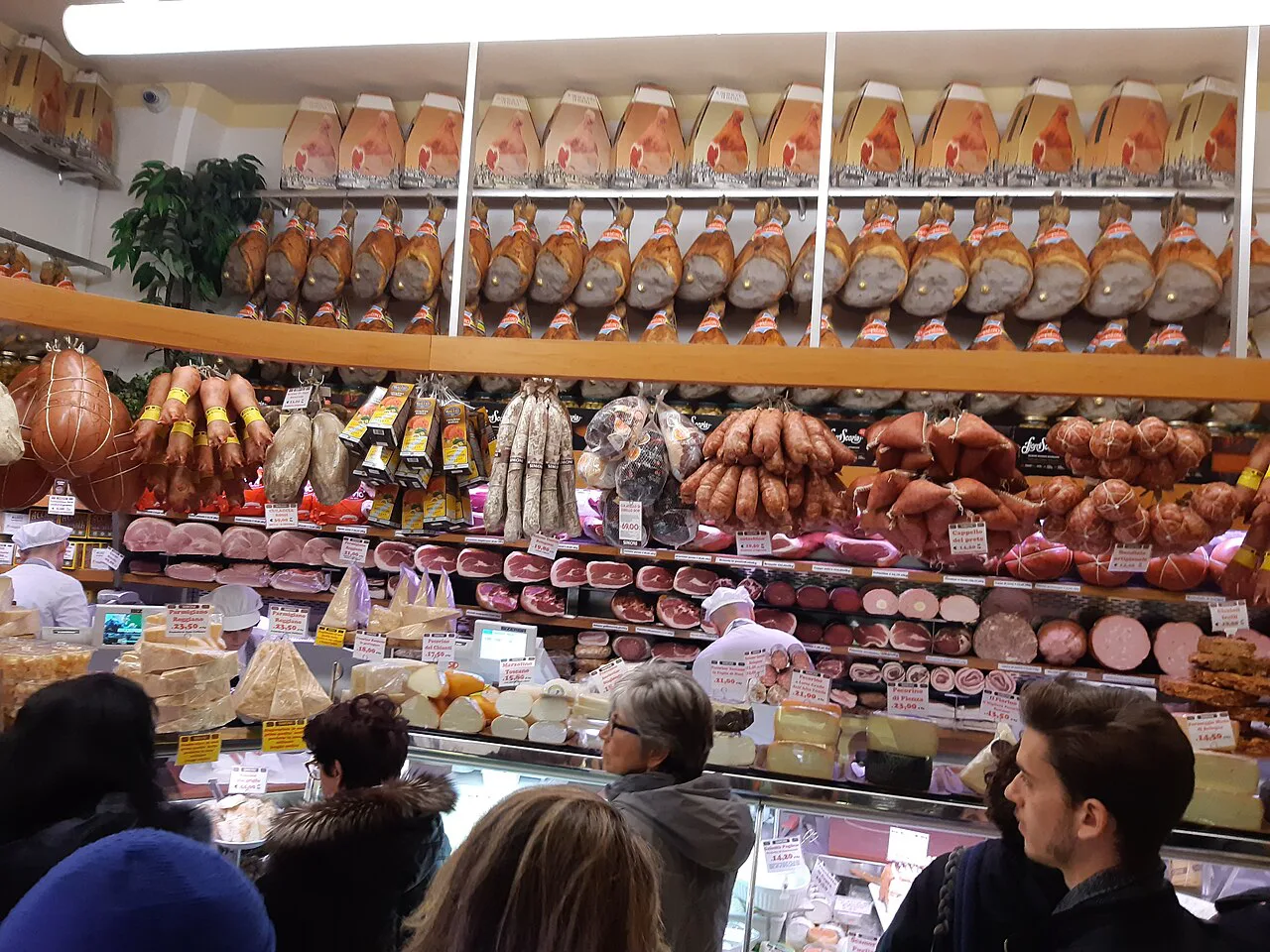
Ask for it sliced to order and say how many slices or how many etti you want, since a salumeria will normally slice from the piece in front of you. Two or three etti is a sensible amount for a picnic or an antipasto for two; ask for it thin, and watch that the slicer is set fine so the fat cubes stay intact.
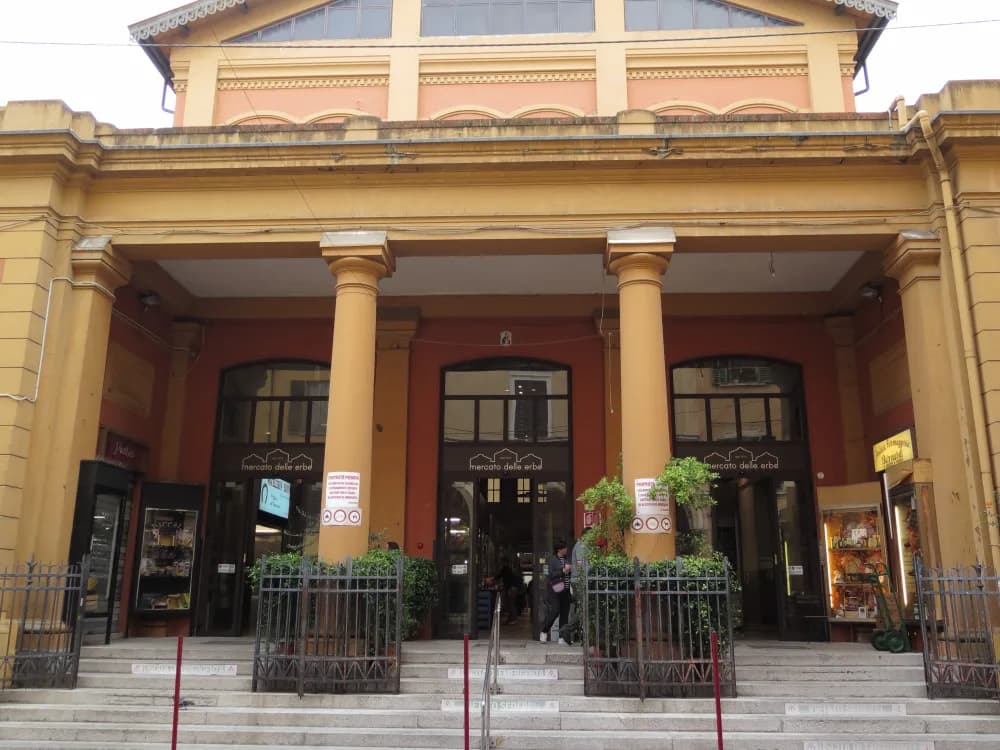
At a food market or a specialist counter, use the fat rule as your buying check: even white squares through a velvety pink slice, no gelatine pockets at the edge. Bologna's food markets are a practical place to see the range on offer in one morning.
Thin slicing is the default for a reason: it keeps the texture soft and the fat evenly spread through each piece. Ask the counter for a slightly thicker cut only if you want a firmer bite, and keep it cold rather than cooking it.
How Bologna eats it
The classic is a panino, split roll, thin mortadella, nothing fussy, eaten standing up or walking. That is also why it belongs on a street food crawl through the centre as much as on a restaurant table.
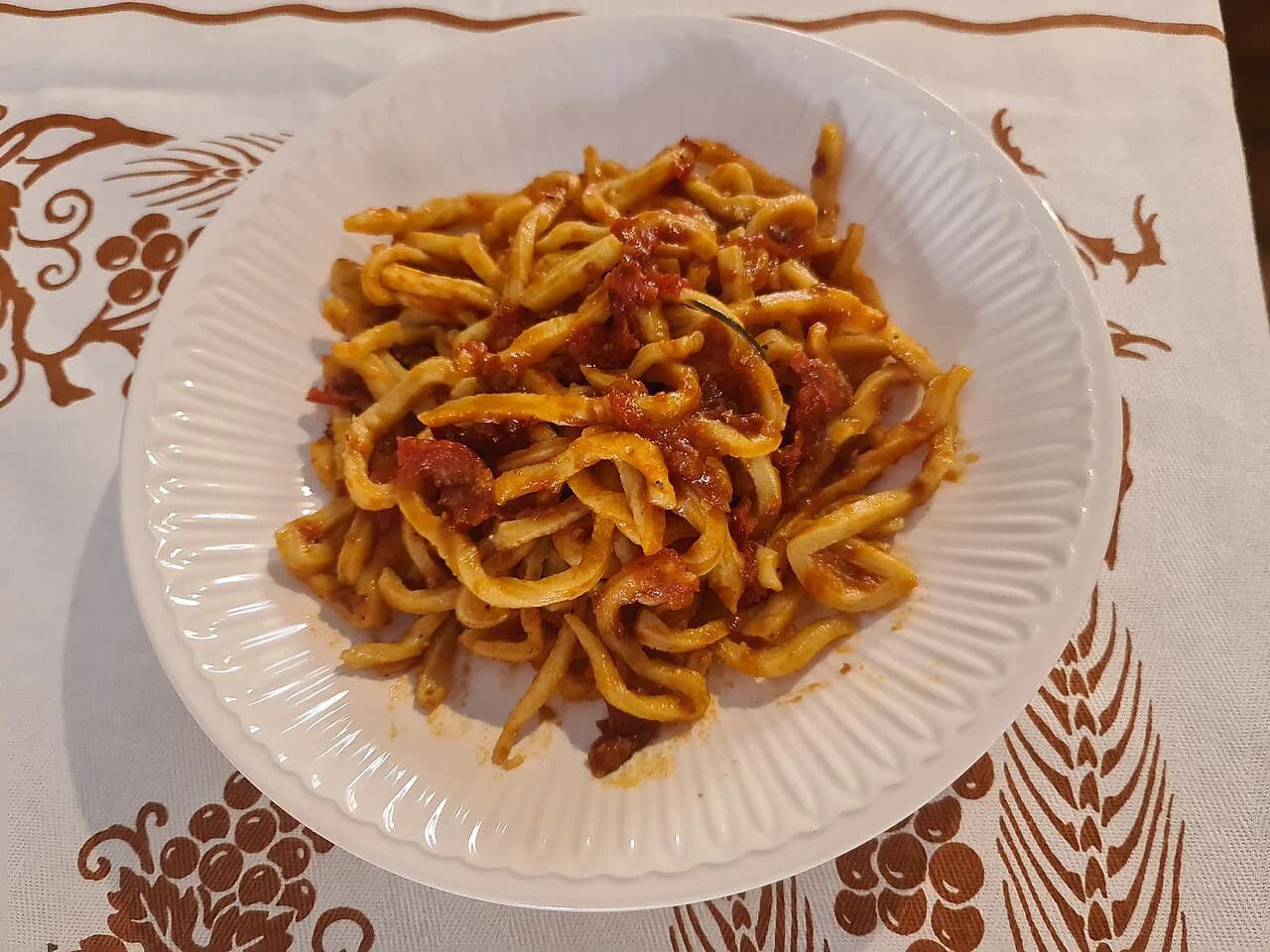
At a trattoria it turns up as an antipasto, often alone or with bread, before a plate of tagliatelle al ragù. If you are building a lunch around it, follow it with the city's pasta or settle into one of the trattorias in Bologna for a longer sit-down meal.
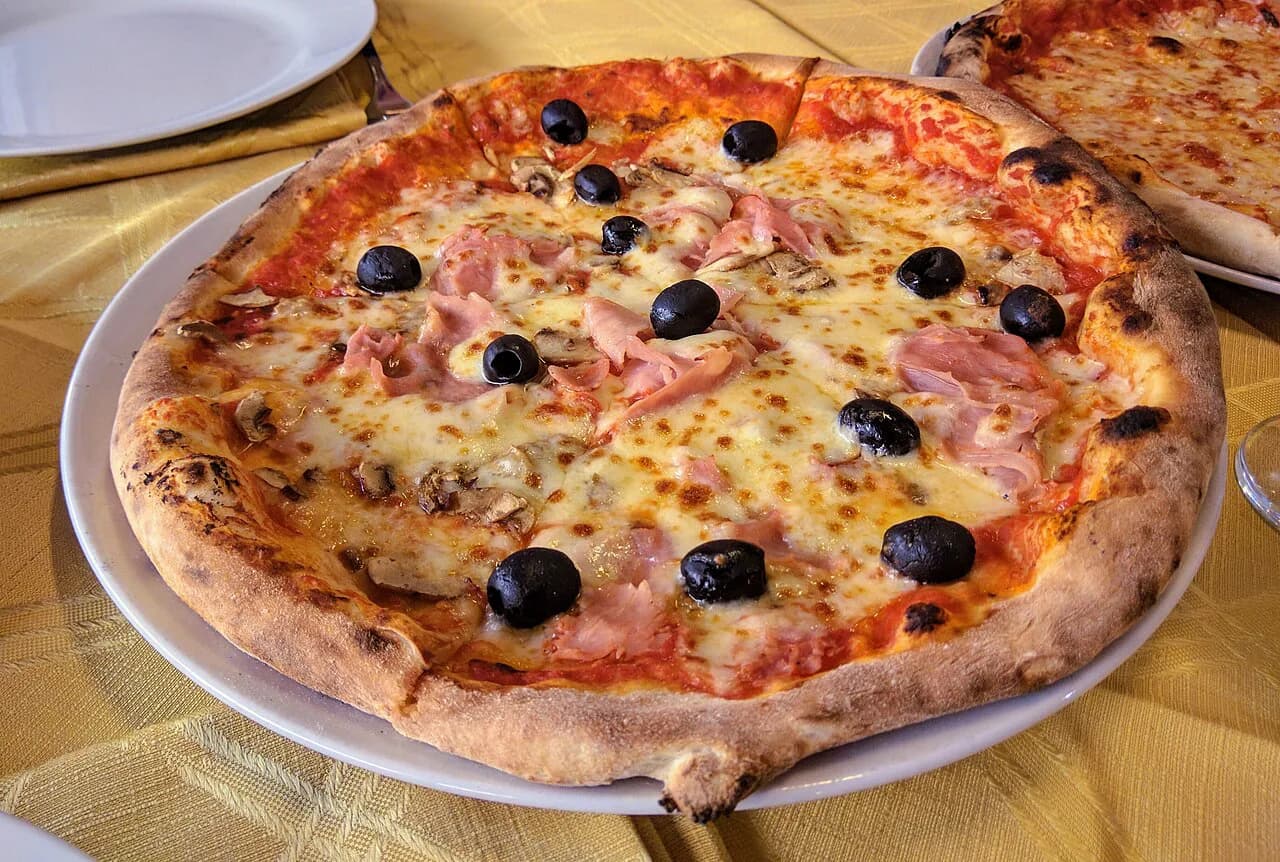
It also works in a roll at a bar, and as a filling for pizza bianca at lunch. If you are planning the day around eating, Bologna rewards moving between these small stops rather than sitting down for one long meal.
Storing and serving sliced mortadella at home
Once the packet or paper is open, keep sliced mortadella in the fridge, covered with cling film, and eat it within a couple of days. Fiorucci gives a maximum of 48 hours for an open vacuum tray, with storage at no more than four degrees, which is a useful benchmark even when you bought it loose.
Take it out of the fridge ten minutes before serving, so the fat softens and the slice stops tasting cold and waxy. Serve it with bread, grissini or gnocco fritto, and let a little black pepper and good olive oil do the rest rather than cooking it into something else.
Mortadella or Bologna: which are you ordering?
Order Mortadella Bologna IGP when you want the pink, fat-flecked salume sliced thin and eaten cold, and treat anything smoked, uniform and bouncy as a different product that happens to share the name. In Bologna, Il Giornale del Cibo notes a preference for the plain version; in Rome, the centre and the south, pistachio is the usual choice.
Build the day around a slice at a market or a panino from a bakery, then follow it with the city's pasta and its trattoria cooking, which is where a quick bite and a long lunch meet in the same neighbourhood.
Explore more Bologna food guides
Frequently Asked Questions
Is mortadella made from horse meat?
No: Mortadella Bologna IGP is made from pork, with pork fat, salt and pepper. The original 1661 rule in Bologna banned meats other than pork, and the product carries a protected origin label, so anything sold as Mortadella Bologna IGP is pork based.
Is mortadella healthy?
That is a judgement about your own diet rather than a fact about the product. It is a cooked pork salume with a protected minimum proportion of fat, so most people treat it as a rich food to eat in slices rather than portions. Check the nutrition panel on the pack you buy.
What does mortadella taste like compared with Bologna?
Mortadella is mild, soft and gently savoury, with visible cubes of fat and often whole peppercorns or pistachio, and it is not smoked. The American cold cut sold as Bologna is a different, fine-ground sandwich product, so the two feel quite different in the mouth.
Where can I buy real Mortadella Bologna?
Look for the Mortadella Bologna IGP name on the label at a salumeria, deli counter or food market, and ask for it sliced to order. The IGP mark is the quick way to tell a protected product from a generic cooked salume.
Sources
Notes for your next meal in Italy
Optional updates to our food guides.
You might also like
Continue reading
More guides you'll find useful