Pecorino di Pienza: What It Is and How to Eat It
Pecorino di Pienza explained: fresh, semi-aged and aged forms, how the cheese is made and what to buy at dairy shops in Pienza and Montepulciano.
On this page
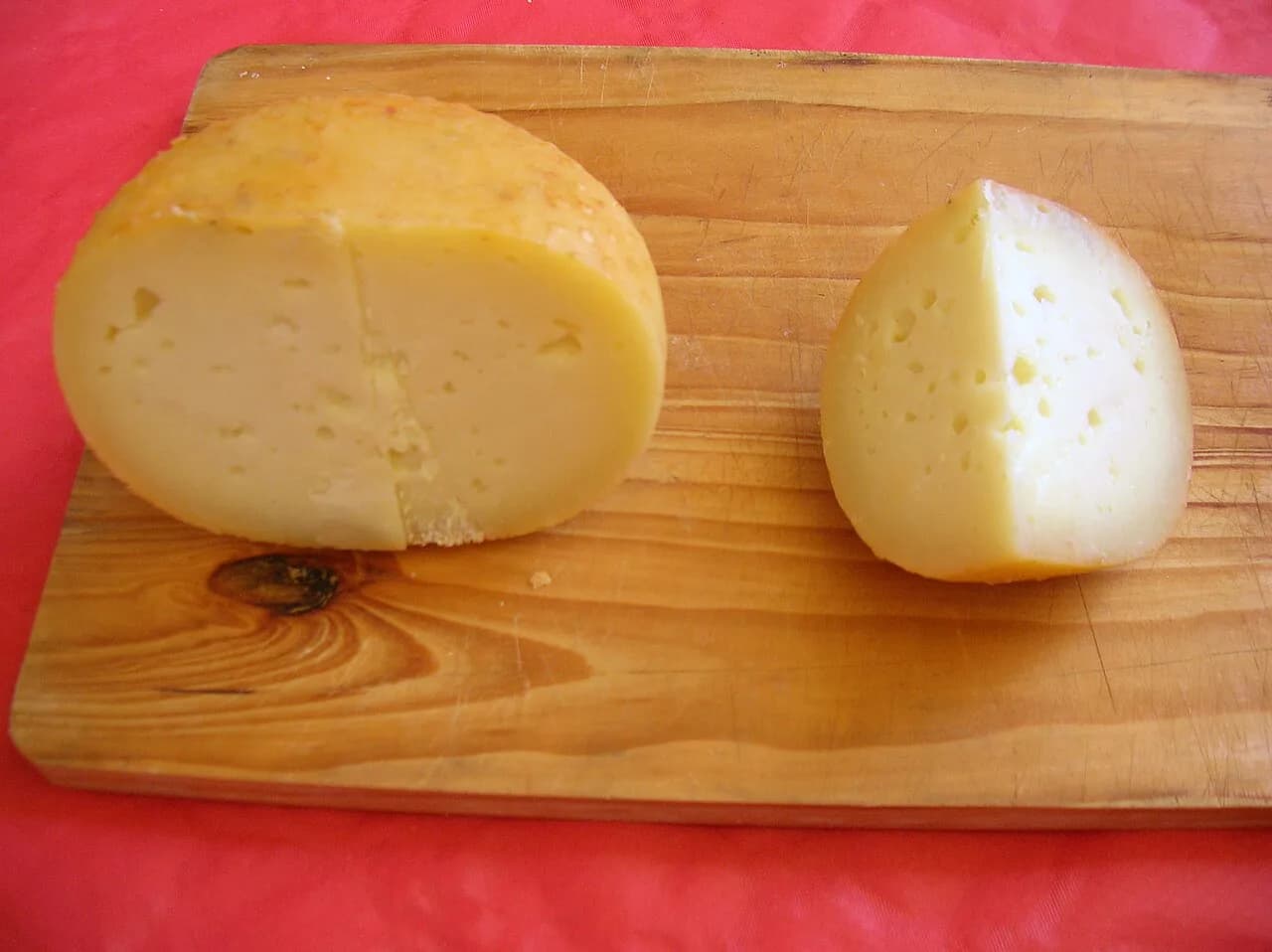
Pecorino di Pienza is a sheep's milk cheese made in the countryside around Pienza and Montepulciano, and the first decision is freshness: the fresh form is soft and mild, the semi-aged and aged forms grow firmer, saltier and sharper. This guide walks through that gradient, the leaf-, ash- and pomace-finished versions worth knowing, the dairies to seek out and how to eat it once you have a wedge in hand.
Pienza sits in the Val d'Orcia south of Montepulciano, and the two towns share the same cheese landscape, so a stay in either puts you within reach of the dairies. Buying a piece to eat straight away is a different transaction from buying a vacuum-packed form to carry home, and the sections below treat them separately.
Pecorino di Pienza in one answer
Pecorino is the Italian word for any cheese made from sheep's milk, and in this corner of Tuscany it comes from flocks grazing the herb-rich hills between Pienza and Montepulciano. The cheeses are sold at different ages rather than as a single product, which is why two wedges labelled pecorino can taste completely different.
The Caseificio Cugusi, based on the hills between the two towns, works only the milk of its own flock, around 800 sheep, plus milk from four shepherds it has collaborated with for over 40 years, and the family came to the area from Sardinia in 1962. Treat that history as the dairy's own account rather than an official record; it does explain why Sardinian cheese-making technique sits behind one branch of the local pecorino.
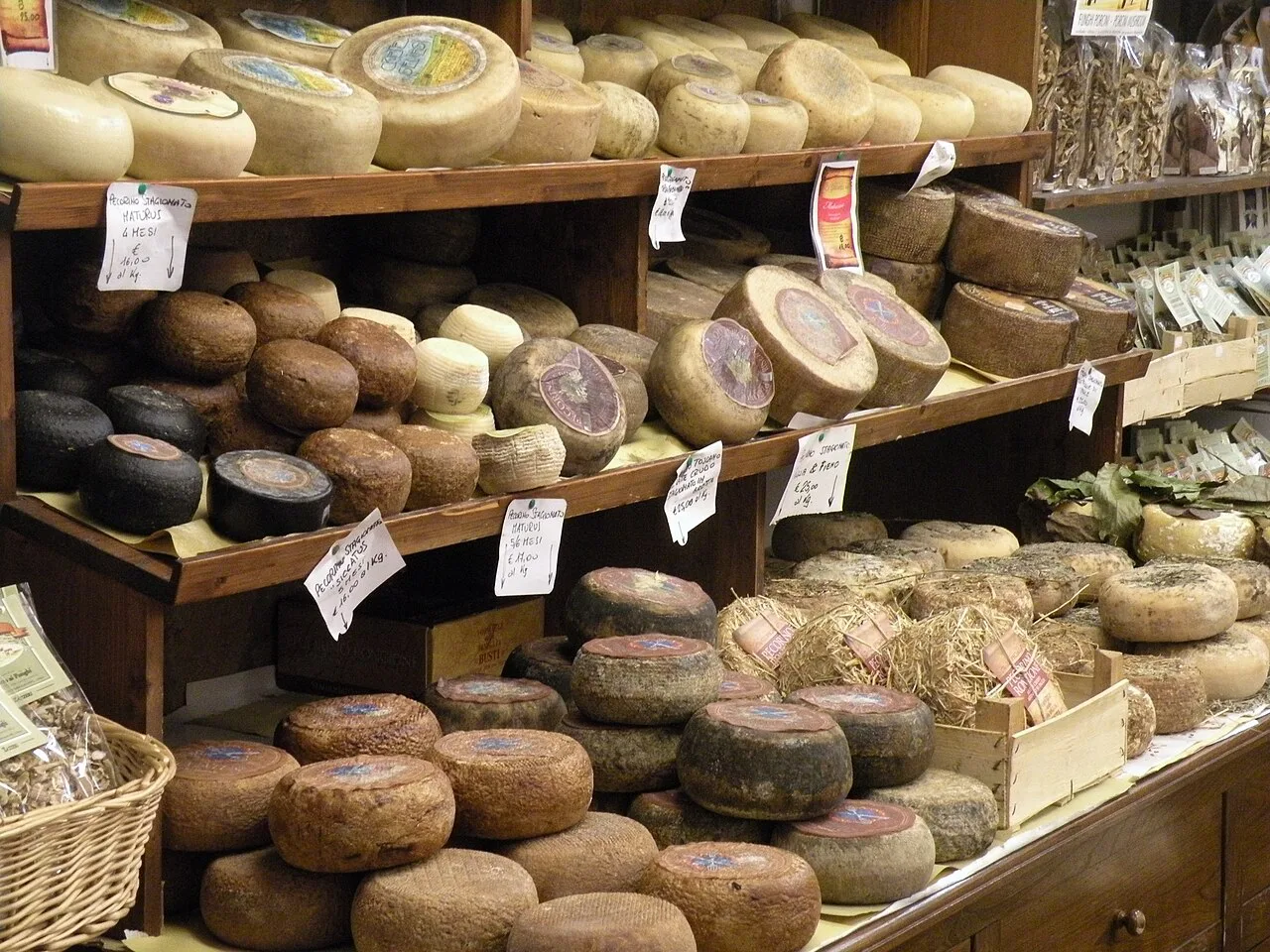
Fresh pecorino: soft, delicate and best eaten soon
Fresh pecorino is the youngest form and the mildest: moist, slightly springy and delicate enough to eat on its own with bread. The Di Mario dairy describes it as soft and delicate, good for filled panini, for melting over crostini (grilled bread with a topping) or over potatoes, and as a dessert spread with chestnut honey.
Because it is mild, fresh pecorino is the version to buy if you find aged sheep's cheese too salty or pungent, and it is best eaten soon rather than kept for months. It also melts well, which makes it a reasonable substitute for mozzarella or caciocavallo when you want a sharper edge on a baked dish. If you are learning to cook the local repertoire, a slab of fresh pecorino is a sensible thing to have in the fridge during a session of cooking classes in Montepulciano.
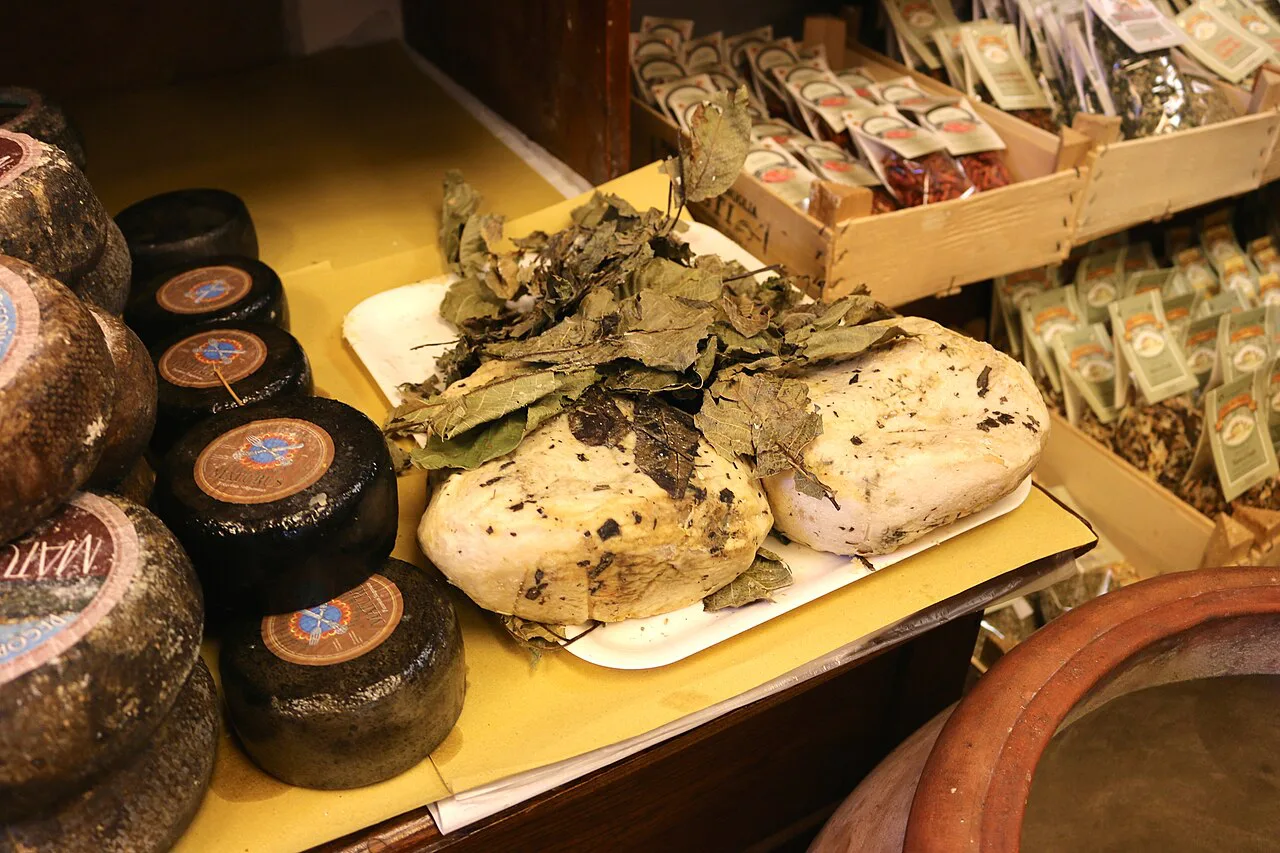
Semi-aged and aged pecorino: what time does to the cheese
As the wheels rest, moisture drops out and the paste tightens, so a semi-aged pecorino is firmer and more savoury than the fresh one, while a fully aged form becomes dense, crumbly and distinctly salty. That saltiness is the point: aged pecorino is built to be grated or eaten in small quantities alongside something sweet or starchy.
The Di Mario range shows the spread clearly: alongside a fresh form of about 1.2 kg it sells a semi-aged wheel of roughly 1.3 kg, a matured Classico Pienza, a large three-kilogram wheel sold as il Vecchio (the old one), and a canestrato, a cheese pressed in a woven basket that leaves a ridged rind. Buying a quarter of an aged wheel is often the practical move, since a little goes a long way.
The matured versions worth knowing
Beyond plain ageing, Pienza dairies flavour and finish their wheels in ways that change both texture and aroma. Di Mario sells pecorino matured under ash and bay leaves or walnut leaves, pecorino rested in vinaccia (the grape pomace left after pressing), pecorino packed in hay, and one matured in the venturi cellars.
The Cugusi dairy offers its own variations: products sold as a pecorino aged in walnut leaves, a semi-aged wheel treated with tomato, a version with black peppercorns, and one treated on the rind with oil. These are the cheeses to buy if you want something you cannot easily find at home, since the flavoured and matured forms are what distinguish the local counters.
Shopping at the Di Mario shop on Corso Rossellino
Di Mario's shop, called La Bottega Del Naturista, sits at Corso Rossellino 16 in Pienza, on the main street running through the centre, and stocks the dairy's range. Expect a counter of pecorino at different ages plus the flavoured and matured forms, with ricotta and other sheep's milk products alongside.
Forms are sold whole, as a half or as a quarter, which matters because a fresh form runs about 1.2 kg and an aged one can be far larger. If you are travelling with hand luggage only, ask for a quarter, which the shop supplies vacuum-packed; fresh pecorino is the one that needs eating soonest, while aged wheels keep far longer. Note that some items on the shop are marked as sold out or available on request.
Caseificio Cugusi between Montepulciano and Pienza
Cugusi's farm and dairy spread across 220 hectares of olives, vines and pasture on the hills linking Montepulciano and Pienza, and the family now runs it across two generations, with the sisters Giovanna and Silvana, their husbands and the other seven siblings all contributing. The pastures are described as herb-rich, the kind of grazing that shapes the milk.
Its cheeses are the ones to look for if you want the flavour of a single flock, from a soft fresh pecorino through to a matured wheel with a treated rind. Because the dairy sits in the countryside rather than in town, it lies on the road between the two centres rather than a stroll from your table.
How to order and eat it
For a picnic, buy a wedge of semi-aged pecorino, a quarter of something matured, a loaf of unsalted Tuscan bread and a handful of walnuts; the salt in the cheese does the work the bread lacks. At home, serve aged pecorino in thin shavings with honey or pears, and keep the fresh form for sandwiches and melting.
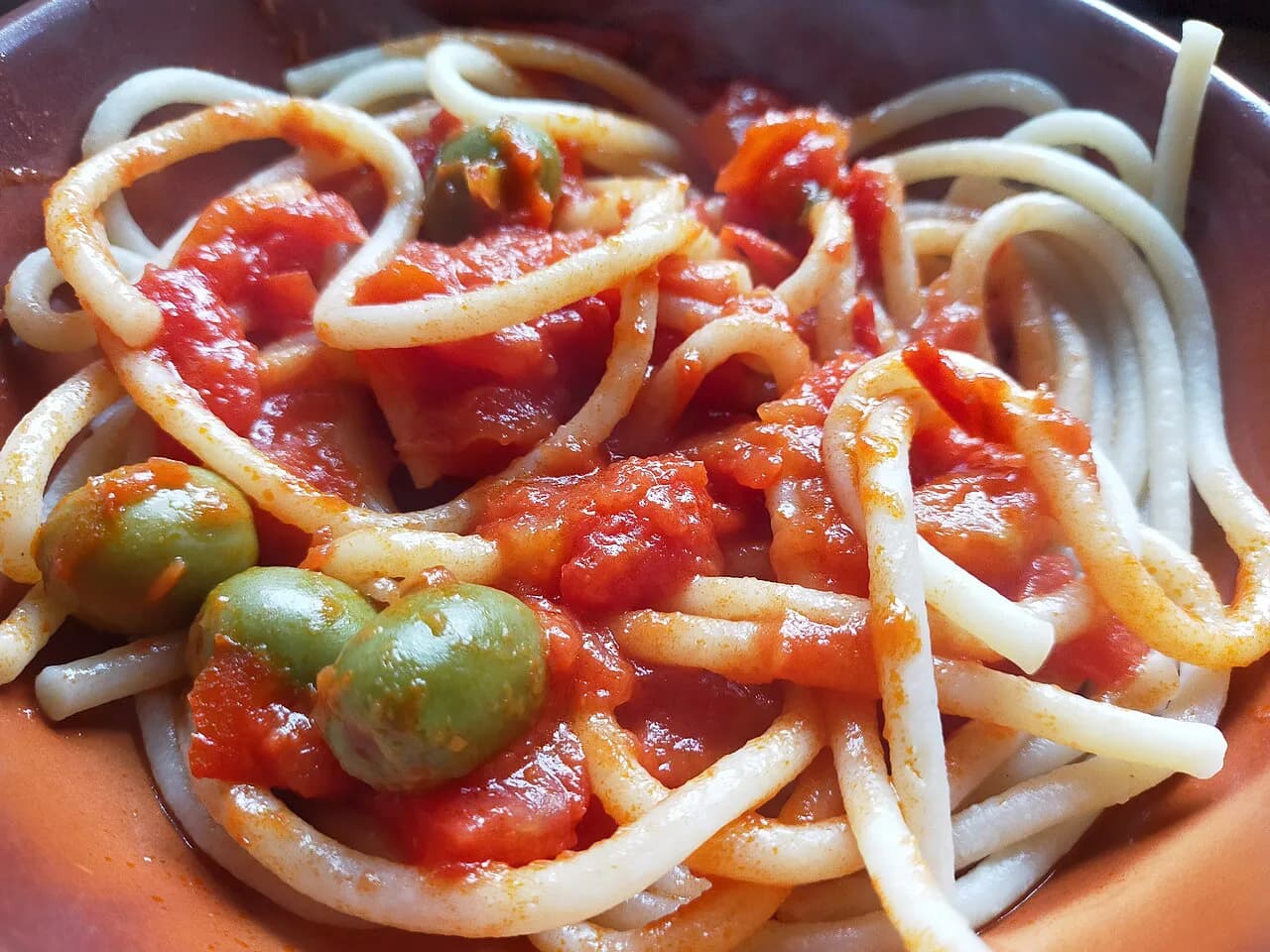
In the kitchen, aged pecorino is the grating cheese for pici, Tuscany's thick hand-rolled pasta, and for ribollita and other hearty soups; a modest grating at the table beats stirring it in during cooking. To see how the local kitchens use it, the best restaurants in Montepulciano are a fair benchmark for how much cheese a dish should carry.
If you want a plate rather than a picnic, order a tagliere of local cheeses with honey and walnuts as a starter, then follow it with a pasta dressed in pecorino; a light aperitivo beforehand keeps the appetite in order. Pienza's own table culture is worth a slow lunch rather than a rushed one.
Pecorino compared with Parmigiano Reggiano
Parmigiano Reggiano is a cow's milk cheese, aged for at least a year and built around sweetness, umami and a crystalline crunch; pecorino is sheep's milk, saltier, sharper and often younger. Neither replaces the other: Parmigiano suits a risotto or a plate of cured ham, while pecorino is the one that stands up to bitter greens, beans and tomato.
Pecorino also exists in many regional forms across Italy, so a pecorino romano on a pasta in Rome will taste quite different from a Tuscan one, which is generally milder and less aggressively salted. If you are buying for grating over a tomato sauce, a younger Tuscan pecorino is a reasonable middle ground between the two.
Buying to take home
Whole, half and quarter forms are the standard units, and the shop supplies cheese vacuum-packed for transport. Take a quarter of an aged wheel and a half of the semi-aged, and ask for the fresh one only if you will eat it within a few days of getting home.
For hold luggage, a hard aged wheel travels best; wrap it again at home and keep it away from anything soft in the case. Fresh and semi-aged cheeses are better eaten on the trip than carried, and anything with truffle or pepper should be eaten soon after opening so the aromas hold.
Which pecorino to buy first
Start with a semi-aged pecorino as your everyday wedge, add a quarter of the ash- or walnut-leaf-matured version for the interesting one, and buy fresh only when you have bread, honey and a picnic in mind. That order lets you taste the full gradient without committing to a whole wheel of something you may find too strong.
Buy from Di Mario on Corso Rossellino if you are staying in Pienza, or look for Cugusi cheeses if you are concentrating on what the Montepulciano side of the valley produces. Either way, ask for a quarter rather than a whole form, and remember that aged pecorino goes further than you expect.
Frequently Asked Questions
Is pecorino the same as parmigiana?
No. Parmigiana in Italian usually means a baked dish, such as melanzane alla parmigiana, not a cheese. Pecorino is a sheep's milk cheese, while Parmigiano Reggiano is a cow's milk cheese with a protected name, so the two have different milk, ageing and flavour.
Where was pecorino cheese invented?
Pecorino is made across central and southern Italy, and no single town can claim its invention. Pecorino di Pienza belongs to the Tuscan tradition of sheep farming in the hills between Pienza and Montepulciano, where local dairies make fresh, semi-aged and matured forms.
What do Italians use pecorino for?
Aged pecorino is most often grated over pasta, soups and beans, or eaten in shavings with honey and walnuts. Fresh pecorino is eaten in sandwiches, melted on crostini or served as a soft cheese in its own right, and semi-aged wheels sit between the two uses.
What cheese is similar to pecorino toscano?
Other Italian sheep's milk cheeses such as pecorino romano and pecorino sardo are the closest relatives, though romano is saltier and sardo often firmer. A young pecorino toscano can also be compared with a mild semi-hard cow's milk cheese, though it keeps its distinct sheep's milk tang.
Sources
Notes for your next meal in Italy
Optional updates to our food guides.
You might also like
Continue reading
More guides you'll find useful