What Is Scaccia Ragusana? Sicily's Layered Stuffed Flatbread
Scaccia ragusana is a thin-layered Sicilian flatbread folded around tomato, cheese and basil. Learn what it is, how it is made and which fillings to look for.
On this page
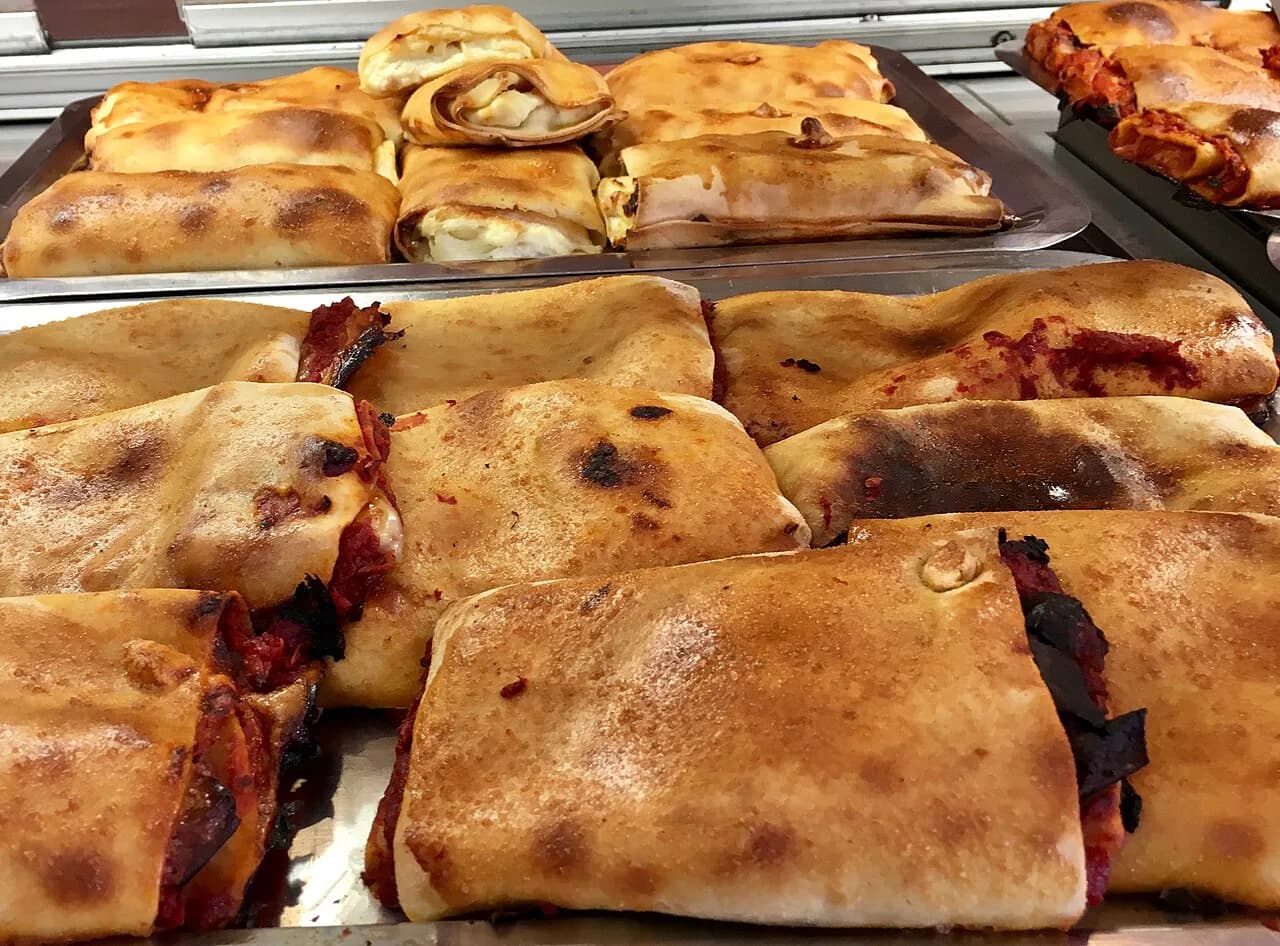
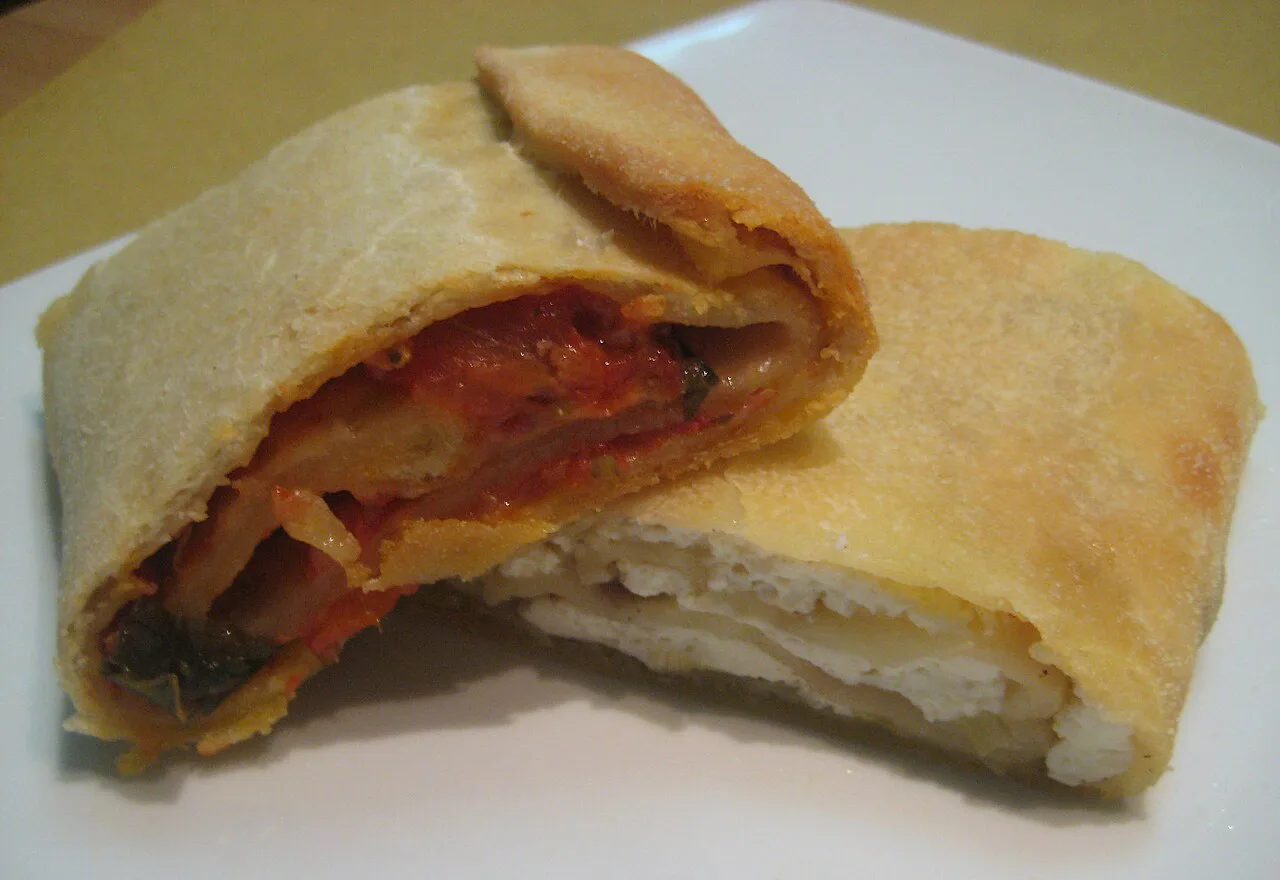
Scaccia ragusana is a thin-layered Sicilian bake in which stretched dough is folded around a savoury filling and baked until the edges show their strata. The classic version holds slow-cooked tomato sauce, basil and ragusano, a Sicilian stretched-curd cheese, and is good warm from the oven or at room temperature. This guide covers what goes inside, how the folding works, the Modica variations worth knowing and how to judge one at the counter.
It belongs to the everyday bakery repertoire of south-eastern Sicily, the sort of thing you buy by the piece or by weight and eat standing up. Neither a pizza nor a sealed pie, it is defined by visible layers and a dense rather than runny filling.
What scaccia ragusana actually is
Think of a savoury bake built from several sheets of very thin dough, each one dressed with tomato sauce and grated cheese before the whole thing is folded into a flat rectangle. Recipes for the Ragusa and Modica area describe exactly this: layers of thin pasta alternating with tomato sauce, basil and cheese. Despite the name, it is not a closed parcel — the sides stay open so the layers remain visible.
The result sits somewhere between focaccia and a filled flatbread. It is substantial enough to be a light lunch with a few leaves alongside, but it is most often eaten as a snack, torn or cut into strips while still warm.
Scaccia, scacciata or impanata: the names on the sign
Around Ragusa and Modica you will meet several words for closely related bakes, and the sign on the shop is your best clue to which one you are getting. The Ragusa-Modica layered version is usually called scaccia; scacciata and impanata are also names used for filled Sicilian bakes in this family, so the label alone will not tell you what you are buying.
Do not confuse any of these with schiacciata, the Tuscan flatbread: similar sound, different bread. If the label says scacce (the plural), it usually points to the layered, folded style described here, so ask what is inside before you commit.
The classic filling: tomato, basil and ragusano
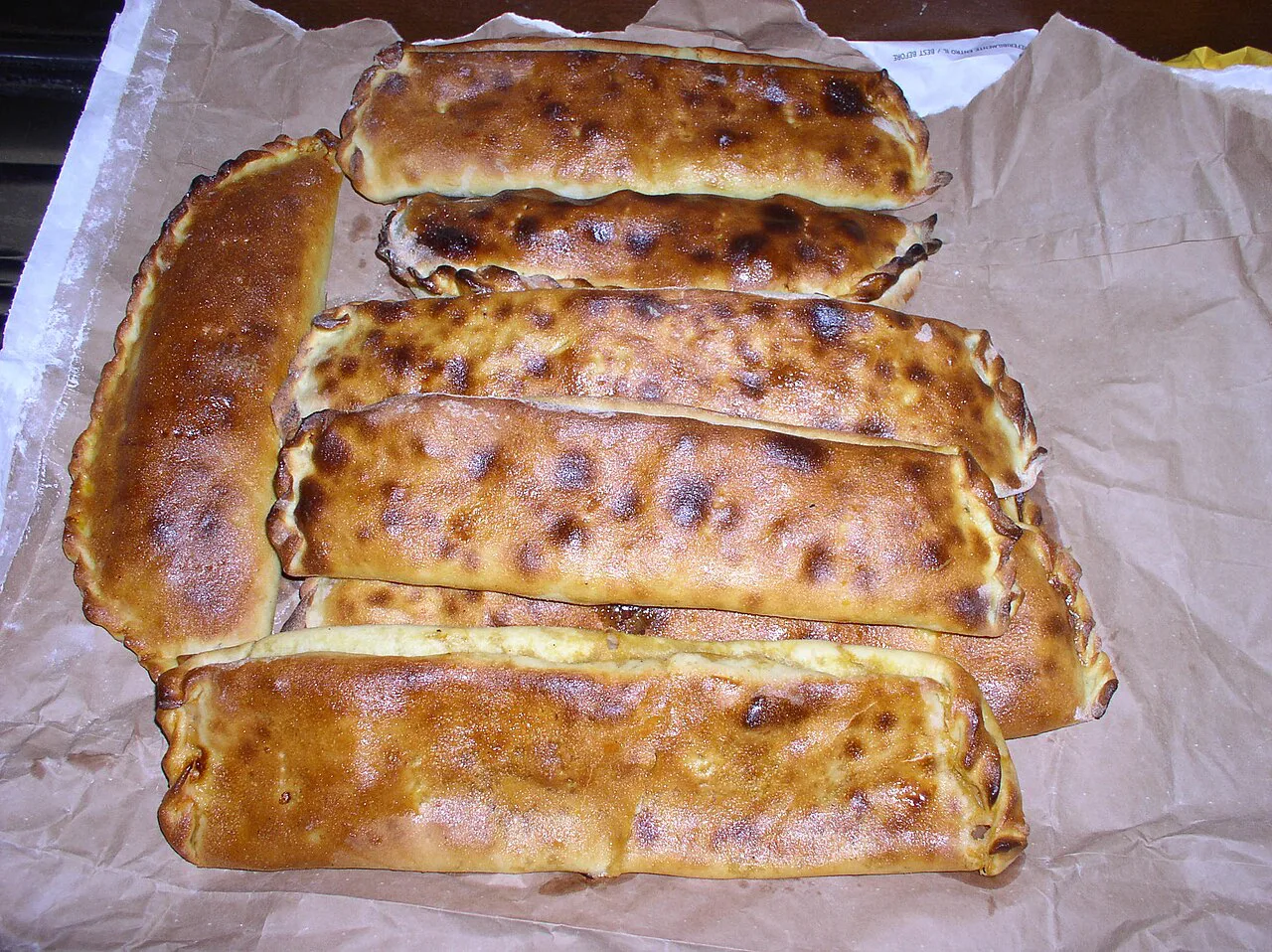
The benchmark filling is a dense tomato sauce cooked down with garlic and plenty of basil, then cooled before it goes anywhere near the dough. The cheese is ragusano, used at two stages of ageing in the same bake: a semi-aged one grated coarsely and a matured one grated finely over the top. Between them you get a mild, milky base and a sharper, saltier edge.
A second widely cooked version leans on onions rather than a plain tomato base: slow-cooked onion with tomato pulp and grated matured caciocavallo, another stretched-curd cheese from southern Italy. That filling is sweeter and more savoury at once, and it is the one to pick if you find tomato-and-cheese bakes too plain.
How the layers are built
The dough is a lean one: durum wheat semolina, water, olive oil, a little yeast and salt, kneaded until soft and elastic and left to rise until roughly doubled. Each portion is then rolled out as thinly as you can manage on a surface dusted with semolina — thinness is the single most important thing, and a small tear between layers does no harm.
The shaping is a sequence of folds rather than a single wrap. You spread the cooled sauce over the sheet, scatter the cheese, bring the two long sides in towards the centre, dress the surface again with sauce and cheese, then fold the top and bottom edges over like closing a book. The edges are left unsealed so the strata stay on show.
Baking is hot and short, in the region of 220 to 230°C for roughly 15 to 30 minutes depending on size and oven, until the top is well browned and the exposed layers crisp at the edges. Brush the surface with oil first; some cooks also prick it so steam escapes and the filling stays dense rather than watery.
Variations worth knowing
Scacce modicane follow the same dough and folding but change the filling, and aubergine or ricotta versions are common alongside the tomato standard. If you are buying several to share, take one classic and one with ricotta or aubergine so you can taste how far the fillings stretch the same base.
Fillings elsewhere in Sicily shift with the province — provola and caciocavallo in place of ragusano in some recipes, for instance — which is why two bakes with the same name can taste quite different. Treat the tomato-and-ragusano version as the reference point and judge the rest against it.
How it is eaten
This is bakery and street food, sold from trays and eaten without ceremony, warm or at room temperature. Recipes note it keeps for a couple of days covered in the fridge, which tells you it is robust picnic food as much as a fresh-from-the-oven snack; reheat it briefly to bring the cheese back.
It also has a festive side: a Ragusa-area account recalls scaccia ragusana as a dish originally cooked about once a week and now a typical Christmas Eve bake at home — a family tradition rather than a rule every bakery follows. If you are in the area in December, look for it on counter displays.
For an eating plan around the city, fold a bakery stop into a day built on the best restaurants in Ragusa and keep the scaccia for the gap between lunch and dinner. A late-afternoon aperitivo is the natural pairing if you want to sit down afterwards rather than eat on the move.
What to look for in a good one
Judge it by the edges first. You should see distinct, thin strata running through the cut side; a bake that looks like a solid sealed parcel has been rolled too thick or folded shut, and the texture will be bready rather than flaky. A well-browned, slightly blistered top is the second signal.
Then look at the filling. A good one is dense and clinging, not pooling, because a wet sauce steams the dough from inside and turns the layers sodden. If the tomato looks loose or the cheese is sliding out at the sides, choose something else from the tray.
Making it at home
The method is forgiving: no shaping skills required, no sealing, no precise scoring. The things that matter are stretching the dough very thin, cooling the sauce fully before it touches the dough, and using cheese at more than one stage of ageing so the flavour has depth rather than just salt.
If you want to learn the folding by hand rather than from a recipe, cooking classes in Ragusa are a reasonable way to spend an afternoon, and you leave knowing how thin the sheet should feel. Otherwise, buy one first, note how the layers sit, and work backwards from what you liked.
Buy it warm from a Ragusa bakery counter
Scaccia ragusana is a bakery bake to buy by the piece, not a restaurant dish to book for: thin layers, dense tomato and basil, and ragusano at two ages is the combination to look for. Take one warm, eat it in the street, and use the visible layers as your test of quality.
If the tray is empty when you arrive, ask when the next batch comes out rather than settling for a cold one — timing is the whole pleasure here. Build the rest of the day around pastry shops in Ragusa and a gelato stop, and let the scaccia be the savoury anchor.
Explore more Ragusa food guides
Frequently Asked Questions
What does scaccia mean in Italian?
In south-eastern Sicily the word names the layered, filled bake sold in bakeries, with dough pressed or folded flat and layered around a filling rather than shaped into a sealed parcel.
Is scaccia the same as schiacciata?
No. Schiacciata is the Tuscan flatbread, usually simpler and often eaten on its own or with a little oil and salt. Scaccia ragusana is a filled, folded bake with several layers of tomato and cheese, so treat the two names as separate breads.
Can you eat scaccia cold?
Yes. It is baked to be eaten warm or at room temperature, and it keeps well enough that recipes describe storing it covered for a couple of days. A brief reheat brings the cheese back to its best.
Sources
Notes for your next meal in Italy
Optional updates to our food guides.
You might also like
Continue reading
More guides you'll find useful