Street Food in Cefalù: Sicilian Snacks, Bakeries and Kiosks
Street food in Cefalù means arancine, sfincione, pane e panelle and fried seafood, bought by weight from old-town bakeries and eaten warm on Corso Ruggero.
On this page
Street food in Cefalù is eaten standing up, out of paper, and mostly bought by weight from bakeries and alimentari (grocers) along Corso Ruggero, the old town's main street. Expect the Sicilian classics rather than a Cefalù-only repertoire: arancine, sfincione, chickpea fritters and cones of fried seafood, with pasticceria stops for cannoli and sfogliatelle to finish. This guide goes through each snack, how it is sold and how to build a cheap eating day around it, leaving the sit-down meals to our pick of the best restaurants in Cefalù.
What street food in Cefalù looks like
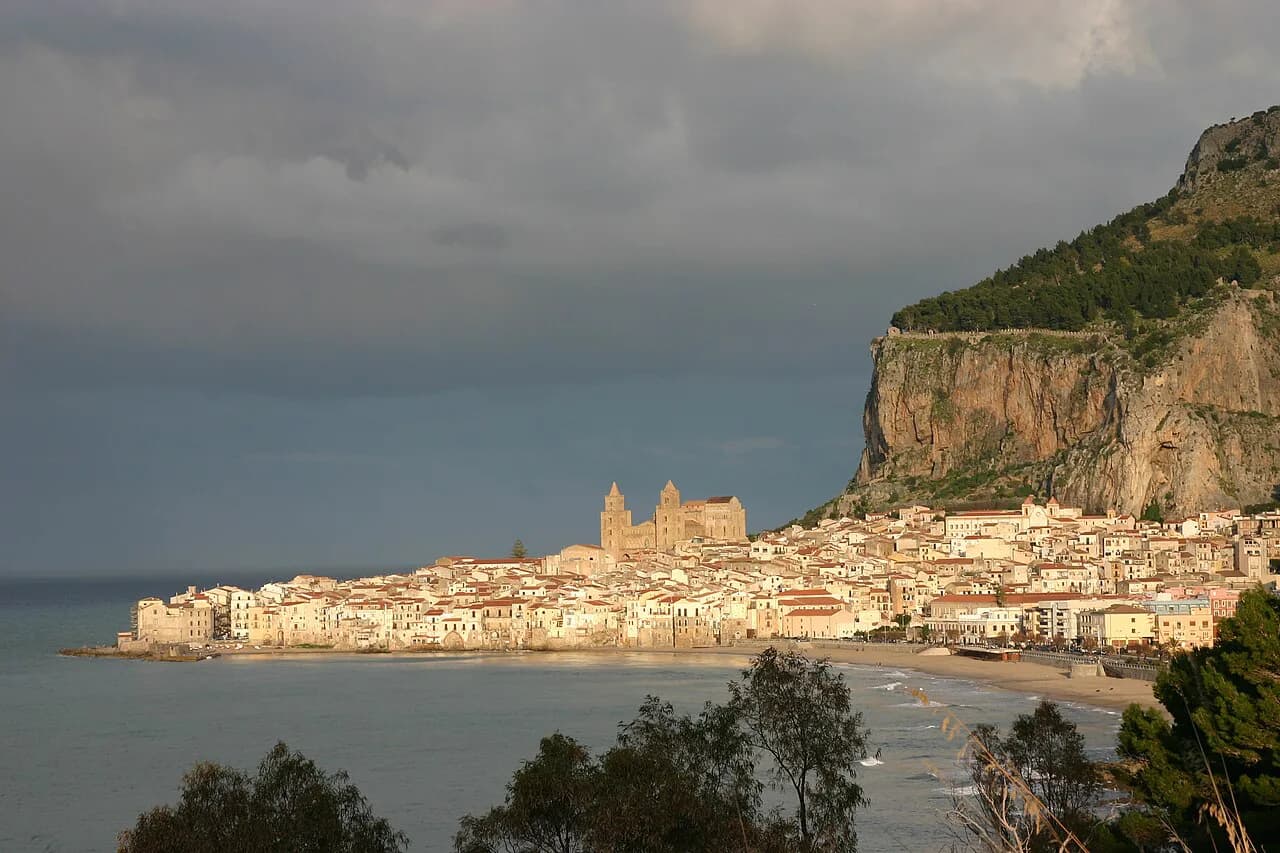
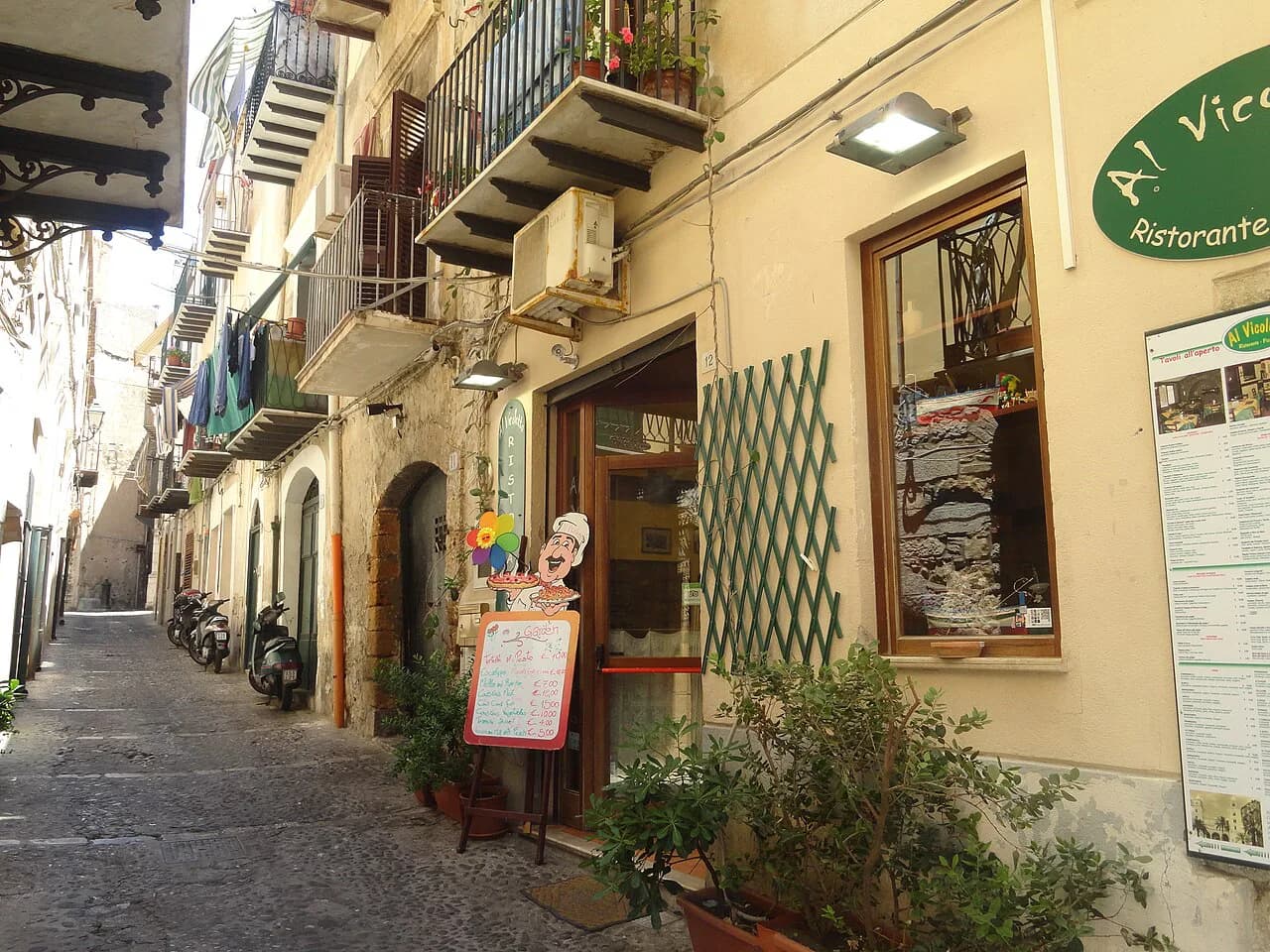
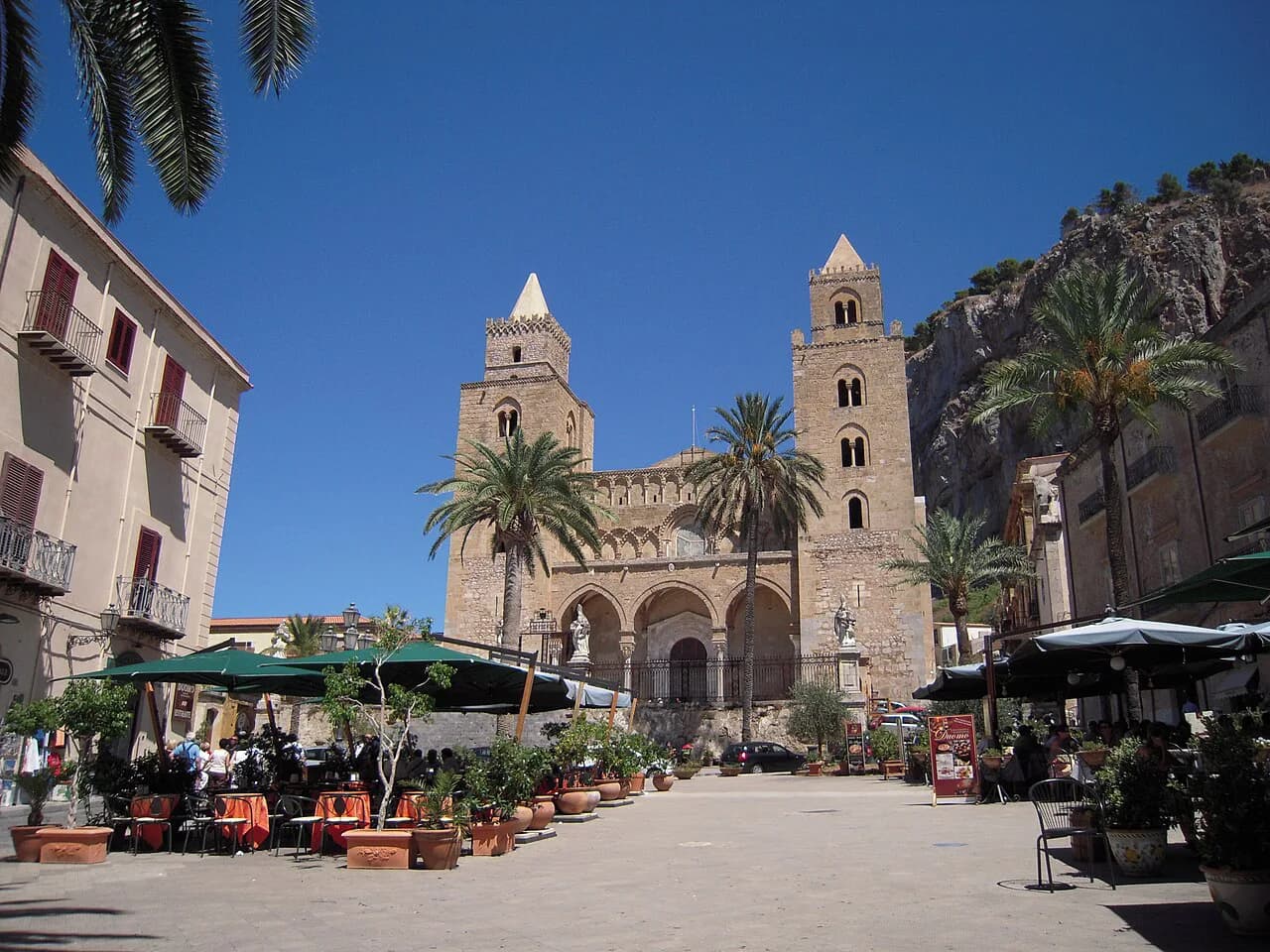
The old town is compact and flat, which suits eating on the move: Corso Ruggero runs from the sea end up towards the cathedral, and most of the bakers, grocers and pasticcerie sit along it or just off it. Sicilian street food here is a bakery trade as much as a kiosk one, so you will spend more time at counters than at vans. Portions are sold singly or by weight rather than as set meals, which is what keeps a snack stop cheap and lets you graze through the afternoon.
Arancine and arancini: what they are and how they are eaten
An arancina is a ball of saffron-tinted rice, about the size of an orange, wrapped around a filling and deep-fried until the outside cracks when you bite it. In Palermo province, Cefalù included, the word is feminine and the plural is arancine; in much of eastern Sicily, and especially around Catania, people say arancino and arancini. The name comes from the resemblance to a little orange, arancia in Italian, and the usual fillings are ragù (slow-cooked meat sauce), butter and ham, or mushrooms. Eat one in your hand, out of the paper the baker gives you, and expect it to be hot enough to need a minute.
Sfincione: the thick Sicilian pizza by the slice
Sfincione is the Palermo-style tray pizza sold across the province: a thick, soft, focaccia-like base topped with tomato, plenty of onion, a little anchovy and caciocavallo or a similar cheese, with breadcrumbs scattered over the top. It is cut with scissors or a knife and sold by weight or by the rectangular piece, so ask for a piece rather than a slice and let the baker judge the size. This is the snack to buy mid-morning or early evening when the tray is still warm; it travels well and costs little. For a sit-down pizza with a proper table and a full menu, our guide to the best pizza in Cefalù covers the other side of the same craving.
Pane e panelle and other chickpea fritters
Pane e panelle is a sandwich made from a soft sesame roll, a panino, filled with panelle: thin, golden fritters of chickpea flour batter, chickpea flour being farina di ceci, often with a squeeze of lemon. They are the Palermo street classic and turn up in Cefalù alimentari alongside cazzilli, small potato croquettes, and occasionally crocchè. Order at the counter as pane e panelle, singular and plural identical in practice, and eat it walking; it is at its best in the first minutes, while the fritters are still crisp and the bread has not gone soft. If a tray has been sitting under glass for a while, ask for a freshly fried batch.
Fried seafood from a kiosk or friggitoria
A friggitoria is a fry shop, and in a coastal town like Cefalù the paper cone, a cono, is the point: small fish, squid rings and prawns dusted in flour and dropped in hot oil, handed over with a wedge of lemon. You eat it with your fingers, standing, ideally somewhere with a sea view rather than a bench in a side alley. Freshness is a matter of timing more than price, so watch for a queue at the counter, which means the oil is working and the batches are turning over. Keep the cone simple: mixed fried fish, calamari, and perhaps a couple of prawns.
Sfogliatelle, cannoli and pasticceria stops
Sicilian pastry counters are where the day ends: a cannolo is a crisp fried tube filled, ideally to order, with sweetened sheep's ricotta, and a sfogliatella is a shell-shaped layered pastry, either riccia (curled, flaky) or frolla (shortcrust), filled with ricotta and candied peel. Both are sold individually rather than in portions, so you order by number, uno or due, not by weight, and you pay after you have chosen. A cannolo filled in advance and left to sit goes soft; ask for one filled while you wait. Cassata and almond pastries, pasta di mandorla, fill the same counters if you want something to carry away, and a scoop from a good gelateria is the other way to close the meal.
Bakeries and alimentari on Corso Ruggero
The practical rhythm of eating cheaply in Cefalù is to treat Corso Ruggero as a moving buffet: buy arancine or a slab of sfincione at one bakery, panelle at a grocer, then eat sitting on the cathedral steps or the sea wall rather than paying for a table. Weight matters here, because cheese, salumi and some tray bakes are sold by the etto, one hundred grams, so ask for un etto or due etti and hold up fingers if the language runs out. This is also where you buy picnic supplies for the beach: bread, tomatoes, olives, a piece of caciocavallo. Our guide to the best pasta in Cefalù takes over when you want a first course with a fork and a chair.
How to order and pay at a Cefalù counter
At a bakery or grocer, point at what you want, say how much by weight or by number, and pay at the end of the counter; cash is still normal for small amounts, though cards are widely taken. For coffee, the Italian routine applies: state your order at the bar, drink it standing, then pay at the till, la cassa, on the way out, and say the order again there. Coperto, the per-person cover charge, belongs to table service in restaurants, not to a paper cone eaten on the street, so a snack stop should cost only what you ate. Standing at the bar rather than sitting at a table is also cheaper, and the same counters serve the evening aperitivo when a spritz and a few nibbles replace a full meal.
When the snacks are at their best
Timing is the whole trick with fried food. Bakeries and friggitorie work to the meal rhythm, so arancine and sfincione tend to be at their best around mid-morning and again in the early evening, when a new tray comes out of the oven; the same goes for panelle, which should be eaten within minutes of leaving the oil. Pastry counters fill cannoli through the day, so a mid-afternoon stop is reliable. Late at night, after restaurants close, the choice thins out; plan your fried snack for the passeggiata hour rather than midnight.
Eating outdoors on the Cefalù seafront
The dated food gathering in Cefalù was Cefalù Street Beer 2026, which turned the Lungomare G. Giardina around Piazza Cristoforo Colombo into a food and craft-beer route. It ran from 25 to 28 June 2026, with free entry, pairing a selection of craft beers with local produce from the area. For a visitor it meant four days of eating and drinking outdoors in one of the town's best settings, an easy way to graze without booking a table. That edition has finished, so treat it as a 2026 memory rather than something to plan around on a future trip.
A guided walk from Cefalù to Palermo with street food
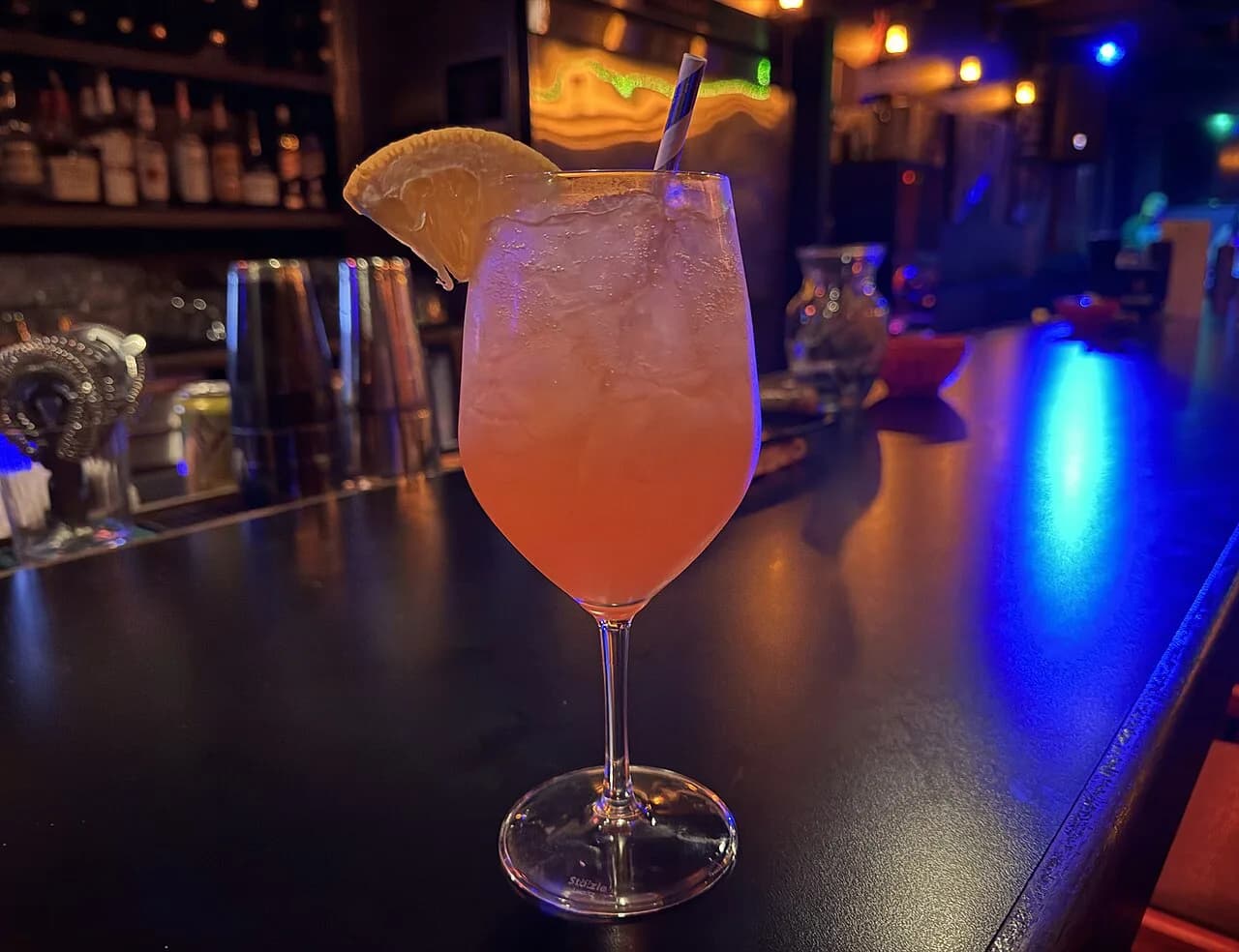
If you would rather have the snacks picked and explained for you, a guided walking tour runs from Cefalù to Palermo and folds street food into a day in the city, so it is a way to eat through the market and the old lanes without planning the stops yourself. Closer to home, the counters along Corso Ruggero and the surrounding lanes do the same job at your own pace, without a fixed schedule. Before a sit-down meal, a spritz stop fits the same rhythm; our guide to aperitivo in Cefalù covers it.
Is a street-food day in Cefalù worth it?
Yes, if you treat it as a deliberate eating plan rather than a fallback: an arancina mid-morning, sfincione or pane e panelle around the passeggiata, a cone of fried fish by the sea and a cannolo filled to order. That costs little and leaves your evening free for a proper table, which is where the best restaurants in Cefalù come in. Eat early, buy by weight, and stand at the counter rather than sitting down.
Explore more Cefalù food guides
Sources
Notes for your next meal in Italy
Optional updates to our food guides.
You might also like
Continue reading
More guides you'll find useful