Busiate in Trapani: What the Pasta Is and How to Eat It
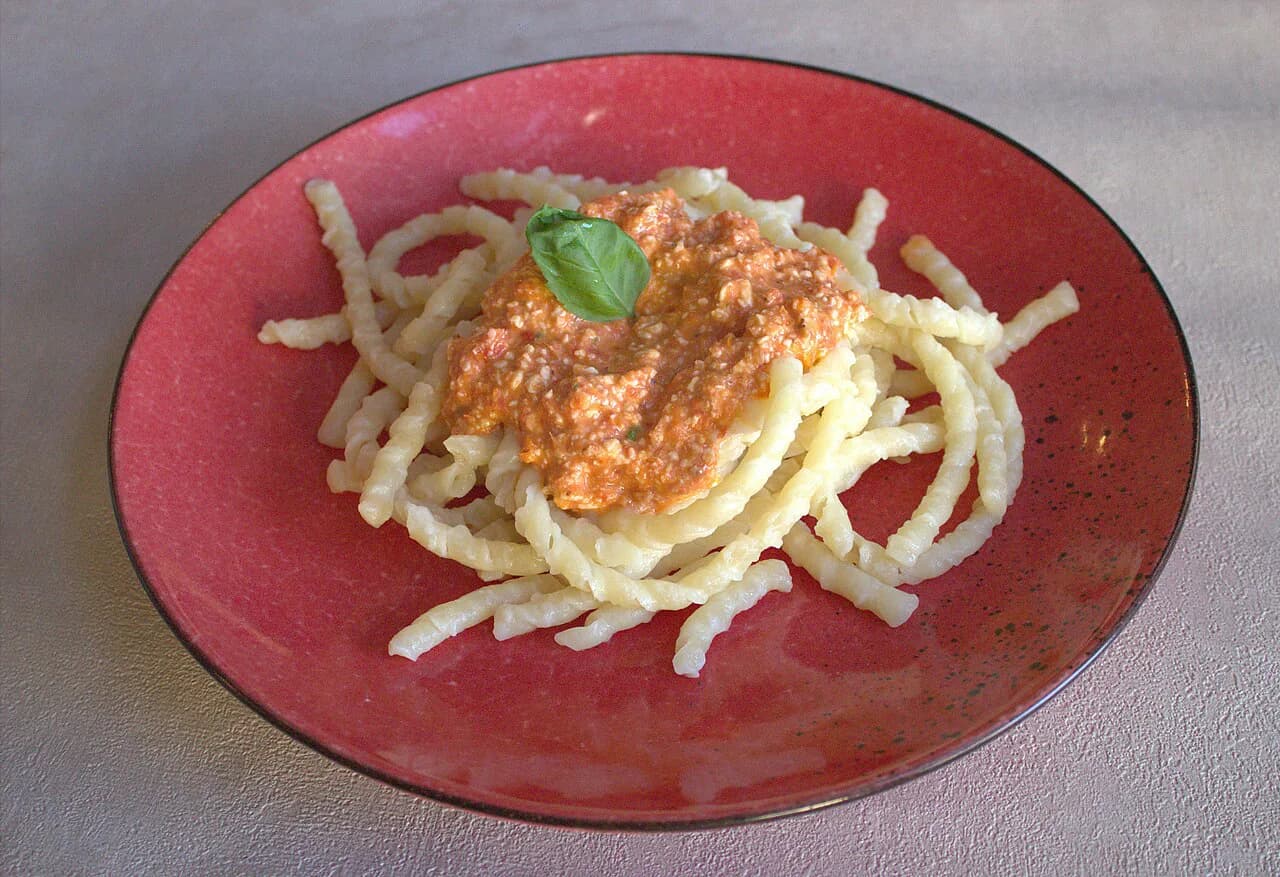
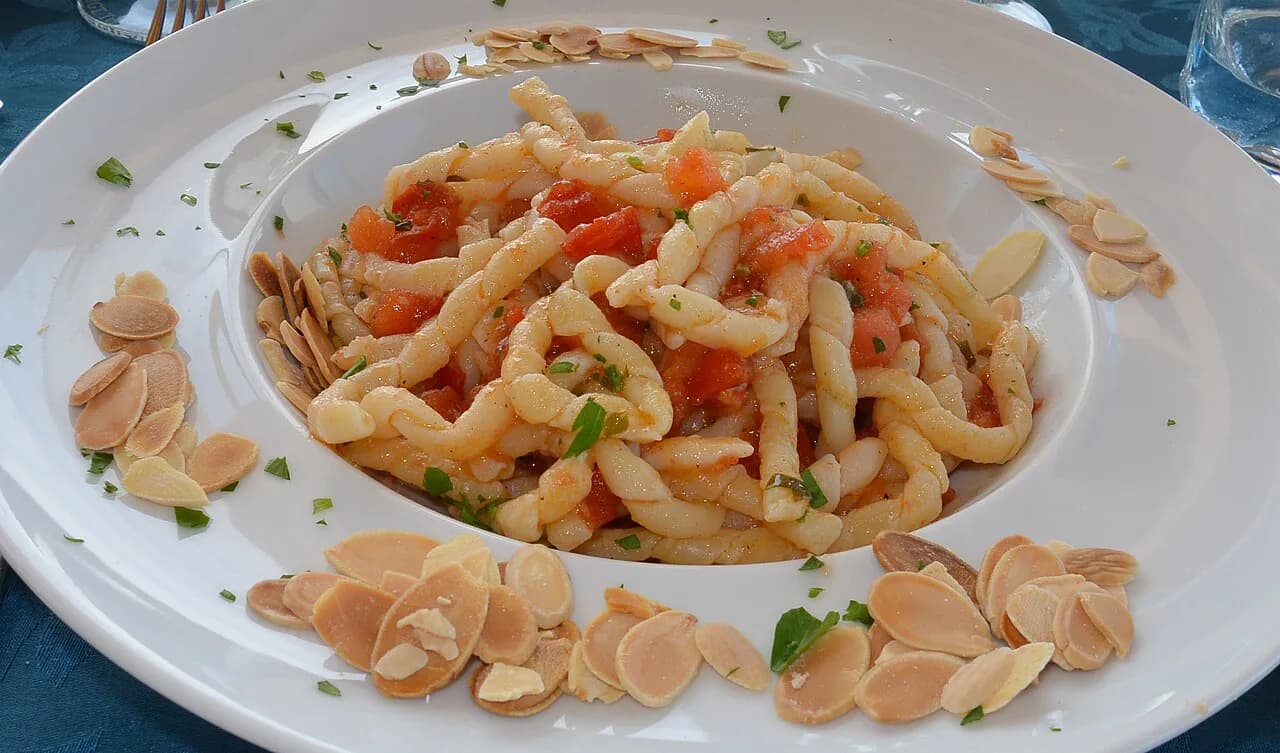
Busiate are Trapani's twisted fresh pasta, rolled around a thin metal rod and served with pesto alla trapanese made from tomatoes, almonds and basil.
On this page
Busiate is the pasta to order in Trapani: fresh durum-wheat twists, traditionally rolled around a thin metal rod, served under a pesto of tomato, almond, garlic and basil. The dish is called busiate al pesto trapanese, and it belongs to the far western corner of Sicily rather than the island as a whole. This guide covers what the shape is, why it grips that particular sauce, the variations cooks argue over, and how to eat it as locals do at lunch.
It is a short read rather than a recipe book. You will get the vocabulary you need on a menu, the difference between pesto alla trapanese and pesto alla siciliana, and the fallback pastas to look for when busiate are not on the list.
What busiate are
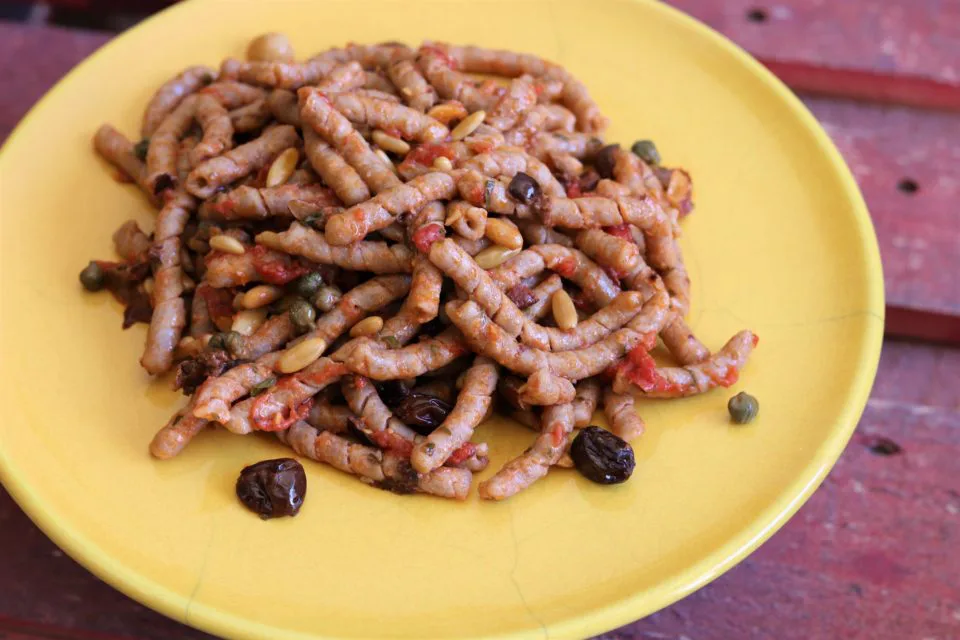
Busiate, also written busiati and known as maccheroni al ferro, are a fresh pasta from western Sicily, above all the province of Trapani. The dough is only durum-wheat semolina and water, sometimes with a pinch of salt, kneaded until smooth and left to rest before being rolled out thin and cut into strips. Each strip is then wrapped around a rod to build the corkscrew, and the name comes from the Buso, the plant stem that dialect speakers once used for the job; a metal knitting needle or a long wooden skewer does the same work today.
The result is a hollow, twisted tube a little like strozzapreti in outline but looser and more open along its length. Home cooks shape them one at a time, which is why a plate of busiate reads as a handmade product rather than a manufactured one. If you see the word ferro on a menu or a packet, it simply means the iron or rod the pasta was rolled around.
Why the shape matters at the table
The twist is functional before it is decorative. Pesto alla trapanese is coarse and nut-thickened rather than smooth and oily, and a smooth tubular pasta lets it slide to the bottom of the bowl. The ridges and hollows of busiate catch the almond and tomato mixture along the whole length of each piece, so every forkful carries sauce rather than bare pasta.
This is also why the pasta is dressed off the heat. Cooks loosen the pesto with a little of the starchy cooking water before folding the drained busiate through, which makes the sauce cling instead of clumping. If a plate arrives dry with the pesto sitting in a heap on top, the kitchen has skipped that step.
Pesto alla trapanese: what is in it
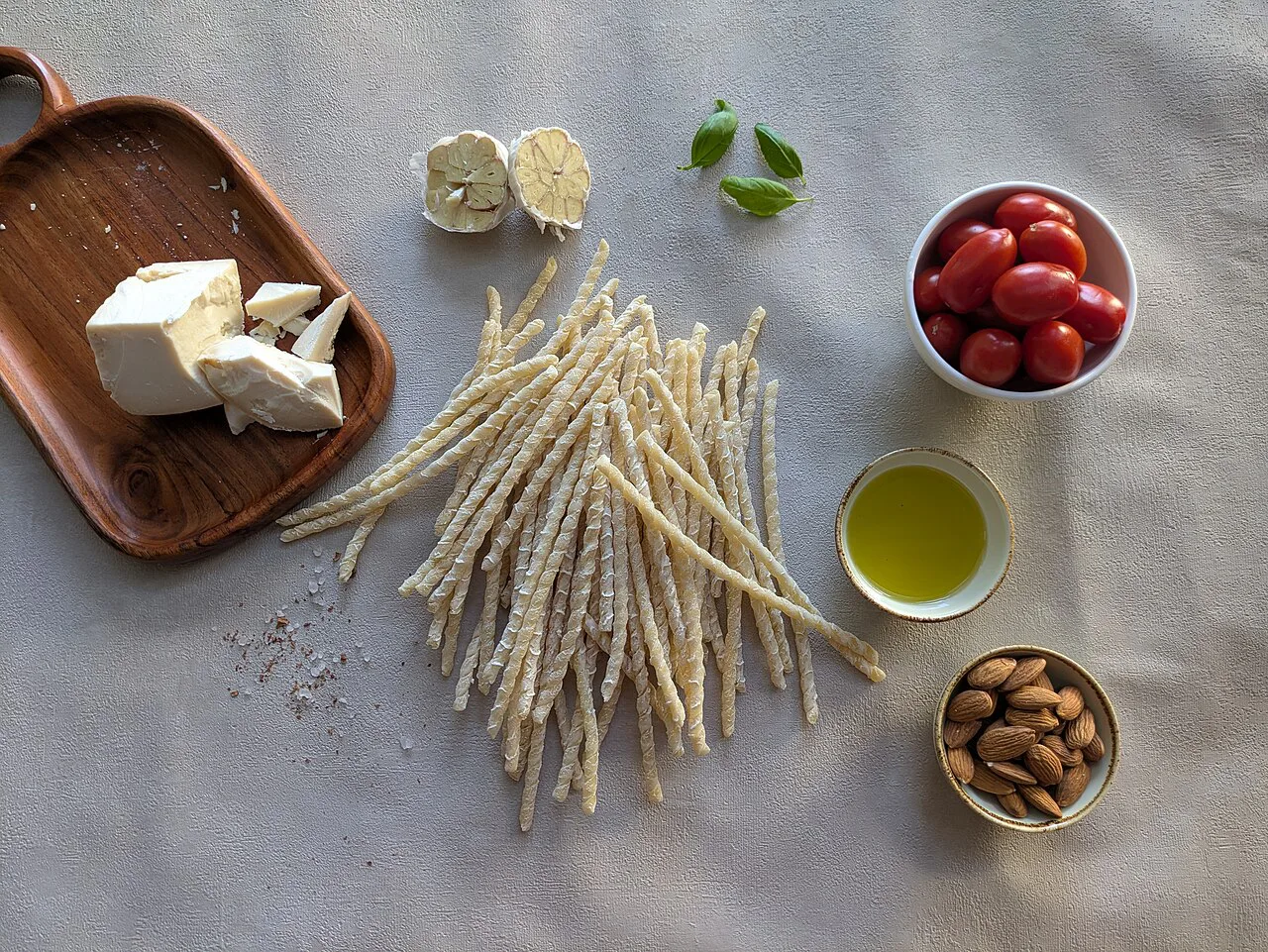
Pesto alla trapanese, called agghiata trapanisa in local dialect, is a raw sauce of ripe tomatoes, peeled almonds, garlic, basil, extra-virgin olive oil and salt, usually finished with grated pecorino. The classic method is a pestle and mortar: crush the garlic with the almonds and a few basil leaves, work in the tomato pulp, then trickle in the oil and stir through the cheese. The texture should be rough and spoonable, closer to a chopped salad than to a purée.
A food processor works, but pulse in short bursts rather than letting it run. The Trapanese themselves say the metal blades darken the basil and dull the colour, which is a fair trade on a busy evening and a real loss on a slow one. Blanching and skinning the tomatoes first gives a cleaner sauce; skipping it gives a rougher, more rustic one.
Do not confuse it with pesto alla siciliana. That name is used in different kitchens for different things, often a mixture of tomato, ricotta and pine nuts rather than the Trapani combination of tomato, almond, garlic and basil. On a menu, read the ingredient list rather than trusting the label.
The dish to order in Trapani
Order busiate al pesto trapanese and expect a bowl of twisted pasta barely coated in a pale coral sauce, glossy from oil, with visible flecks of almond and torn basil. It is a warm-weather dish, deliberately light, and it usually arrives without the weight of cheese you might expect from a ragù. Eat it as a primo, the first course, before a fish secondi rather than as the whole meal.
Where a kitchen offers both busiate and a long pasta under the same pesto, take the busiate. The shape is the point of the pairing in this part of Sicily, and the difference on the plate is real. For a wider survey of the city's tables, from seafood to couscous, the best restaurants in Trapani is the place to start.
Variations worth knowing
Cooks vary the sauce within a recognisable frame. Some stir grated bottarga, the cured and dried tuna roe, into the pesto for a salty marine edge. Others swap the basil for mint, add peperoncino for heat, or leave the pecorino out altogether and finish the dish with toasted breadcrumbs instead of more cheese, which gives crunch where dairy would give creaminess.
Some cooks make a pistachio pesto that turns up alongside the tomato version, greener and sweeter than the almond one. Sicily is known for its pistachios, particularly those from Bronte in Catania province. That is a different sauce with a different character, so treat a pistachio busiate as its own dish rather than as a variant of the almond one.
Other ways busiate turn up
Pesto is the signature, not the limit. In Sicilian kitchens busiate are dressed with aubergine fried or pan-tossed with tomato, basil and salted ricotta, and with fish: tuna, swordfish, prawns or the small oily fish of the coast, often in a simple tomato sauce. Vegetable sauces of courgette, pepper and tomato appear in summer, and meat ragù in the cooler months.
One combination worth knowing is busiate with a tuna ragù, a slow-cooked sauce that pushes the pasta in a richer direction than the raw pesto does. If you want the full range of pasta shapes and sauces across the city, work through the trattorias rather than the seafront tourist menus.
Ordering and eating
In Trapani, busiate usually appears as a primo at lunch or dinner, and portions are smaller than a British main course, which is why a secondo of grilled fish often follows. Ask whether the busiate are fresh or dried: dried busiate cook firmer and hold sauce differently from the fresh ones, and the answer tells you something about the kitchen. If pesto trapanese is the only thing you try on your first visit, that is enough.
For a broader sense of where to eat in the city's old centre, the centro storico rewards those who eat a little later than the tourist rush, when the lunch service finds its rhythm. Pair the pasta with a glass of local white and leave the heavier drinking for later.
Buying busiate to take home
Dried busiate travel well and are sold in packets in Sicilian supermarkets and delis. Look for durum-wheat semolina and water on the ingredient list and nothing else; that is the same recipe as the fresh dough, just dried. Dried busiate need a slightly longer cooking time than the fresh ones and hold their shape well with a chunky fish or aubergine sauce.
Fresh busiate are sold by weight in pasta shops and some bakeries, often lightly floured and semi-dried on trays. They will not survive a long journey home, so eat them within a day or two or buy the dried version. If you cannot find either, fusilli, linguine or spaghetti are the practical substitutes, and the pesto will still work with them.
Is busiate al pesto trapanese worth ordering first?
Yes. It is the clearest edible expression of Trapani: a handmade semolina twist, an almond and tomato sauce pounded rather than blended, and a lightness that leaves room for fish afterwards. Order it as a primo, ask whether the pasta is fresh, and try one variation, breadcrumbs or bottarga or mint, if a second busiate appears on the menu.
If you want to taste how the dish compares with the rest of the city's cooking, use the best restaurants guide to plot a lunch and the trattorias for the more traditional rooms, then leave an evening for aperitivo in Trapani to see how the city eats before dinner.
Explore more Trapani food guides
Frequently Asked Questions
What is busiate in English?
Busiate are a twisted or corkscrew-shaped semolina pasta from western Sicily, rolled by hand around a thin metal rod called a ferro. The name comes from the Buso, the plant stem that dialect speakers once used to shape the twists.
What kind of pasta is busiate?
It is a fresh pasta from western Sicily made from durum-wheat semolina and water. The dough is cut into strips and wrapped around a ferro, the metal rod, to form a hollow twist that holds chunky sauces.
What is Trapani style pesto?
Pesto alla trapanese, known locally as agghiata trapanisa, is a raw sauce of ripe tomato, peeled almonds, garlic, basil, olive oil and usually pecorino. It is pounded in a mortar or lightly pulsed and served with busiate, but never cooked.
What food is Trapani famous for?
Trapani is best known for busiate with pesto alla trapanese and for its fish couscous. Both are on the city's menus and are the two dishes worth ordering on a first visit.
Can I make busiate at home?
Yes, with semolina, water and a knitting needle or long skewer to roll the strips around. The pasta needs a rest and a drying period before cooking, and a food processor will do for the pesto if you pulse it briefly.
Sources
Notes for your next meal in Italy
Optional updates to our food guides.
You might also like


Continue reading
More guides you'll find useful