Pastry Shops in Trapani: Where to Eat Sicilian Sweets
A practical guide to pastry shops in Trapani, what to order from a Sicilian pasticceria counter, and why some stop at cannoli and others go further.
On this page
Trapani's pastry shops work on a simple rhythm: look along the glass counter, choose by the piece, pay, then eat standing or carry a box away. Two names worth building a morning around are Pasticceria La Pistacchiata dei F.lli Messina on Via degli Anemoni and Pasticceria Palme on Via Pietro Novelli, one strong on pistachio and savoury food, the other a neighbourhood counter of almond pasticcini and cannoli. This guide explains what a Sicilian pasticceria actually sells, which sweets to try first, and how to slot one into a day of eating that also takes in the best restaurants in Trapani.
What a Trapani pasticceria is and how the counter works
A pasticceria is a pastry shop first, not a café with a display cabinet bolted on. The counter is the menu: trays of small pasticcini, whole cakes, and larger single items sit behind glass, and you usually ask for a number of pieces rather than reading a printed list. Many also run a tavola calda, a hot savoury counter of pizzette, calzoni and rice balls, which turns the same shop into a fast lunch stop. Expect to pay at the till rather than at the counter in most shops, and keep a little cash in case the card machine is out of action.
The practical consequence is that you should decide before you reach the front. Point at what you want, say how many, and ask for a box if you are taking things away; a vassoio of mixed pasticcini is the standard way to try several at once without committing to a whole cake. Small shops move quickly at breakfast time, so a short queue is a good sign rather than a problem.
The Sicilian sweets to look for
Cannoli are the entry point: crisp fried tubes filled with sweetened ricotta, usually piped to order so the shell stays brittle. Cassata siciliana is the bigger commitment, a round cake of sponge, ricotta and candied fruit under a marzipan or icing lid, sold by the slice as well as whole. Pasta reale is the almond paste itself, moulded into fruit shapes and coloured, and it is the item most likely to divide a table.
Almond sweets run through the whole counter, from pasticcini di mandorle to the peach-shaped pesche that look like fruit and taste of almond and cream. At La Pistacchiata the display also carries mignon, graffe, sfogliatelle and pistachio pastries alongside the cassata and cannoli, so a mixed box covers most of the Sicilian repertoire in one go.
Pasticceria La Pistacchiata dei F.lli Messina
La Pistacchiata dei F.lli Messina sits at Via degli Anemoni 16 in Trapani and describes itself as an artisanal pastry laboratory, with a counter of daily sweets and cakes and a separate savoury side. The name is the clue: pistachio runs through the display in pastries and creams, and the shop also makes arancine al pistacchio, rice balls with a pistachio filling, which is the order that best explains the place. It is a shop rather than a restaurant, so treat it as a stop rather than a sit-down meal.
The savoury counter is the reason to come at lunch rather than mid-afternoon. Alongside the arancine there are pizzette, calzoni, mattonelle, panini and iris, a fried brioche-style snack, all available to eat in or take away, which makes it a genuine alternative to a sandwich bar. If you want a plate of pasta instead, the trattorias in Trapani are a better fit; if you want to eat standing with a rice ball in one hand, this is the format.
The shop also offers a delivery service using an insulated refrigerated vehicle for pastry transport, as stated on its own site. Coverage, cut-off times and charges are not something to assume, so ask at the counter or by phone if you want a box sent rather than carried.
Pasticceria Palme in Via Pietro Novelli
Pasticceria Palme is at Via Pietro Novelli 1 in Trapani, listed in a Trapani-wide pastry-shop directory among dozens of addresses across the city and province, with a local phone number. The directory carries customer reviews rather than a confirmed menu, so use the counter and the staff to decide what to order when you arrive.
Palme appears in the same directory with a user rating and a handful of comments, some praising almond pasticcini and cannoli and the savoury tavola calda, others critical of specific purchases. Those are diner opinions rather than a confirmed menu or quality rating, so treat them as a prompt to check the counter rather than as a guarantee.
How to order: trays, pieces and boxes
Order by number of pieces, not by weight. Say the name of the sweet and a count, and the shop will lift them onto a tray with paper between the layers; this is the routine whether you are buying four cannoli or twenty mixed pasticcini. If you want a single item to eat immediately, say so, because it may come unwrapped and ready to handle.
For a gift or a journey, ask for a box and be clear about how long the contents will travel. Anything with ricotta or cream is best eaten the same day, especially in warm weather, while almond paste and dry pastries keep far better in a bag. If you are heading onwards by ferry or train, buy the dry items last and keep the cannoli for the walk back.
Sweet or savoury: using a pasticceria for lunch
The tavola calda is the underused half of a Trapani pasticceria. Arancine, calzoni and pizzette are made for a quick lunch, and eating them at the counter costs less and takes less time than sitting down for a first course. La Pistacchiata lists arancine classiche alongside the pistachio version, plus calzoni, mattonelle and panini, all offered to eat in or take away.
The trade-off is choice. A pasticceria with a hot counter will feed you well for a few euros and get you back out on the street, but it will not give you a table, a printed menu of pasta dishes or a long lunch. If your day is built around one proper sit-down meal, keep the pastry shop for breakfast and a mid-afternoon box instead.
Where pastry fits into a Trapani eating day
Breakfast in Trapani is the natural pastry slot: a cannolo or a sfogliatella with a coffee, taken standing, is the local start to the day. Mid-morning is when the counters are fullest and the mixed trays are still complete, so it is the best time for a box of assorted pasticcini.
After lunch, a pastry shop does the job a dessert menu cannot: you choose one item, eat it on the move, and carry on towards the harbour. Late afternoon is the moment for a pistachio pastry or a slice of cassata with a coffee before the evening changes gear, and the centro storico is where most of the walking happens.
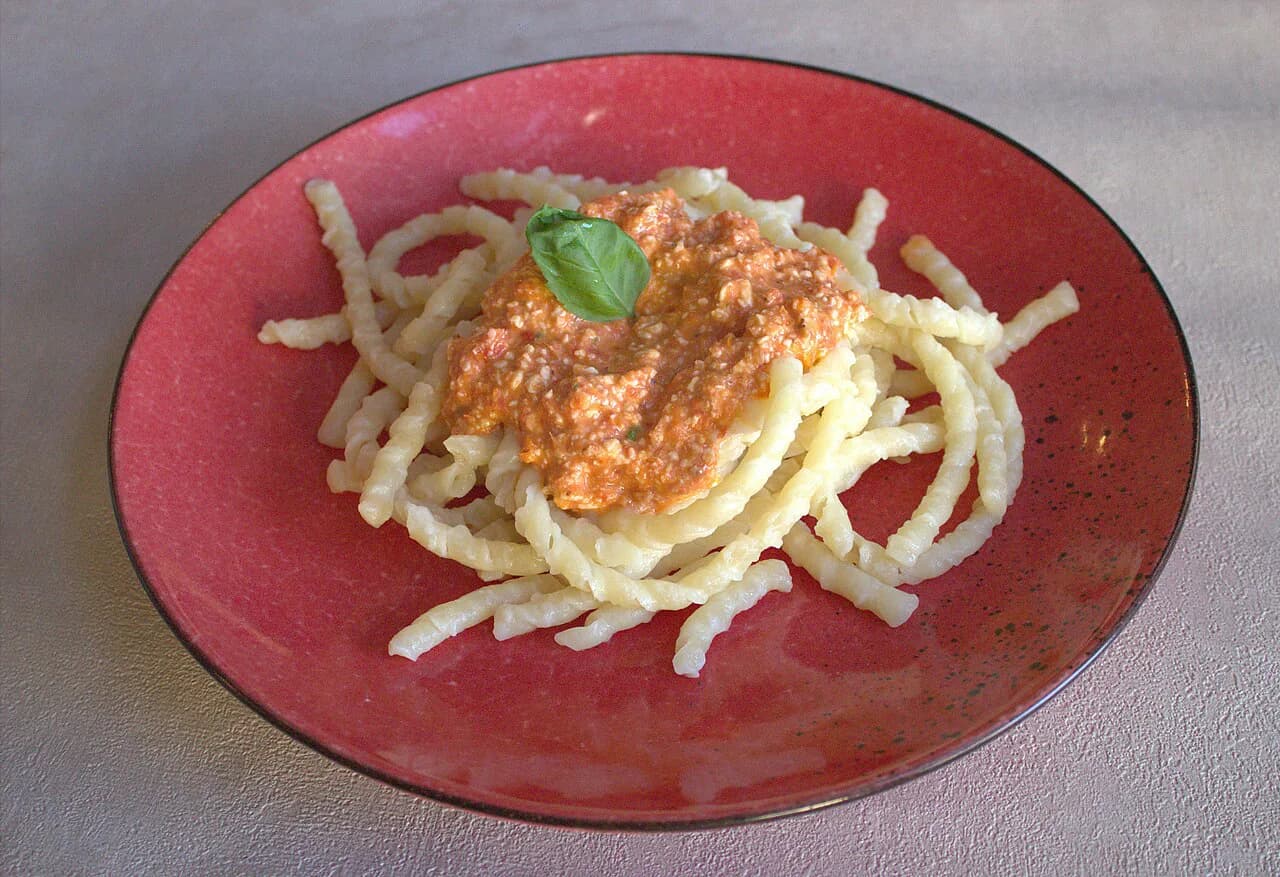
In the evening, the pastry counter is still open for a box to take back, but the eating day in Trapani usually moves towards busiate, the local twisted pasta often served with pesto trapanese, an uncooked sauce of tomato, almond and basil, or towards an aperitivo in Trapani. Keep the sweet course flexible rather than booking the day around it.
What to expect to pay and how to pay
Pastry is the cheapest way to eat well in Trapani: single pasticcini and cannoli are priced by the piece, and a small mixed box costs less than a restaurant starter. The trap is the tavola calda, where it is easy to order three savoury items while waiting and spend as much as a sit-down lunch. Decide your number before you point.
Payment is usually at the till, and small shops may prefer cash for a handful of pieces. Ask for a receipt if you are buying a box for someone else, and check what is in the box before it is tied, since mixed trays are assembled quickly and a pistachio item can easily end up where an almond one was expected.
Cannoli near the port: judging the counters
Counters facing the port and the main streets sell cannoli to people who will never come back, which is not automatically a bad thing: the shell is often fried in the morning and the filling piped to order. The honest test is whether the cannolo is filled while you wait and whether the shell cracks cleanly when bitten. If the tubes sit pre-filled in the display, the shell will already be softening.
Away from the waterfront, the same rule applies with more choice. Palme on Via Pietro Novelli and La Pistacchiata on Via degli Anemoni are both worth the short walk from the centre, and a stop at either fits neatly before or after the Street food in Trapani stops around the centre.
Which pastry shop should you walk to first?
Start with La Pistacchiata on Via degli Anemoni if you want one shop that covers both halves of a meal: a box of cassata, cannoli and almond sweets, plus an arancina al pistacchio from the savoury counter. Choose Palme on Via Pietro Novelli if you want a plain neighbourhood pasticceria where almond pasticcini and cannoli are the point.
Either way, go in the morning when the trays are full, order by the piece, and pay at the till. Keep the box small enough to finish the same day, and leave the sit-down meal for the evening.
Explore more Trapani food guides
Sources
Notes for your next meal in Italy
Optional updates to our food guides.
You might also like
Continue reading
More guides you'll find useful