Granita in Sicily: What It Is, Best Flavours and How to Order It
Sicilian granita is a dense, spoonable ice made with water, sugar and fruit, nut or coffee flavourings. Here are the classic flavours and how it is served.
On this page
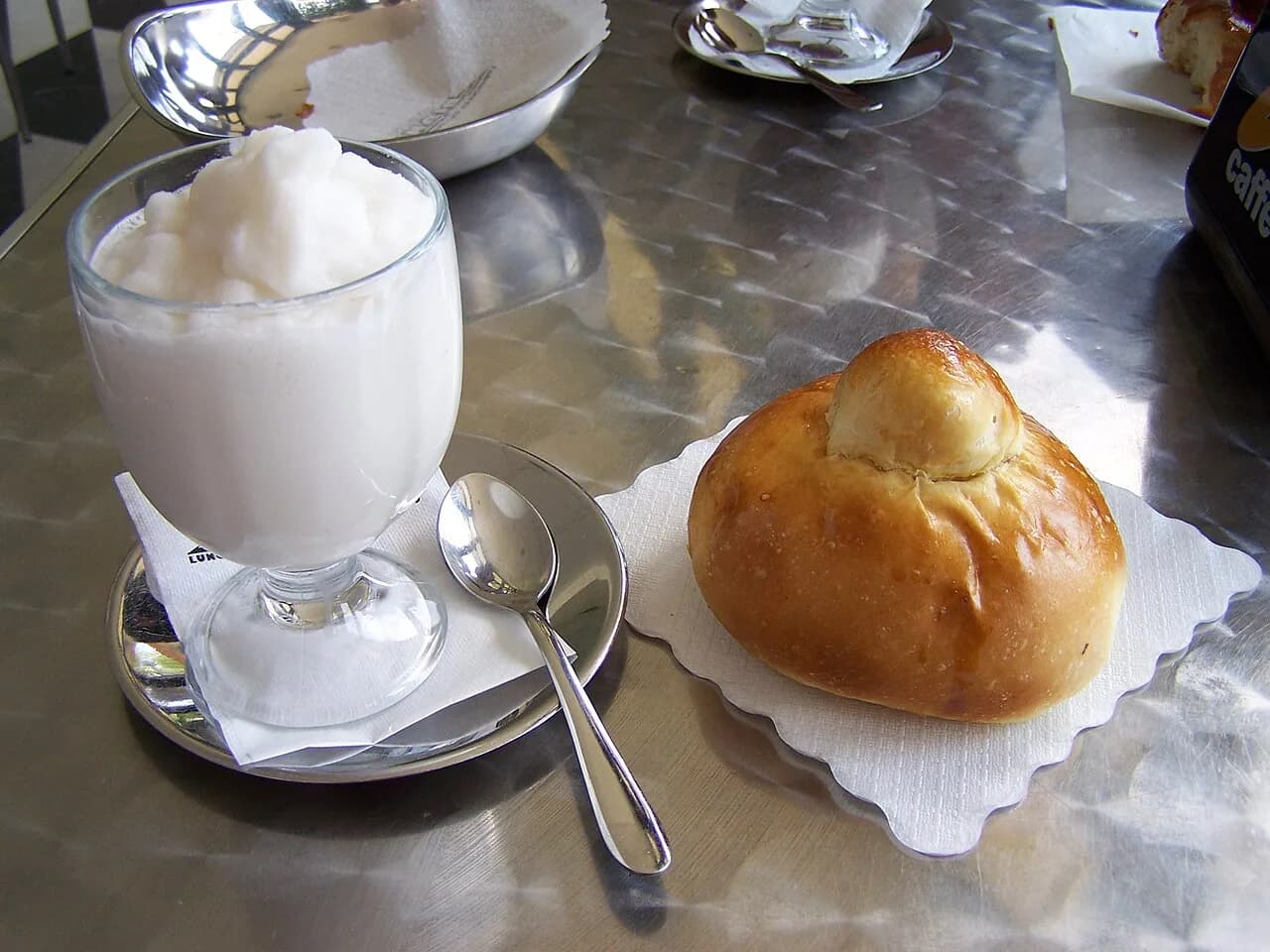
Sicilian granita is a dense, slowly melting ice of water, sugar and a flavouring such as lemon, almond, coffee or pistachio, served in a glass and eaten with a spoon. Order it with a hot brioche and you have the island's standard breakfast; order it plain and it works as a mid-afternoon reset. This guide covers what granita actually is, the flavours worth knowing, how it is served and how the ordering works at a Sicilian bar.
What granita in Sicily actually is
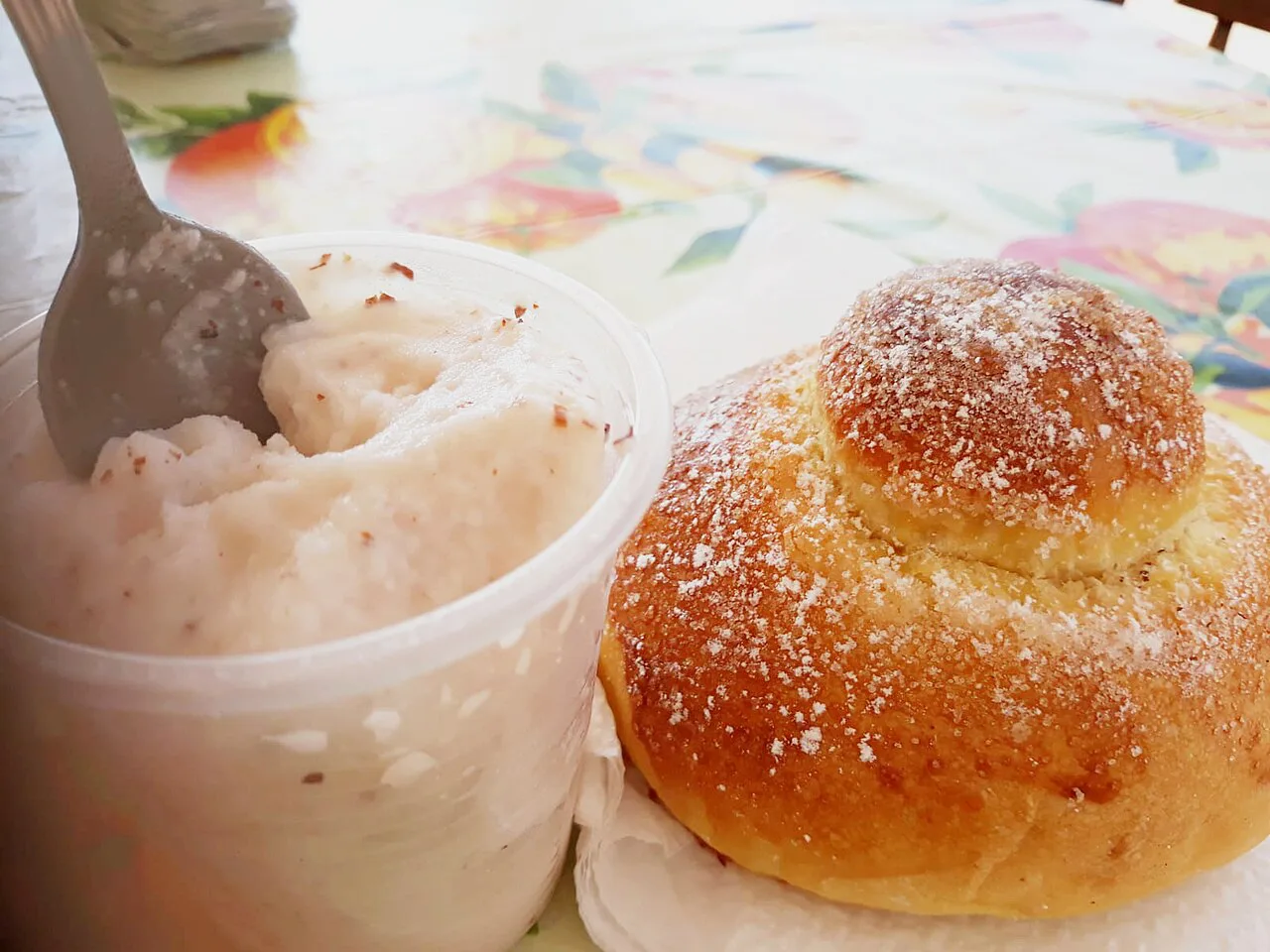
Granita is not a slush and not a sorbet. Visit Sicily describes the modern Sicilian version as water and honey or sugar worked into a deliciously creamy mixture, which is why a good granita holds a soft, spoonable texture rather than turning to shards of ice. It is served in a glass, eaten with a spoon, and can be ordered at breakfast, lunch, in the afternoon or after dinner.
The texture is the whole point, so judge a bar on how the granita sits in the glass: it should mound slightly and melt slowly at the edges. If it looks crunchy or sharded with ice, it has been frozen too hard or bulked out. Texture is also the clearest line between Sicilian granita and the Italian gelato you may know from elsewhere, which is churned from a milk, cream and sugar base rather than built on water.
How it differs from grattachecca, sorbet and cremolata
Visit Sicily is explicit that Sicilian granita is entirely different from Roman grattachecca, from sorbet and from cremolata. Grattachecca is the Roman version of shaved ice with syrup poured over it, sorbet is the French-style frozen fruit purée, and cremolata is a Sicilian frozen dessert of its own. The distinction matters when you read a menu: only granita has the dense, creamy-yet-dairy-free texture Sicilians expect.
What does granita taste like? Granita tastes of its flavouring rather than of cream: lemon is sharp and clean, almond is nutty and slightly bitter from the bitter almonds, coffee is deep and roasted, and pistachio is intense and green. The texture is soft and spoonable, melting slowly rather than crunching like shaved ice.
How do you eat brioche with granita? Tear off a piece of the warm brioche and dip it into the granita, alternating spoonfuls of ice and bread. The brioche is served hot and the granita cold, and the contrast is the point; in the past a plain freshly baked bread roll was used instead.
Is granita the same as sorbet? No. Visit Sicily treats Sicilian granita as a category of its own, distinct from sorbet, from Roman grattachecca and from cremolata.
The difference is also useful if you are weighing granita against gelato on holiday and want to understand how the two frozen desserts sit side by side in Italian food culture. Granita is water-based, gelato is milk- or cream-based, and both live in the same bars and gelaterie in Sicilian towns. If you want the wider frozen-dessert picture, see how Gelato vs Ice Cream compare and the Italian Gelato guide.
The snow-and-nivaroli story behind the modern granita
Visit Sicily traces the tradition back to the Middle Ages, when nivaroli gathered snow in winter on Mount Etna and the Peloritani, Iblei and Nebrodi mountains and stored it through the year in neviere, holes lined with stone or brick. Well-preserved examples can still be seen in Buccheri. In the warm months the snow was carried down to the coast, grated, and mixed with lemon juice or fruit syrups.
Over time the snow stopped being the ingredient and became only a coolant, replaced by water and sugar or honey, which is how the creamy mixture we call granita siciliana took shape. Treat this as the historical background Visit Sicily gives rather than a fully documented chronology; the practical takeaway is that granita is an old Sicilian habit, not a modern novelty.
The classic flavours and what each one tastes like
Visit Sicily lists lemon as the most traditional flavour, refreshing with the lowest calorie content, and almond as the most popular, made more aromatic by the addition of bitter almonds. Coffee is the breakfast standard, especially alongside almond. Chocolate is made with low-fat cocoa and is the children's favourite.
The fruit list continues with mulberry, described as tasty and refreshing and favoured by more refined palates, strawberry, peach, and sometimes wild strawberry or flat peach in individual cafés. Bronte pistachio is the intense green variant with a distinctive flavour. If you only have room for one order, lemon is the one to use as your benchmark, because a bar that gets lemon right usually gets the rest right too.
If you already know which frozen flavours you like from a gelateria counter, use that as your starting point: almond and pistachio translate well from gelato to granita, while lemon and coffee taste sharper and more direct in the water-based version.
Almond, lemon and coffee: how Sicilians pair them
The pairing logic is the most useful thing to copy. Visit Sicily pairs coffee with almond as the ideal breakfast combination, and suggests chocolate alongside almond or pistachio. Strawberry is described as working with lemon, and peach with almond or mulberry.
There is even a word for ordering two together: an angelica granita is the combined order that lets you enjoy two flavours in one glass, according to Visit Sicily. Use it if you cannot decide between lemon and strawberry. Otherwise keep the order simple; Sicilians rarely pile on more than one or two flavours.
Granita with brioche: what the brioche is and how to eat it
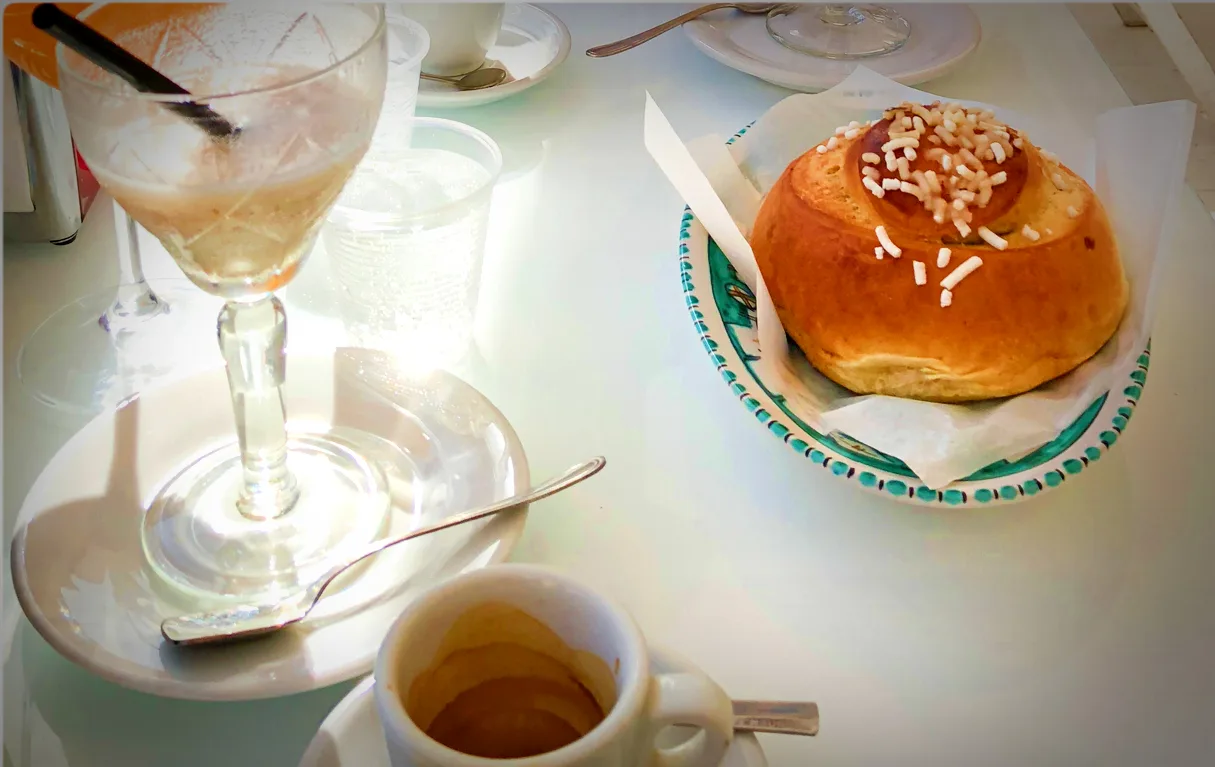
Granita is served with a hot brioche, or, as in the past, with a fragrant freshly baked bread roll, according to Visit Sicily. The brioche is there to be torn and dipped, not eaten as a separate course, and the hot-cold contrast is the point of the combination. If you order granita without specifying, expect to be asked whether you want the brioche with it.
The brioche is not a dessert in its own right but part of the order, so a breakfast of coffee granita and almond granita with one brioche between two people is a normal and sensible way to start the day. If you are travelling with someone who does not want the bread, simply order the granita alone.
Brioche col tuppo versus a plain bread roll
The brioche Sicilians use for granita is the brioche col tuppo, the soft, slightly sweet bun with a rounded top knob, which is also the roll used for Sicilian ice cream sandwiches. Visit Sicily notes that in the past a fragrant freshly baked bread roll could stand in for it, so a bar serving a plain roll with your granita is following an older habit rather than doing it wrong.
In practice the tuppo brioche is softer and richer, the plain roll more savoury and less sweet, and both work with coffee or almond granita. If you want the version most Sicilians associate with the ritual, ask for the brioche col tuppo.
Ordering at the bar or table, and how it is served
Granita is served in a glass with a spoon, either at the bar counter or at a table. Visit Sicily recommends at least 30 minutes seated at the tables of an open-air bar to enjoy it properly, with a newspaper or a chat, which is a polite way of saying it is not a takeaway snack to gulp on the move.
Order at the counter if you are in a hurry, or sit down if you want the full ritual and take the time over it. Say the flavour you want, then ask whether you want it with the brioche.
If you are not sure whether a bar makes its granita properly, the same instinct that helps with gelato applies: look for a short, seasonal flavour list and a texture that looks soft rather than icy.
How granita is eaten through the day, including breakfast
Visit Sicily describes granita as a ritual eaten all year round, not just in summer, at breakfast, lunch, in the afternoon or even at dinner. Breakfast is the classic slot, with coffee and almond granita and a brioche, and it is the meal where the habit is most visible in Sicilian towns.
A granita in the afternoon is lighter than a gelato and works well after a long walk, while an evening granita is a small, cold finish rather than a dessert course. Lemon and almond are the traditional flavours to lean on, and the fruit flavours are the ones worth asking about on the day.
Pistachio and other flavours that vary by town
Beyond the core list, flavours shift by town and by bar. Visit Sicily places granita across Catania, Enna, Messina, Ragusa, Siracusa and Trapani provinces, and Bronte pistachio, grown on Etna's western slope, is the variant that most clearly signals where you are. If Ragusa is on your route, our Ragusa guide covers the flavours, brioche and where to eat it there.
The safe approach in an unfamiliar town is to order the flavour the place is known for, then come back for lemon the next day. Trying the plain classics first will tell you more about a bar than a long list of exotic flavours.
Which granita to order first
Start with lemon, then try almond, and save coffee-and-almond with a brioche col tuppo for breakfast. Sit down, take the half hour, and treat the brioche as part of the order rather than an extra.
Explore more Italy food guides
Frequently Asked Questions
What does granita taste like?
Granita tastes of its flavouring rather than of cream: lemon is sharp and clean, almond is nutty and slightly bitter from the bitter almonds, coffee is deep and roasted, and pistachio is intense and green. The texture is soft and spoonable, melting slowly rather than crunching like shaved ice.
How do you eat brioche with granita?
Tear off a piece of the warm brioche and dip it into the granita, alternating spoonfuls of ice and bread. The brioche is served hot and the granita cold, and the contrast is the point; in the past a plain freshly baked bread roll was used instead.
Is granita the same as sorbet?
No. Visit Sicily treats Sicilian granita as a category of its own, distinct from sorbet, from Roman grattachecca and from cremolata. Granita is denser and more slowly melting than a sorbet, and it is eaten with a spoon from a glass rather than scooped like ice cream.
When do Sicilians eat granita?
At any time of day and in any season, according to Visit Sicily: breakfast, lunch, the afternoon or after dinner. Breakfast with coffee or almond granita and a brioche is the most established habit, but a mid-afternoon granita is just as normal.
Sources
Notes for your next meal in Italy
Optional updates to our food guides.
You might also like

Continue reading
More guides you'll find useful