Emilia-Romagna Food: What to Eat in Bologna, Parma and Modena
Emilia-Romagna food explained: fresh egg pasta and ragù, pork and piadina, Parmigiano Reggiano and balsamic, plus how Bologna, Parma and Modena differ.
On this page
Emilia-Romagna food is best understood as a constellation of local cuisines rather than a single regional menu: every city and town reinterprets the same building blocks of fresh egg pasta, pork and cheese in its own way. The old dividing line runs between Emilia in the west, around Piacenza, Parma, Reggio Emilia, Modena and Bologna, and Romagna in the east, around Ferrara, Ravenna, Forlì and Rimini. This guide explains each dish plainly, shows how the table changes as you move across the region, and covers the practical side of eating well.
What Emilia-Romagna food is: a region of many cuisines, not one
The regional tourist board puts it directly: in Emilia-Romagna you should speak of a constellation of cuisines, because every city and town boasts typical dishes reinterpreted differently from one place to another. The cooking is sumptuous and meat-based, proudly tied to the land and to strong peasant roots. That means a plate of tagliatelle in Bologna is not identical to the same name in Rimini, and a menu that travels with you across the region is a menu that has missed the point.
Two staples run through almost every kitchen. Fresh egg pasta, filled or plain, is rolled out with a rolling pin as in the old days and cut or shaped into tagliatelle, lasagne, tortelli, cappellacci, passatelli and anolini. Pork is the king of the table, appearing in nearly every recipe and even in bread dough, as with piadina, the traditional flatbread of Romagna.
Think of the region in three belts: the Po plain dairies and pork cure houses of the west, Bologna's egg-pasta heartland, and Romagna's flatbread, vegetables and Adriatic seafood. Plan a day around one belt instead of trying to sample all three at a single table. If you want the wider national picture before you start, the regional Italian food overview maps how each zone's cooking fits together.
Fresh egg pasta: tagliatelle, lasagne, tortelli, cappellacci, passatelli and anolini
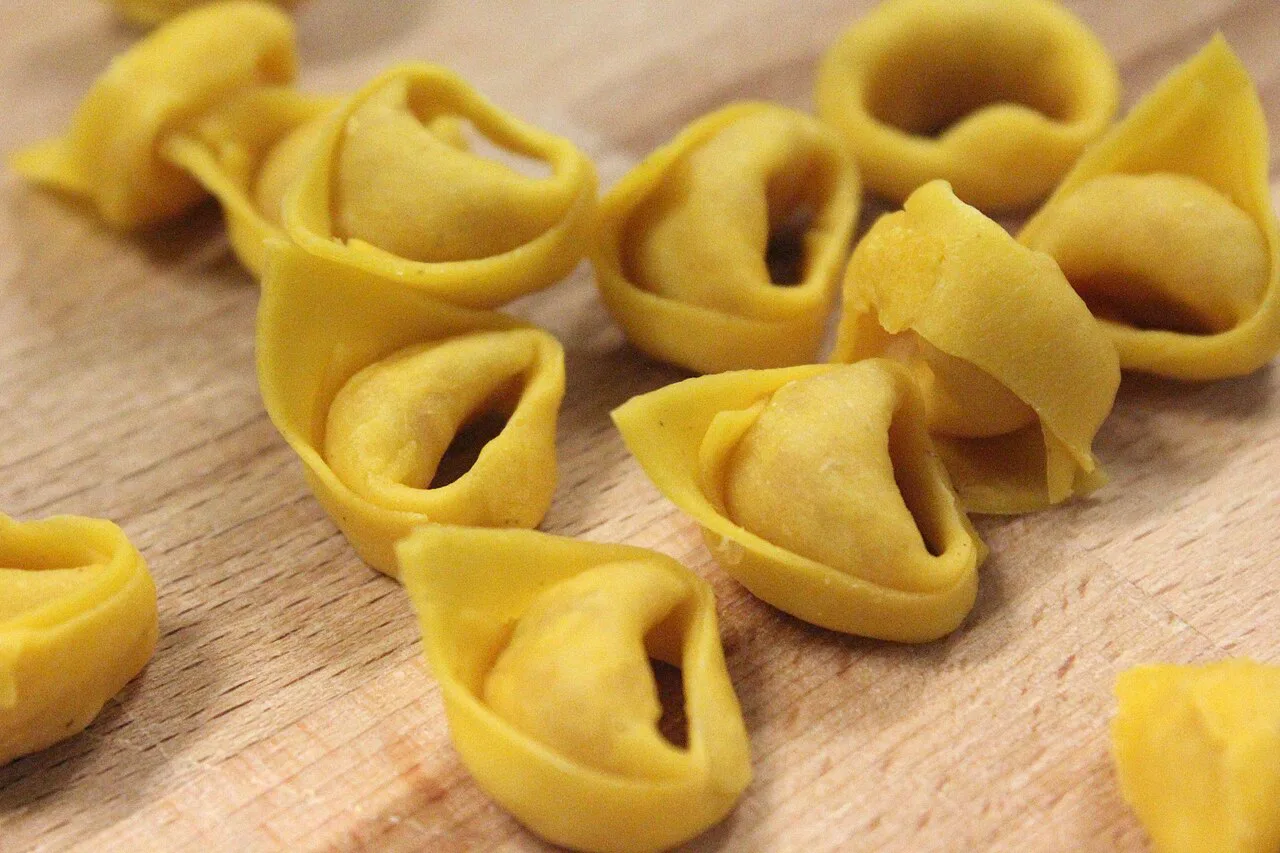
Fresh egg pasta is the region's signature, and the shapes carry meaning rather than decoration. Tagliatelle are long ribbons, usually dressed with a meat ragù; lasagne are the wide sheets layered with ragù and béchamel and baked. Tortelli and cappellacci are filled parcels, the stuffing changing with the province, while passatelli are short, rough strands made from breadcrumbs, cheese and egg rather than flour dough.
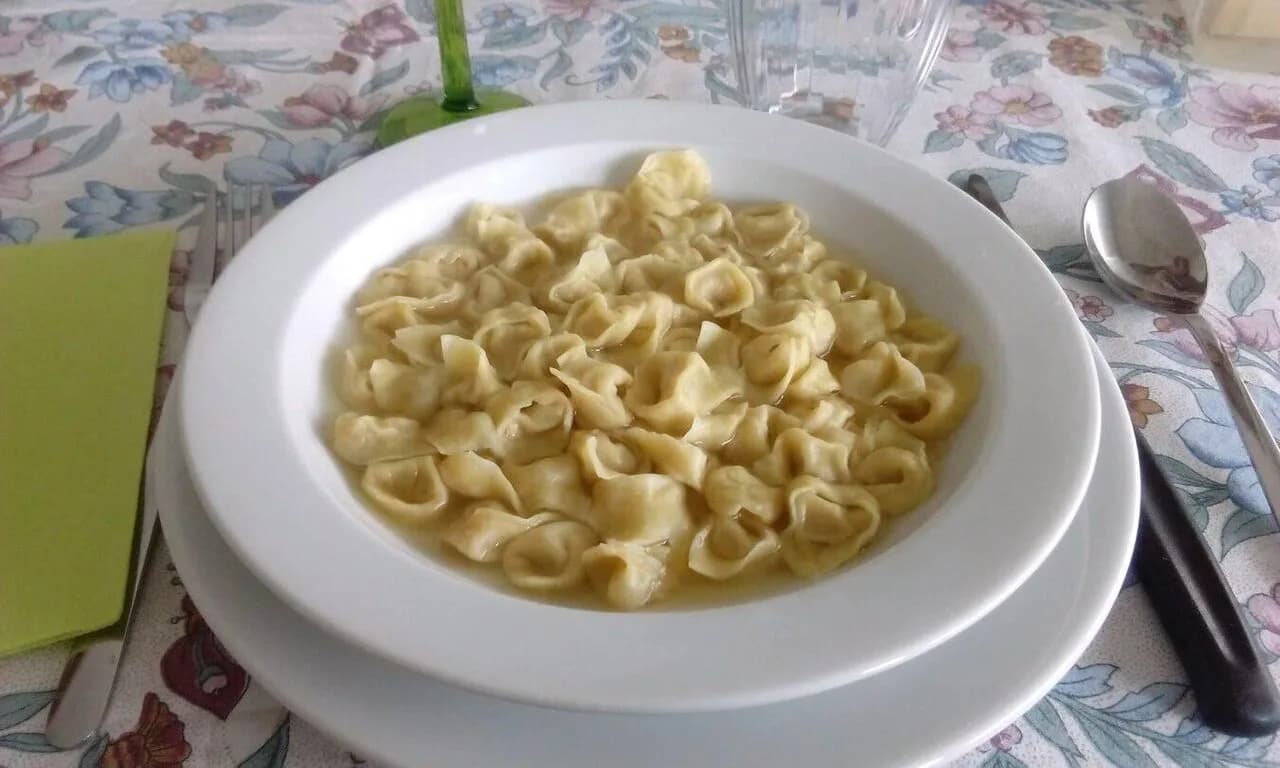
Anolini are small round filled pasta, typically meat-stuffed and served in broth in Emilia-Romagna, and they are the dish to watch for on a winter menu. A gastronomia counter will often display them ready to reheat, alongside soft torta di patate, a potato cake popular in the provinces of Parma and Piacenza, and torta d'Erbe, a savoury spinach-filled cake in flaky pastry associated with the agricultural towns of Parma province.
Order one pasta and one filled pasta between two people rather than a pasta each, because portions of fresh egg pasta are dense and the second course still matters. If a menu lists tagliatelle al ragù and tortellini in brodo side by side, that pairing tells you the kitchen cooks both the dry-dressed and the broth tradition properly.
Ragù and broth: how the same pasta is dressed differently from town to town
The tourist board describes fresh egg pasta dressed with tasty ragùs or with pleasant meat broths, and that split is the simplest way to read a menu. Ragù is the slow-cooked meat sauce served over ribbons and layered into lasagne; broth is the clear meat stock that carries small filled pasta such as anolini. A kitchen that lists both is telling you it cooks for the cold months as well as the warm ones.
Bologna's ragù is served with tagliatelle rather than the spaghetti abroad that borrowed its name, so expect a ribbon rather than a long strand. In the western provinces the same sauce turns up inside lasagne verdi al forno, the green spinach pasta baked in layers. Romagna's own tradition leans more on broth-based filled pasta and on flatbread at the side of the table.
When you order, ask whether the ragù is beef, pork or a mix, because the answer often signals whether you are in the Emilian or the Romagnan half of the region. A menu that offers brodo as a first course is usually a good sign for a cold-day lunch.
Pork at the centre of the table, and piadina, the flatbread of Romagna
Pork appears across the region in cured form and in cooked dishes, and the tourist board calls it the king of the table. On a gastronomia counter you will see it as thick slabs of cured meat hanging from the ceiling and as sliced salume ready to take away. Ask for a mixed selection by weight and let the shop assistant guide you towards the local speciality rather than the international one.
Piadina is the flatbread of Romagna, a thin griddled dough that can be eaten plain or folded around cured meat, cheese and greens. It belongs to the eastern side of the region, so treat it as the quick lunch of Ravenna, Rimini and Forlì rather than the default in Bologna. A piadina eaten standing at a counter is the cheapest and most typical midday meal in Romagna.
Beyond pork, Romagna's Adriatic edge brings seafood to the table, especially in Rimini and Ravenna. That is the clearest sign that the region's cooking changes as you move east, and it is worth planning a seafood lunch into any itinerary that reaches the coast.
Parmigiano Reggiano and the cheeses of the region, and what to buy at a dairy counter
Parmigiano Reggiano is the region's most famous cheese, and Emilia-Romagna is the only place in the world where it is possible to eat the cooked and pressed cheese at the source. In practice that means buying it where it is made, in the dairies of Parma, Reggio Emilia and Modena, or from a cheese counter that sells it young for eating and older for grating.
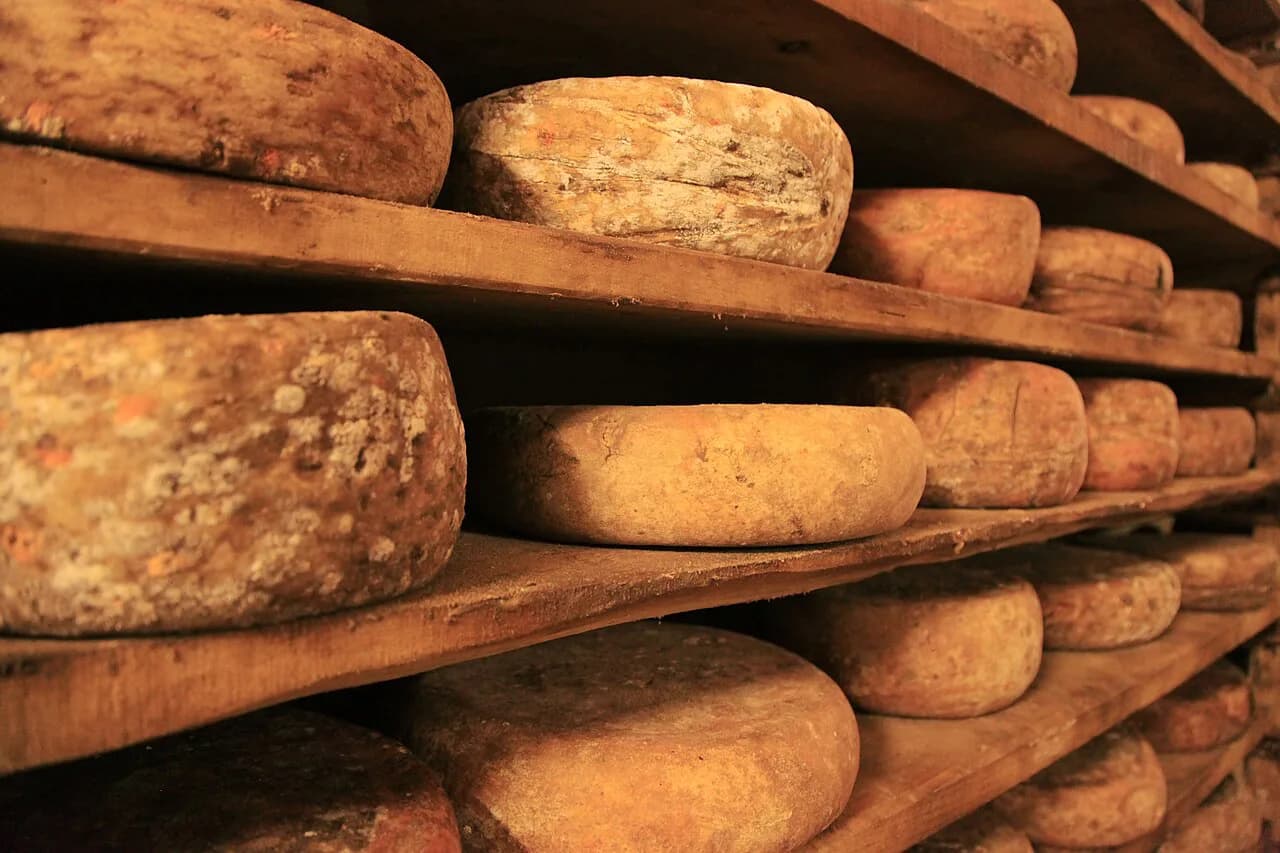
Do not stop at the famous name. Emilia-Romagna also produces distinctive cheeses such as Fossa, a cheese matured in tufa pits, which is worth tasting alongside the Parmigiano. Ask the counter staff for a young and an aged piece of the same cheese to compare, and buy a wedge rather than a pre-cut slab so you can see the rind.
A gastronomia will display cheeses in round, rectangular and triangular forms alongside cured meat and prepared dishes, which makes it a practical place to assemble a picnic or a light supper. Buy by weight, ask for a taste where offered, and keep soft cheeses for eating within a day or two.
Balsamic vinegar in and around Modena: what traditional balsamic is and how it is used
Traditional balsamic vinegar of Modena is a thick, sweet-sour condiment aged in wooden casks, and it is a different product from the everyday balsamic sold in supermarkets. Treat it as a finishing drop on Parmigiano Reggiano, grilled meat or strawberries rather than as a dressing for salad. A shop selling it will usually let you taste before you buy, so ask for a small sample and compare an aged vinegar against a younger one.
Modena is the city to plan around if vinegar is your interest, and a visit to a producer explains why the casks matter more than the label. Buy a small bottle rather than a large one, since the vinegar is used in drops and a little goes a long way; check the label for the words tradizionale rather than the generic balsamic.
Bologna: the dishes to order and where the city's food reputation comes from
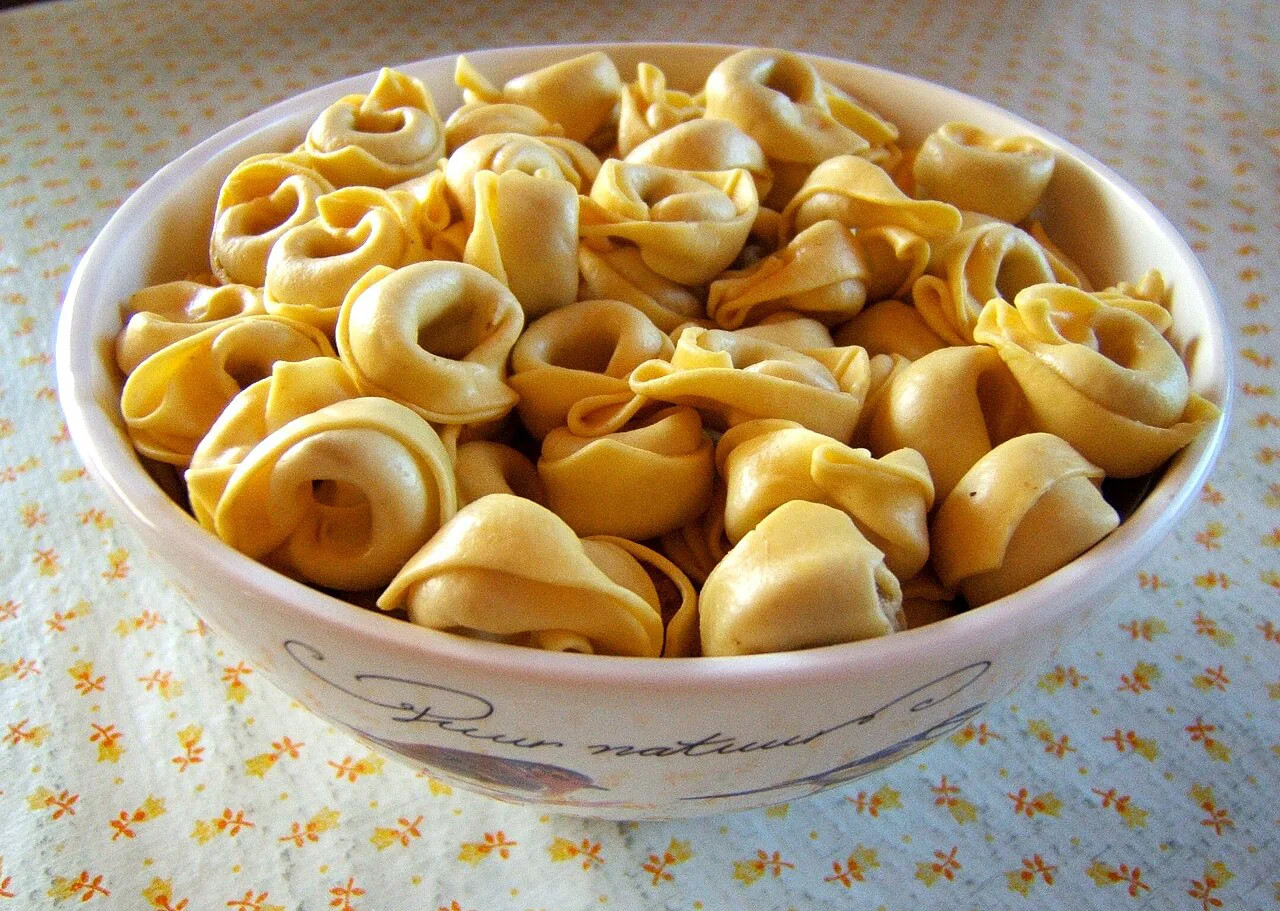
Bologna is the region's capital and its gastronomic showpiece, known for porticoes, egg pasta and a nickname, La Grassa, that refers to its rich cooking. The dishes to order are tagliatelle al ragù, lasagne verdi al forno, and filled pasta in broth. Mortadella, the city's pink pork sausage, is the cold cut to ask for at a counter.
The city is famous enough that menus near the main squares lean on the tourist trade, so walk a few streets away from the porticoes around Piazza Maggiore for a better-value lunch. A trattoria with a short handwritten menu and a bowl of tortellini in brodo is a safer bet than a laminated menu with photographs. Ask what is made in-house that day before you commit.
Bologna is also a good base for the wider food valley, with Modena, Parma and Ferrara within easy reach by train. Renting a car from Bologna opens up the countryside and the smaller producers that the rail network does not reach.
Modena and Parma: what changes on the plate as you move west
Emilia's western provinces, Parma and Modena, are where the region's most renowned foods are made, from Parmigiano Reggiano to cured pork and balsamic vinegar. On the plate, expect more butter and cheese, more stuffed pasta, and a cheese course that matters as much as dessert. The cooking is less about seafood than Bologna's and more about the dairy and the cure house.
Parma's contribution is ham and cheese, and both are worth buying at a salumeria rather than a supermarket. In Modena the vinegar and the pork sausage take the lead, and the city rewards a slow lunch over a rushed one. If you only have a day, pick one city and eat one long meal rather than splitting the day between two.
Piacenza, further west still, is known for torta di patate and for a cuisine that shades into Lombardy. It is a useful stop if you are travelling between Emilia and Milan by train.
Ravenna, Ferrara and Rimini: the Romagna side of the table
Romagna is the eastern half of the region, and its cooking shows the Adriatic and the plains more than the dairy. Ravenna offers seafood and a lively market culture, while Rimini pairs beach cooking with the region's flatbread. Ferrara sits on the border and brings its own pasta and vegetable traditions to the table.
Al Mèni is a Romagna food festival listed among the region's food experiences, and its dates and location are best confirmed with the organisers before you plan around it. On a normal day, order piadina for lunch and a seafood dinner by the water.
San Marino is a separate state surrounded by Emilia-Romagna, not a province of the region, so treat a day there as a side trip rather than part of the regional food map. The surrounding Romagnan towns are the better places to eat local cooking.
The gastronomia: Italy's ready-made food shop and how to use one for lunch
A gastronomia is a small food shop selling homemade regional dishes, often priced by weight and ready to eat after a quick reheating. They are found in every town across Italy, and in Emilia-Romagna they carry local specialities such as anolini, torta d'Erbe and crostata di prugne, a plum jam tart in a pastry lattice. Use one for lunch when you want a proper meal without a restaurant bill or a long sit-down.
The counter works like a deli: point at what you want, ask for a weight or a number of pieces, and expect it to be wrapped or boxed for you. Choose one pasta, one vegetable or savoury cake, and a piece of cured meat or cheese, which makes a balanced meal for two. A gastronomia will also sell bread and a sweet tart to finish.
Prices are set by weight, so ask for a little rather than a lot and add more if you are hungry. A gastronomia is also the right place to buy a picnic for the train, since everything travels well in a box.
Markets and food shopping: what to buy and how it is sold by weight
Local markets are the other side of the same shopping habit, and they are the best place to see the seasonal produce that the region cooks with. Buy fruit and vegetables by the kilo, cheese and cured meat by the etto, and ask the stallholder to slice what you need rather than taking a pre-packaged portion.
For pantry shopping, a salumeria or gastronomia is more reliable than a market stall for cured meat and cheese, and the counter staff can tell you which pieces are local. A jar of plum jam or a small bottle of traditional balsamic makes a sensible suitcase purchase.
How to order and eat: portions, courses and what a coperto is
Italian meals run in courses, and in this region the pasta is a primo followed by a meat secondo, with a contorno of vegetables on the side. A coperto is a small per-person cover charge added to the bill for bread and service, and it is normal rather than a scam. Order one primo and one secondo between two if you want to leave room for cheese.
Coffee is drunk standing at the bar, and in many cafés in Italy you pay at the till first and then hand the receipt to the barista. A caffè is an espresso, so ask for a cappuccino only in the morning. For a longer sit, choose a table and pay at the end.
At a gastronomia, payment is at the counter after your order is weighed and wrapped. Cash is still welcome in smaller shops, but cards are widely accepted in cities.
Where to eat in Emilia-Romagna: choosing between the trattoria and the tourist menu near the sights
The choice between a trattoria and a menu turistico near the main square comes down to what you want from the meal. A trattoria will have a shorter menu, seasonal dishes and a local wine list; a tourist menu will have photographs, translations in four languages and a fixed price. The trattoria is usually the better meal, but it may be slower and busier at peak times.
Use the gastronomia as a third option: buy by weight, eat at a bench or take it away, and save the restaurant meal for the evening. An agriturismo lunch in the countryside is a fourth route, worth the drive if you have a car and want a long, fixed-menu meal.
Book the trattoria for dinner, especially at weekends, and turn up without a booking only for lunch. If the menu is in English only and the prices are round numbers, keep walking.
Which Emilia-Romagna table is yours?
If you have one meal, make it Bologna: tagliatelle al ragù or tortellini in brodo in a trattoria a few streets from the porticoes. If you have two, add a long lunch in Parma or Modena for the cheese and the vinegar. If you have a week, follow the region east to Romagna for piadina and seafood.
For the rest of the country's cooking, the regional Italian food guide shows where Trentino-Alto Adige and Friuli Venezia Giulia sit alongside Emilia-Romagna. And if you are heading south afterwards, Sicilian food is the next stop for pasta with sardines and the island's own street cooking.
Explore more Italy food guides
Frequently Asked Questions
What food is Emilia-Romagna known for?
The region is known for fresh egg pasta such as tagliatelle, lasagne and filled shapes like tortelli and anolini, for pork in cured and cooked forms, and for piadina in Romagna. Parmigiano Reggiano and traditional balsamic vinegar of Modena are its most famous products, and Bologna is its gastronomic capital.
What is the most famous dish in Bologna?
Tagliatelle al ragù is the dish most associated with Bologna, served as ribbons of fresh egg pasta under a slow meat sauce rather than the spaghetti bolognese eaten abroad. Lasagne verdi al forno and tortellini in brodo are the other classics to order.
What is Emilia-Romagna famous for?
It is famous as one of Italy's great food regions, with a cuisine built on egg pasta, pork and dairy. Parma and Modena are known for cheese, cured meat and balsamic vinegar, Bologna for its pasta, and Romagna for piadina and Adriatic seafood.
Sources
Notes for your next meal in Italy
Optional updates to our food guides.
You might also like
Continue reading
More guides you'll find useful