Campania Food: Regional Dishes, Cheeses and Pastries
Campania food means mozzarella di bufala, Amalfi lemons, spaghetti alle vongole and sfogliatella. Here is what each dish is and where to eat it across the region.
On this page
Campania food is coastal southern Italian cooking built on fresh seafood, vegetables, buffalo mozzarella and durum wheat, with Naples as its engine room for pizza, pastries and coffee. This guide explains what each signature dish and ingredient actually is, from spaghetti alle vongole to babà, and where across the region to look for it.
Treat it as a map of the plate rather than a restaurant list: Naples and its countryside, the Amalfi Coast, the buffalo plains around Caserta and Paestum, and the islands each contribute something different. For the wider picture, our guide to regional Italian food places Campania alongside the country's other kitchen traditions.
What Campania food is
The region's cooking centres on fresh seafood, vegetables, cheese and, above all, Naples, the city widely treated as the home of pizza. Meals in the countryside around the city revolve around fruit and vegetables, seafood, local cheeses and salumi rather than restaurant showmanship.
Simplicity is the point: fresh, local ingredients carry the dishes, and the region's geography, climate and soil shape both what grows and what lands in the nets. That means a plate of clams or a ball of mozzarella can be a better introduction to Campania than any composed dish.
Where Campania sits, and why durum wheat matters
Campania lies on the western edge of Italy's durum wheat belt, alongside Puglia, Molise and Abruzzo. That latitude suits ancient wheat varieties, which is why the region is so strong on pasta and bread.
What is the difference between sfogliatella riccia and frolla? Riccia is the ridged, flaky version with a shell-like crust, while frolla is smoother and softer. Both are filled with ricotta and citrus, and a good pasticceria in Naples will sell both.
Where is mozzarella di bufala made? On the marshy plains of Campania, especially around Caserta and Paestum, where buffalo herds are milked and the milk is turned into cheese at local caseifici. Because it is a fresh product, eat it near where it was made.
What is colatura di alici? It is a fermented anchovy sauce from Cetara on the Amalfi Coast. It is deep, salty and used sparingly, typically to season pasta or vegetables rather than as a general condiment.
For a visitor this translates into everyday ordering decisions: pasta is not a preamble to the main event, and a simple bread or a plate of pasta can be the most regional thing on the table. It also explains why the region's food travels so well in the imagination, from dried pasta shapes to the pizza dough that defines the city.
Naples and pizza: what it means for a first meal
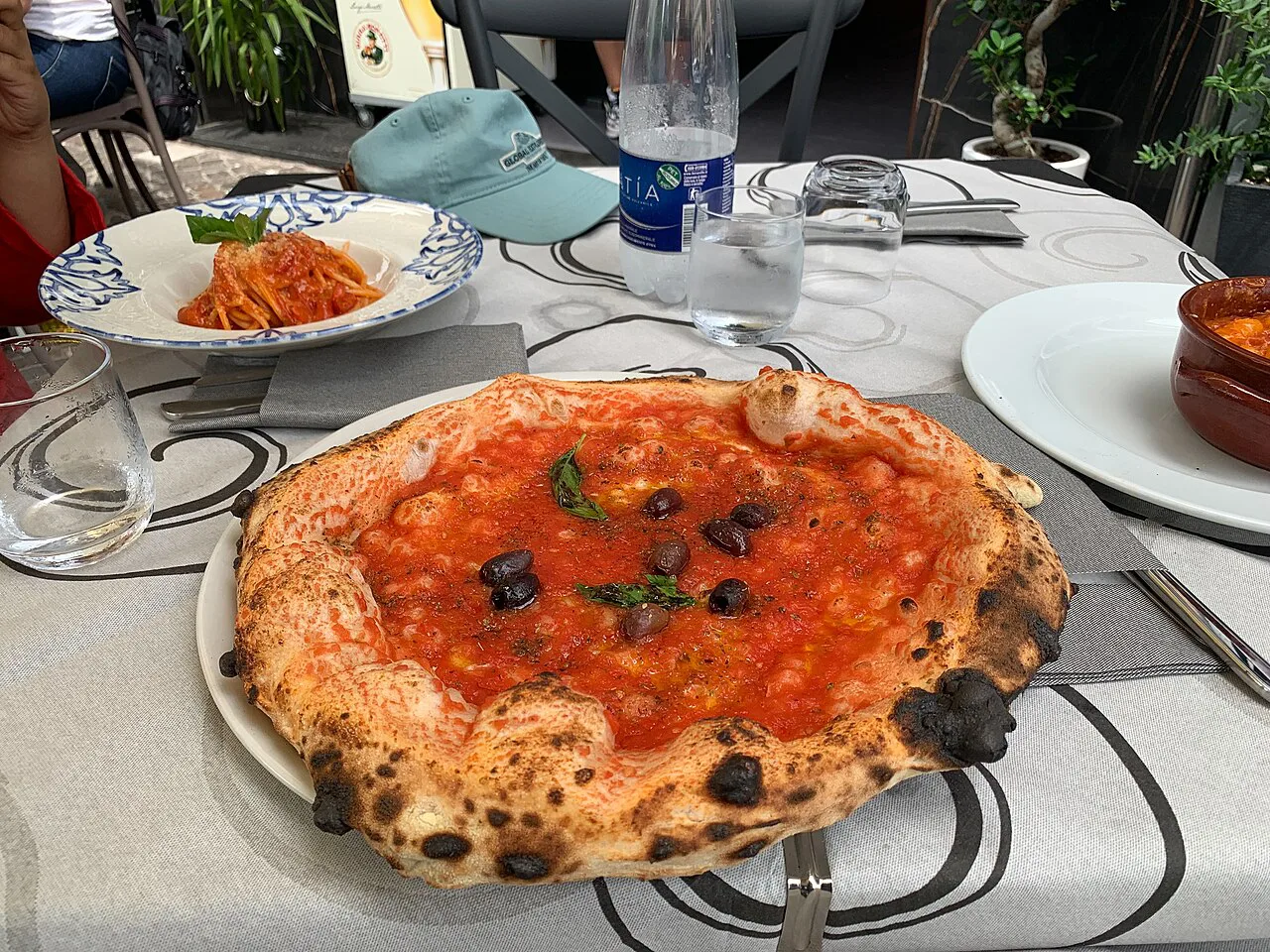
Naples is the birthplace of pizza, the dish that most people associate with Campania before anything else. For a first meal in the city, that makes a pizzeria the obvious starting point rather than a compromise.
Pizza also anchors the city's wider food scene, which has its own thriving energy and a strong coffee culture. If you only have one day, pair a pizza with a coffee, and keep the rest of the day for pastries and seafood.
Pizza Margherita and the 1889 story
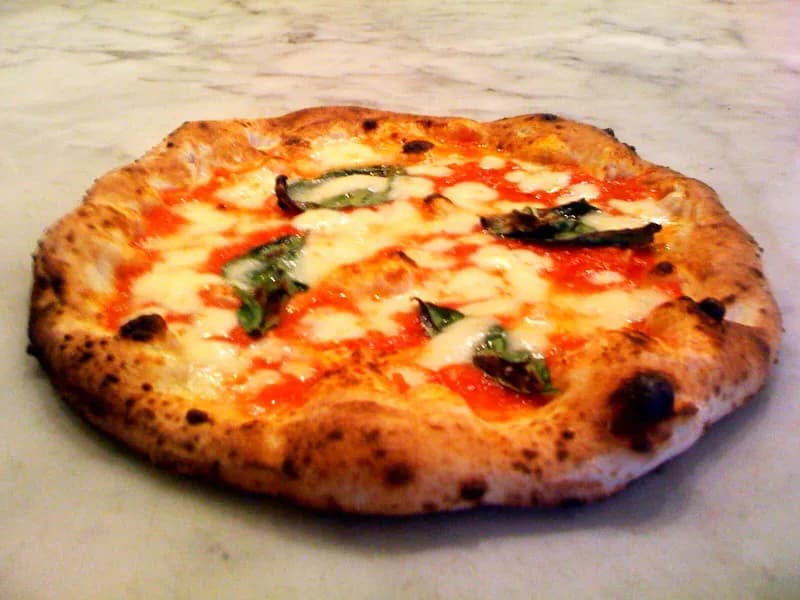
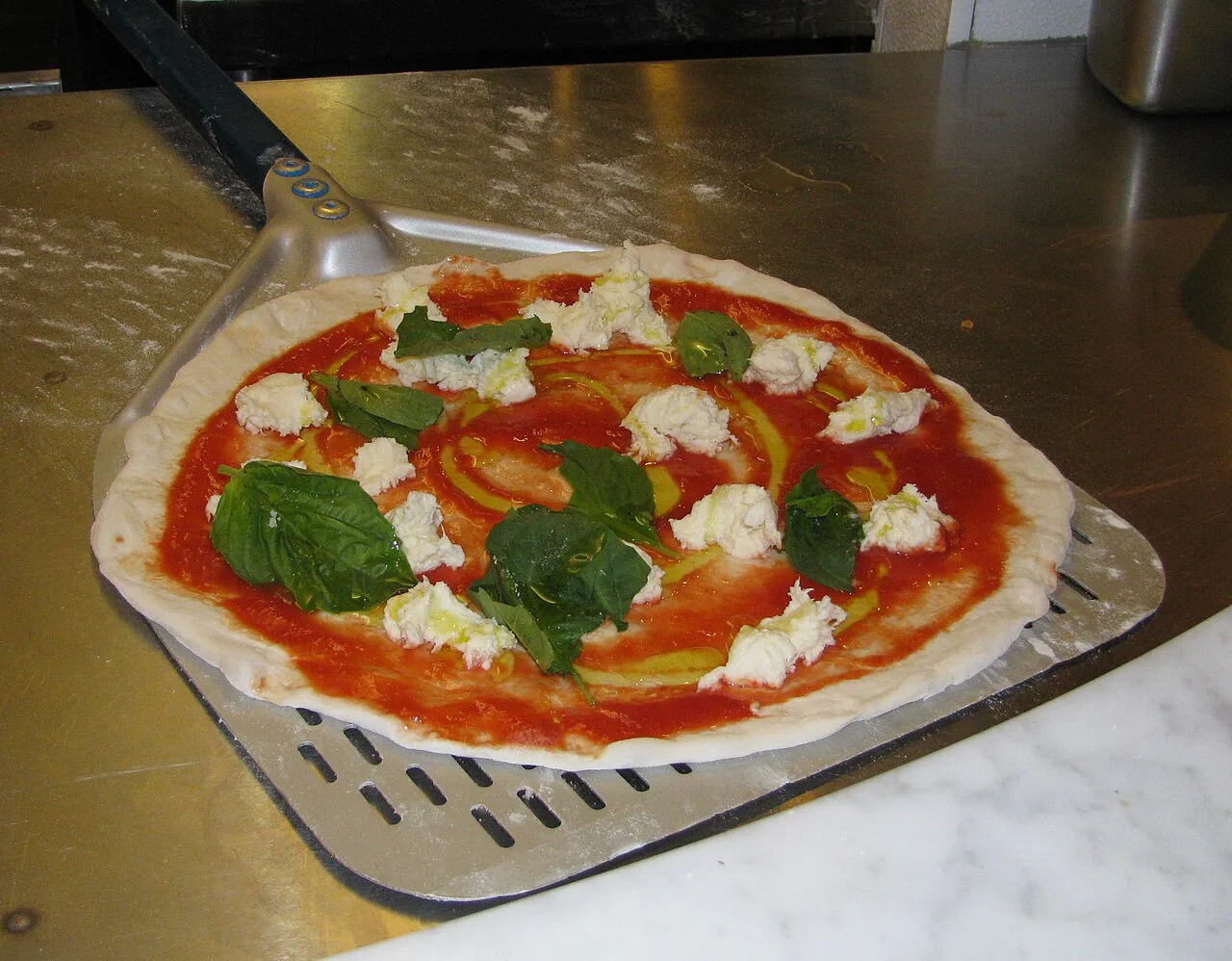
Pizza Margherita is topped with tomato, mozzarella and basil, chosen to echo the green, white and red of the Italian flag. The popular account dates it to Naples in 1889 and names it after Queen Margherita of Savoy; it is a claim worth enjoying as a story rather than treating as settled history.
Order it as a benchmark: it tells you how the dough, the tomato and the cheese are handled before you move on to other toppings. The three ingredients are the whole point, and a well-made one is a better test of a kitchen than any piled-high topping.
Mozzarella di bufala: a fresh dairy product
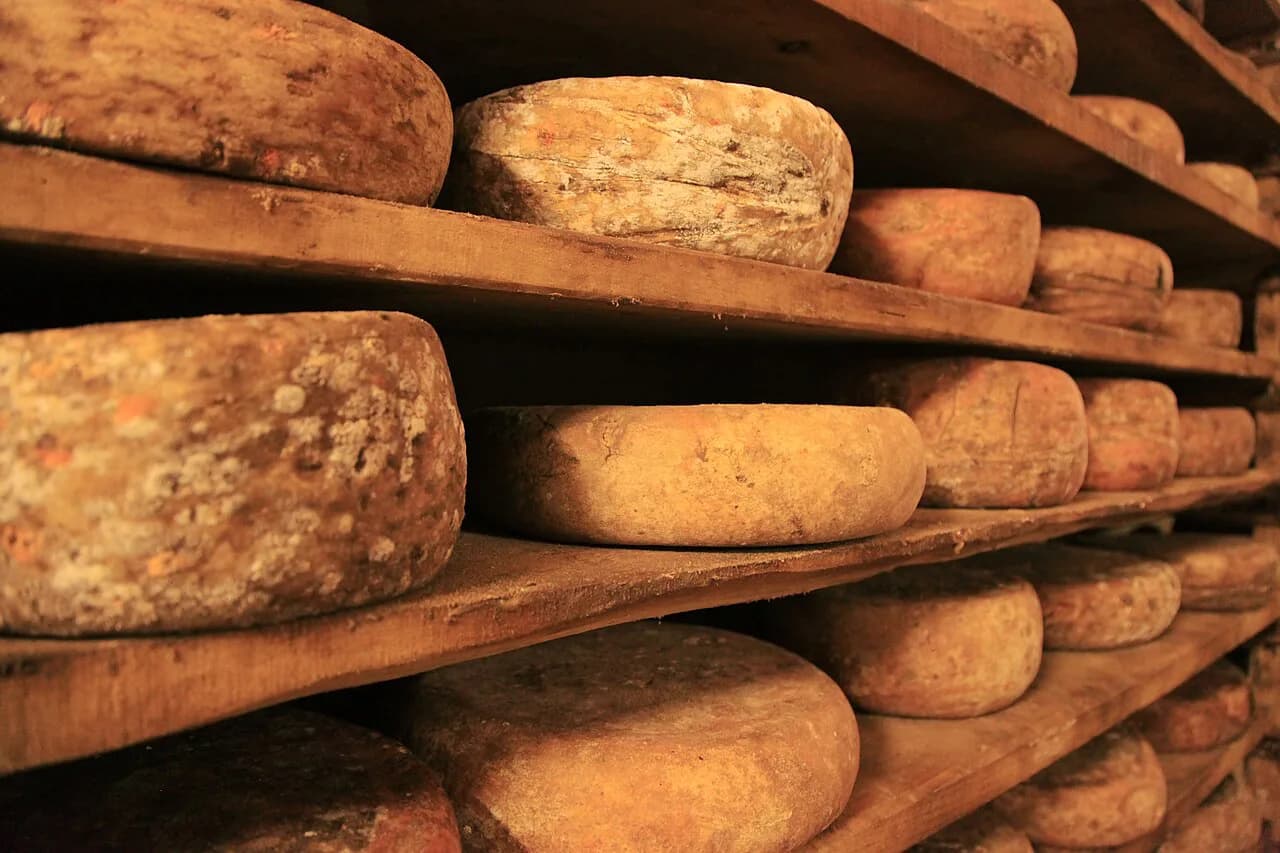
Mozzarella di bufala comes from buffalo herds milked on the marshy plains around Caserta and Paestum, where caseifici turn the milk into smooth, pearly balls of cheese. It is a fresh product with a short life, so it is at its best eaten close to where it is made.
For the traveller this creates a simple plan: buy it from a caseificio or a good salumeria on the day you plan to eat it, keep it cool, and serve it plainly with bread, tomatoes or a little oil rather than cooking it into something else. Dairies around Paestum and Caserta are the obvious places to look.
Names worth knowing if you want to buy at source include Tenuta Vannulo near Paestum and Caseificio Il Casolare at Alvignano, both listed as dairies and mozzarella producers in the region.
Amalfi and Sorrento lemons
The coastal breeze gives Amalfi and Sorrento lemons a particular microclimate, which is why the fruit turns up so often on menus along the coast. Look for it in granita, in lemon desserts and alongside seafood, where the acidity cuts through the oil.
They are a useful marker of a coastal kitchen: a lemon dessert at the end of a fish lunch says more about where you are than any list of dishes. Our Amalfi Coast food guide takes the coastal stretch further, with the seaside kitchens along the route.
Seafood: anchovies, clams and octopus
Fishing boats bring in everything from tiny anchovies to large octopus, and spaghetti with clams is one of the region's most familiar plates. Order it where the catch is the point rather than an afterthought, and consider a starter of marinated anchovies or fried seafood to see the day's haul.
At Cetara, on the Amalfi Coast, anchovies and the fermented anchovy sauce colatura di alici are the speciality to look for. It is a deep, salty seasoning used sparingly, so ask for it with pasta or vegetables rather than treating it like a sauce for everything.
On Ischia and Procida the cooking turns to honest seafood, and the dishes are simpler than the mainland's restaurant plates: grilled fish, shellfish and whatever came in that morning.
Pasta and bread: what to order for durum wheat
The durum wheat tradition shows up in the region's pasta and bread, so a plate of plain pasta with a tomato or vegetable sauce can be more revealing than a complex dressed dish. Ask what shapes are local and pair them with a seafood sauce rather than a heavy meat ragù.
This is also where Campania's cooking overlaps with the south's broader kitchen habits, from bread used to mop up oil to dried pasta as a storecupboard staple. If you are comparing regions, our Sicilian food guide shows how the neighbouring island handles the same ingredients differently.
Vegetables and fruit: the coastal larder
The temperate climate and coastal breeze make the region a strong place for fruit and vegetable growing, so menus fill up with whatever is in season. In summer that means tomatoes, aubergines and peppers in the cooking, and in winter you are more likely to see greens and preserved vegetables.
For a visitor, the practical move is to order the vegetable dish rather than treat it as a side: a plate of grilled vegetables or a simple salad tells you what the market had that morning. It also balances a diet heavy on bread and mozzarella.
Naples pastries and coffee
Sfogliatella is the city's defining pastry, a layered, shell-shaped baked shell filled with ricotta and citrus. It comes in two forms: the ridged, flaky riccia and the smoother, softer frolla, and locals argue about which is the better breakfast.
Pasticceria Attanasio in Naples is known above all for sfogliatella in both forms, while Pasticceria Poppella is known for the fiocco di neve, a small filled pastry that makes a quick morning stop.
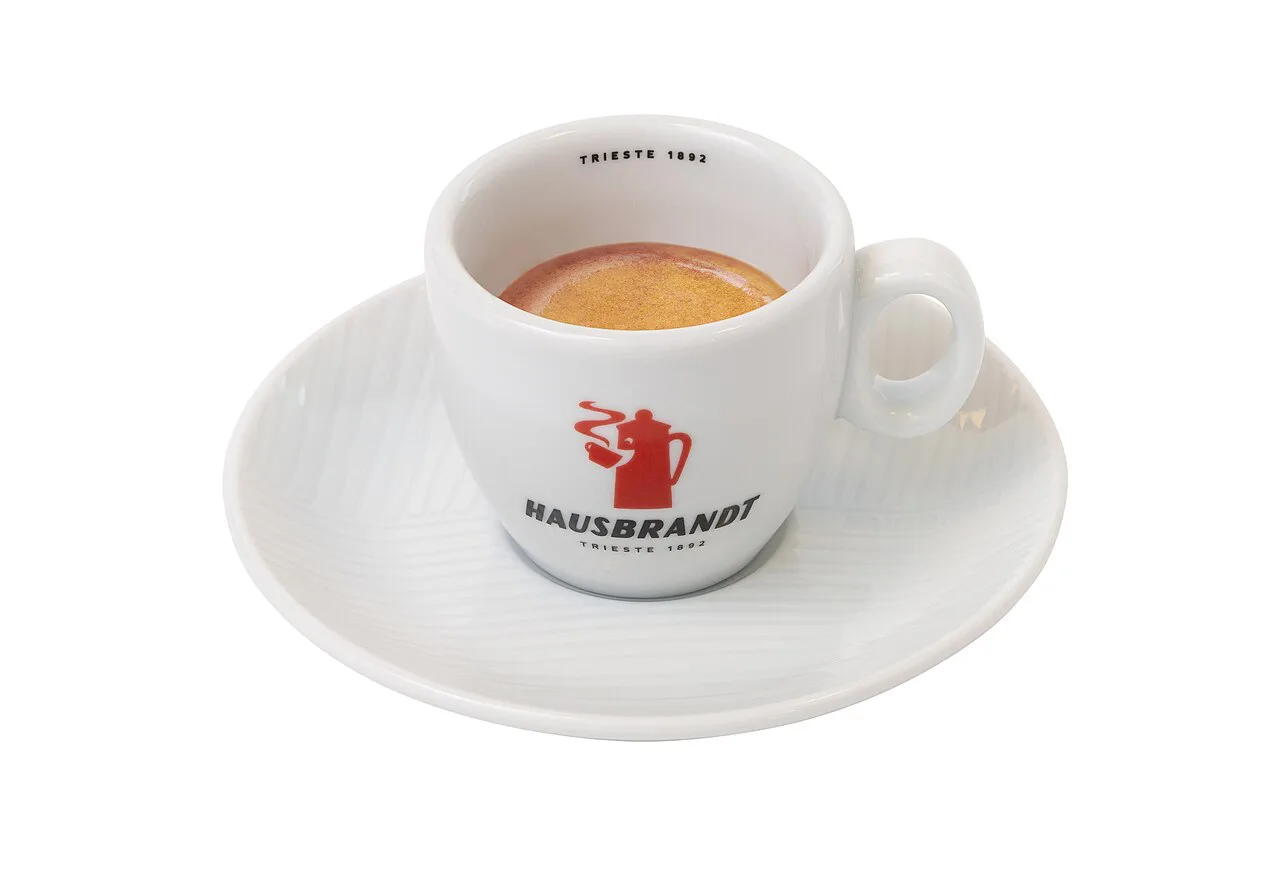
Coffee culture is part of the same ritual: order and drink it standing at the bar, pay at the till, and treat it as a short pause rather than a sit-down affair. That rhythm is what makes a Naples morning feel like Naples.
Babà and the sweet side of Campania
Babà is the other pastry to know, a small yeast cake soaked in syrup until it is soft and heavy. It is a sweet finish rather than a morning pastry, and it rewards being eaten fresh.
Expect it in pasticcerie across Naples alongside sfogliatella, though a good one is a matter of how well it has been soaked rather than how large it is. If you only have room for one sweet, share it and add a second sfogliatella instead.
Campania wines in brief
Three grapes define the region's wine list: Aglianico, a red with dark fruit and high tannin, and the whites Fiano and Greco, both fresh and aromatic. The reds stand up to pizza and grilled meat, while the whites suit seafood and mozzarella.
You do not need to study labels: ask what is local by the glass and let the dish decide. For a fuller survey of regional drinking, see our guide to Venetian food for a different set of wines and bar habits.
Eating across the region: city, countryside and coast
Naples and the surrounding countryside offer two different kinds of eating. The city is dense and fast-moving, with pizzerias, pastry shops and coffee bars close together, while the countryside slows down and puts seasonality first.
In the city, Mimì alla Ferrovia is known for Neapolitan classics executed with care, from stuffed peppers to ziti alla genovese, a slow-cooked pasta dish with onion and meat. Trattoria da Nennella is the more raucous, folklore version of the same city.
Elsewhere, the sandwiches matter too: Salumeria Malinconico in Naples is known for a sandwich filled with cicoli, the crisp pork scraps left after rendering lard, and ricotta. It is a good, simple lunch that costs far less than a restaurant plate.
Where to stop for mozzarella and pizza, from Paestum to Caserta
For mozzarella, head for the dairies on the plains rather than a city delicatessen: Tenuta Vannulo at Paestum and Caseificio Il Casolare at Alvignano sit in the heart of buffalo country. Both are listed as working dairies and mozzarella producers, so buy the cheese at source if you are passing between the coast and Caserta, and confirm any visit arrangements directly before travelling.
For pizza, the wider province is as interesting as the city itself. Pepe in Grani at Caiazzo and I Masanielli at Caserta are both in the province of Caserta, while La Notizia 53 and Concettina ai Tre Santi are in Naples.
Pompeii has a worthwhile stop in La Bettola del Gusto, described as a proper Slow Food osteria. Book ahead for the better-known addresses, and remember that a single outstanding pizza is a better use of an evening than three mediocre ones.
Pasta alla Nerano and zucchini spaghetti
On the Amalfi Coast, pasta alla Nerano is the dish to look for: spaghetti tossed with fried courgettes and cheese, associated above all with the village of Nerano. Ristorante Maria Grazia at Nerano is the address associated with it, while Lo Scoglio serves a version described as iconic zucchini spaghetti.
Order it as a first course rather than an accompaniment to fish, and expect it to be rich despite the vegetables; the frying is what gives it body. It is the clearest example of how Campania vegetables can carry a dish without meat.
Where to start eating in Campania
Start in Naples with a pizza and a sfogliatella, then take a short drive to the buffalo plains for mozzarella eaten on the day it is made. Add a coastal lunch of spaghetti alle vongole or pasta alla Nerano, and the region's food logic becomes obvious.
If you are travelling on through Italy, compare Campania with our Sardinian food guide, where the island's bread and pecorino tell a different southern story.
Explore more Italy food guides
Frequently Asked Questions
What is the difference between sfogliatella riccia and frolla?
Riccia is the ridged, flaky version with a shell-like crust, while frolla is smoother and softer. Both are filled with ricotta and citrus, and a good pasticceria in Naples will sell both.
Where is mozzarella di bufala made?
On the marshy plains of Campania, especially around Caserta and Paestum, where buffalo herds are milked and the milk is turned into cheese at local caseifici. Because it is a fresh product, eat it near where it was made.
What is colatura di alici?
It is a fermented anchovy sauce from Cetara on the Amalfi Coast. It is deep, salty and used sparingly, typically to season pasta or vegetables rather than as a general condiment.
Sources
Notes for your next meal in Italy
Optional updates to our food guides.
You might also like

Continue reading
More guides you'll find useful