Parmigiano Reggiano: How to Taste and Buy It
Parmigiano Reggiano is a PDO hard cheese from Parma, Reggio Emilia, Modena and Bologna. Learn how it differs from Parmesan, how it tastes and how to eat it.
On this page
Parmigiano Reggiano is a hard, granular cheese made from raw cows' milk in a defined part of northern Italy, and the name is protected by PDO status, so a cheese made elsewhere cannot legally carry it. This guide covers where it is made, how the production process shapes its texture and price, and how to buy and eat it without wasting a crumb.
It is a cheese you can treat two ways in the kitchen: a chunk eaten on its own with a little balsamic vinegar, and a hard wedge grated over pasta or stirred into risotto and soup. Knowing which cut and which age suits each job is the whole game.
What Parmigiano Reggiano is and where it is made
The cheese takes its name from the producing areas: Parma, Reggio Emilia, Modena and Bologna in Emilia-Romagna, plus Mantova in Lombardy. Parmigiano is simply the Italian adjective for Parma, which is why the English word Parmesan looks familiar but means something looser.
Within Europe, the Parmesan name is classified as a protected designation of origin, so it belongs to the same family of protected names as the cheese itself. The practical effect for a shopper is simple: a wedge stamped Parmigiano Reggiano is the Italian original, while a tub or block labelled only Parmesan can be a cheese made in a similar style anywhere in the world.
If you are building a cheese board or a cooking repertoire, treat Parmigiano Reggiano as one of the great aged hard cheeses alongside the others in our guide to Italian cheese, where it sits next to Grana Padano and the stretched-curd families.
Parmigiano Reggiano vs Parmesan: what the names actually mean
The distinction is not snobbery, it is law. Parmigiano Reggiano has PDO status, which means its traditional production methods are protected under European law and the cheese cannot be made anywhere else. Anything simply labelled Parmesan is a cheese made in a similar style, often outside Italy, and it is not the same product.
Can you eat the rind of Parmigiano Reggiano? Yes. The crusts can be chewed and eaten, and they are also added to soup or to the water when cooking plain rice to give it a fine aroma.
Is Parmigiano Reggiano the same as Parmesan? No. Parmigiano Reggiano has PDO status and must be made in its defined producing area using protected methods, while a cheese labelled simply Parmesan can be made elsewhere in a similar style.
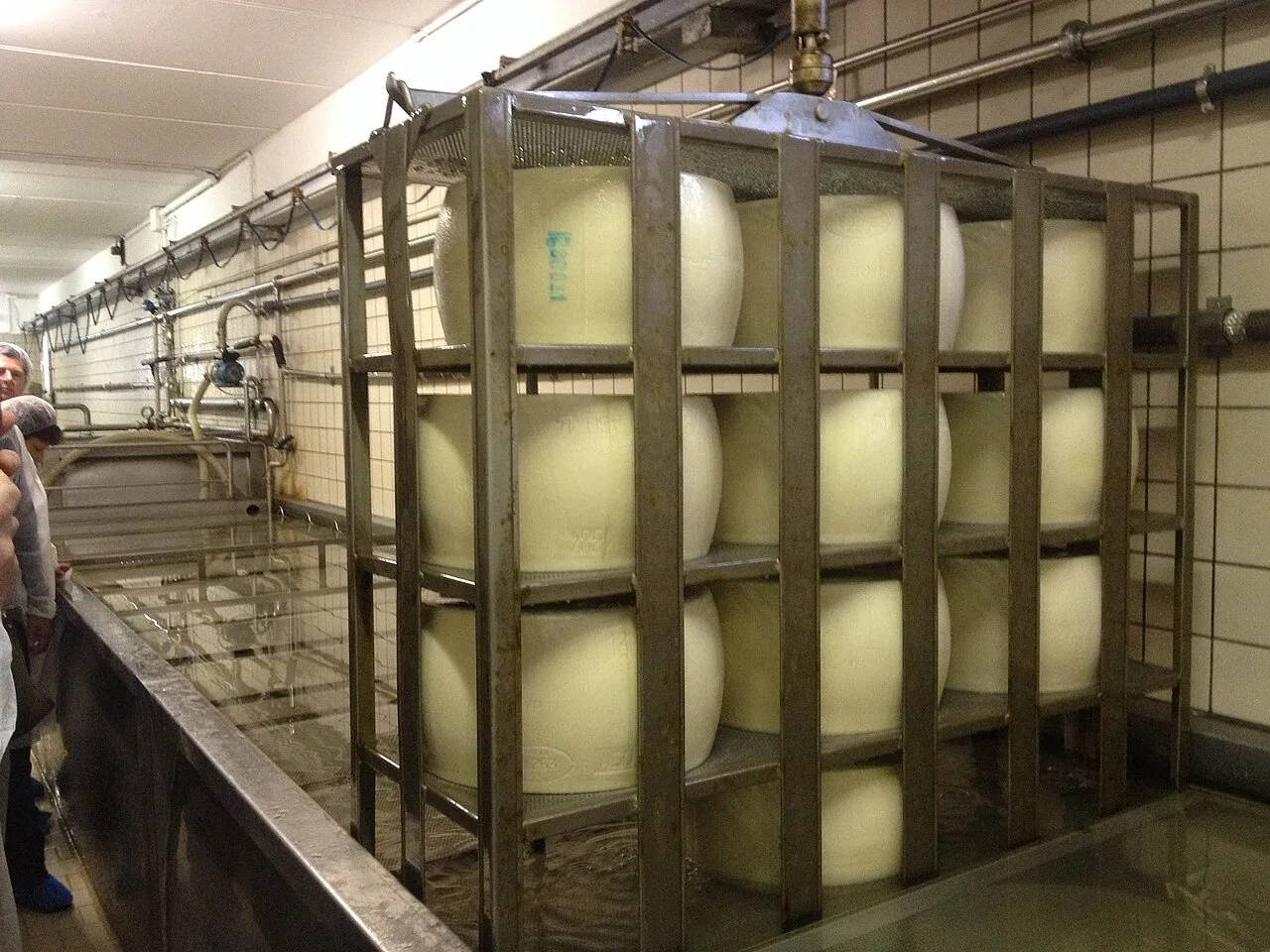
How is Parmigiano Reggiano made? It is made from raw cows' milk, with salt as the only additive. The wheels are submerged for 20 days in brine tanks saturated with Mediterranean sea salt, then matured for an average of two years.
That protection explains why the genuine article costs more than a supermarket tub of grating cheese. You are paying for raw cows' milk from a defined area, a slow make and a long maturation, not for a brand name. Our guide to Parmigiano Reggiano sits within the wider Italian cheese picture, which helps if you are comparing it with Grana Padano on a deli counter.
What it tastes like and how the texture changes with age
Genuine Parmigiano Reggiano has a sharp, complex flavour that reads as fruity and nutty at once, with a slightly gritty texture on the tongue. The cheese is aged an average of two years, and that long maturation is what builds the crystalline crunch and the depth of savouriness.
Cooking Stories describes a crumbly texture that melts in the mouth, with a slight sweetness under the nuttiness. In practice this means a younger wedge is gentler and better for eating in chunks, while a longer-aged piece gives more punch when grated. Ask the counter for a taste before committing to a large piece.
How it is made: raw cows' milk, copper vats and time
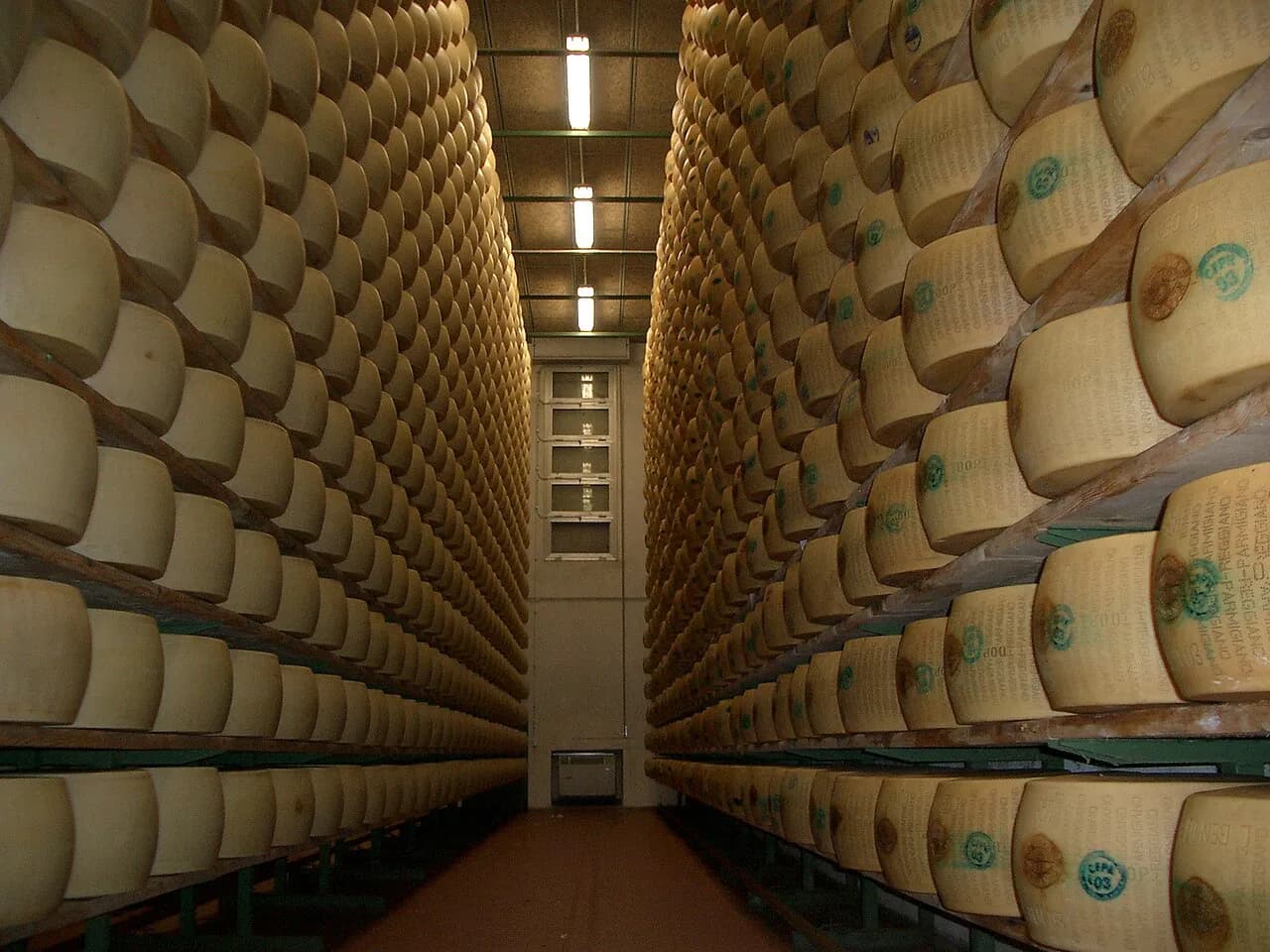
The cheese is made from raw cows' milk, and the only additive allowed is salt, which the wheels absorb while submerged for 20 days in brine tanks saturated with Mediterranean sea salt. Nothing else goes in, which is why the flavour comes entirely from the milk, the make and the months in the ageing room.
Each wheel starts with a large volume of milk, which is poured into a traditional upturned bell-shaped copper vat and left to coagulate with rennet and whey. The curd is then broken into granules, cooked to form a solid wheel, salted and matured for a minimum of 12 months, though some pieces go far longer.
Buying it: wheel markings, the rind and what to look for
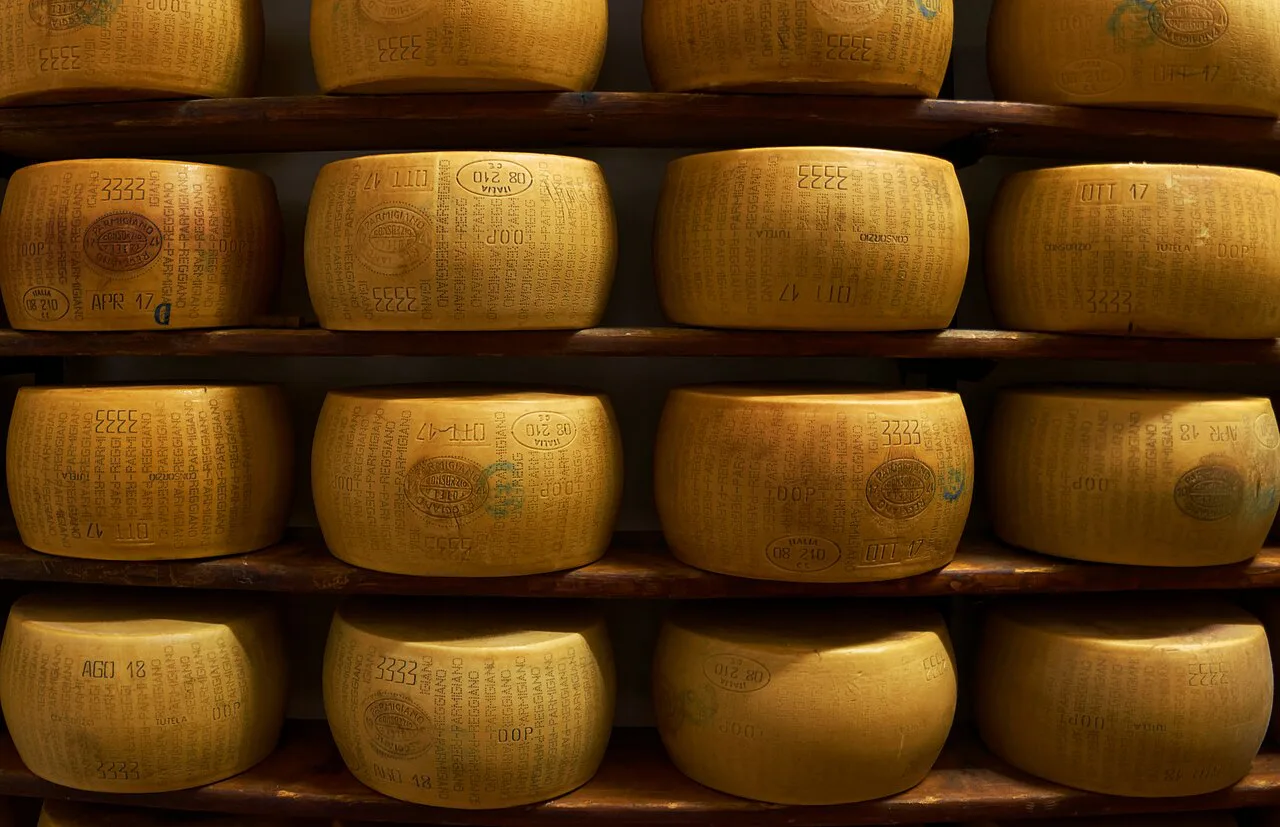
On a whole or part wheel, the stencilled dots and lettering on the rind are the cheese's identity papers, and they are the quickest thing to check on a market stall or in a deli. Buy from a counter that cuts to order rather than pre-wrapped cubes when you can, because a fresh cut face keeps its moisture and aroma better.
Ask for the age when you buy, since the shop is the only reliable place to learn how long a particular piece has matured. A wedge for eating and a piece for grating are different purchases: the eating piece should be cut thick enough to bite, roughly a finger's width, while a grating piece can be thinner and older.
How to eat it: chunks, pasta, risotto and soup
The simplest serving is a chunk eaten with a few drops of balsamic vinegar, which lets the fruity sharpness of the cheese do the talking. It also grates over pasta, stirs into soup and risotto, and appears in pesto and in Alfredo sauce, where its job is to bring salt, savouriness and body rather than to melt into strings.
When you are cooking, add grated cheese off the heat or at the very end so it emulsifies into the sauce instead of clumping. If you want to compare it with other Italian cheeses that behave differently in the kitchen, mozzarella di bufala is the fresh, milky counterpoint.
Using the crusts in soup and rice instead of binning them
Parmigiano crusts should never be discarded, because they have real culinary uses. Dropped into a pot of soup or into the water when you cook plain white rice, they lend a pleasant, fine aroma that costs you nothing extra.
The same crusts can also be chewed and eaten once softened, so a household that buys a lot of the cheese gets a second ingredient out of every wedge. Keep them wrapped in the fridge until you need them, and scrub the rind before it goes in the pot if it has been handled.
What it costs and how much to buy for a household
Retail prices move constantly, and a cut of Parmigiano Reggiano is sold by weight, so the honest answer is to compare price per kilogram at the counter rather than look for a fixed number. For a sense of scale, a one-kilogram piece of the PDO cheese was listed on a UK price comparison site at figures in the tens of pounds, with whole wheels running into the hundreds, but treat any such listing as a snapshot rather than a guide to what you will pay in Italy.
For most households, a 200 to 300 gram wedge for eating plus a smaller older piece for grating covers a fortnight of normal cooking. Buy the eating piece in one thick chunk and cut what you need from the end, wrapping the rest tightly; the cut face dries out before the rest of the cheese does.
Which piece should you buy first?
Start with a thick wedge of around 250 grams for eating in chunks, chosen at an age that suits your taste after a sample at the counter, and add a smaller older piece only if you grate the cheese regularly. Keep the rinds in the fridge and put them to work in soup or rice rather than throwing away the most flavoursome part of the wheel.
If you want to place Parmigiano Reggiano in the wider Italian cheese landscape before you shop, our guide to Italian cheese covers where it sits among the hard, fresh and stretched-curd families.
Explore more Italy food guides
Frequently Asked Questions
Can you eat the rind of Parmigiano Reggiano?
Yes. The crusts can be chewed and eaten, and they are also added to soup or to the water when cooking plain rice to give it a fine aroma. Scrub the rind before use and keep it wrapped in the fridge until needed.
Is Parmigiano Reggiano the same as Parmesan?
No. Parmigiano Reggiano has PDO status and must be made in its defined producing area using protected methods, while a cheese labelled simply Parmesan can be made elsewhere in a similar style. In Europe the Parmesan name is itself classified as a protected designation of origin.
How is Parmigiano Reggiano made?
It is made from raw cows' milk, with salt as the only additive. The wheels are submerged for 20 days in brine tanks saturated with Mediterranean sea salt, then matured for an average of two years.
Sources
Notes for your next meal in Italy
Optional updates to our food guides.
You might also like


Continue reading
More guides you'll find useful