Lampredotto: Florence's Tripe Sandwich, Explained
Lampredotto is Florence's boiled cow-stomach sandwich, served in a rosetta bun with salsa verde and dipped in broth. Here's what it is and how to order one.
On this page
Lampredotto is Florence's own street sandwich, and it is made from the fourth stomach of a cow — the abomasum — boiled until soft in a vegetable broth, then chopped and stuffed into a crusty Tuscan roll. It is a dish and a tradition tied to Florence, sold by lampredottai from vans and counters around the city's streets and markets. This guide covers what the filling actually is, how the sandwich is put together, the sauces and the broth dip, the fixed places to try it and the honest question of whether the texture will suit you.
What lampredotto is: the fourth stomach of a cow, boiled in vegetable stock
The cut is the abomasum, the fourth of a cow's four stomachs, which is why lampredotto is often described in English simply as cow stomach. It is simmered whole in a broth built from carrot, onion, celery and tomato until it turns tender, then kept warm in that same liquid until someone orders. The tradition belongs to la cucina povera, the frugal Italian cooking that found a use for every part of the animal, and it is why a city famous for bistecca fiorentina also has a beloved sandwich made from what the steak leaves behind.
Nothing about the raw ingredient is glamorous: it comes out of the pot grey and wobbly before it is chopped, which is exactly why the chopping, the sauce and the bread matter so much. Those three steps are what turn a plain boiled stomach into a hot, juicy sandwich. If you can get past the look, you are eating one of the oldest fast foods in Tuscany.
Lampredotto vs tripe: which stomach each one comes from
Italians use several stomachs from the same animal, and they do not taste or cook the same. Lampredotto is specifically the fourth stomach; the tripe sold in markets and cooked in other regional dishes generally comes from the earlier stomachs, with a different texture and a milder flavour. Ordering a panino di lampredotto in Florence therefore gets you something narrower and more local than a generic tripe dish.
What is lampredotto made of? Lampredotto is the fourth stomach of a cow, the abomasum, boiled until tender in a vegetable broth with carrot, onion, celery and tomato. It is chopped and served hot in a crusty Tuscan roll with salsa verde, a green sauce of parsley, anchovy, capers and olive oil.
Is lampredotto beef or pork? It is beef: lampredotto comes from a cow, not a pig. The cut is a stomach rather than a muscle, which is why it is boiled rather than grilled or roasted.
What does lampredotto taste like? Savoury and beefy, like a rich braise, with a soft and slightly gelatinous texture. The green sauce and the broth-soaked bread do much of the flavouring, so the offal taste is milder than the appearance suggests.
This is why lampredotto is so strongly identified with Florence rather than with Italy as a whole, and why it is not a standard filling in most other cities' sandwich counters. Elsewhere in the country, fried rice croquettes such as arancini and supplì take the street-food spotlight.
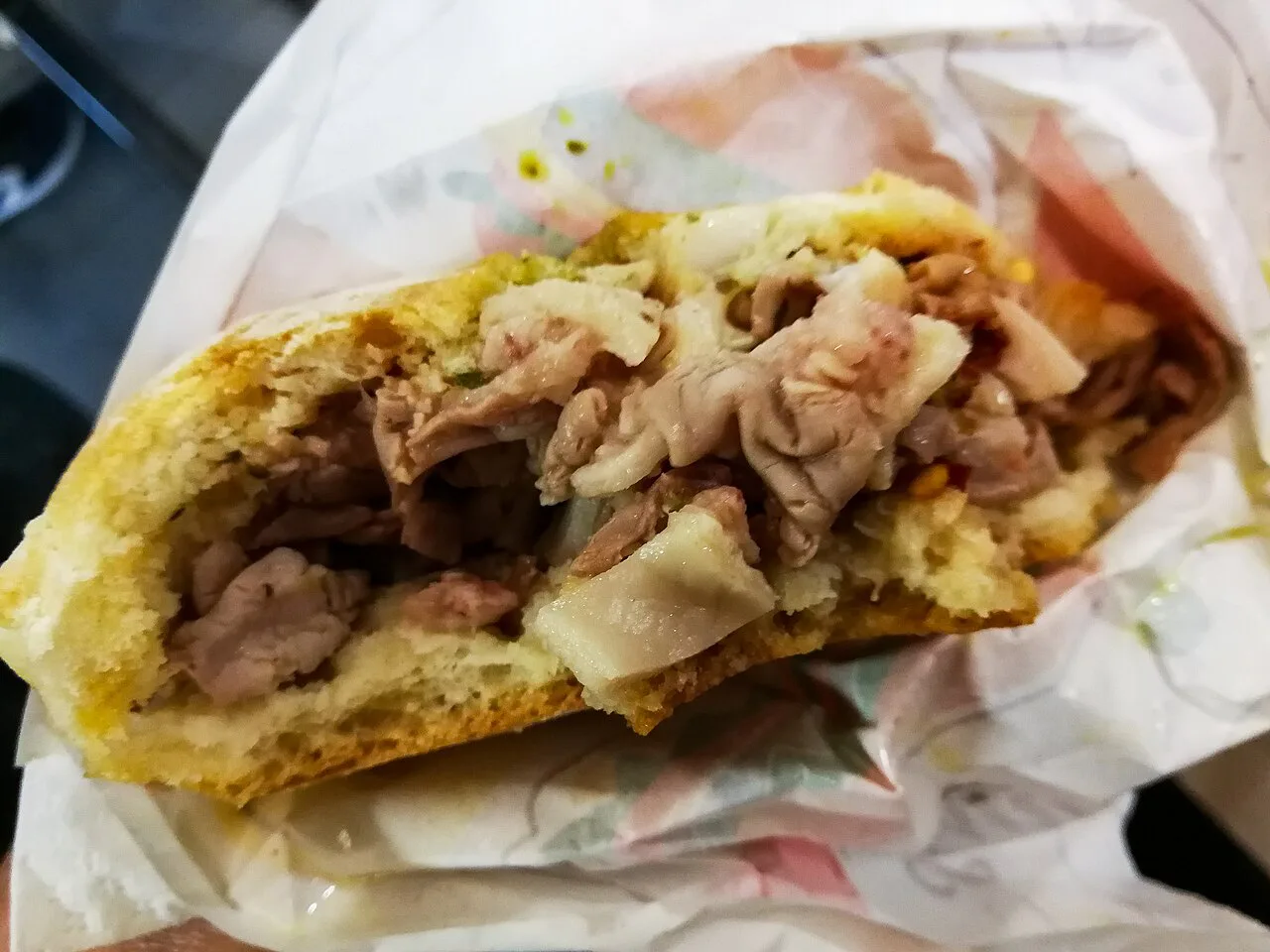
What a lampredotto panino looks like
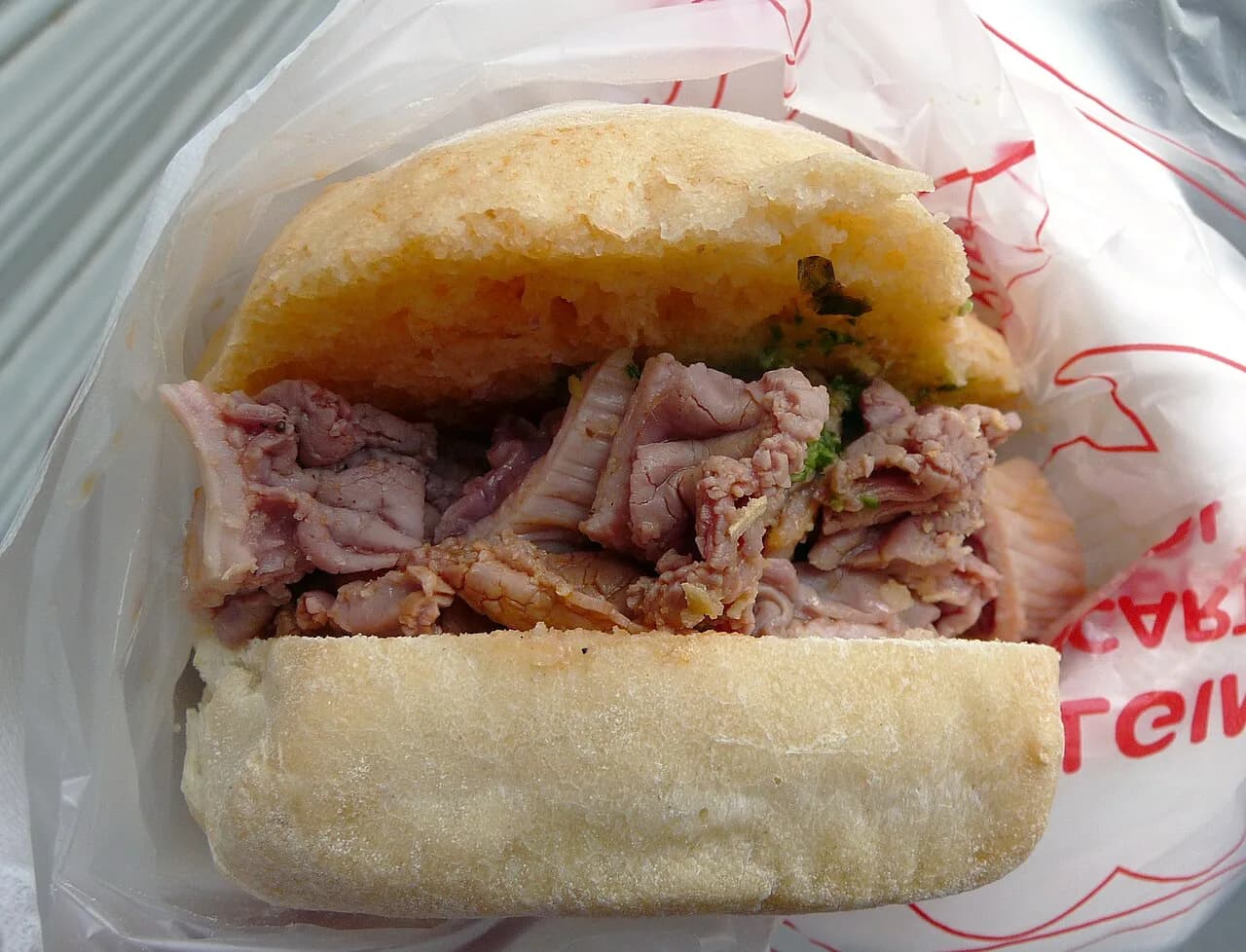
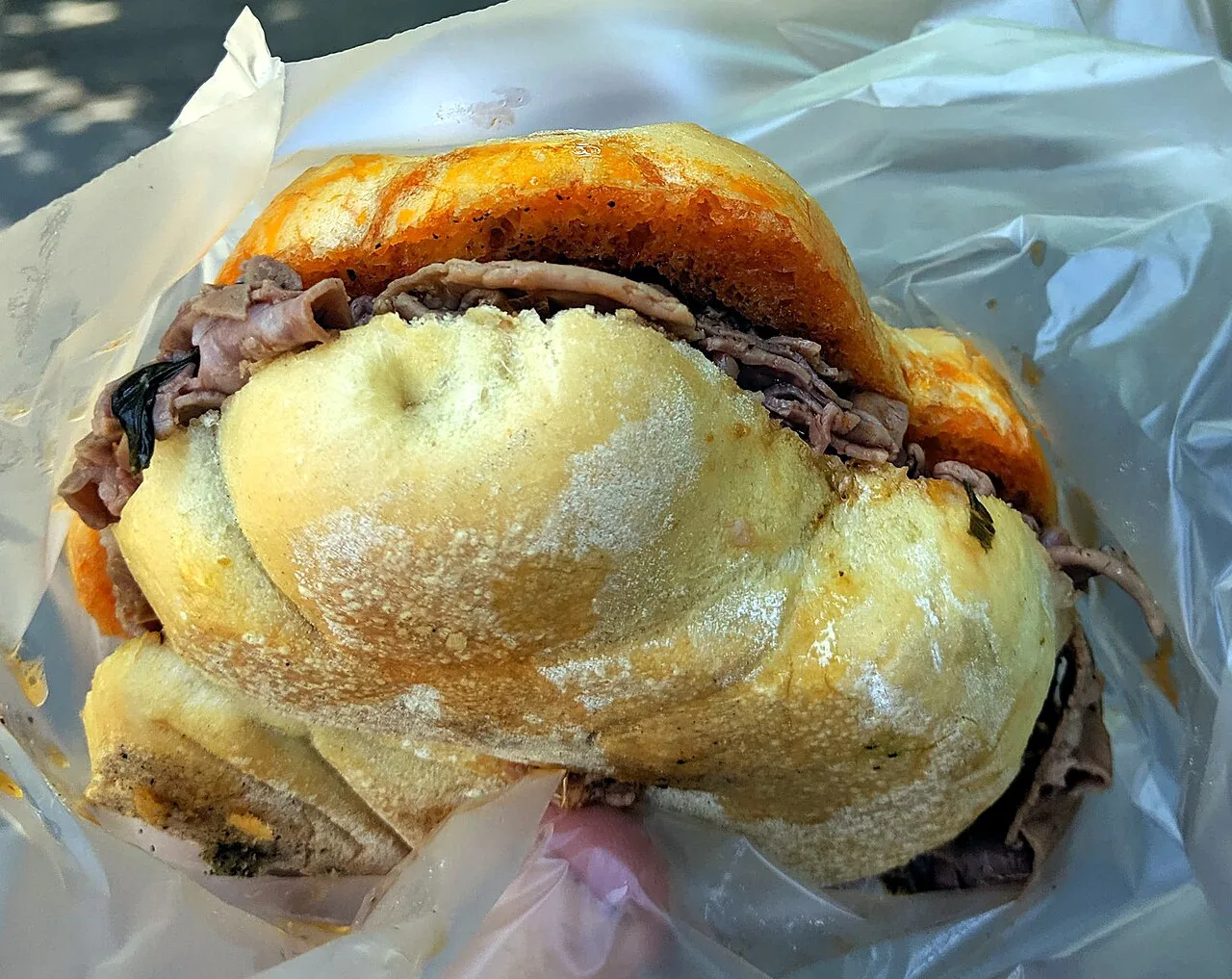
The bread is usually a rosetta, the large crusty Tuscan roll with a soft white inside and a firm crust. The lampredottaio splits it, pulls out some of the crumb to make room, and heaps in the chopped lampredotto. That hollowing step is practical rather than decorative: without it, the filling spills out with the first bite.
A spoonful of salsa verde goes on top, the sandwich is seasoned with salt and pepper, and it is handed over in a paper napkin to be eaten standing up. It is a compact, two-hand affair, so do not plan on carrying anything else while you eat.
The two sauces: salsa verde and the piccante option
Salsa verde, literally green sauce, is the standard topping: a raw, uncooked blend of parsley, anchovy, capers and olive oil, often with garlic. It is bright, salty and herby, and it cuts through the richness of the meat. Recipes vary from household to household, so expect small differences between one van and the next.
Some lampredottai also offer a piccante version, a chilli-spiked sauce for anyone who wants heat. Ask for it when you order, since the default is the green sauce. A little chilli works well with the broth-soaked bread; a lot will bury the flavour of the filling.
Bagnato nel brodo: asking for the top of the roll dipped in the stock
Bagnato nel brodo means dipped in the broth, and it is the single request that most improves the sandwich. The vendor takes the top half of the roll and plunges it into the pot where the lampredotto has been cooking, so the crust soaks up the savoury liquid. Ask for it when you order; it is a normal request, not a special favour.
The trade-off is a sandwich that needs eating immediately, because the soaked bread softens fast. If you want to walk with it, order it plain and add sauce instead. Choose the dip when you are standing at the counter anyway.
Where to eat lampredotto in Florence
Three fixed, well-known counters make a sensible starting point. Nerbone sits inside the Mercato Centrale, Lupen & Margo is just outside the same market, and L'Antico Trippaio stands in Piazza de Cimatori. All three are permanent addresses, so you can plan around them rather than chasing a van.
Beyond those, many lampredottai work from vans that appear in different spots on different days, often at a corner of a piazza or a busy intersection. If you spot one with a queue of Florentines at lunchtime, that is your signal to stop. In sandwich terms, the city's wider repertoire — from pani ca' meusa in Palermo to the tramezzini of Turin — is covered in the guide to Italian sandwiches.
How it's served and eaten
Expect no ceremony: you order at the van or counter, pay, and eat standing, usually within a few steps of where you bought it. There is no table service and no need to tip. Napkins are handed over with the sandwich, and the best ones come with a queue that moves quickly.
Some vendors also pour a glass of local Tuscan wine alongside, which is a pleasant pairing if you are stopping rather than walking. Keep it to one glass and treat the sandwich as the main event.
Buying lampredotto by weight to heat at home
Ask a lampredottaio whether they will sell the cooked lampredotto by weight; some will, ready to be reheated at home and eaten as you like. It is a habit visitors tend to miss, and it turns a street snack into a simple supper with bread and salsa verde.
Reheat it gently in its own broth rather than frying it, so it stays soft, and warm the rolls separately so they keep their crust. If you are cooking at home outside Florence, the filling is the hard part to source; in the city, buying it ready-cooked is the easier route.
What lampredotto tastes like and who should skip it
The flavour is savoury and beefy, closer to a rich braise than to anything offal-strong, with a soft, slightly gelatinous texture. The salsa verde does most of the lifting, and the broth-soaked bread adds salt and depth. People who dislike soft textures will struggle with it more than people who dislike the idea of offal.
Skip it if you need your meat firm and grilled, or if the sight of the pot puts you off before the first bite. If you are unsure, order a small portion or share one, and have a backup plan such as a slice of pizza al taglio. It is a cheap way to find out what all the fuss is about, and there is no shame in deciding it is not for you.
Should you queue for a lampredotto panino?
Yes, if you want to taste something that belongs to Florence and nowhere else: a boiled fourth stomach, chopped into a hollowed rosetta, green sauce on top, dipped in broth on request. Order it bagnato nel brodo, eat it on the spot, and buy some by weight if you have a kitchen nearby. If soft textures put you off, spend your appetite elsewhere and come back when you are hungrier.
Frequently Asked Questions
What is lampredotto made of?
Lampredotto is the fourth stomach of a cow, the abomasum, boiled until tender in a vegetable broth with carrot, onion, celery and tomato. It is chopped and served hot in a crusty Tuscan roll with salsa verde, a green sauce of parsley, anchovy, capers and olive oil.
Is lampredotto beef or pork?
It is beef: lampredotto comes from a cow, not a pig. The cut is a stomach rather than a muscle, which is why it is boiled rather than grilled or roasted.
What does lampredotto taste like?
Savoury and beefy, like a rich braise, with a soft and slightly gelatinous texture. The green sauce and the broth-soaked bread do much of the flavouring, so the offal taste is milder than the appearance suggests.
What is the difference between lampredotto and tripe?
Lampredotto is specifically the fourth stomach of the cow. Tripe as sold and cooked elsewhere in Italy generally comes from the earlier stomachs, which have a different texture and a milder flavour.
Sources
Notes for your next meal in Italy
Optional updates to our food guides.
You might also like

Continue reading
More guides you'll find useful