Supplì: Rome's Fried Rice Croquette Explained
Supplì is Rome's fried rice croquette with a molten mozzarella heart, known as supplì al telefono. Here is what is inside and how it differs from arancini.
On this page
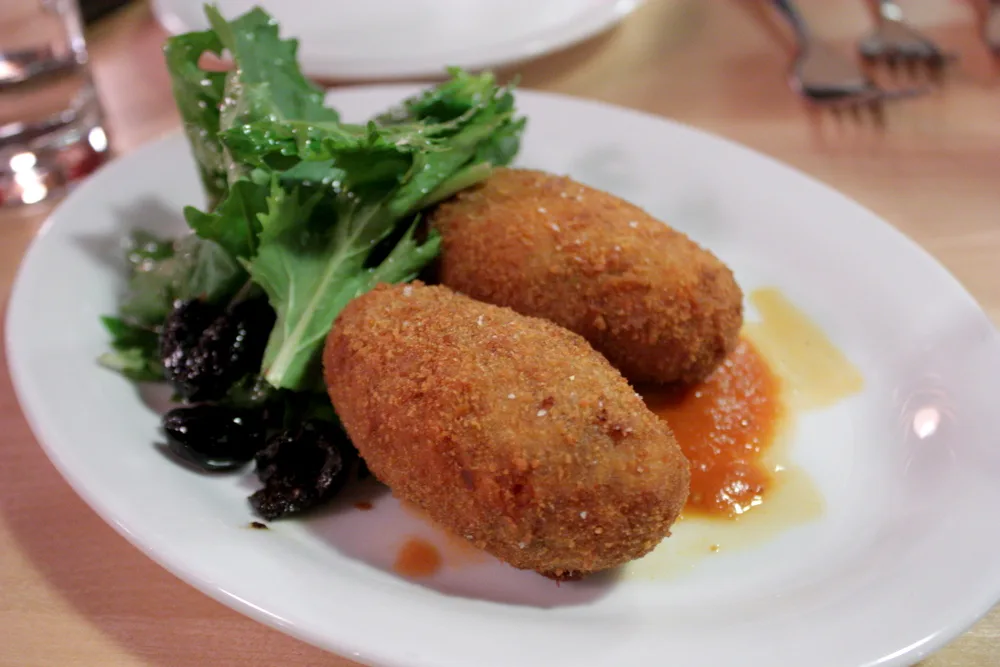
Supplì is a Roman croquette of rice cooked in meat ragù, moulded into an oblong shape around a piece of mozzarella, rolled in breadcrumbs and deep-fried. Order one hot from a friggitoria (fried-food shop) or a pizzeria and it works as a snack or as the antipasto before pizza. This guide covers what goes inside, where the now-familiar telephone name comes from, how the Roman version differs from Sicilian arancini, and how to make a batch at home.
What supplì is: rice, ragù and a molten centre
The base is rice cooked like a risotto, stirred with a dense meat sauce and finished with grated pecorino and butter so it holds together once cold. That rice is flattened in the hand, a piece of mozzarella is tucked inside, and the whole thing is closed into a cylinder rather than a ball. A coating of beaten egg and breadcrumbs goes on next, then the croquette is fried until deeply golden.
The result should be crisp outside and soft within, with the cheese still liquid at the centre. That molten core is the whole point of the shape: the rice wall has to be thick enough to survive the oil without splitting. A supplì that has been sitting under a lamp loses the stretch, so eat it while it is still hot.

Why it is called supplì al telefono
Bite into a correctly made supplì and the mozzarella pulls out in a long white strand, and that strand is the reason Romans call it supplì al telefono: the cheese resembles a telephone wire stretched between two hands. The nickname belongs to the version with cheese at the centre, so a supplì without mozzarella is not the al telefono one.
Is supplì vegetarian? Not in its classic Roman form, because the rice is cooked in a meat ragù. A vegetarian version is made by replacing the ragù with tomato sauce and keeping the mozzarella centre, which is how meat-free recipes are usually written.
Do you eat supplì with sauce? No. The tomato is already cooked into the rice, and the croquette is eaten hot on its own, usually from a napkin.
What does supplì mean in Italian? The name is generally linked to the French word surprise, referring to the mozzarella hidden inside the rice. It is a suggested origin rather than a documented certainty, so it is best described as the story behind the name.
The image only works if the filling is properly melted, which is why the frying temperature matters as much as the recipe. Fry at too low a heat and the rice drinks oil before the centre warms through; fry at the right heat and the crust sets fast while the mozzarella turns to liquid.

What goes inside, and what the original filling was
Rice, tomato sauce and mozzarella are the constants, with pecorino or parmesan stirred through the rice for salt and depth. The classic Roman ragù for supplì was originally made with chicken giblets and livers, an offal-based sauce that has largely given way to a mix of pork and beef mince closer to modern tastes. If you want the historical version, that is the filling to ask for; most supplì sold today use the meat-mince sauce.
Other cheeses, peas, mushrooms or ground meat turn up in regional variations, but they are departures from the Roman standard rather than the thing itself. For the rice, arborio and carnaroli both work because they release starch and hold the sauce; carnaroli keeps a firmer grain through the final fry. A loose, wet risotto is the usual reason a home batch falls apart.
Where the name comes from
The name is usually traced to the French word surprise, a nod to the cheese hidden inside the rice, and the dish is generally dated to the nineteenth century, when rice became more common in Roman cooking. That etymology is a suggested origin rather than a settled fact, so treat it as the story Romans tell rather than documented history. Either way, the idea of a concealed filling explains both the name and the shape.
The croquette grew up as street food and as an antipasto in the city's friggitorie and pizzerias, which is still where you find the best ones: fried to order, handed over in paper, eaten standing up. Look for a shop with a visible fryer and a queue of locals rather than a tray of pre-cooked pieces.
Supplì versus arancini
Supplì are Roman and arancini are Sicilian, and the difference shows in both shape and filling. A supplì is oblong, roughly the size of a small sausage, and built on tomato-sauce rice; arancini are typically larger and rounder, often with saffron-tinted rice and fillings that vary from ragù to cheese and peas. Neither is a superior version of the other; they are different snacks from different regions.
If you are working through Italy's fried street food, treat them as two stops on the same map rather than substitutes. Rome gives you the telephone stretch of mozzarella; Sicily gives you the bigger, heavier sphere. Both belong in the same mental list as pizza al taglio and focaccia genovese, the bready, hand-held food that makes an Italian midday meal easy.
How to eat it
Eat supplì hot, on its own, from a napkin, in two or three bites. The tomato is already cooked into the rice, so the croquette needs no accompaniment; a pot of sauce on the side would only sog the crust. Serving it as an antipasto before pizza is common, and a couple of supplì with a drink is a perfectly normal light lunch.
This is casual, standing-up food, so expect paper rather than plates in the most traditional shops. If you are building a street-food crawl, supplì sit naturally alongside other regional fried and offal specialities, from Florentine lampredotto to Palermo's pani ca' meusa, and knowing what each one is makes ordering much less guesswork.
Making them at home
Cook the rice as you would a risotto, adding hot stock a ladle at a time and finishing with butter and grated cheese, then spread it on a tray and let it cool completely before shaping. Warm rice will not hold the cheese. Cut the mozzarella into short pieces and let it drain so it does not leak water into the rice.
Seal each croquette carefully so no sauce or cheese is exposed, then coat in egg and breadcrumbs. Heat the oil to between 175 and 180°C, fry only a few at a time, and turn them so they colour evenly; drain on kitchen paper and serve immediately. A vegetarian version simply skips the ragù and uses a tomato sauce with the same mozzarella centre.
Supplì or arancini: which to order first
Order supplì in Rome and arancini in Sicily, and judge each on its own terms. In Rome, look for a friggitoria or pizzeria frying to order, take it in paper, and eat it before the mozzarella stops stretching. At home, the two rules that matter are fully cooled rice and a completely sealed filling.
Frequently Asked Questions
Is supplì vegetarian?
Not in its classic Roman form, because the rice is cooked in a meat ragù. A vegetarian version is made by replacing the ragù with tomato sauce and keeping the mozzarella centre, which is how meat-free recipes are usually written.
Do you eat supplì with sauce?
No. The tomato is already cooked into the rice, and the croquette is eaten hot on its own, usually from a napkin. A dipping sauce would soften the breadcrumb crust.
What does supplì mean in Italian?
The name is generally linked to the French word surprise, referring to the mozzarella hidden inside the rice. It is a suggested origin rather than a documented certainty, so it is best described as the story behind the name.
Sources
Notes for your next meal in Italy
Optional updates to our food guides.
You might also like


Continue reading
More guides you'll find useful